What It's Like to Walk Ireland Alone: First-Hand Notes from the Trail
An honest guide to walking Ireland on your own — written by an operator who has put hundreds of solo walkers on Irish trails over fifteen years.
Hi, I'm Cliff. I run Walking Holiday Ireland, and roughly a third of our guests every year arrive on their own. They are widows and widowers, divorced women in their fifties, retired husbands whose wife doesn't share the walking bug, mid-career professionals on a between-jobs reset, and a steady trickle of people who simply prefer their own company. Solo walking holidays Ireland are one of the loveliest ways to experience the country — quiet enough that you'll meet sheep before tourists, social enough at the B&Bs that you won't feel cut off, and safe enough that the questions we get from first-time solo walkers are almost always about logistics rather than risk.
Here is everything we tell our solo guests before they book.
Why Ireland is one of the best places in Europe to walk alone
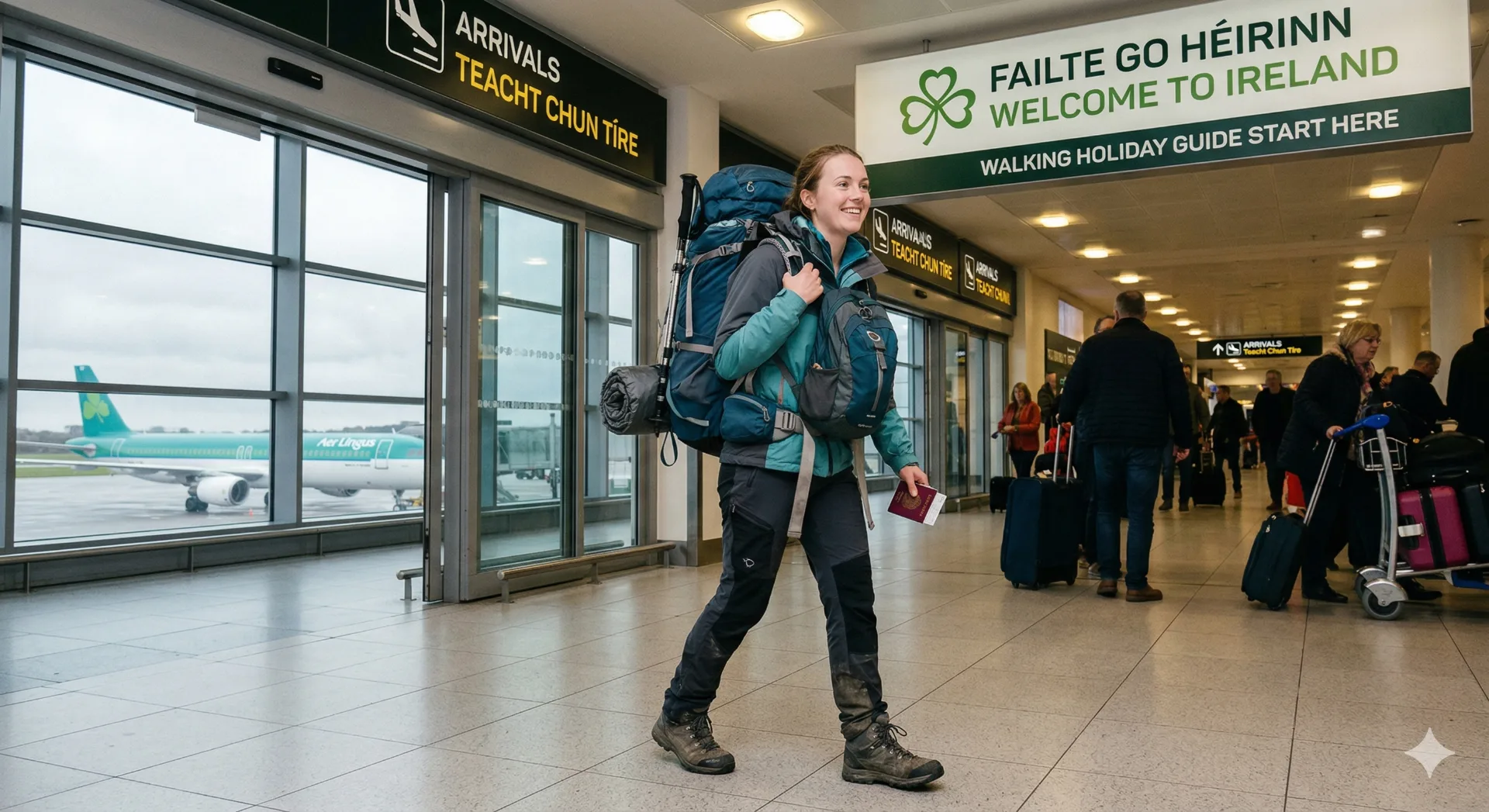
Solo walking holidays Ireland work because the country has three things going for it: a national network of waymarked trails (the National Waymarked Ways) that are properly signed; a culture of casual conversation in pubs and B&Bs that means you'll have someone to chat to in the evening without arranging anything; and a low-density population on the trails themselves, especially outside of July and August. You can walk for hours without seeing another person and still arrive at a guesthouse where the host knows your name.
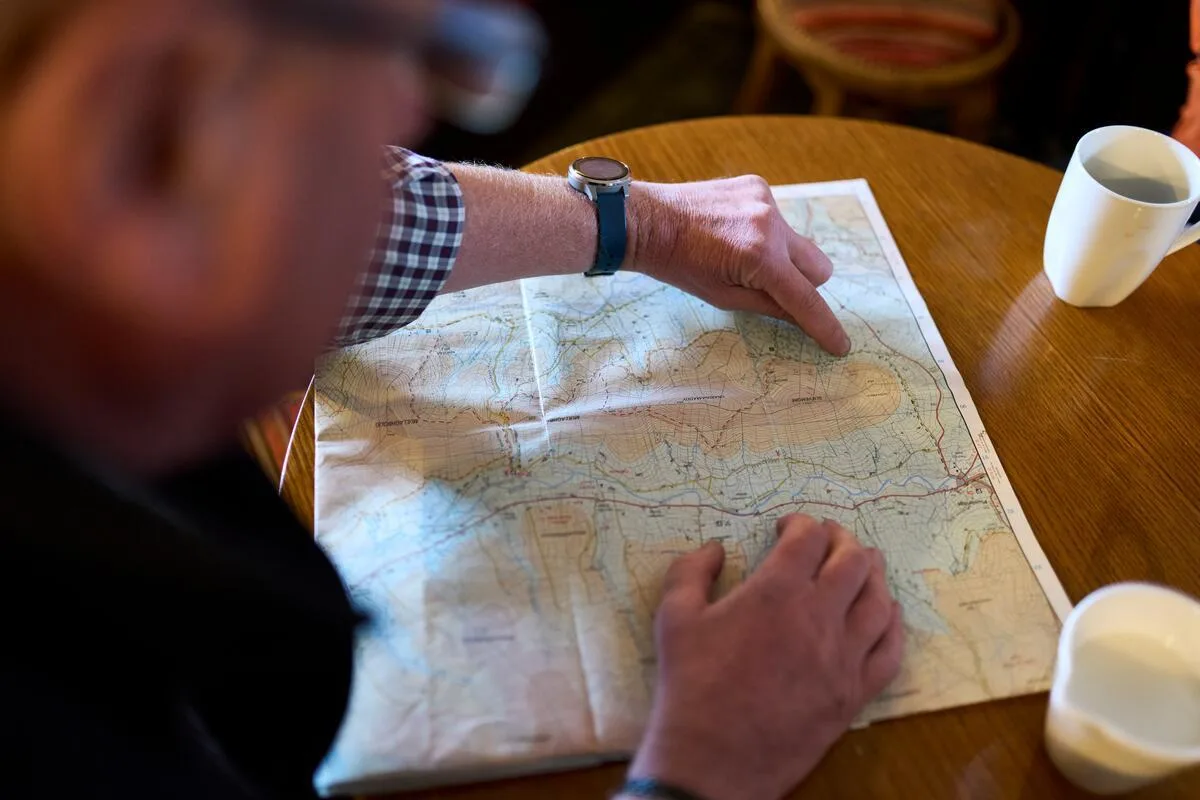
The waymarked trails make navigation forgiving. You're rarely more than a few hundred metres from a yellow walking-man arrow on a post or stone. You don't need to be a confident map-reader to do a self-guided week solo, although you should still carry a map and a phone with the route loaded.
The five best trails for solo walkers
Of the routes we run, these are the five we recommend most often for first-time solo walkers, in roughly the order we suggest them.
1. The Kerry Way
The most popular Irish trail and our most popular for solo walking holidays Ireland. 200 km in a loop from Killarney through MacGillycuddy's Reeks, Caherdaniel, Sneem and Kenmare. Eight or nine days. Very well waymarked, lots of B&Bs, and you'll meet other walkers on the trail every day in season — most of them solo or in pairs. A good first solo Irish walk.
2. The Dingle Way
Quieter than the Kerry Way, with fewer walkers and equally beautiful coastline. 162 km circular from Tralee around Slea Head and back. Eight days. The villages of Dingle, Dunquin and Cloghane are small and welcoming — the kind of places where the publican will introduce you to the regulars by your second night.
3. The Wicklow Way
Ireland's first long-distance trail and the easiest for solo walkers to reach from Dublin. 130 km from Marlay Park (south Dublin) to Clonegal. Five to seven days. The route is woodland, valley and open mountain — wilder than people expect for somewhere within an hour of an EU capital. Quiet midweek, busier at weekends.
4. The Burren Way
Our favourite for shorter solo trips. 123 km through the limestone landscape of County Clare, from Lahinch to the Cliffs of Moher and inland through Doolin and Ballyvaughan. Six days. Ample pubs, music, and an unusual landscape that makes the walking memorable even on rest days.
5. The Sheep's Head Way
For solo walkers who want the most solitude. A peninsula in West Cork, 88 km of clifftop and inland walking on a finger of land most Irish people couldn't find on a map. Five days. Small B&Bs, almost no other walkers off-season, and the kind of quiet that solo walkers tend to fall in love with.
The solo supplement explained honestly
Most B&Bs in Ireland charge per room rather than per person. A double room shared between two walkers is therefore good value per head; the same room occupied by one walker costs nearly the same. This is the source of the "single supplement" — it isn't a penalty, it's how the room rate divides when you're alone in it.
We try hard to keep the supplement reasonable on our solo walking holidays Ireland by booking guesthouses that have proper single rooms (smaller, single bed, sometimes shared bathroom — and priced fairly). On the Kerry Way for example, our solo supplement is roughly 30% less than the equivalent walker would pay at a 4-star hotel. We also work with B&Bs that offer "single occupancy of a twin" at a discount in the shoulder months.
If the supplement feels steep on a route you want, ask us — we can sometimes restructure the itinerary to use more single-friendly accommodation at lower cost.
Safety on the trail — what to actually worry about
The honest list of risks for solo walkers in Ireland, in order of how often they cause us a phone call:
Weather. By a wide margin the most common reason for an early finish or a worried call. A wet day on an exposed ridge with no waterproof is genuinely miserable; a wet day on a low forest trail with the right kit is fine. Pack a real waterproof and check the forecast each evening.
Twisted ankles. Wet rock, bog, loose scree on descents. The standard injury we see is a moderate ankle sprain in the second half of a long day when concentration drops. Walking poles help, especially solo — you don't have a partner to lean on.
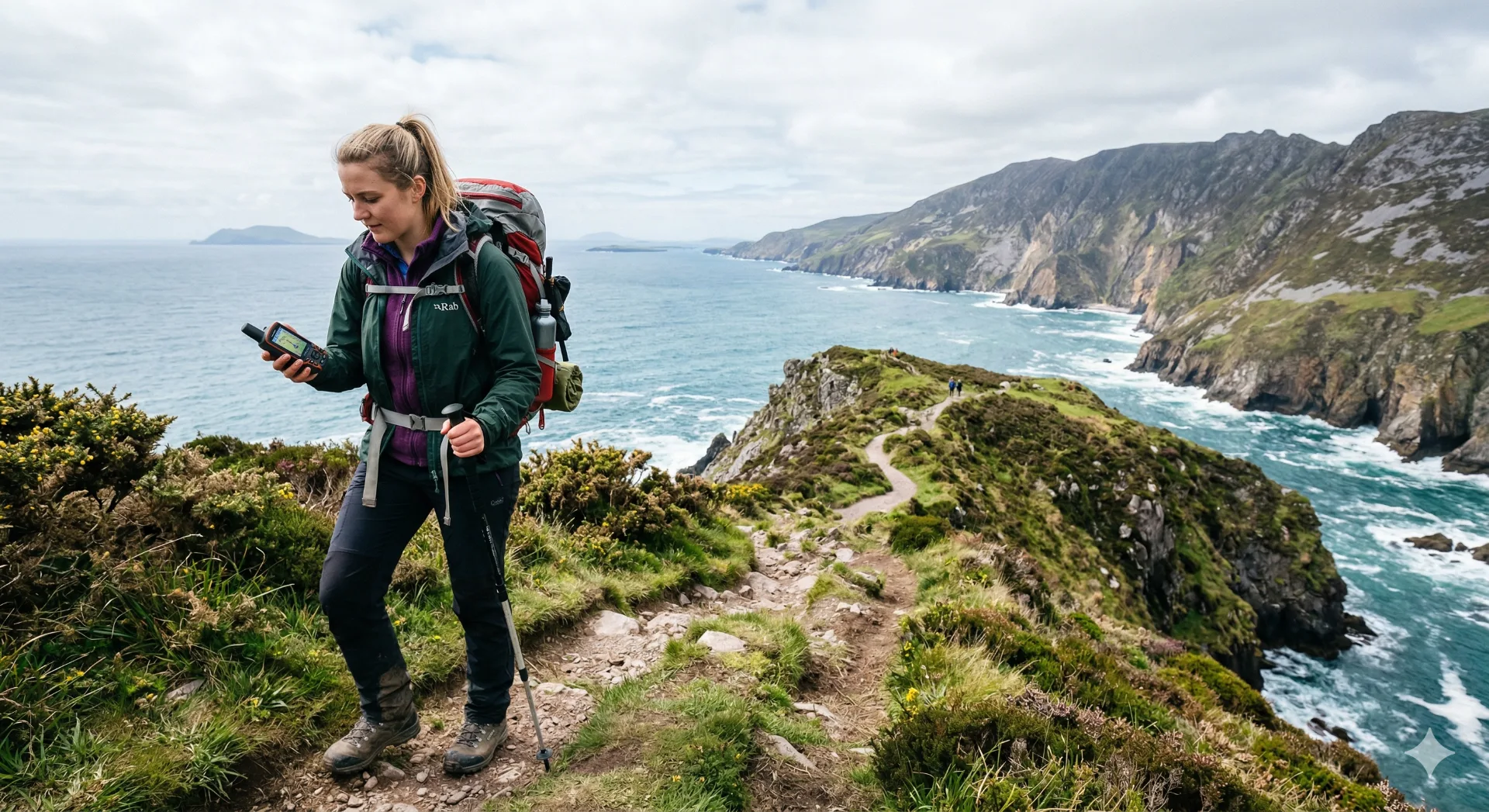
Getting off-route. Most often happens at forest junctions where signage has been turned around or in mist on open hill. Carry an offline map (OS Ireland, OutdoorActive, Komoot all work) and a power bank for the phone.
Crime. Effectively a non-issue on rural trails. Ireland has an exceptionally low rate of violent crime against strangers, particularly outside Dublin city centre. We've sent hundreds of women on solo walking holidays Ireland over fifteen years and the only safety incidents we can recall have been weather and ankle injuries.
Meeting people without joining a group
One of the surprises for first-time solo walkers in Ireland is how easy it is to be sociable on your own terms. The pattern most of our guests fall into:
Walk on your own all day. Arrive at the B&B around four. Wash, change, head down to the pub for dinner around six or seven. Sit at the bar — never the table by the window — and within twenty minutes you'll have a conversation with whoever's sitting next to you. By night three you'll recognise other walkers from the trail and end up in the same pub by accident. By night five you'll have swapped phone numbers with at least one of them. This isn't theory; it's what we hear back from solo guests every season.
If you actively want to walk part of the way with someone, our office can match solo walkers travelling the same week on the same route. We don't do organised group tours, but we do quietly facilitate informal pairings when guests ask.
Planning a self-guided solo trip
A practical checklist for anyone considering solo walking holidays Ireland:
Time of year: May, June and September are ideal — long daylight, fewer midweek walkers, accommodation easier to book on a single basis. July and August work but get noisier on the most popular trails (Kerry Way, Wicklow Way).
Length: First-time solo walkers usually prefer 5–6 walking days plus a rest day. Long enough to settle into the rhythm; short enough to leave wanting more.
Phone: Get an Irish or EU eSIM. Good reception on most trails. Useful in B&Bs that don't take card payments (still surprisingly common).
Trip notes: We send a daily route card and a 24/7 number you can call from anywhere on the trail. Most solo guests use it twice in a week — once to ask about a luggage pickup time, once to check a weather call.
Thinking of a solo walking holiday in Ireland?
We run self-guided trips on Kerry, Dingle, Wicklow, the Burren and Sheep's Head — set up specifically for solo walkers, with reasonable single supplements and a number you can call any time on the trail.
FAQs about solo walking holidays in Ireland
Are solo walking holidays in Ireland safe for women?
Yes — and we say that based on hundreds of solo female guests across fifteen years with no incidents beyond weather and minor injuries. Ireland has very low rates of violent crime, especially outside Dublin. Rural trails and country pubs are welcoming places. The usual sensible precautions (let someone know your day's plan, share your location, don't accept lifts from strangers) are enough.
Will I be walking entirely alone?
On the most popular routes (Kerry Way, Wicklow Way) you'll see other walkers most days in season. On quieter routes (Sheep's Head, Burren in shoulder months) you might walk for hours seeing nobody. You can choose either experience by picking the trail and the month. Solo walking holidays Ireland accommodate both extremes.
How big is the single supplement?
It varies by route and accommodation but typically adds 25–40% to the per-person price of a shared booking. We try to keep it as low as possible by working with guesthouses that have real single rooms. Ask for a quote on your specific dates and route — we'll give you the honest number.
What if I get injured walking alone?
Carry your phone (with our 24/7 number saved), a whistle, a small first-aid kit and a power bank. Ireland's emergency number is 112 or 999 and Mountain Rescue is excellent — but in fifteen years of running solo walking holidays Ireland we've only used Mountain Rescue twice, and both involved minor evacuations after ankle injuries. Sensible precautions and decent kit cover the realistic risks.
Will I feel lonely?
Most solo walkers tell us the opposite. Daytime is quietly social — short chats with farmers, B&B owners, other walkers passing the other way. Evenings in the pub are easy. The combination of solitude during the day and conversation at night is what people come back for.
Photo Gallery