
Burren Wildflowers: Why May Is the Best Month to Walk the Limestone
Burren Wildflowers: Why May Is the Best Month to Walk the Limestone
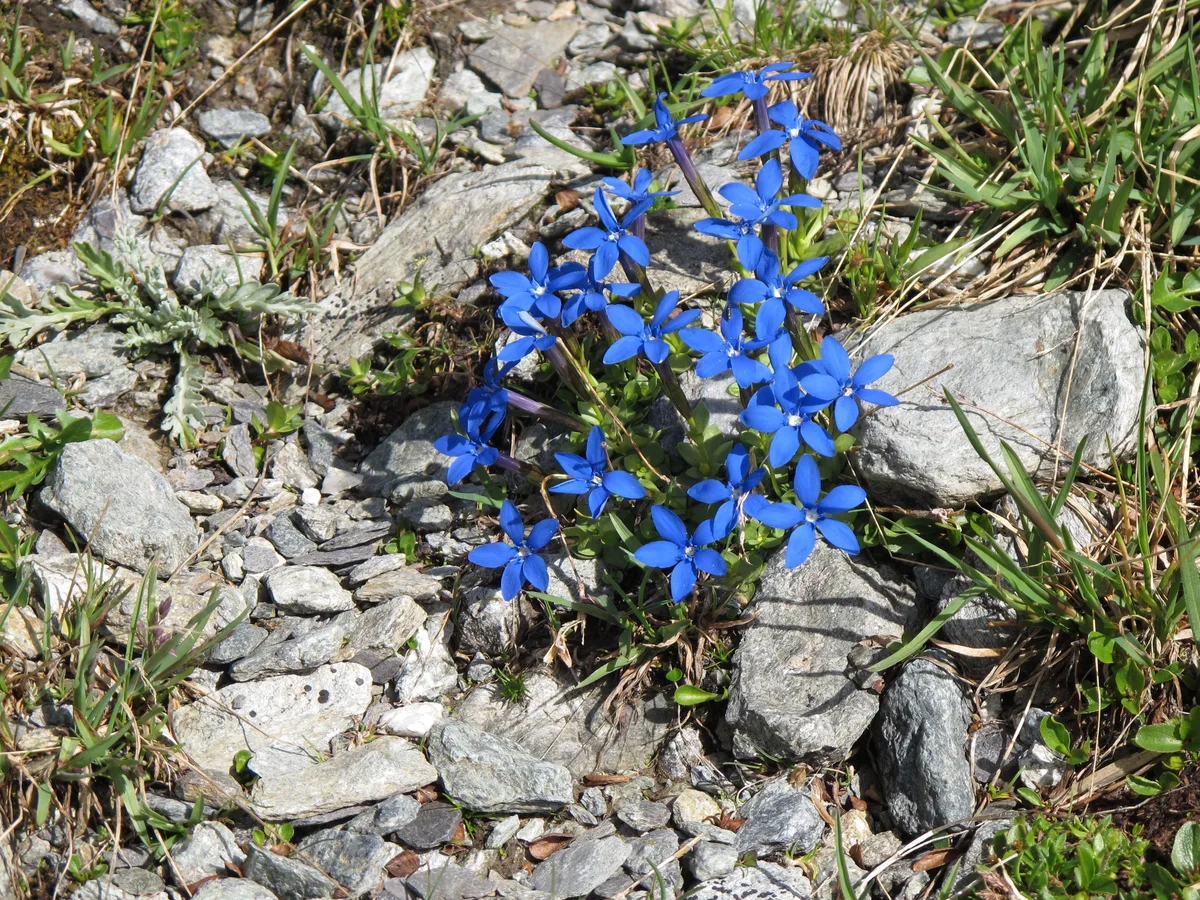
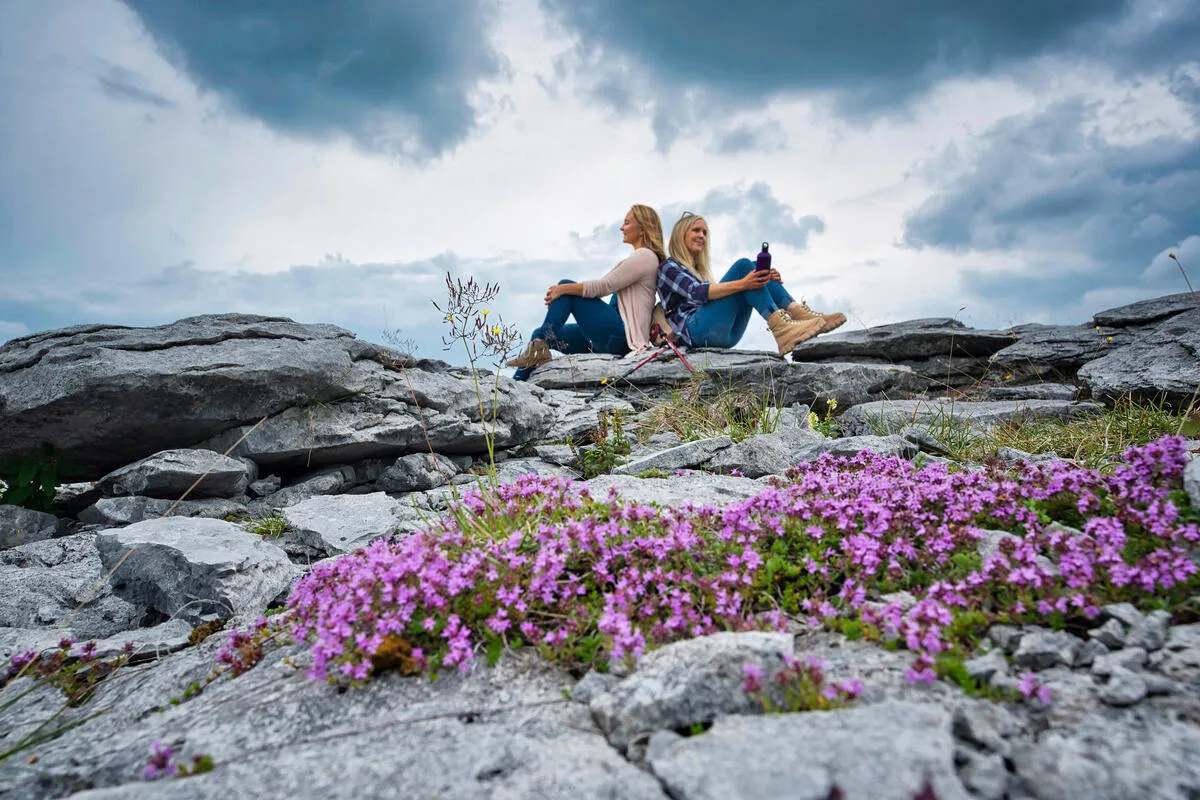
There's a moment in May, somewhere on the limestone pavement between Mullaghmore and the coast, when you stop walking and just stand there. Not because you're exhausted. This is due to the blue hue of the rock beneath your feet. A constellation of spring gentians — each one the size of a 50-cent coin, each one an impossibly saturated cobalt — has opened across the grey limestone in every direction. You knew the event was supposed to happen. You'd read about it. But reading about Burren wildflowers May and actually standing among them are two entirely different things.
May is the best time visit Burren for wildflowers. The same grey plateau that looks austere in winter turns into one of Europe's most extraordinary wildflower displays— and the Burren spring walking here in late April and May is, in our view, as good as it gets anywhere in Ireland.
Why Burren Wildflowers May Are So Unusual
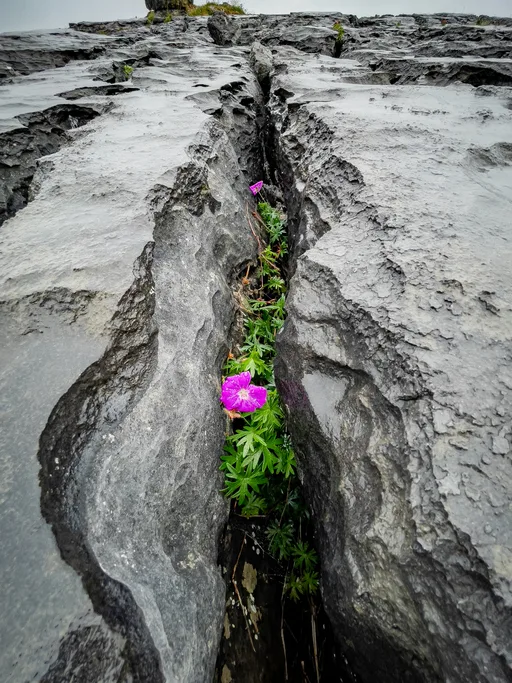
The Burren's flora is famous among botanists because it shouldn't work. The plants growing here come from entirely different climates and latitudes — yet they all thrive together on this small stretch of County Clare limestone. Spring gentians are native to the Alps and the Arctic tundra. Bloody cranesbill belongs to the Mediterranean. Mountain avens Ireland normally grow in Scandinavia and on high Scottish peaks. Shrubby cinquefoil is a Scandinavian upland plant. All of them grow side-by-side in the grikes—the deep cracks in the limestone pavement—within a few meters of each other.
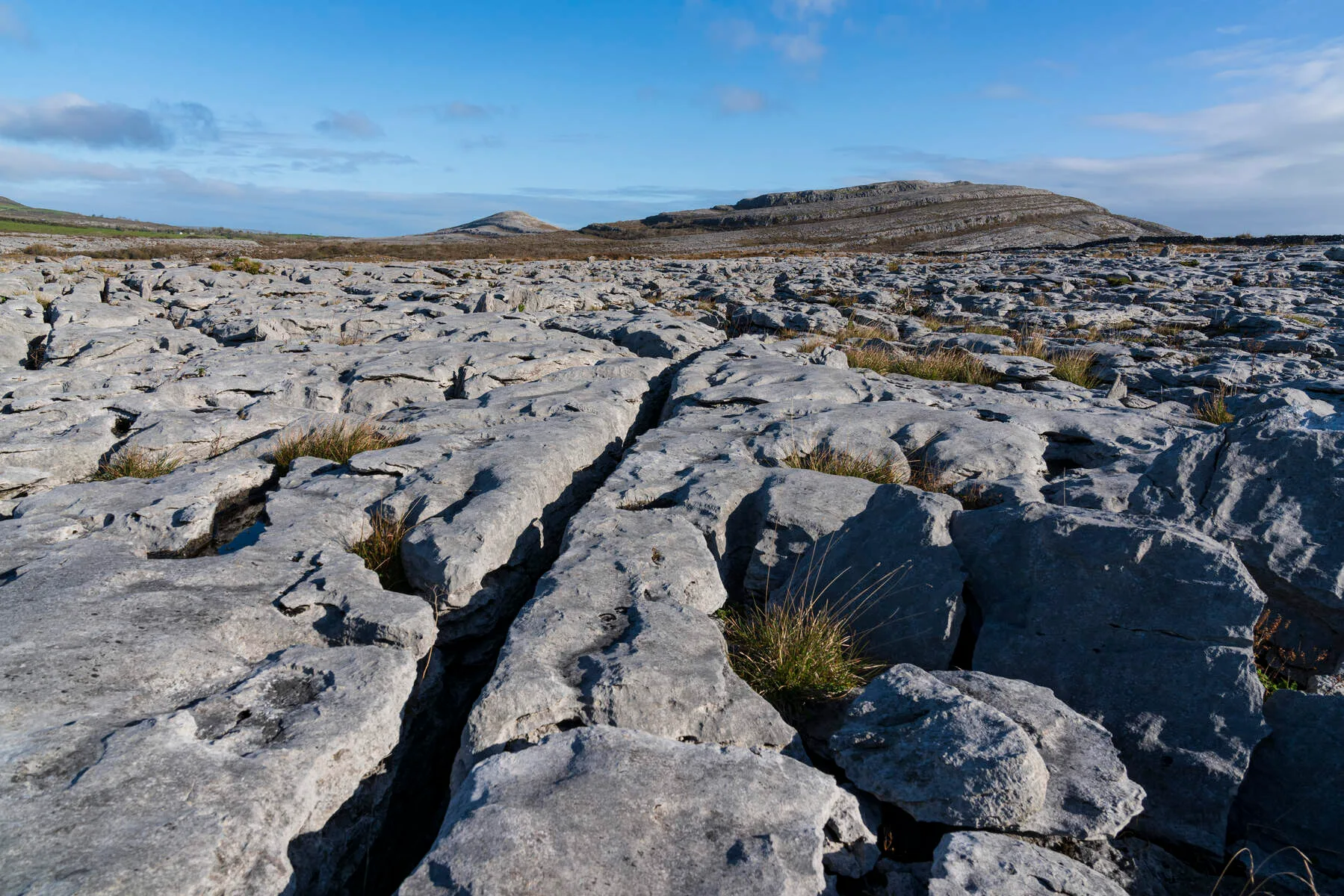
The grikes themselves are the reason. These fissures in the rock create protected microclimates: sheltered from grazing animals, insulated from frost by the thermal mass of the limestone, and surprisingly moist despite the rock's appearance. The Burren's mild Atlantic climate does the rest — warm enough for Mediterranean species, cool enough for Arctic ones. It's a botanical accident that happens nowhere else in the world at this scale, and burren in may is when these Burren limestone flowers are at their most visible.
What to Look For: Burren Wildflowers May Star Species
You don't need a Burren botany guide to enjoy the Burren in May. But knowing a few names helps — it gives you something to look for, and the looking slows you down in exactly the right way.
Spring gentian (Gentiana verna) is the one everyone comes to see. It blooms from late March through May, and in peak weeks, the limestone pavement turns blue with them. The flowers are a vivid, almost unreal cobalt— five petals, perfectly symmetrical, usually no more than 2 cm across. Look for them in short grass on the limestone and tucked into shallower grikes. Mullaghmore is outstanding for gentians, as is the ground around Black Head.
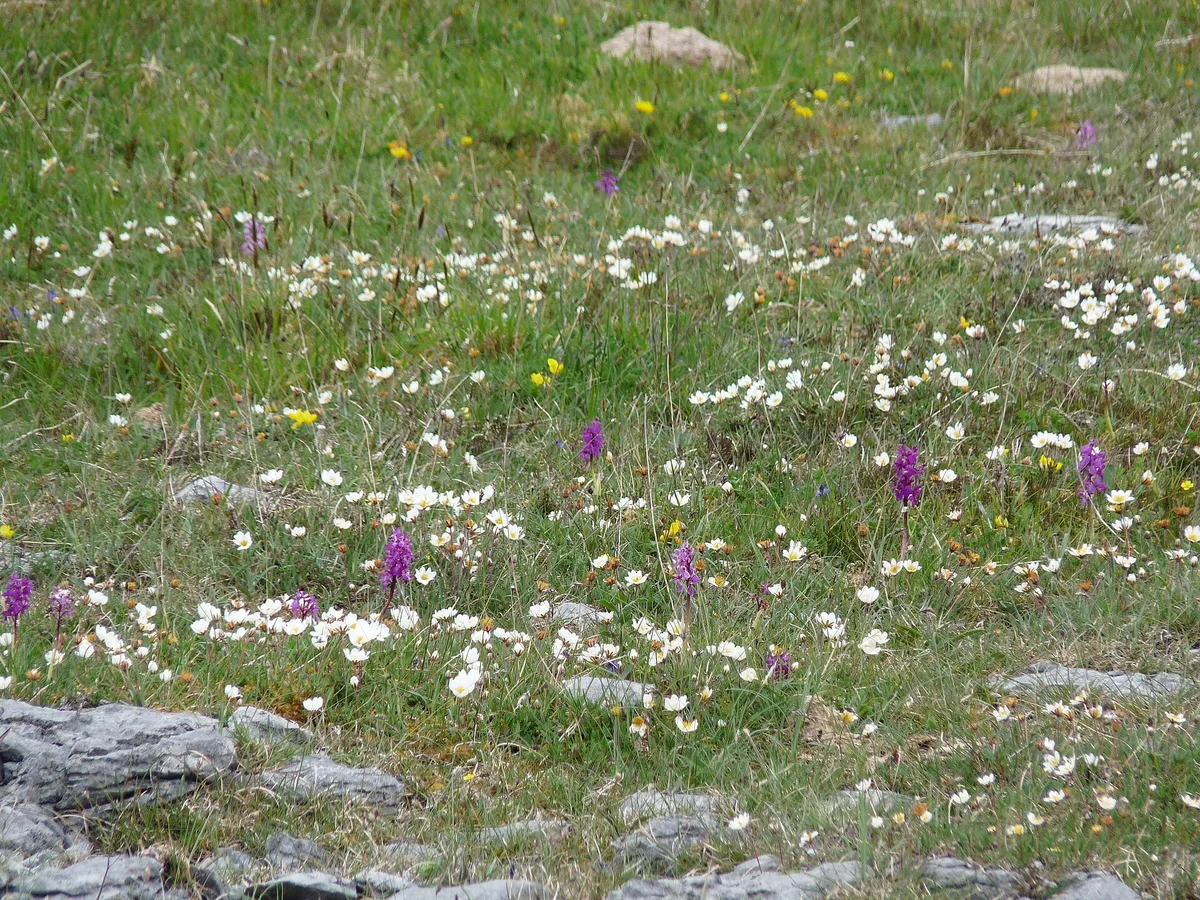
Mountain avens (Dryas octopetala) is the Burren's other signature plant — an eight-petalled white flower on a low, creeping stem. It's normally found above 800 meters in Scotland or on Scandinavian alpine meadows. Here it grows at sea level, sprawling over the limestone pavement in white mats that are among the finest May wildflowers in Ireland, at their peak in May and June.
Bloody cranesbill (Geranium sanguineum) comes later — June is its peak — but you'll start seeing the first deep magenta flowers of bloody cranesbill Burren in May, particularly along the coast and in sheltered grike systems. The name comes from the leaves, which turn red in autumn. The flower itself is a vivid, almost shocking pink-purple, and in favourable years it covers whole sections of the limestone.
The early purple orchid is precisely what it sounds like — Ireland's first orchid of the year, appearing in April and May in meadows and on grassy limestone banks. The Burren has several orchid species, but the early purple orchid is the one you'll most likely encounter on a May walk. Look for tall spikes of purple-red flowers on roadsides and in the green road margins.
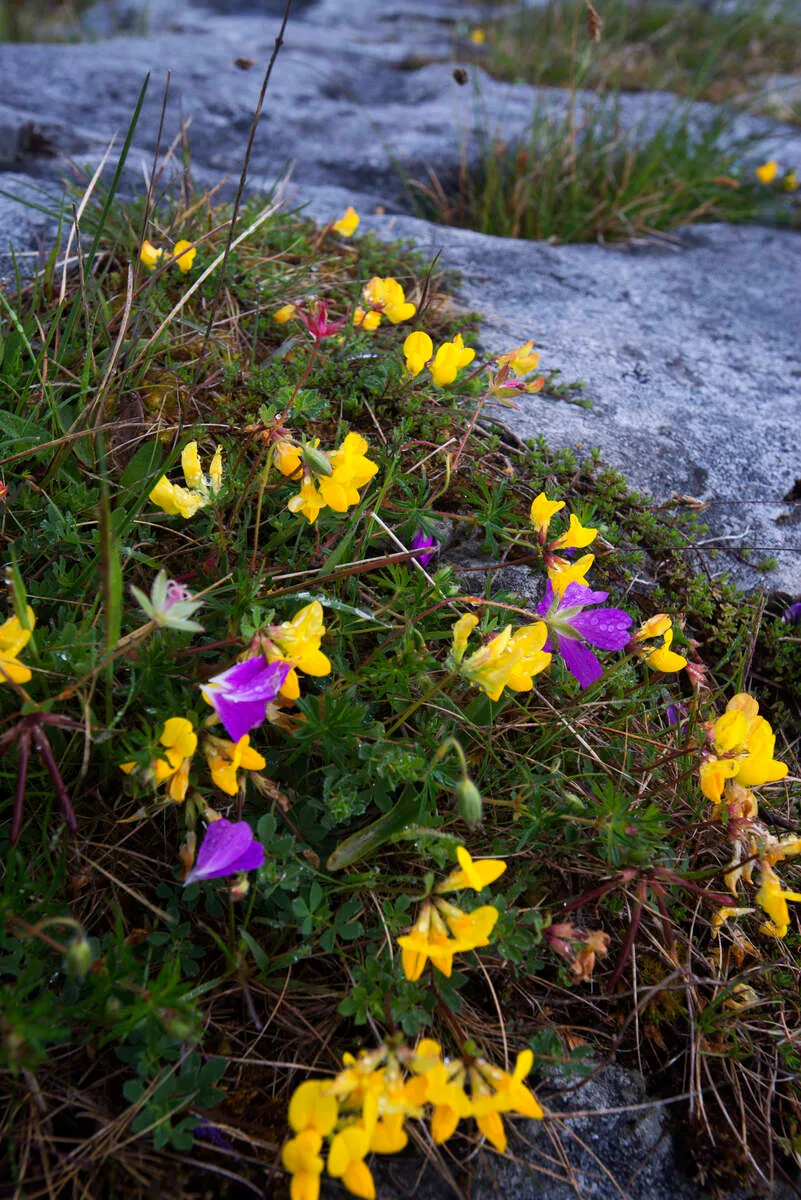
Hoary rock-rose (Helianthemum oelandicum) is a small yellow flower that carpets the bare rock in May, especially on south-facing limestone terraces. It's rare in Ireland outside the Burren. Shrubby cinquefoil (Potentilla fruticosa), a yellow-flowered shrub normally found in Scandinavia and the Rocky Mountains, grows in the Burren's rocky margins and flowers from May through July.
And don't forget to look into the grikes themselves. Maidenhair fern—one of the most delicate ferns in Europe—grows deep in the sheltered cracks, its fronds trembling even in a light breeze. It's a plant of Mediterranean gorges and Atlantic seacliffs, and finding it growing in a Burren grike at your feet is one of those small, quiet moments that stay with you.
The Best Walks for Burren Wildflowers May
Mullaghmore Loop — the wildflower showpiece
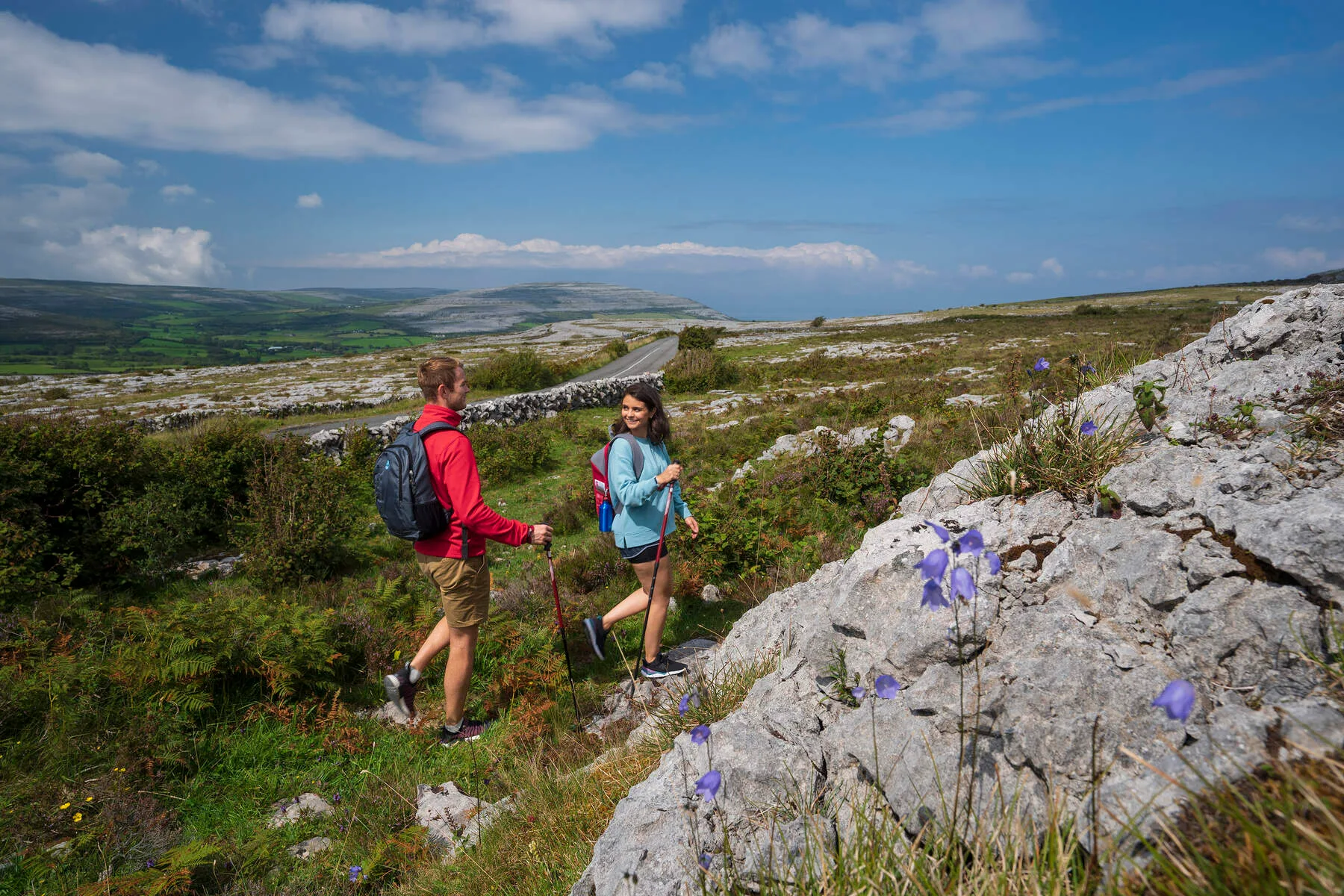
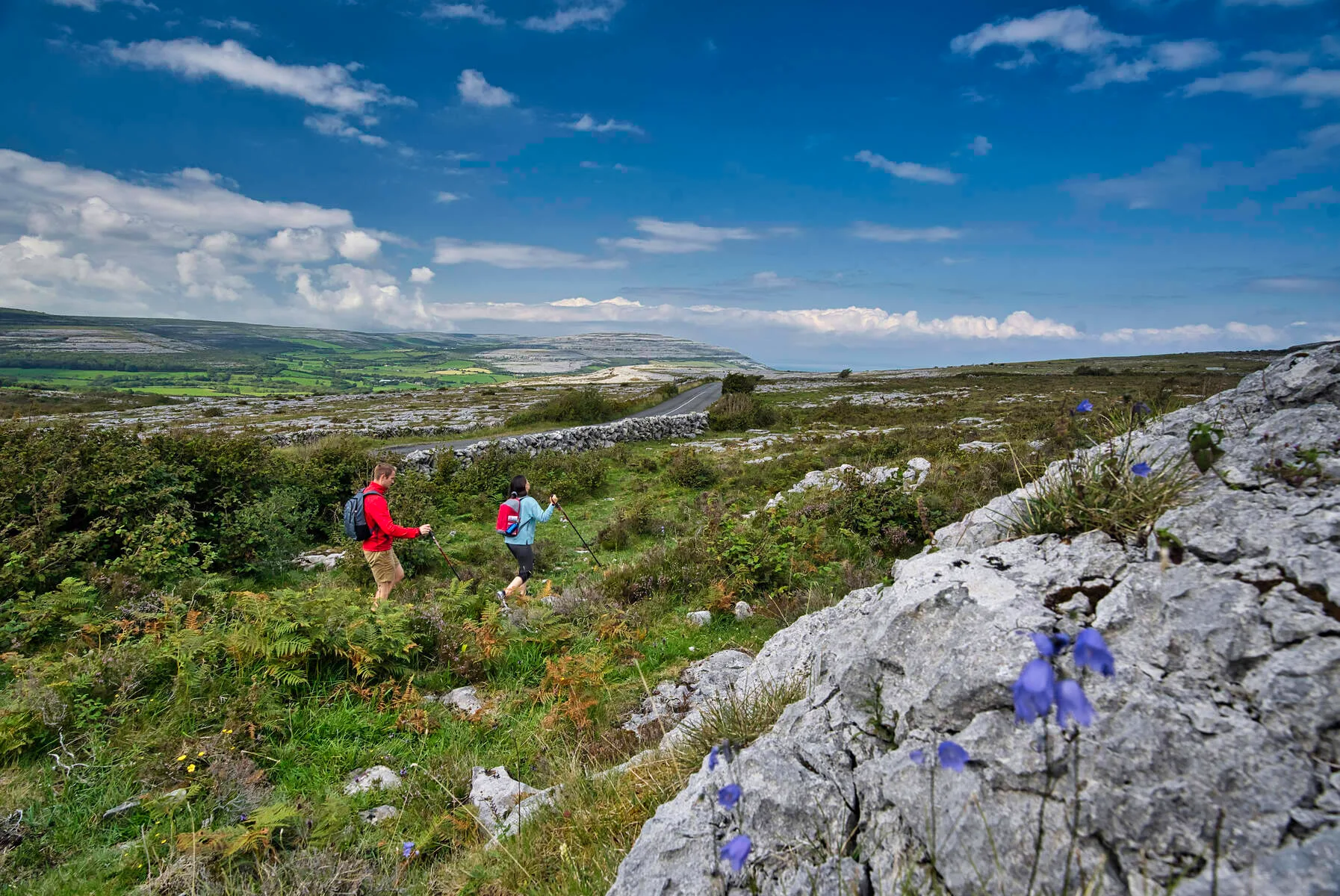
This 8-kilometer loop around the base of Mullaghmore Hill in the national park is the finest Burren flora walking route. The limestone pavement here is some of the most intact in the whole region — undisturbed, complex, and in May absolutely carpeted with gentians, mountain avens and early orchids. Give yourself three hours minimum, but plan for longer. You will stop constantly. The walk is moderate—uneven underfoot, so proper boots matter— but there are no serious climbs. Start at the Mullaghmore car park off the R476.
Caher Valley, Fanore — sheltered and lush
The Caher Valley runs inland from Fanore Beach on the Atlantic coast, sheltered between limestone hills on both sides. This valley is a different experience from the open plateau — greener, more enclosed, with a stream running through it and rich vegetation in the valley bottom. May here brings a different palette: wild garlic, hawthorn blossom, early purple orchids in the meadows, and bloody cranesbill beginning to appear on the valley slopes. The walk from Fanore inland and back is about 10 km and takes around three to four hours.
Black Head — coast meets limestone
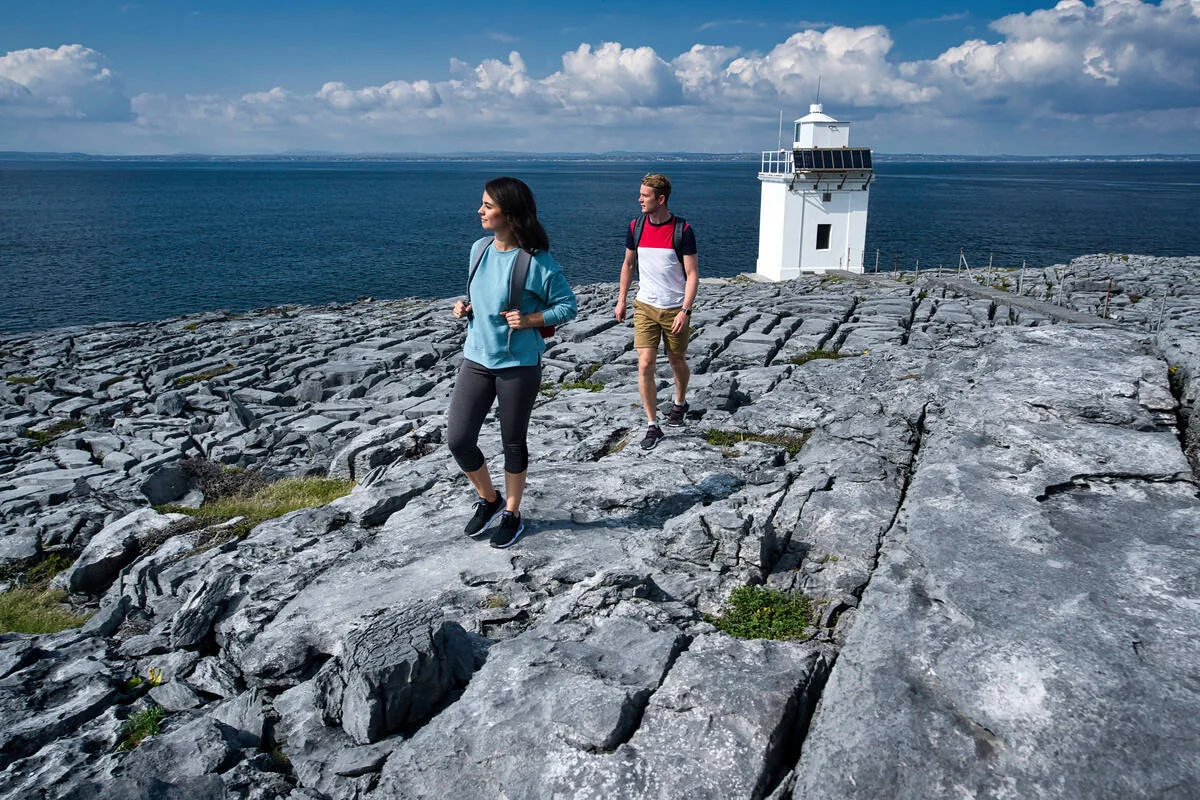
The loop walk around Black Head on the northwest tip of the Burren gives you the full combination: open Atlantic coastline on one side, terraced limestone rising on the other, and in May a concentration of spring gentians that's difficult to match anywhere. The walk follows the coast road beneath the cliffs, then climbs through the limestone terraces with wide views over Galway Bay and the Aran Islands. About 8–10 km depending on the route you take. This walk has extraordinary late-afternoon light, with the sea behind you and flowers underfoot.
The Green Roads — walk slowly and walk quietly
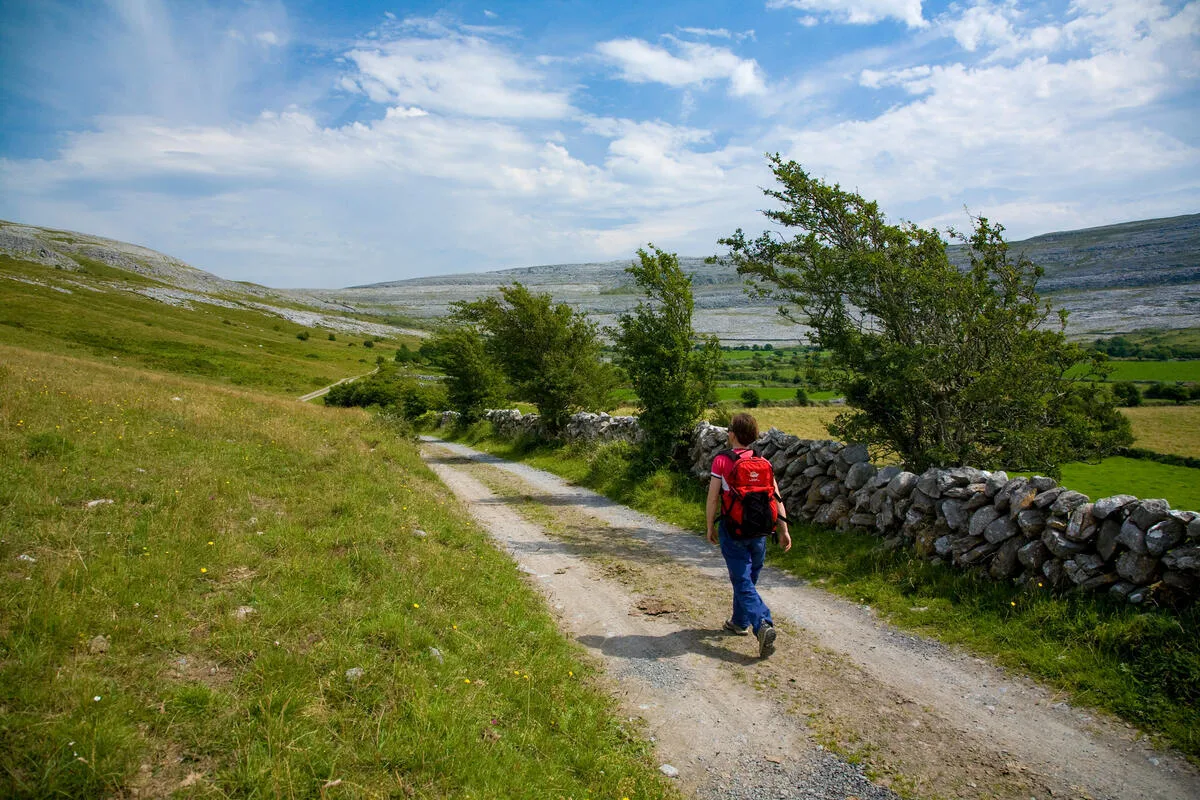
The ancient green roads that cross the Burren — old droving routes used to move cattle to summer pastures — are some of the best wildflower walking in the region, and they're far quieter than the marked trails. These grassy tracks thread through the interior limestone, passing ringforts and old field systems, with wildflowers in the verges and grikes on either side. There's no single loop to recommend; the best approach is to pick up a detailed map (the Burren 1:30,000 map is excellent) and wander. Give yourself a full day and no particular destination.
How to Walk the Burren Wildflower Season: A Burren Botany Guide
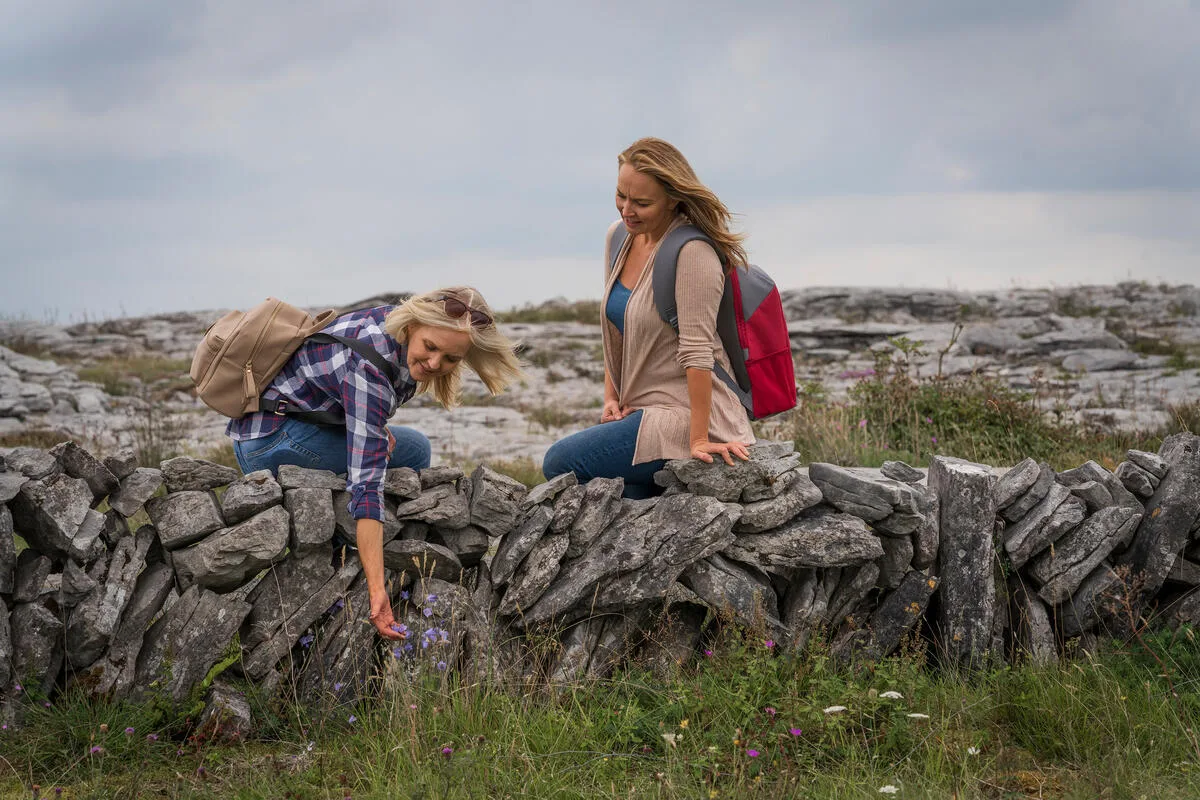
The most important thing is to slow down. Walking the Burren for wildflowers is not about covering distance — it's about looking carefully at small things. The spring gentian is easy to miss if you're walking at a normal pace; at a slower pace, you suddenly see them everywhere. Carry a small hand lens if you have one. Get down on your knees to look into the grates. Turn over a rock (gently, and put it back) to see what's sheltering underneath it.
Stick to paths and existing tracks where you can — the limestone pavement looks tough, but the wildflowers in the grikes are fragile. Walking on bare pavement is fine; walking through patches of vegetation causes damage that takes years to recover.
May mornings are the best time for May wildflowers Ireland. The light is soft, the trails are quiet, and the gentians open fully in sunshine — on overcast days, they close their petals. If you want photographs, plan your walk for mid-morning when the sun has warmed the ground but the tourists haven't yet arrived in numbers.
Practical Details for a May Walking Holiday
May is increasingly popular in the Burren, and accommodation fills up faster than it used to. Aim to book at least two to three months in advance, especially for weekends. Doolin, Ballyvaughan, and Kilfenora are the best bases — all within easy reach of the main wildflower walks and with good pubs and restaurants.
The weather in May is changeable — this is the west of Ireland, and an Atlantic front can arrive with little warning. Layers and a waterproof jacket are non-negotiable even on warm days. The Burren's limestone drains quickly, so the paths dry fast after rain, but the exposed plateau is cold in wind. Boots with ankle support matter on the uneven pavement.
Daylight is generous in May — you have it until after 9pm, which means long afternoon walks without any rush. It's worth building in one or two slow days with no fixed plan: just a map, sturdy boots, and the willingness to stop whenever something catches your eye.
Walking the Burren in May with Walking Holiday Ireland
We time our Burren walking holidays to make the most of the wildflower season. May departures are our most popular of the year — and once you've walked the limestone in full bloom, it's easy to understand why. We handle the logistics: handpicked accommodation in guesthouses where the owners know the landscape, daily luggage transfers between bases, detailed route notes, and the kind of local knowledge that tells you where the gentians are thickest this particular week.
You bring the boots, curiosity, and a willingness to stop and look at small, beautiful things. The Burren does the rest.
Get in touch to plan your May Burren walking holiday — we'd love to help you find the best of the wildflower season.
Frequently Asked Questions
What wildflowers can I see in the Burren in May?
Why does the Burren have such unusual wildflowers?
Where is the best place to see wildflowers in the Burren?
Do I need any specialist knowledge to walk the Burren for wildflowers?
When is the best time to see wildflowers in the Burren?
What should I wear for walking in the Burren?
Photo Gallery






.jpg)