Waterproof Hiking Boots for Ireland: How to Choose the Right Pair
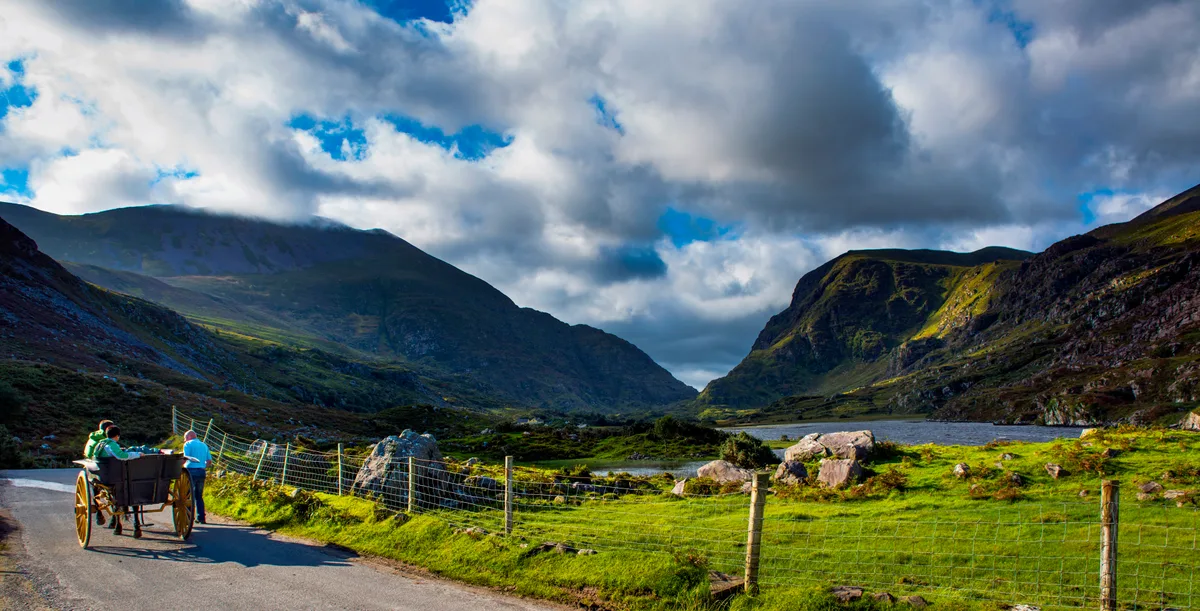
The rain came in flat off the Atlantic about twenty minutes out of Glenbeigh. I watched a guest in canvas trainers stop, wring her sock out against a fence post, and laugh — half amused, half regretting life choices. Ireland's ground is rarely dry for long, and a good pair of waterproof hiking boots is the quietest, most important piece of kit you'll pack. Get the boots right and the rest of the walk takes care of itself.
Below is what I've learned about choosing boots for Irish trails after 15 years of sending walkers off on the Kerry Way, the Dingle Way, the Causeway Coast and the Wicklow Way. Some of it is obvious. Some of it I wish someone had told me earlier.
Why waterproof hiking boots matter more in Ireland than almost anywhere else
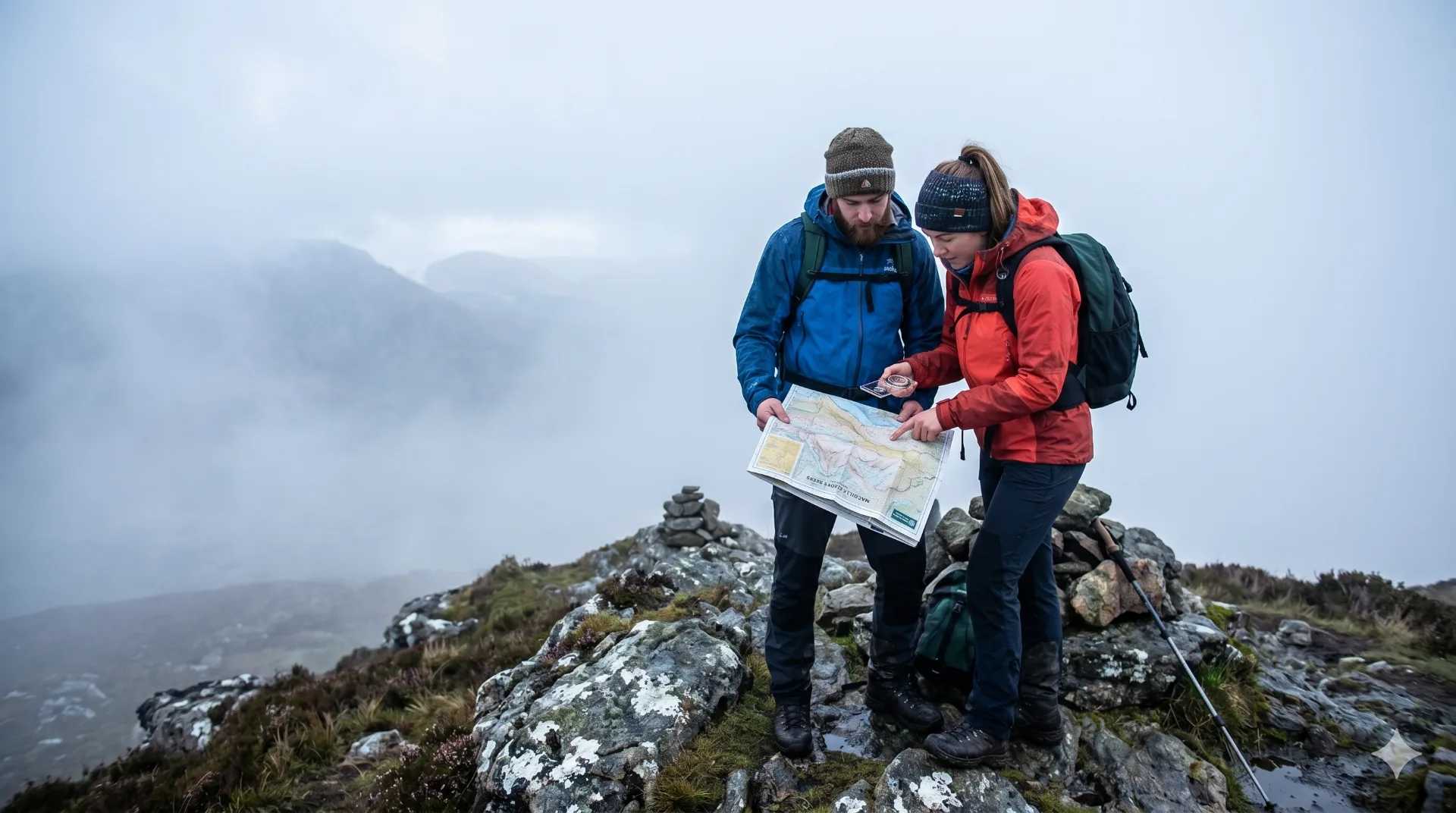
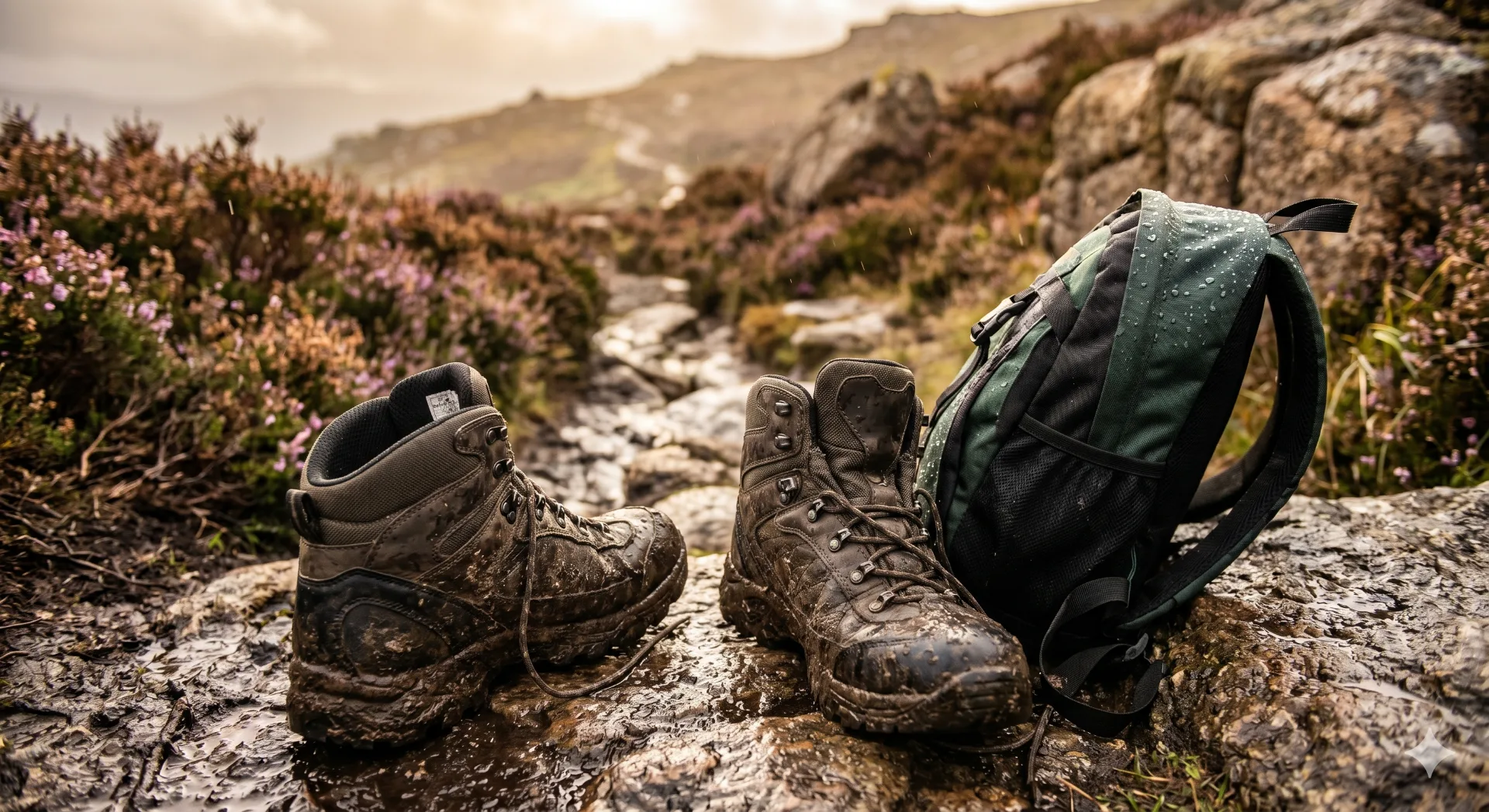
Ireland is a country of soft ground, sideways rain, and old stone walls you cross at the exact moment the sky opens. On the Kerry Way you'll cross blanket bog where water sits just under the heather. On the Dingle Way you'll hit wet sand, then a rocky lane, then a boggy farm track, all in one morning. On the Wicklow Way the boardwalk over Djouce can be streaming in October.
This is why waterproof hiking boots aren't a luxury here — they are the baseline. Not Gore-Tex-branded specifically, but a boot with a proven waterproof membrane and a properly sealed upper. A non-waterproof shoe will take on water in the first hour of most Irish walks, and once your feet are wet, everything that follows — comfort, pace, mood, blisters — gets harder.
I'm not saying you need €300 mountaineering boots. I'm saying the one corner you should not cut is waterproofing.
The six things to look for in a walking boot
When a guest emails asking what to buy, I send them this short list:
- Comfort — the boot has to feel right in the shop, not "break-in-able". If it hurts on day one, it will ruin day three.
- Durability — a rand, a proper rubber sole, and stitching that doesn't look decorative.
- Weight — lighter is better for multi-day walks, but don't go so light that you lose the sole stiffness.
- Stability — a boot that rolls less when you step sideways off a stone. Ankle support matters on uneven ground.
- Warmth — within reason. Ireland is rarely cold-cold, but wet feet cool you fast. A breathable lining helps.
- Water resistance — non-negotiable. Test it by running the outside under a tap before your first walk. If it beads, you're grand.
Hiking shoes (low-cut) are fine for gentle coastal paths and for day-walkers with strong ankles. For our standard self-guided tours across varied Irish terrain, proper boots almost always win out.
Low-cut, mid-cut, or high-cut — which to pick
Boot cuts come in three shapes, and your terrain decides which is right for you:
- Low-cut (approach / trail shoes) — light, flexible, good for well-graded trails and day walking. Fine for the Cliffs of Moher coastal walk, the Sheep's Head loop, or a towpath day. Not enough ankle support for a full Wicklow Way or Kerry Way.
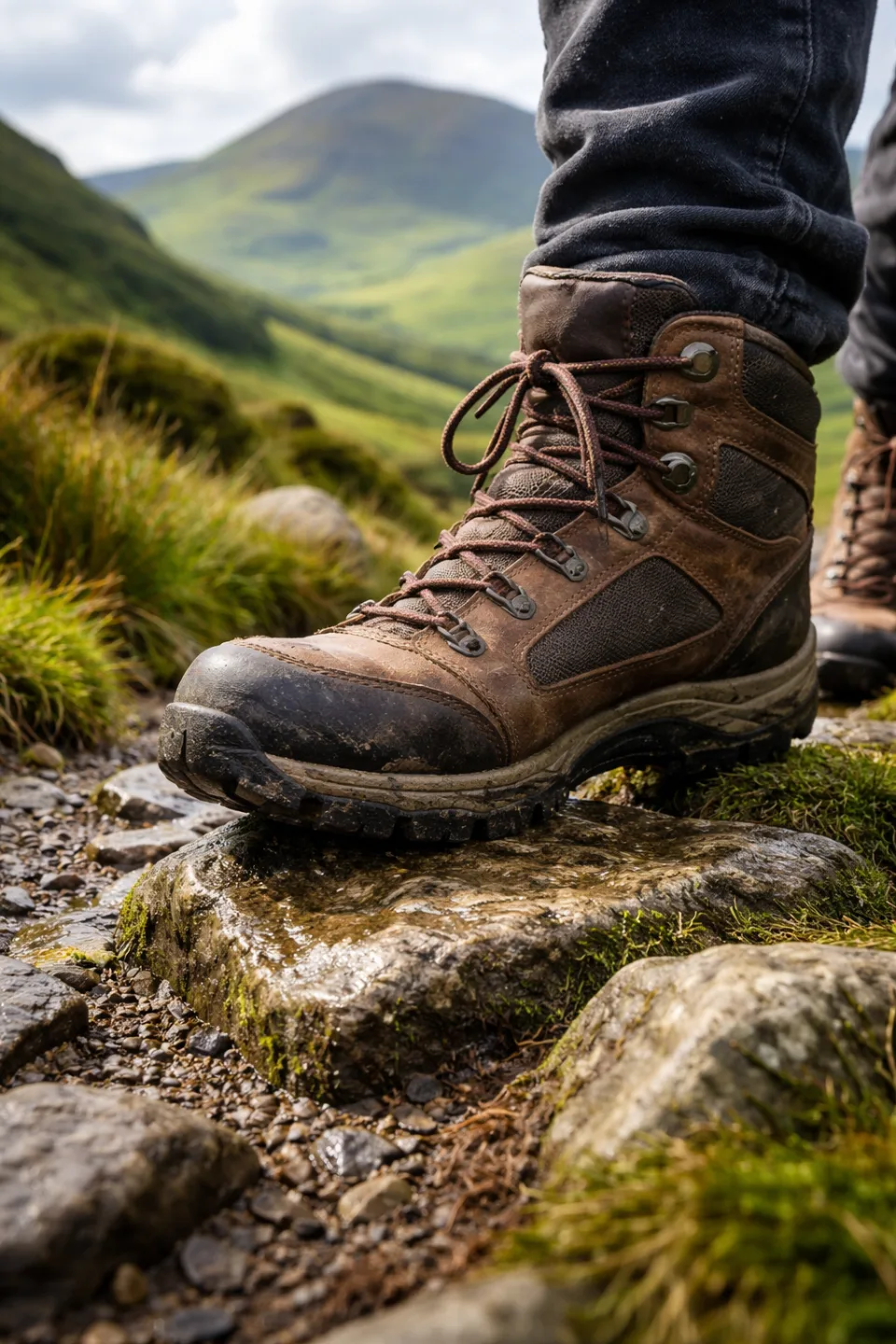
- Mid-cut (most walkers' sweet spot) — the ankle shaft sits above the ankle bone. This is what I recommend to about nine out of ten guests. It handles boggy tracks, stony lanes, and mountain cols on the Kerry Way, Dingle Way, Causeway Coast and Wicklow Way.
- High-cut (backpacking / mountaineering) — stiffer, heavier, built for loaded packs and serious ground. Overkill for Irish long-distance trails unless you're planning mountaineering in the Mournes or Kerry's MacGillycuddy's Reeks.
If you're not sure, go mid-cut. It's the one that leaves the least regret.
How to test the fit before you commit
Fit is the part almost everyone gets wrong. Here's the check I use in the shop, and the check I ask guests to do at home before their tour:
- Try boots on in the late afternoon — your feet swell through the day, and a boot that fits at 9am will pinch at 3pm.
- Wear the socks you'll actually walk in (more on socks below). Thin liner socks change the fit by half a size.
- Slide your foot forward so your toes touch the front. You should be able to fit an index finger behind your heel. Less than that, too short.
- Lace them up properly. Walk up a slope — a shop ramp or stairs work. If your toes bang the front on the downhill, go up a half size.
- Wiggle your toes. If they hit the front of the shoe, return them. If they move without lifting your heel when you walk, you're in the right pair.
The best pair of waterproof hiking boots in the world will hurt if the fit is wrong. Don't romanticise the brand name over the fit.
Ireland-specific terrain: what your boots are actually walking on
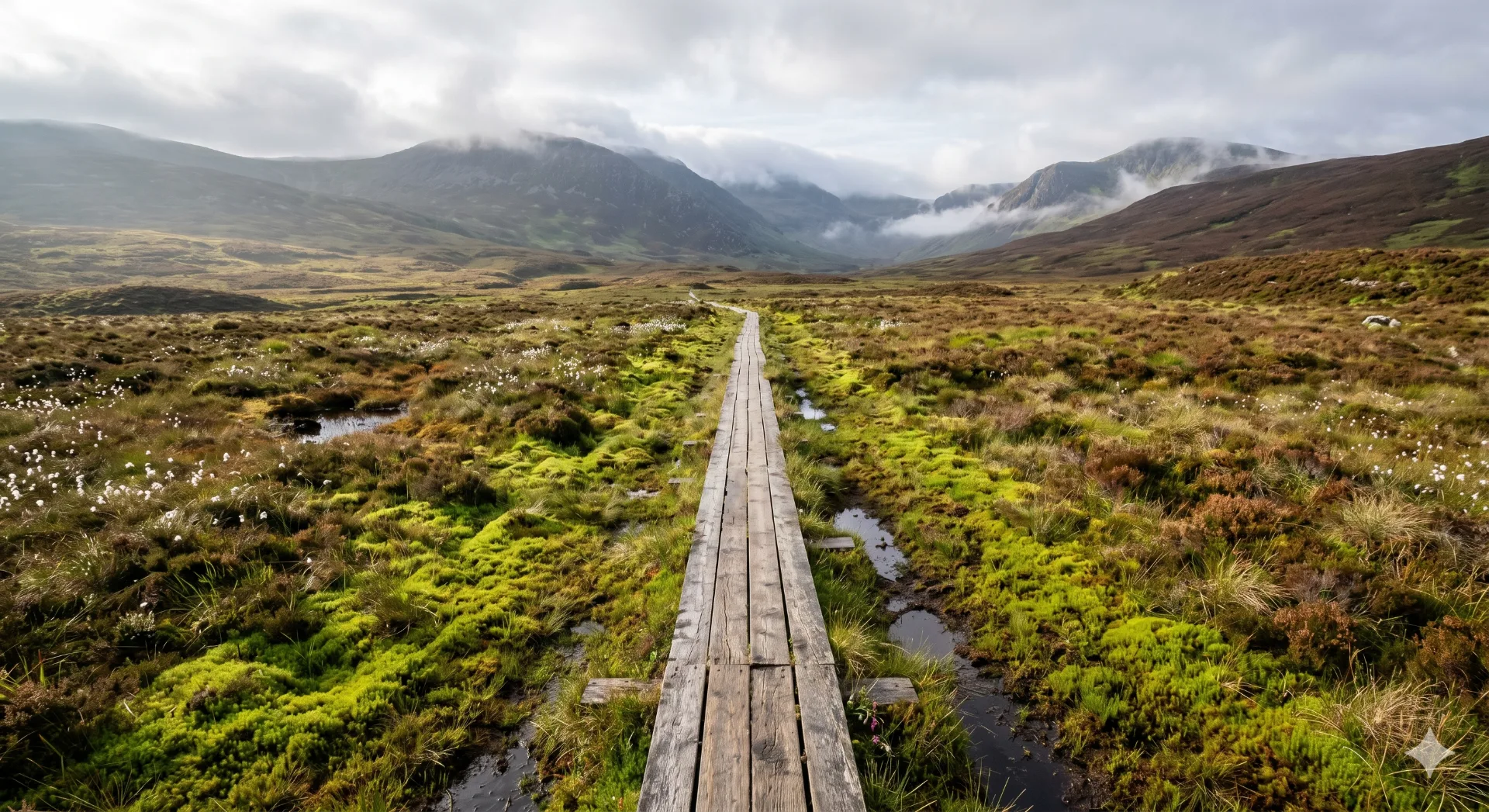
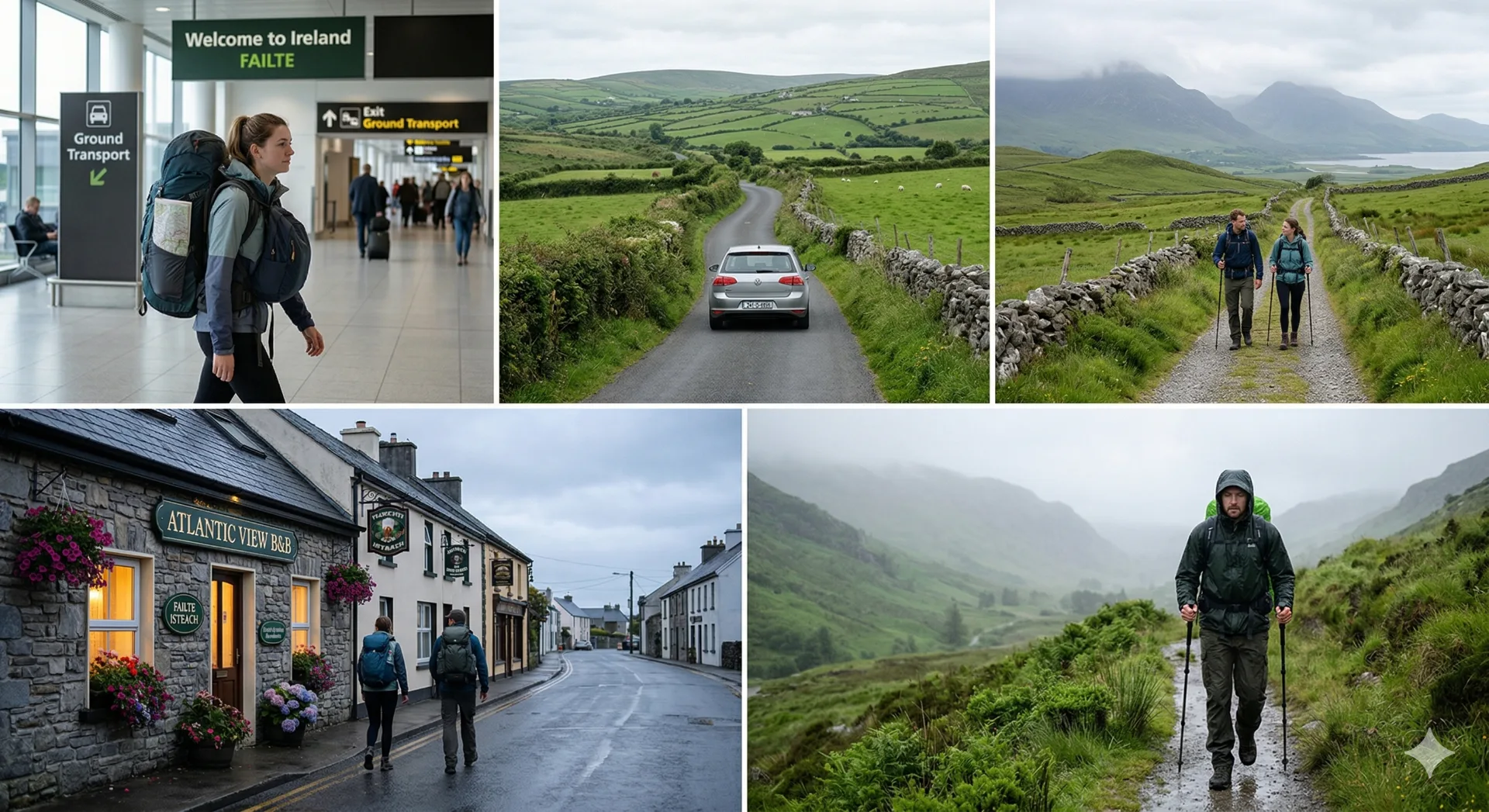
Irish trails are rarely "one surface for the whole day". On a typical stage you'll walk through several things, often in a single hour:
- Blanket bog — the ground feels like a damp mattress. You need a stiff enough sole that your foot doesn't flex sideways on every step. Gaiters help on saturated sections.
- Boardwalk — slippery when wet, especially sleepered timber. A boot with a soft, grippy rubber sole (think Vibram or similar) beats a harder lug.
- Stone lanes and field walls — limestone pavement in the Burren, rough boreens in West Cork. Your soles take a hammering here; soft rubber wears, hard rubber slips. Mid-density is the compromise most guests want.
- Mountain cols and scree — on the Dingle Way's climb over the Masatiompan saddle below Mount Brandon, or the Kerry Way between Glencar and Glenbeigh. A bit of ankle support earns its place here.
- Beach and wet sand — Inch Strand, Trá Mór, the approach to Dunquin. Sand finds every gap. Tighten your laces and keep your gaiters on.
This mixed picture is the reason I push mid-cut waterproof hiking boots for almost every Irish itinerary. They don't excel at any one surface, but they don't fail on any of them either.
Socks are half the answer
I've watched more foot problems come from bad socks than from bad boots. Proper walking socks do three things: they cushion, they wick sweat out (which keeps the inside of the boot drier), and they reduce friction at the pressure points. Merino wool blends are the standard for a reason — they stay warm damp, don't hold smell, and dry overnight on a B&B radiator.
A few specific habits that help:
- Bring two pairs for each walking day. Change at lunch if you can.
- Liner socks (a thin silk or synthetic layer worn under the main sock) drastically reduce hot-spots on longer days.
- Never wear cotton socks hiking. They hold water and grind your skin.
Breaking boots in before your walking holiday
Please, please do not wear new boots for the first time on day one of a walking tour. The cheapest way to ruin a holiday is to skip the break-in period.
Two or three weeks before you travel, start wearing your boots around the house for an hour. Progress to short local walks — an hour, then two hours, then a half-day. Wear the socks you'll travel with. Carry a small daypack with some weight in it. Modern walking boots are softer out of the box than the leather clompers of twenty years ago, but they still mould to your foot, and it's better to find any pinch-point at home than on the Kerry Way.
Care and maintenance — keeping the waterproofing honest
Waterproofing is not a one-time state. The outer DWR (durable water repellent) treatment wears off with use, and when it does, the upper wets-out and the boot feels heavy and cold, even though the inner membrane is still working. Re-proof every 20–30 walking days, or once a year for casual walkers.
- Rinse mud off with a soft brush and water. Don't machine-wash boots.
- Dry at room temperature. Never in front of a radiator or open fire — high heat destroys adhesives.
- Stuff them loosely with newspaper to draw moisture out after a wet day.
- Re-proof with a wash-in treatment like Nikwax Fabric & Leather Proof, following the instructions on the bottle.
- Check the soles once a season. When the lugs are worn flat, your grip is gone — resole or replace.
Boots that are looked after will last three or four seasons of Irish walking. Neglected, they're done inside a year.
Hot, dry, cold, wet — one-boot decisions for mixed climates
A question I get often: can one pair of boots cover both Ireland and a hotter, drier destination like Spain or Portugal? In practice, yes, for most walkers. A mid-weight breathable waterproof boot is fine in both climates — the membrane breathes well enough in heat, and the weight penalty is small. Hardcore desert walkers will want vented low-cut shoes instead, but for a general walking wardrobe, one good mid-cut pair is the right answer.
Ready to test your boots on the real thing?
Walk Ireland's best-known trails with everything booked for you
Once your waterproof hiking boots are broken in, all that's left is picking a route. We handle accommodation, daily luggage transfers, route notes, and a phone line to our office if anything goes sideways. You carry a daypack; we carry the rest.
View Kerry Way self-guided tours
Frequently asked questions
Do I really need waterproof hiking boots for Ireland in summer?
Yes. Irish summer weather is genuinely unpredictable — a forecast that says "sunny intervals" can deliver three rain showers and a wet bog crossing in an afternoon. A proper waterproof boot is the single piece of kit I would not compromise on, any month of the year.
Are Gore-Tex boots worth the extra money?
Gore-Tex is one proven membrane technology among several. Own-brand alternatives from Decathlon, Keen and Merrell now perform nearly as well and cost less. What matters is that the boot has a bonded waterproof membrane — not the brand on the tag. Look for "waterproof" or "W/P" in the product description, not just "water resistant".
How long does a pair of walking boots last?
With care, three to four seasons of regular Irish walking — roughly 800–1,200 km. You'll lose the DWR outer coating first (re-treatable), then the sole lugs will wear flat. Cracking at the flex points on the upper is usually the signal to replace rather than repair.
Can I bring hiking shoes instead of boots to Ireland?
You can, and some day-walkers do, but I don't recommend it for multi-day self-guided tours. The ankle support and the higher waterproof cuff genuinely earn their place on Irish trails. Shoes are for gravel towpath days and dry forest tracks — not for the Kerry Way in April.
How do I stop blisters if the boots are new?
Three things, in order: break them in at home first, wear proper walking socks (wool-blend, not cotton), and carry blister plasters in a ziplock in your daypack. Hotspots that you feel on a walk should be taped immediately — don't wait for them to become blisters.
Once you've sorted out the boot, the next question is what works on which trail. See our companion post — Footwear for Irish Walking Holidays: A Route-by-Route Guide — for trail-by-trail notes on the Kerry Way, Wicklow Way, Dingle Way, Causeway Coast and Sheep's Head Way.
Stay safe and see you on the trail.
— Cliff
Photo Gallery