How to Train for Hiking: A 12-Week Plan for Ireland
A 12-week training plan for an Irish long-distance walking holiday, written for walkers who want to enjoy the week rather than survive it.
My name is Cliff — I run Walking Holiday Ireland, and every spring I hear the same worry in my inbox: "I want to book the Kerry Way but I'm not sure I'm fit enough." Here is the good news: most of our guests are not athletes. They're people in their fifties, sixties and seventies who've decided to spend a week walking in Ireland. They finish strong because they give themselves three honest months to prepare. If you're wondering how to train for hiking a long-distance trail like the Kerry Way, Dingle Way or Wicklow Way, this is the plan we share with guests.
The short version of how to train for hiking a multi-day Irish trail: walk more, walk further, walk on hills, and put on your full pack once a week. Twelve weeks of that and you're ready.
Why Irish trails are different
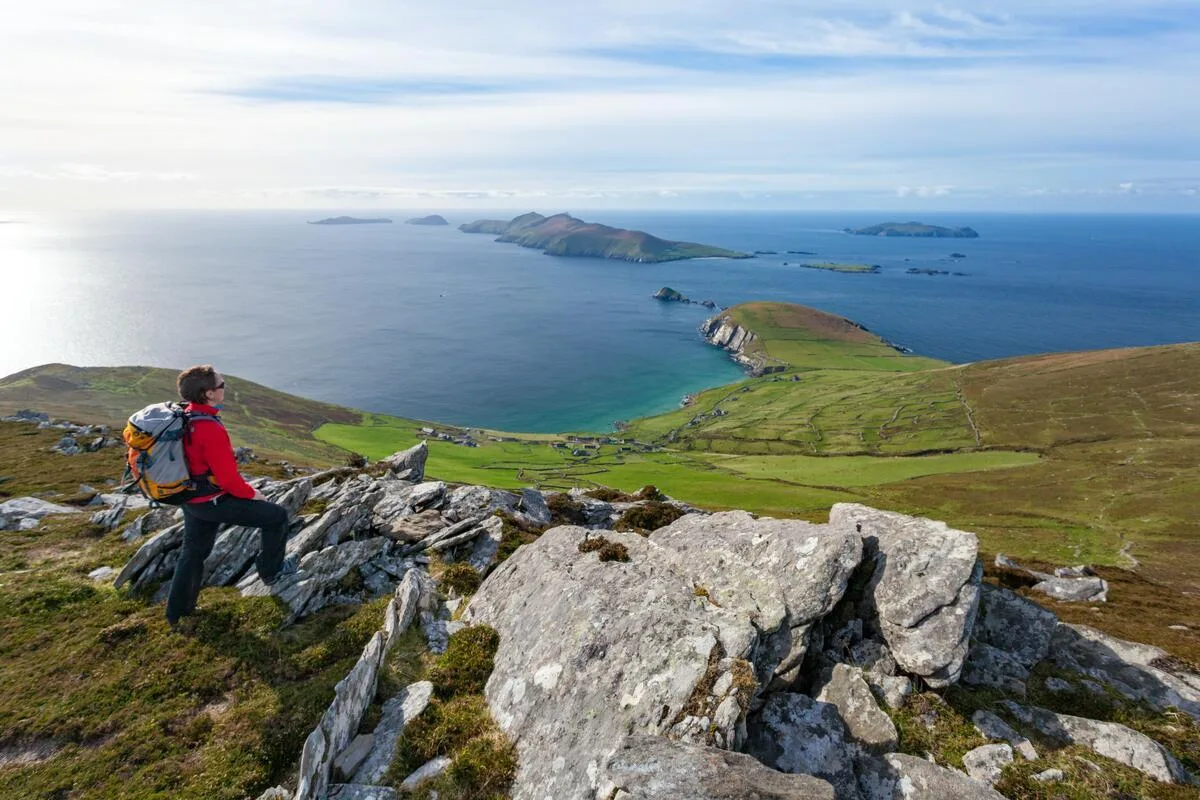
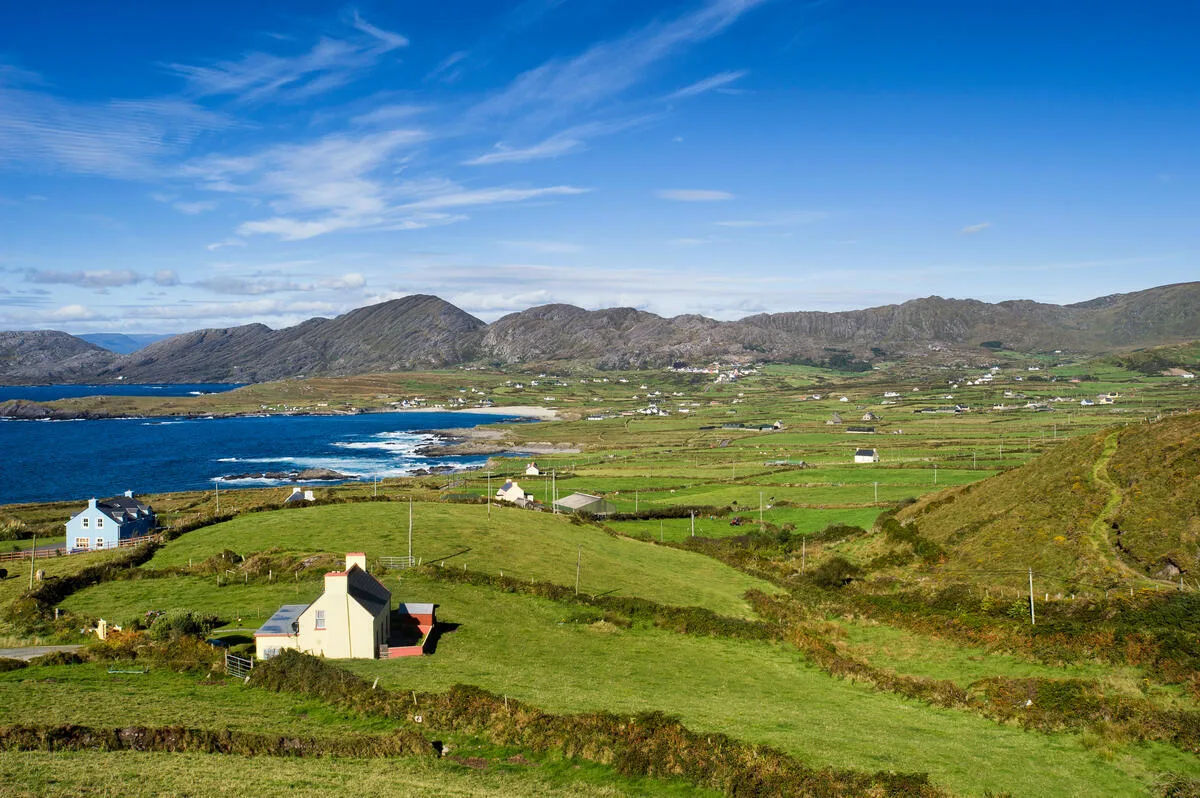
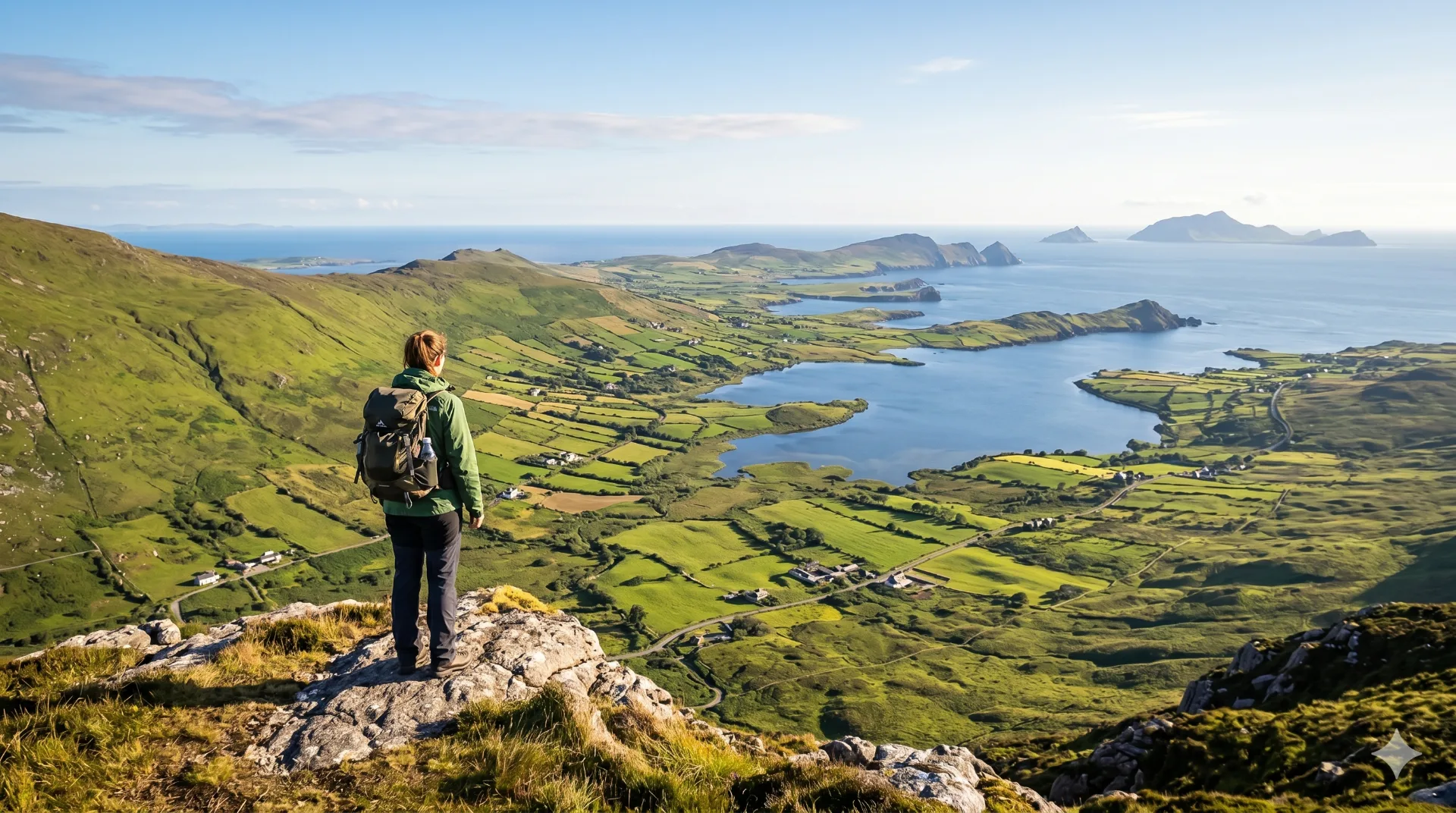
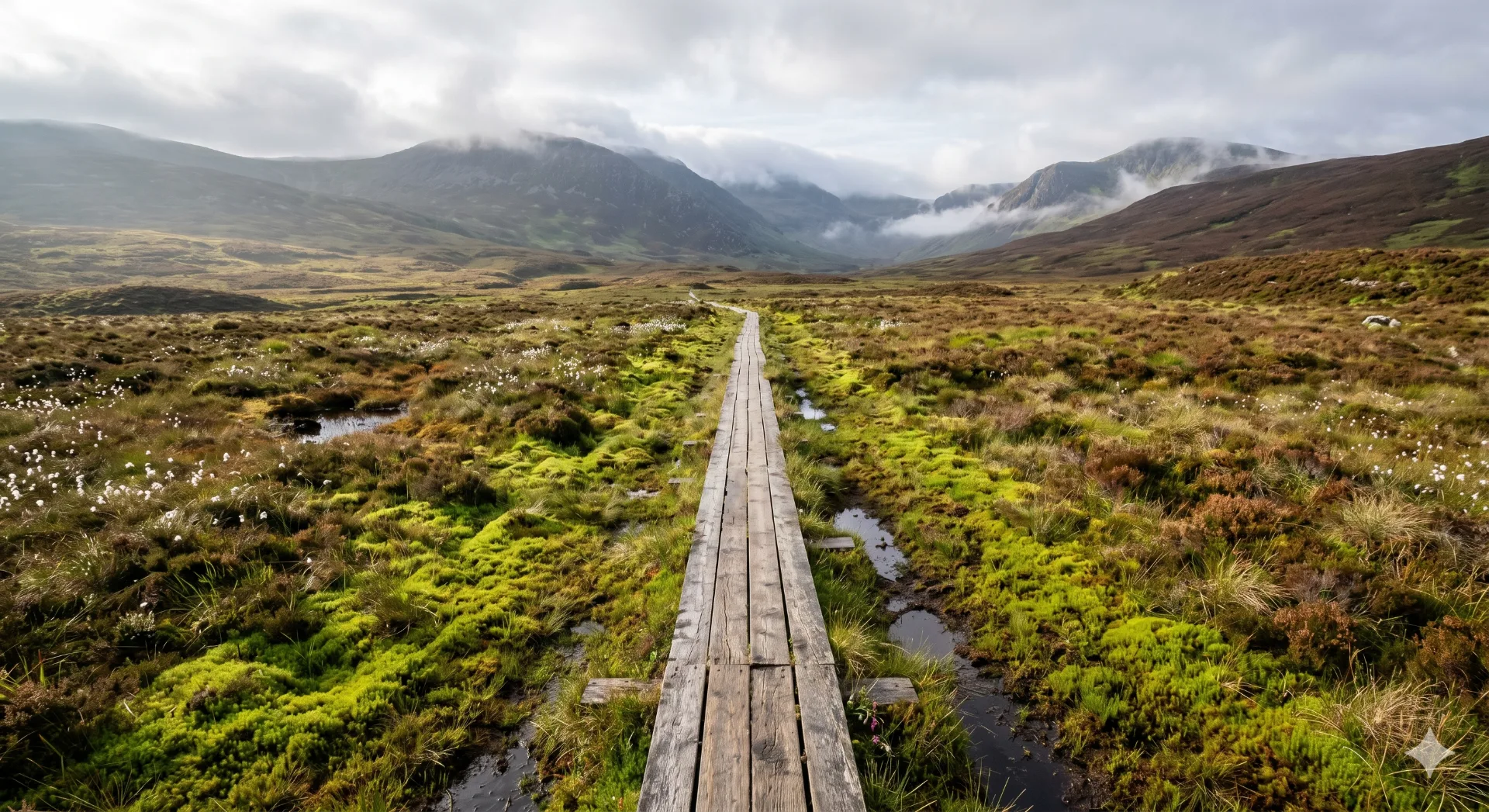
If you're thinking about how to train for hiking in Ireland specifically, it helps to know what you're preparing for. Our trails average 20–25 km a day with 400–700 m of ascent. Nothing alpine, but the surface varies from forest track to bog boardwalk to wet rocky path. Weather is changeable. You'll be on your feet for six to eight hours. You'll repeat that for five or six consecutive days. It's the repetition that catches underprepared walkers out — day one is fine for everyone; day four is where poor preparation shows up as sore knees, blisters, and an early finish.
Where is your fitness today?
A useful honest baseline. Can you walk briskly for an hour on flat ground without breathing hard? Can you climb three flights of stairs at a normal pace without needing to stop? Can you walk 10 km on a weekend without aching the next day? If you answer yes to all three, you have a reasonable starting point and twelve weeks is plenty. If you answer no, give yourself sixteen weeks and start with shorter sessions.
If you walk regularly already — say, 5 km three times a week — the training is simply about adding distance, hills and a weighted pack to what you do now.
The 12-week training plan
Here's how to train for hiking a long-distance Irish trail on a realistic weekly rhythm. This is the plan we recommend as a baseline. Adjust to fit your week. The principle: three walking sessions and one strength session per week, with a longer walk at the weekend.
Weeks 1–4 — Foundation: three walks of 5–8 km on flat or gently rolling ground, one weekend walk of 10–12 km. One strength session (see below). Build the habit; don't push the pace.
Weeks 5–8 — Hills and distance: keep the midweek walks at 6–8 km but add hills — any hill you can find, repeated up and down. Weekend walk grows to 15–18 km with 300 m of ascent. Start carrying a 5 kg pack on the weekend walk.
Weeks 9–11 — Specificity: now you train for the holiday. One midweek walk at pace (7 km in an hour on flat ground). One hill session (two hours with a 7 kg pack, at least 400 m of climbing). Weekend walk of 20–22 km with 500 m of ascent, full pack. Back-to-back weekend walks in week 10 — a 20 km Saturday followed by a 15 km Sunday. This is the session that tells you you're ready.
Week 12 — Taper: two short, easy walks. Rest. Do nothing heavy in the last three days before you fly.
Hills, steps and the single most important session
If you only do one thing beyond regular walking, do hill repeats. Find a hill that takes ten minutes to climb at a steady pace. Walk up, walk down, walk up again. Repeat for an hour. Do this once a week from week five onwards. Nothing else builds the leg strength and cardiovascular base for Irish hill days as efficiently. Stadium steps work too. So does a treadmill on a 12% incline if you live somewhere flat.
This is the heart of how to train for hiking Irish long-distance trails. Almost every person who emails us mid-trip saying the trip was easier than they expected has done hill repeats consistently.
Walking with the pack
On most of our self-guided tours your main bag is moved each day. You walk with a day pack — typically 5–7 kg with water, waterproofs, lunch and a warm layer. It doesn't sound like much, but on a six-hour day it changes how your shoulders, hips and feet feel. Train with the pack from week five. Start at 3 kg and build up. Practise drinking while walking, pulling the waterproof out without stopping, adjusting straps on the move. These small skills save time and energy in Ireland.
Strength work that actually helps
You don't need a gym. Twenty minutes once a week covers it. The exercises that matter for walkers:
Step-ups onto a bench or sturdy chair, 3 sets of 15 each leg. Builds the quadriceps and glutes that climb hills.
Lunges, 3 sets of 10 each leg. Single-leg strength — important for uneven ground.
Calf raises, 3 sets of 20. Calves take a beating on descents.
Plank, 3 sets of 30–60 seconds. Core stability for rougher ground.
Bird-dog (on all fours, opposite arm and leg extended), 3 sets of 10 each side. Back and hip stability under a pack.
None of these are sexy. They work. Do them on a rest day, not the day before a long walk.
Feet, boots and the slow break-in
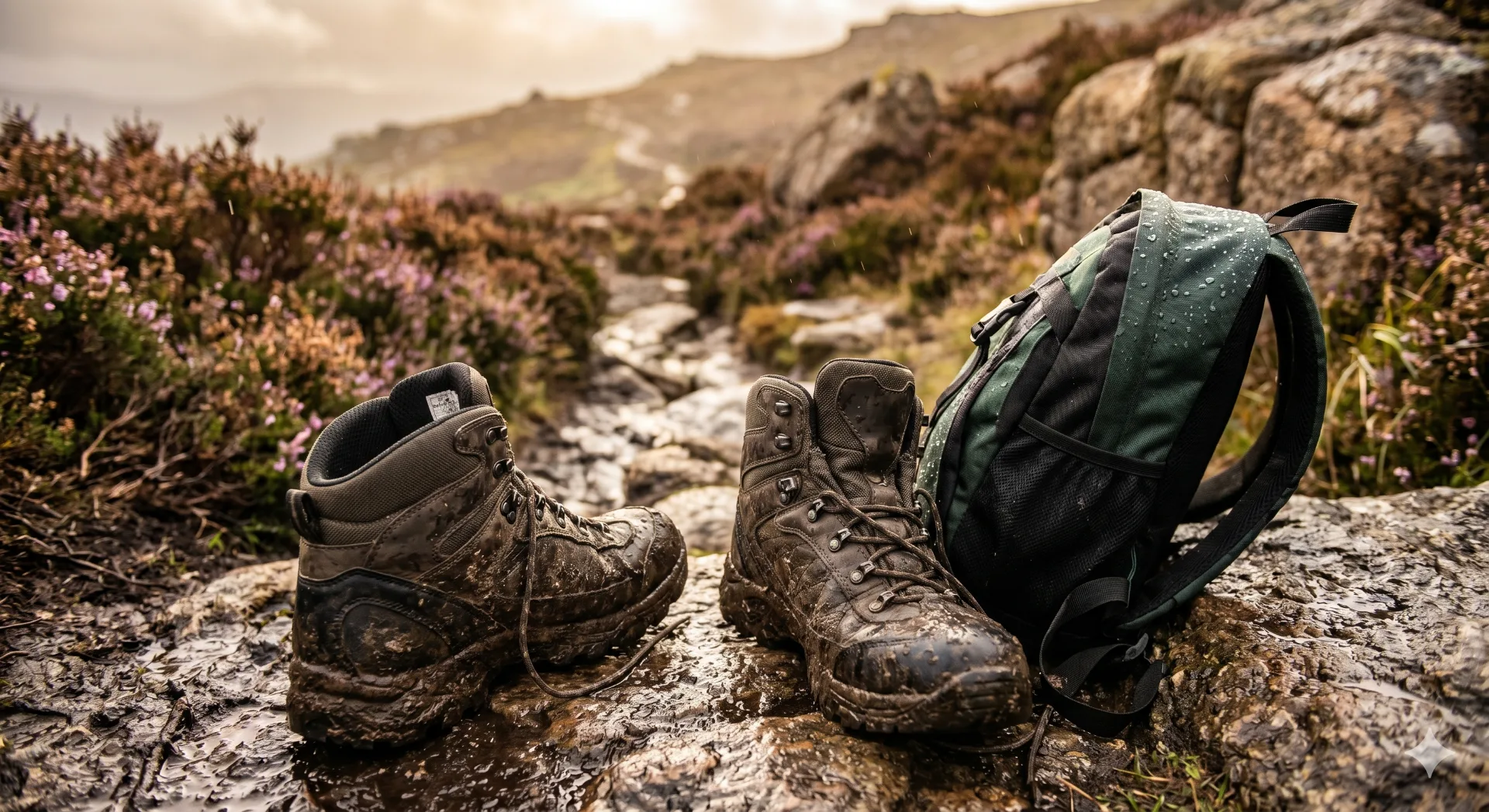
Any plan for how to train for hiking a long-distance route has to include your boots. New boots need at least 50 km of wear before they're trustworthy on a multi-day trail. Wear them for short walks from week one. Upgrade to the full pack and hill session in weeks five to eight. If you bought new boots in month three, you are asking for trouble — either buy earlier or take your current pair.
Blister prevention during training teaches you what works for you: double-layer socks, a lighter sock under a thicker one, a little anti-chafe balm on sensitive spots, or zinc oxide tape pre-applied to known hot-spots. You don't want to be experimenting with any of this on day one in Ireland.
Eating and drinking on long days
Learning how to train for hiking includes learning how to eat and drink across a long day. Use the long training walks to rehearse fuelling. Two litres of water is usually right for a six-hour Irish day; in hot dry weather, three. Food: small, regular snacks beat one big sandwich. A banana and a handful of almonds at the first stop. A B&B packed lunch around noon. Something sweet every 90 minutes after that. If you're walking more than 25 km, add a salty snack — crisps, salted nuts, or an electrolyte tablet in the second water bottle. Practise all of this at home so nothing surprises your stomach on holiday.
The last two weeks
The final piece of how to train for hiking well is knowing when to stop. Resist the urge to cram. A "big walk" in the final week does nothing useful and can leave you arriving tired. Two weeks out is your last long training day. After that, keep moving but ease off. Short walks, some stretching, early nights. Arrive rested.
Ready for an Irish long-distance trail?
The Kerry Way, Dingle Way and Wicklow Way are our three most popular routes — all suited to walkers who've done this training. Hand-picked B&Bs, bags moved each day, route notes and a 24/7 number on the trail.
FAQs about how to train for hiking in Ireland
How fit do I need to be to walk the Kerry Way?
Fit enough to walk 20–25 km a day with 400–600 m of ascent, five days in a row. That is a real fitness demand, but twelve weeks of progressive training from a reasonable starting base gets most people there. If you can walk 18–20 km comfortably on the last weekend before your holiday, you're ready.
Is 12 weeks really enough to train for a long-distance walk?
For a reasonably active person, yes. If you currently do little exercise, give yourself 16 weeks and build the foundation more gradually. The biggest mistake we see is people who train for eight weeks with very little progression, then wonder why day four is hard.
Do I need to do anything other than walking to train for hiking?
Walking is the main event. But one 20-minute strength session a week — step-ups, lunges, calf raises, plank — materially reduces sore knees and tired legs on back-to-back days. It takes less time than people expect.
Should I train on the same type of ground I'll walk on?
If you can, yes. Trails, paths, grass and rough ground are kinder training surfaces than pavement, and they prepare your ankles for uneven Irish paths. If you live in a city, a local park with trails is fine. A treadmill at an incline is acceptable but not ideal on its own.
How much weight should I carry during training?
Start with 3 kg, build up to 7 kg by week nine. That's the typical day-pack weight on our self-guided tours. There's no benefit to training with 15 kg — you'll never carry that on holiday because we move the main bag for you.
Photo Gallery