50 Fun Facts About Ireland: History, Nature & Culture
After years of guiding walkers across Ireland's bogs, mountains and coastal paths, you start to notice fun facts about Ireland that don't make it into the guidebooks. These interesting facts about Ireland reveal themselves slowly – the way a limestone pavement in the Burren glows warm in late afternoon light, even in October. The strange silence on the upper slopes of Carrauntoohil just before the cloud drops. The fact that the sheep outnumber you by about six to one, and they know it.
Ireland is a small island that has somehow packed in an extraordinary amount of history, ecology, legend and sheer peculiarity. These are 50 fun facts about Ireland – bits of Ireland trivia and history that we find ourselves sharing on the trail or over a bowl of soup in a farmhouse kitchen when the rain has set in for the afternoon.
Ireland: quick facts at a glance
| Capital | Dublin |
| Population | ~5.1 million (Republic); ~7.2 million whole island |
| Size | 84,421 km² (whole island) |
| Languages | Irish (Gaeilge) and English |
| Currency | Euro (€) in Republic; pound sterling (£) in Northern Ireland |
| Highest point | Carrauntoohil, 1,041m |
| Longest river | River Shannon, 360km |
| National symbol | The harp |
Ireland geography trivia: Irish landscape facts
1. Ireland is Europe's third-largest island — after Great Britain and Iceland. It's modest in size (about 480 km from north to south) but packs in more landscape variety per square kilometre than almost anywhere in Europe — a piece of Ireland geography trivia that surprises many visitors.
2. The coastline stretches for approximately 2,500km — roughly the same as the coastline of France, despite being a fraction of the size. That's a lot of sea cliffs, hidden beaches and rocky headlands to explore on foot.
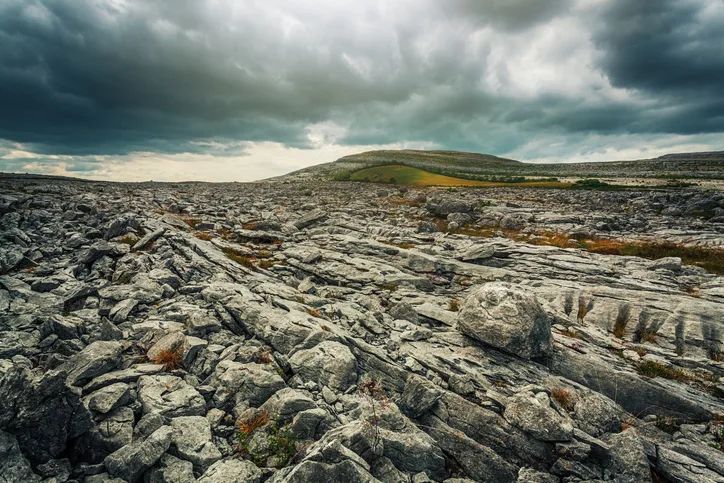
3. The Burren in County Clare is one of the largest karst landscapes in Europe. About 250 square kilometres of exposed limestone pavement, formed 350 million years ago under a tropical sea. Among the most unusual facts about Ireland: Mediterranean plants — spring gentians, mountain avens, and bloody cranesbill — grow here at 53° north because the limestone absorbs heat and releases it slowly through the winter. Walking across it in May, you'll find orchids growing in the cracks between the rocks. The Burren Way takes you across this extraordinary landscape on foot.
4. The Wicklow Mountains, just south of Dublin, form the largest continuous upland area in Ireland — about 500 square kilometres of blanket bog, granite peaks and glacial valleys. On a clear day from the summit of Lugnaquilla (925m), you can see all four provinces. We sometimes forget how wild this is, so close to a capital city.
5. Carrauntoohil stands at 1,041m and is the highest point on the island of Ireland. It sits in the MacGillycuddy's Reeks in County Kerry—a range that looks almost implausibly dramatic, like someone folded the Alps and compressed them to a quarter of the size. On the approach along the Kerry Way, you walk under them for two days before reaching Killarney.
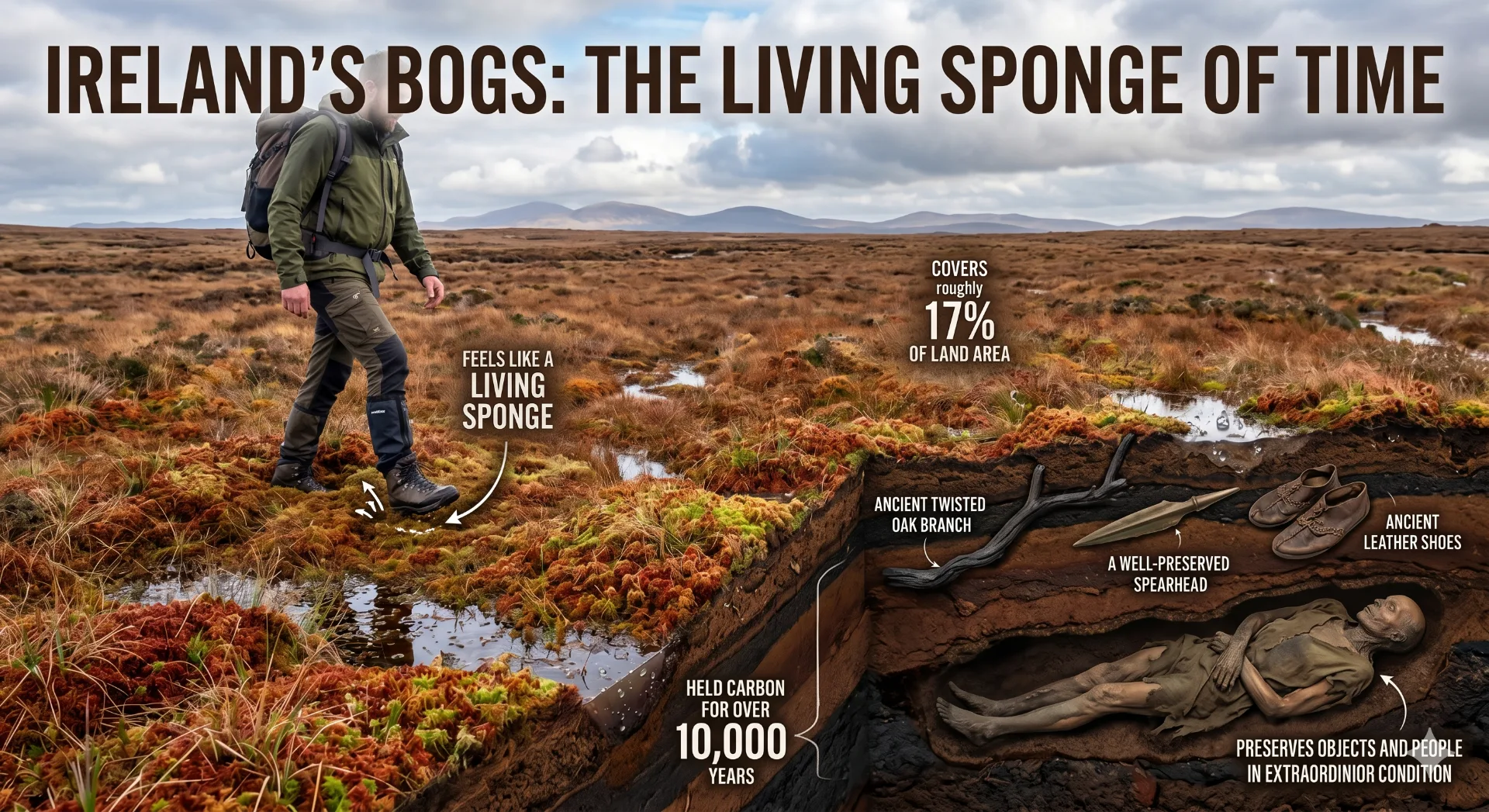
6. Ireland's bogs cover roughly 17% of the land area — more than almost any other country in the world. That seemingly featureless brown blanket holds carbon laid down over 10,000 years and has preserved objects, animals and people in extraordinary condition. Walking across a bog feels like walking on a living sponge, and it more or less is.
7. There are over 800 offshore islands around Ireland's coast, most of them uninhabited. The largest, Achill Island in County Mayo, is connected to the mainland by a bridge and has some of the most dramatic sea cliff walking in Europe.
8. The River Shannon, at 360km, is the longest river in Ireland and Britain. It rises at the Shannon Pot in County Cavan and flows south and west through the Irish midlands before reaching the Atlantic at Loop Head in County Clare. The Shannon Estuary is one of the largest in western Europe and supports one of only two semi-resident bottlenose dolphin communities in the EU — a population of around 200 animals that has been studied since the 1990s.
9. Lough Corrib is the largest lake in the Republic of Ireland, covering approximately 176 km² in County Galway. On still mornings, the limestone bed is visible beneath the water in the shallower stretches. It sits on the edge of the Connemara landscape — walking here means the lough is a constant presence to the east as the mountains rise to the west.
10. Ireland has four provinces — Connacht, Leinster, Munster and Ulster — a division that predates the Norman invasion by over a thousand years. This isn't merely historical: the provincial structure still shapes Gaelic sports, regional identity and the way Irish people talk about where they're from. A Leinster–Munster rugby match or a Connacht–Ulster GAA game carries a weight of allegiance that outsiders tend to underestimate until they've stood in the crowd.
Ireland wildlife facts: Ecology and natural history
11. St Patrick did not banish the snakes. Ireland has had no native snakes since the last Ice Age, when rising sea levels isolated the island before snakes could colonise it from mainland Europe. The legend is almost certainly a metaphor — St Patrick's "snakes" were more likely the old pagan beliefs he was displacing. But as fun facts about Ireland go, this piece of Ireland trivia is 1,500 years old, so we'll let it stand.
12. Ireland has no native reptiles at all — not a single snake, lizard or slow-worm. Britain, just 20km away at its closest point, has three native reptile species. The difference is a few thousand years of sea-level change after the last glaciation.
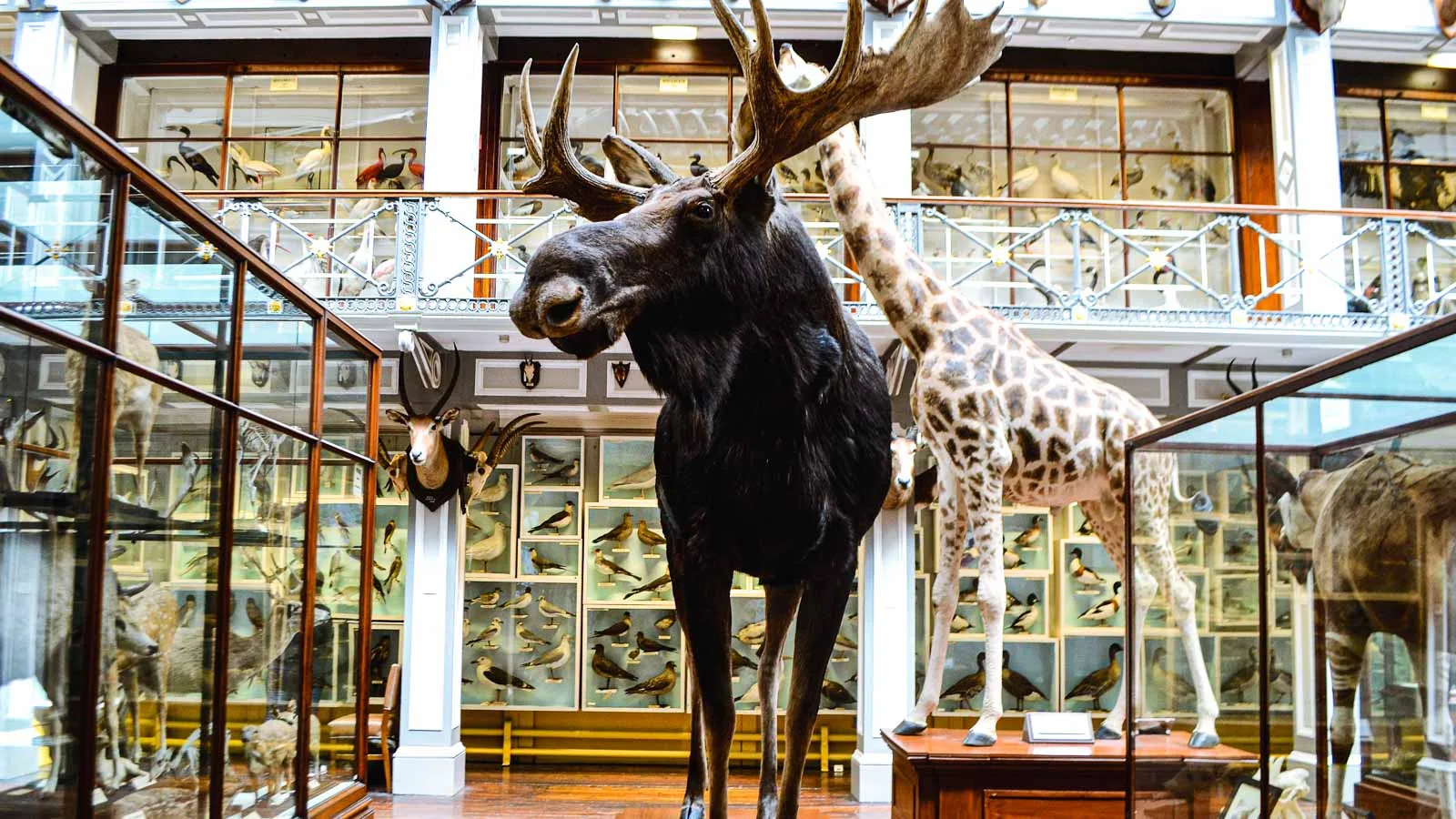
13. The Irish elk was the largest deer that ever lived, with an antler span of up to 3.7 metres — wider than most living rooms. It roamed Ireland until about 7,700 years ago, and its remains still turn up in bogs with remarkable regularity. You can see a superb specimen in the Natural History Museum in Dublin.
14. White-tailed eagles were extinct in Ireland for over 100 years before a reintroduction programme began in 2007. They are now breeding successfully in counties Kerry, Clare, Galway and Wicklow. On the Wicklow Way, there is a genuine chance of spotting one overhead — their wingspan reaches 2.5 metres, and they are unmistakable.
15. The Burren supports six of Ireland's 26 native orchid species in the same area of limestone pavement, growing alongside plants you'd expect to find in the Mediterranean and plants you'd expect to find in the Arctic. Botanists from across Europe come here in May and June to see combinations that exist nowhere else on earth.
16. The corncrake, a grassland bird that was once common across Ireland, declined catastrophically through the 20th century due to changes in farming practices. Conservation efforts on the Aran Islands and in Connemara have stabilised the population — if you're walking the Connemara trails in early summer, you may hear the distinctive rasping call at dusk. It sounds like someone dragging a comb across a piece of card.
17. Red deer are Ireland's only native deer species, and the largest surviving population on the island lives in Killarney National Park in County Kerry. They have been in the park's oak woods and mountain uplands since before recorded history. On quiet mornings on the Kerry Way, walkers occasionally spot them on the open hillside above the treeline — the stags particularly striking in October when the rut is on.
18. Ireland has no moles. Like the absence of snakes, this comes down to timing: the island was cut off from mainland Europe by rising sea levels around 10,000 years ago, before moles could colonise it from Britain. The complete absence of moles means Ireland's soil structure is subtly different — earthworms do much of the aeration work that moles do elsewhere in Europe. On the plus side, walkers' lawns go undisturbed.
Irish history facts for walkers
19. Newgrange in County Meath was built around 3,200 BC—making it older than the Egyptian pyramids (2,560 BC) and older than Stonehenge (2,500 BC). Every year on the winter solstice, a single shaft of sunlight enters a narrow roof box and travels 19 metres into the inner chamber, illuminating it for about 17 minutes. The passage tomb was perfectly aligned 5,200 years ago and still works. There is a 10-year waiting list to be in the chamber on solstice morning.
20. The Book of Kells, created around 800 AD, is considered one of the finest illuminated manuscripts ever made. It was almost certainly produced by Irish monks — possibly on the Scottish island of Iona — and brought to Kells in County Meath for safekeeping during the Viking raids. It is now on display at Trinity College Dublin, where it has been for over 300 years.
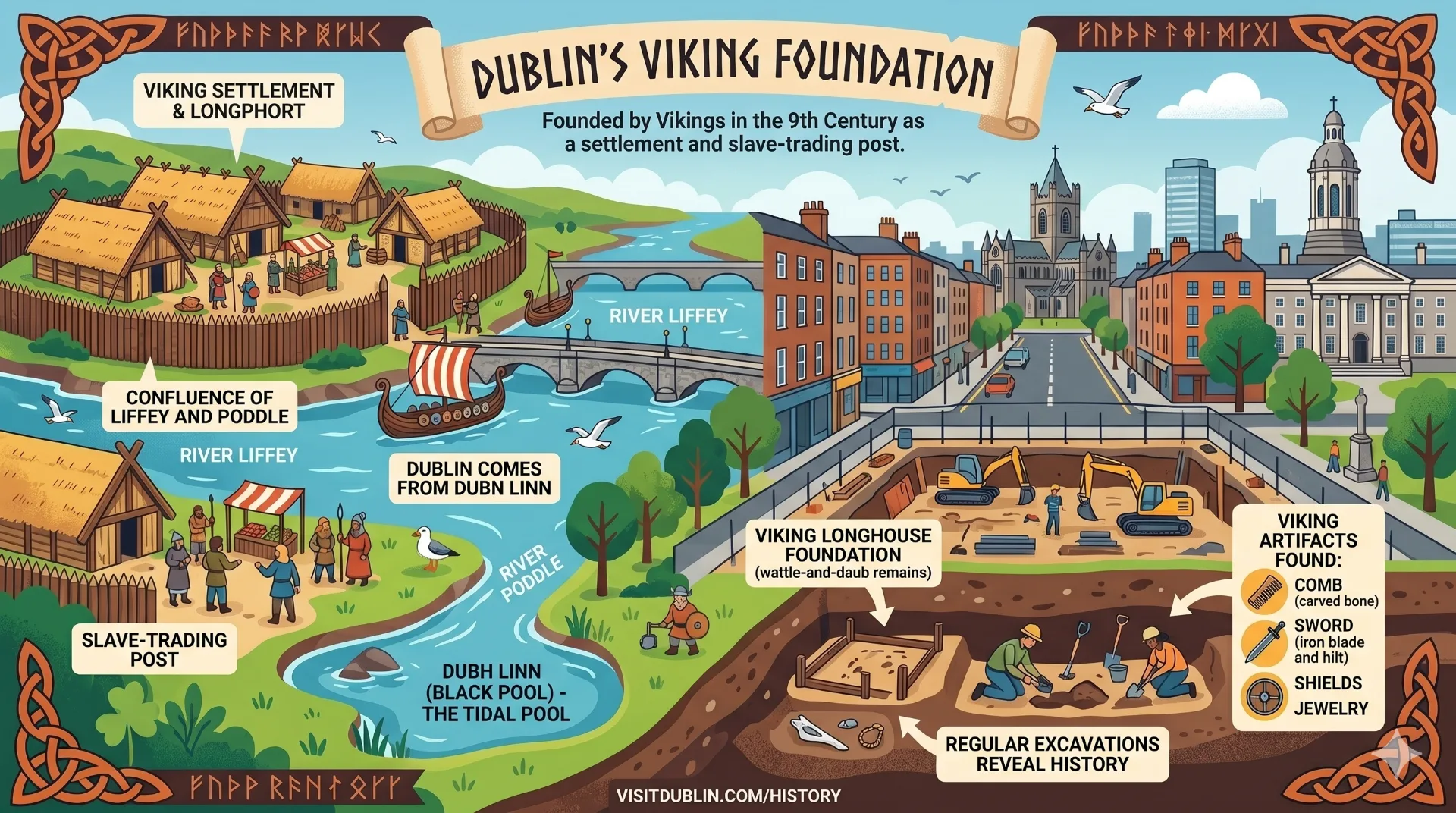
21. Dublin was founded by Vikings in the 9th century as a settlement and slave-trading post. The name comes from the Irish Dubh Linn — "black pool" — referring to a tidal pool at the confluence of the Liffey and the Poddle rivers. Construction work beneath the modern city regularly uncovers Viking longhouses, swords, and combs.
22. Bram Stoker, the author of Dracula, hails from Ireland. He was born in Dublin in 1847 and studied at Trinity College, where his contemporaries included Oscar Wilde. Every October, Dublin hosts the Bram Stoker Festival in his honour. The setting Stoker chose for his novel — a Transylvanian castle, Whitby harbour, and London streets — deliberately draws on the gothic landscape of his Irish imagination.
23. Skellig Michael, a jagged rock rising from the Atlantic 12km off the Kerry coast, was home to a community of early Christian monks from the 6th to the 12th centuries. They built dry-stone beehive huts on a ledge 180 metres above sea level, accessible only by climbing 618 hand-cut stone steps. It is a UNESCO World Heritage Site and, more recently, the location of scenes from Star Wars: The Force Awakens.
24. The Great Famine of 1845–1852 reduced Ireland's population by roughly 25% through death and emigration — an event so catastrophic it shaped Irish identity and diaspora culture for generations. The population of the island has still not returned to its pre-Famine level of 8 million. Among the most sobering Irish history facts: the Irish diaspora now numbers approximately 70 million people worldwide – more than ten times the current population of the island.
25. The Wild Geese were Irish soldiers who fled to France and Spain after the Williamite Wars of the 1690s. Following the Treaty of Limerick in 1691, around 12,000 Jacobite soldiers chose exile over surrender. Their descendants fought in European armies for over a century — the Irish Brigade in the French army played a key role at the Battle of Fontenoy in 1745, helping defeat a combined British and Dutch force. The phrase "Wild Geese" entered Irish culture as a metaphor for all those who have left Ireland unwillingly.
26. Ireland has more castles per square kilometre than almost any other country in Europe. Estimates suggest over 30,000 castle structures survive in various states of preservation — from intact tower houses to moss-covered stone mounds at the corner of a field. On almost every Waymarked Way, you'll pass ruined tower houses that have become so naturally integrated into the landscape that locals barely notice them. Most were built between the 12th and 17th centuries; many were never grand affairs, just a small landlord's fortified home.
Language and culture
27. Irish (Gaelic) is one of the oldest written languages in Europe, with a continuous written tradition stretching back to around 400 AD and an oral tradition much older than that. It was never replaced by Latin, Norman French or English in the way other Celtic languages were. Today about 1.7 million people in the Republic have some ability in Irish; around 75,000 speak it daily as a first language in Gaeltacht areas, most of them on the Atlantic coast.
28. "Céad míle fáilte" (pronounced roughly KAYD mee-leh FALL-cha) means "a hundred thousand welcomes". It is Ireland's most famous phrase of greeting and appears on everything from pub signs to guesthouse doormats. The warmth it expresses is, in our experience, entirely genuine.
29. To say "hi" in Irish, you say "Dia dhuit" (JEE-ah gwit) — literally "God be with you". The correct response is "Dia is Muire dhuit" — "God and Mary be with you". Greetings in Irish were designed to be theological events.
30. Ireland has won the Eurovision Song Contest seven times — more than any other country. The extraordinary run between 1992 and 1996 included three consecutive victories: Linda Martin in 1992, Niamh Kavanagh in 1993 and Paul Harrington in 1994. The Irish television broadcaster RTÉ is reported to have quietly hoped not to win in the mid-1990s, as hosting Eurovision three times in four years was becoming expensive.
31. Phoenix Park in Dublin, at 1,750 acres, is the largest enclosed public park in any European capital city — larger than Central Park, Hyde Park and the Bois de Boulogne combined. A herd of fallow deer has roamed freely in the park since 1662. The US ambassador's residence and the official residence of the Irish president are both inside the park, which is also open to the public 24 hours a day.
32. Trinity College Dublin's Long Room library contains 200,000 of the oldest books in Ireland, including the Book of Kells, and is one of the most photographed library interiors in the world. It was built in 1732, though the distinctive barrel-vaulted ceiling was added in the 1860s when extra shelf space was needed.
33. Halloween originated in Ireland. The Celtic festival of Samhain, observed on 31 October, marked the end of the harvest season and the beginning of the dark half of the year. The Celts believed the boundary between the living and the dead was thinnest at this time, and that spirits moved freely among them. The jack-o'-lantern tradition was originally made with turnips, not pumpkins — pumpkins are an American adaptation, easier to carve in the New World. It is Ireland's most successfully exported cultural tradition.
34. Ireland has produced four Nobel Prize winners in literature — W.B. Yeats (1923), George Bernard Shaw (1925), Samuel Beckett (1969) and Seamus Heaney (1995). For a country of just over five million people, it is a remarkable concentration of literary talent. The four represent very different traditions: Yeats the poet of myth and nationalism, Shaw the sharp-tongued satirist, Beckett the philosophical minimalist, Heaney the poet of the everyday and the earth.
35. Riverdance began as a seven-minute interval act at the 1994 Eurovision Song Contest in Dublin. Jean Butler and Michael Flatley performed during the broadcast interval. The audience's standing ovation was immediate. Within a year, a full-length stage show had been produced and toured internationally. Riverdance is credited with transforming the global perception of Irish traditional music and dance almost overnight — from something regional to something with genuine international reach.
Food and drink: facts about Irish cuisine
36. Irish butter is among the most distinctive in the world. Kerrygold, the best-known brand, is made from the milk of grass-fed cows — Ireland's temperate, wet climate means cattle graze outdoors longer here than almost anywhere else in Europe, typically around 300 days a year. That grass diet gives the milk a higher beta-carotene content, which is why Irish butter has its characteristic deep yellow colour. Kerrygold is now the second-bestselling butter brand in the United States.
37. Arthur Guinness signed a 9,000-year lease on his Dublin brewery in 1759 — at £45 per year. St James's Gate, where he first brewed Guinness, is still where it is brewed today. The original lease documents are displayed in the Guinness Storehouse in Dublin. The water used in brewing comes from the Wicklow Mountains — the same hills that walkers cross on the Wicklow Way.
38. Irish whiskey must be aged for a minimum of three years in wooden casks on the island of Ireland. Unlike Scotch, which is typically double-distilled, Irish whiskey is usually triple-distilled — a process that produces a lighter, smoother character. The word "whiskey" itself comes from the Irish uisce beatha, meaning "water of life". Ireland once dominated the global whiskey market; Prohibition in the United States and trade disputes with Britain nearly destroyed the industry. A revival over the past two decades has brought dozens of new distilleries back to the island.
39. Soda bread exists because of the chemistry of 19th-century American wheat. When wheat imported from the United States became widely available in Ireland, bakers found that the lower-gluten flour didn't rise reliably with yeast. Bicarbonate of soda, which reacts with the buttermilk in the dough to create lift, solved the problem. The cross cut into the top of a traditional soda bread is said to "let the fairies out" — it also helps the bread cook evenly through the middle.
40. The full Irish breakfast has real regional variations. Rashers, sausages, black pudding, white pudding, eggs, grilled tomato and soda bread or toast — served with tea strong enough to stand a spoon in. Clonakilty black pudding from County Cork is considered by many to be the finest in Ireland. After a long day's walking in the Kerry or Wicklow hills, a full Irish breakfast is not a luxury — it is a structural requirement.
Quirky and surprising
41. Anyone with an Irish grandparent is eligible to apply for Irish citizenship — and therefore EU citizenship — through the Foreign Births Register. Since the Brexit referendum in 2016, applications from British citizens have increased by several hundred per cent. The Irish passport consistently ranks among the most powerful in the world in terms of visa-free access.
42. Massachusetts is the most Irish US state, with over 25% of the population identifying as Irish American. Boston's St Patrick's Day parade, first held in 1737, predates American independence. The other most Irish states — New Hampshire, Connecticut, and Rhode Island — are all in New England.
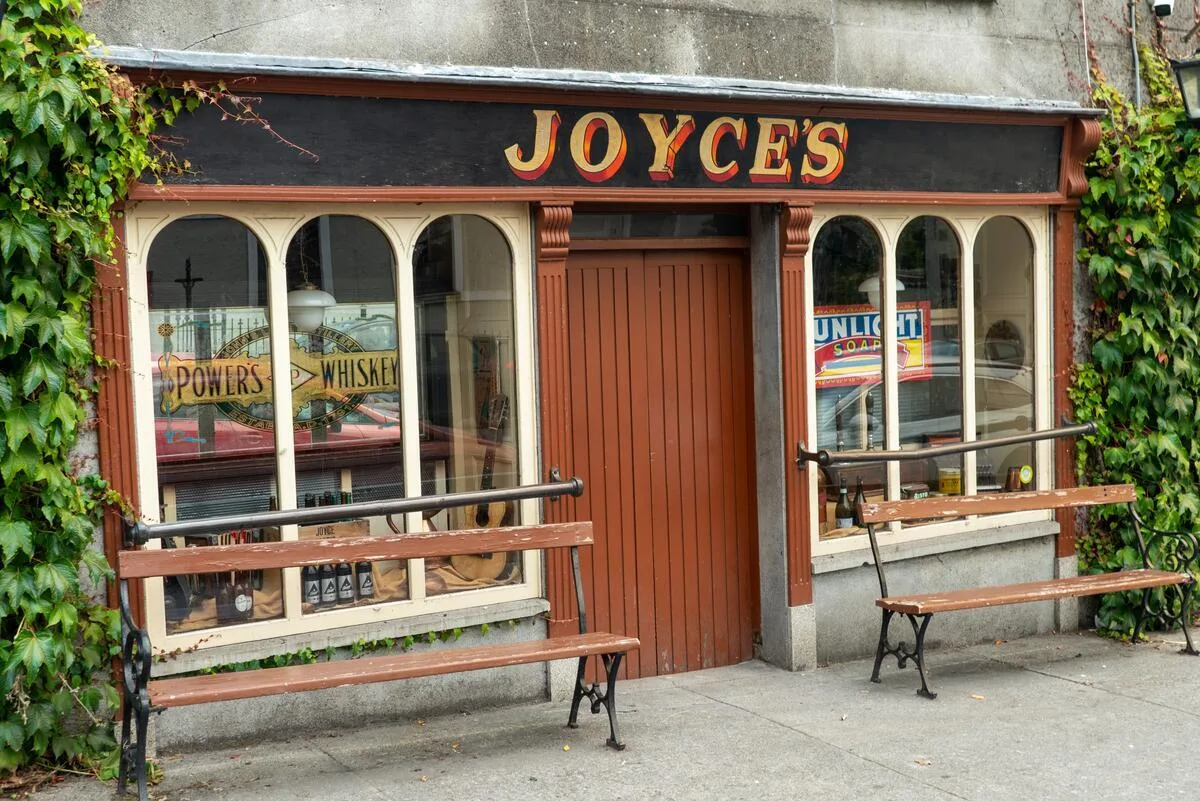
43. There are an estimated 7,000 Irish pubs outside Ireland — roughly the same number as exist on the island itself. An "authentic Irish pub" has become such a recognisable format worldwide that there are companies that design and ship the complete interior — bar, snugs, decorative Guinness mirror, and slightly wobbly stool — as a flat-pack from Ireland.
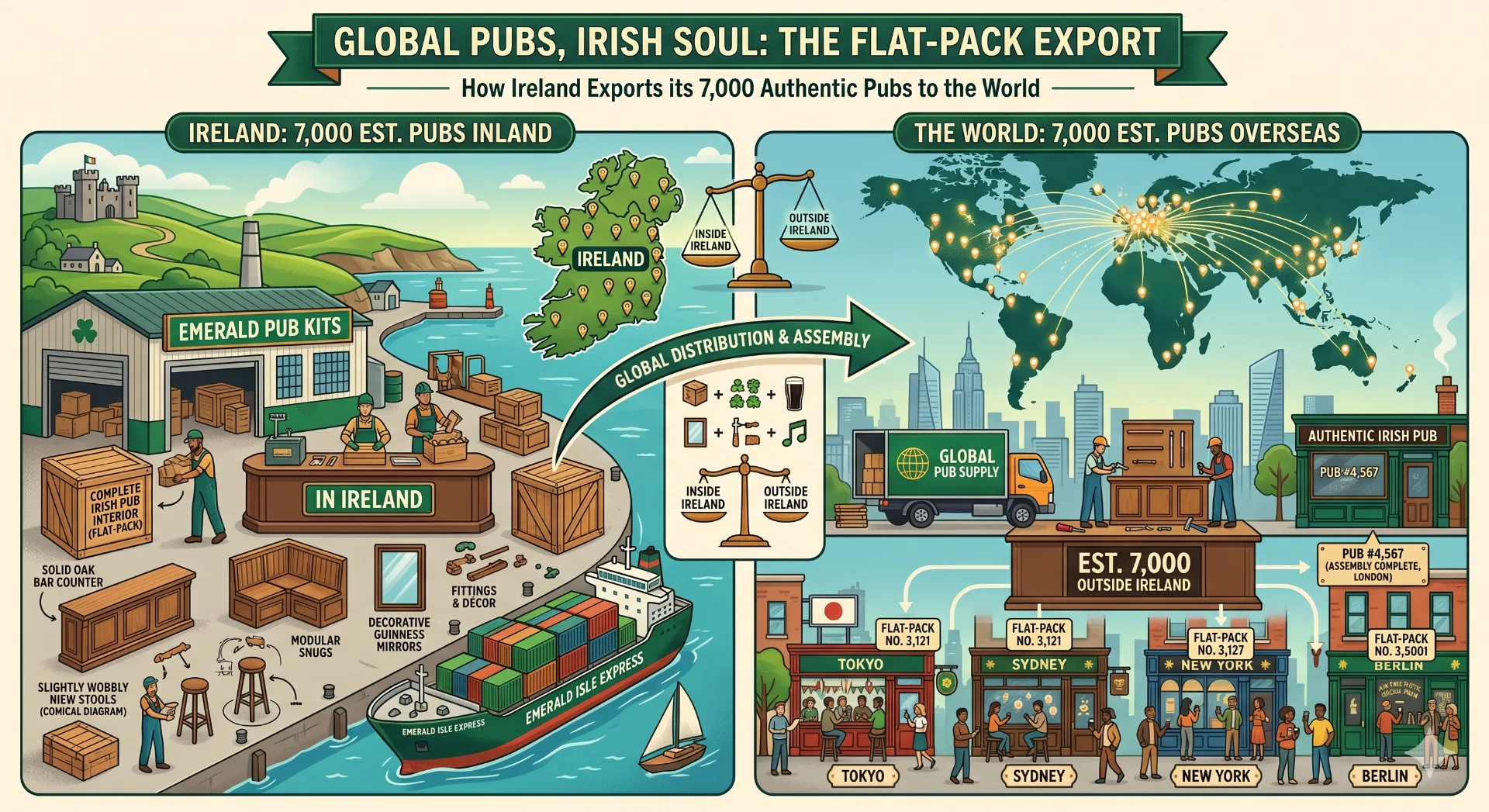
44. The Aran Islands off the Galway coast had no electricity until the 1970s. The islands are made almost entirely of bare limestone, with no natural soil. Over generations, islanders built their fields by carrying sand and seaweed up from the shore and layering it with animal manure – creating thin, fertile soil by hand, field by field. Walking across the ancient stone walls on Inis Mór today, you are walking through centuries of accumulated human effort.
45. Ireland's weather is more complicated than its reputation suggests. Yes, it rains; the west coast receives up to 2,500 mm of rainfall annually, five times as much as London. But the Gulf Stream keeps temperatures mild year-round (rarely below 2°C in winter, rarely above 22°C in summer), and the quality of light after rain, when the sky clears over the mountains, is something we've never managed to describe adequately to anyone who hasn't seen it. Of all the fun facts about Ireland, this might be the most important for walkers: walking here in the rain is not a hardship. It is, in a funny way, the point.
46. The Blarney Stone at Blarney Castle in County Cork is kissed by around half a million visitors every year. Legend has it that kissing the stone confers "the gift of the gab" — an ability to speak eloquently and persuasively. To reach it, you lean backwards over a drop of around 90 metres while gripping two iron bars set into the battlements. The stone is said to have been brought from Scotland by Robert the Bruce in the 14th century, in gratitude for Irish support at the Battle of Bannockburn.
47. Croagh Patrick in County Mayo is climbed by around 100,000 pilgrims every year — many of them barefoot. The 765m quartzite mountain on the southern shore of Clew Bay is where St Patrick is said to have fasted for 40 days in 441 AD, and the annual pilgrimage has been observed ever since. The final section — loose quartzite scree — is particularly punishing on bare feet. The pilgrimage takes place on the last Sunday of July, known as Reek Sunday. On a clear day from the summit, the view across Clew Bay and its hundred-odd islands is one of the finest in Ireland.
48. St Brigid's Cross is one of the oldest Irish traditions still widely observed. Woven from rushes on 1 February — St Brigid's Day — the cross is made fresh each year and hung inside the home to protect it from fire and misfortune. You still find them hanging above doors in farmhouses and B&Bs across rural Ireland, often a blackened old one alongside a fresh new one woven that morning. The tradition predates Christianity — it is thought to derive from a pre-Christian custom associated with the Celtic goddess Brigid.
49. The Cliffs of Moher stand 214 metres at their highest point and stretch for 14km along the County Clare coast. On a clear day from the top, you can see the Aran Islands to the south-west and the mountains of Connemara to the north. The cliffs are formed from the same ancient seabed sediments as the Burren — layers of sandstone, siltstone and shale laid down around 300 million years ago. About 1.5 million people visit each year; those who time it for a weekday morning in spring often have long stretches to themselves.
50. Ireland is the only country whose national symbol is a musical instrument — the harp. The model for the harp on Irish coins, passports and state documents is the Trinity College Harp (also called the Brian Boru Harp), dated to the 15th century and housed in Trinity College Dublin. It appears on every Irish Euro coin, every can of Guinness and every Irish government document. Unlike most national symbols, Ireland's is something that can be heard — and frequently is, in sessions in pubs from Dingle to Donegal.
Walking Ireland: facts about the trails
Ireland has 44 official Waymarked Ways—long-distance walking routes covering over 4,300km in total. The Wicklow Way (127km), established in 1981, was Ireland's first and remains its most popular. Across those 44 routes, you'll cross blanket bog, ancient oak wood, limestone pavement, sea cliff and mountain ridge — often on the same walk.
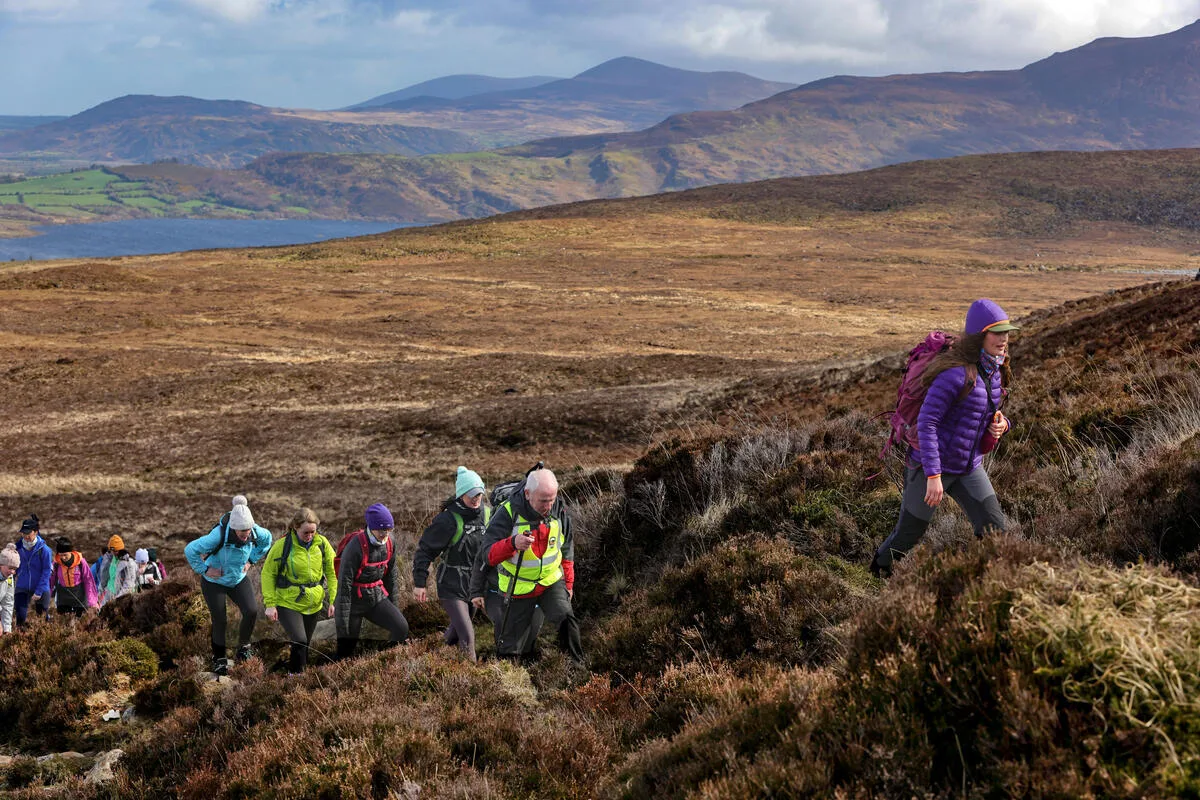
Killarney National Park, established in 1932, was Ireland's first national park. Its 10,236 hectares contain three lakes, Ireland's last remaining ancient oakwood and the lower slopes of the MacGillycuddy's Reeks. Every one of the eight major trails in the park is stunning, and most of them are quiet outside the summer peak.
The Kerry Way (214km) is the longest Waymarked Way in Ireland, circling the entire Iveragh Peninsula in County Kerry. It takes walkers through remote mountain passes, along the Wild Atlantic coastline and through the quiet villages of the Ring of Kerry — all without a car in sight.
If you'd like to discover some of these facts for yourself — on foot, at your own pace, with your luggage already at the next guesthouse — we'd love to help you plan your walk.
Have a look at our self-guided walking holidays or drop us a message. We're always happy to talk about Ireland's trails.
Frequently asked questions
What are some unusual facts about Ireland that most tourists don't know?
Ireland has more medieval castles per square mile than any other country in Europe. The country is also home to Europe's largest karst limestone landscape in the Burren, where Arctic, Mediterranean and Alpine plants grow side by side. Perhaps most surprisingly, Ireland has no native snakes—not because St. Patrick banished them, but because the island was separated from mainland Europe before snakes could migrate after the Ice Age.
Why does Ireland have so many stone walls across the countryside?
Many of Ireland's iconic stone walls were built during the Great Famine (1845-1852) as part of relief work schemes. Landowners were given government funds to employ starving workers, who cleared fields of stones and built the walls you see today. These walls now stretch for an estimated 400,000 kilometres across the Irish landscape—enough to circle the Earth ten times.
Is it true that Ireland doesn't have any snakes?
Yes, Ireland genuinely has no native snakes, and it's one of only a handful of countries worldwide that can make this claim. The reason is geological rather than miraculous—Ireland became an island about 10,000 years ago after the last Ice Age, before snakes could migrate from continental Europe. The same applies to moles, which also never made it to Ireland.
What makes the Burren landscape in Ireland so special?
The Burren is one of Europe's largest karst landscapes, formed 350 million years ago under a tropical sea. What makes it truly remarkable is its unusual plant life—Arctic, Alpine and Mediterranean species grow together in the limestone cracks, including 23 of Ireland's 27 native orchid species. The porous limestone absorbs heat during the day and releases it slowly, creating microclimates that support this unlikely botanical mix.
How many people actually speak Irish in Ireland today?
About 1.9 million people in Ireland say they can speak some Irish, but only around 73,000 speak it daily outside the education system. Most fluent Irish speakers live in Gaeltacht regions—officially designated Irish-speaking areas scattered mainly along the western coast. Irish is a compulsory subject in schools and you'll see it on all road signs and official documents, though English remains the everyday language for most people.
Continue exploring
If you're planning to explore these landscapes yourself, these guides will help: