Ireland National Parks: A Walker's Guide to All Seven
A walker's guide to the six Irish national parks — what each one offers, which trails are worth your time, and how to string them together on a holiday.
Hi, I'm Cliff from Walking Holiday Ireland. The Republic of Ireland has six official Ireland national parks, plus the Mourne Mountains across the border in Northern Ireland which function as a seventh. Anyone serious about walking in Ireland should spend time in at least three of them. They cover the country's best-preserved landscapes: the mountainous oak woods of Wicklow, the glacial ridges of Killarney, the peatlands of Mayo, the exposed Atlantic of Connemara, the limestone pavement of the Burren, the remote glens of Donegal, and the granite heights of the Mournes.
Here is a working guide to all seven — written after guiding walkers through each of them across fifteen years.
The parks are also the best places to spot native animals in Ireland — Killarney alone holds the country's only wild red deer herd.
1. Wicklow Mountains National Park
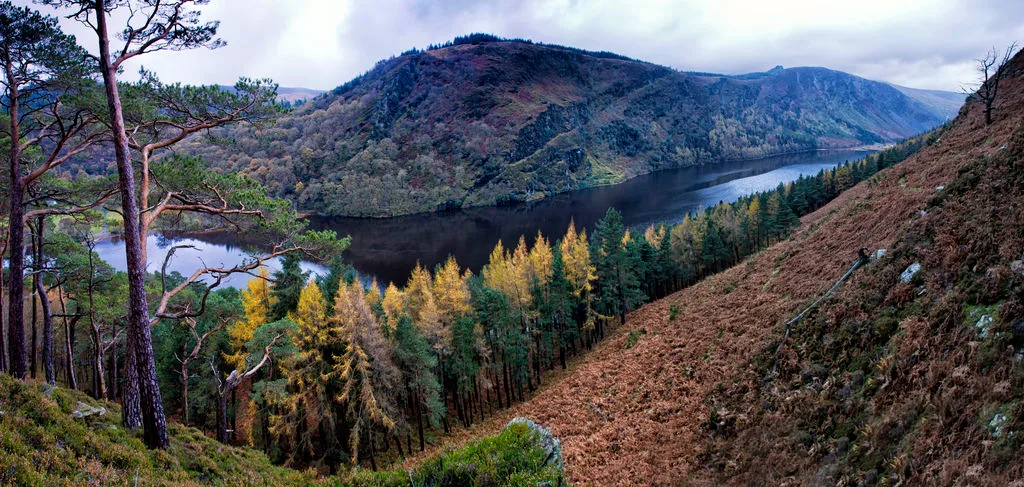
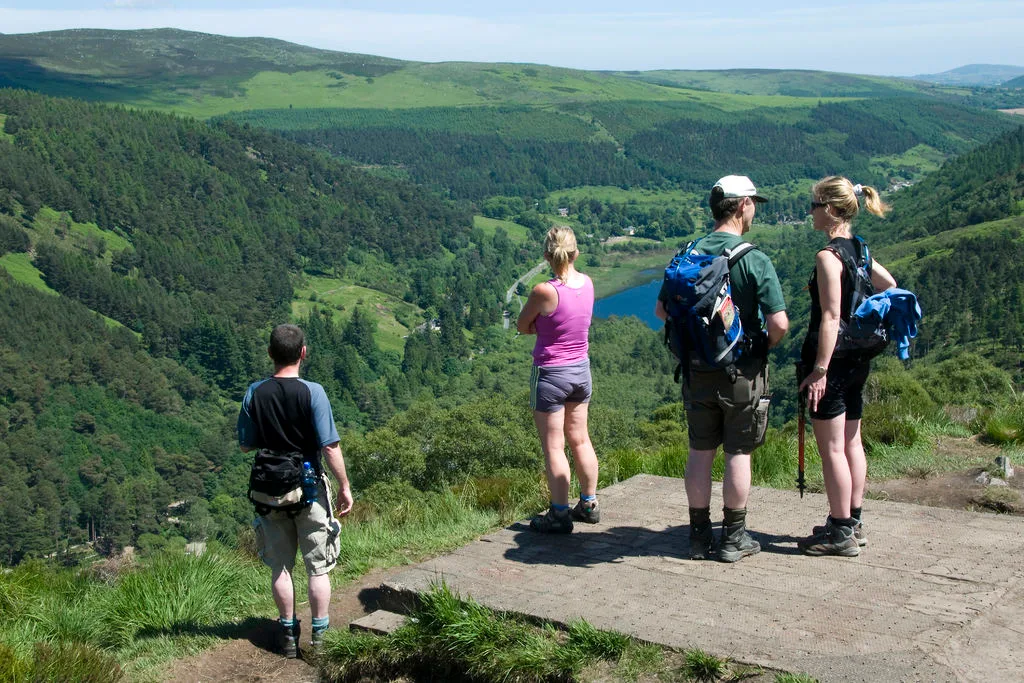
The largest national park in the Republic (220 km²) and the easiest to reach from Dublin. Covers the central Wicklow uplands around Glendalough, Glenmacnass, Lough Tay and the granite dome of Lugnaquillia (Ireland's fourth-highest peak at 925 m). The Wicklow Way passes through on its way south. Oak woodland, glacial lakes, bog, and the clearest sense of mountain wilderness you can find within an hour of an EU capital.
Best walks: the Spinc ridge above Glendalough (9 km, outstanding), Lugnaquillia from Glen of Imaal (14 km, demanding), the whole Wicklow Way in stages (130 km, 5–7 days).
2. Killarney National Park
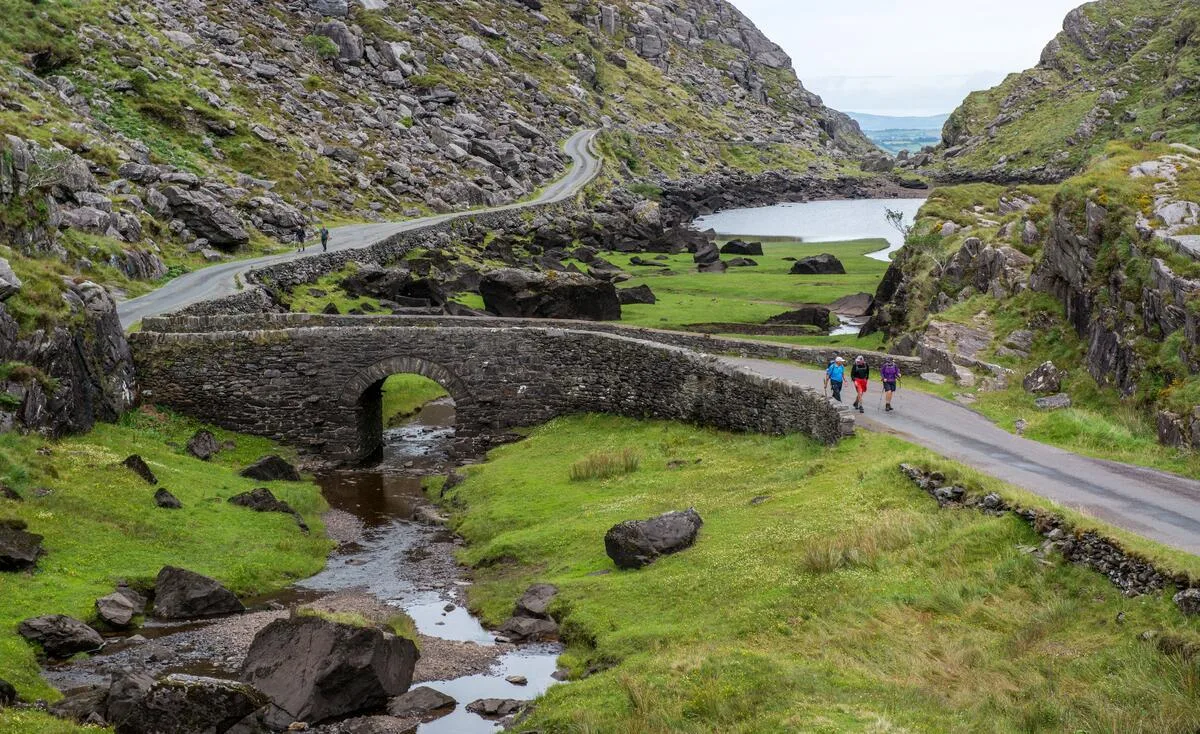
The oldest and arguably most-loved of the Ireland national parks. 102 km² of lakes, ancient oak woods, MacGillycuddy's Reeks foothills and the country's only wild herd of native red deer. Muckross House and Lough Leane are the tourist centrepieces; the Reeks Walk and the Old Kenmare Road offer proper mountain walking within the park. The Kerry Way begins and ends in Killarney.
Best walks: Torc Mountain loop (7 km, superb views), the Old Kenmare Road section of the Kerry Way (15 km), Carrauntoohil from Cronin's Yard (14 km, Ireland's highest mountain, requires experience or a guide).
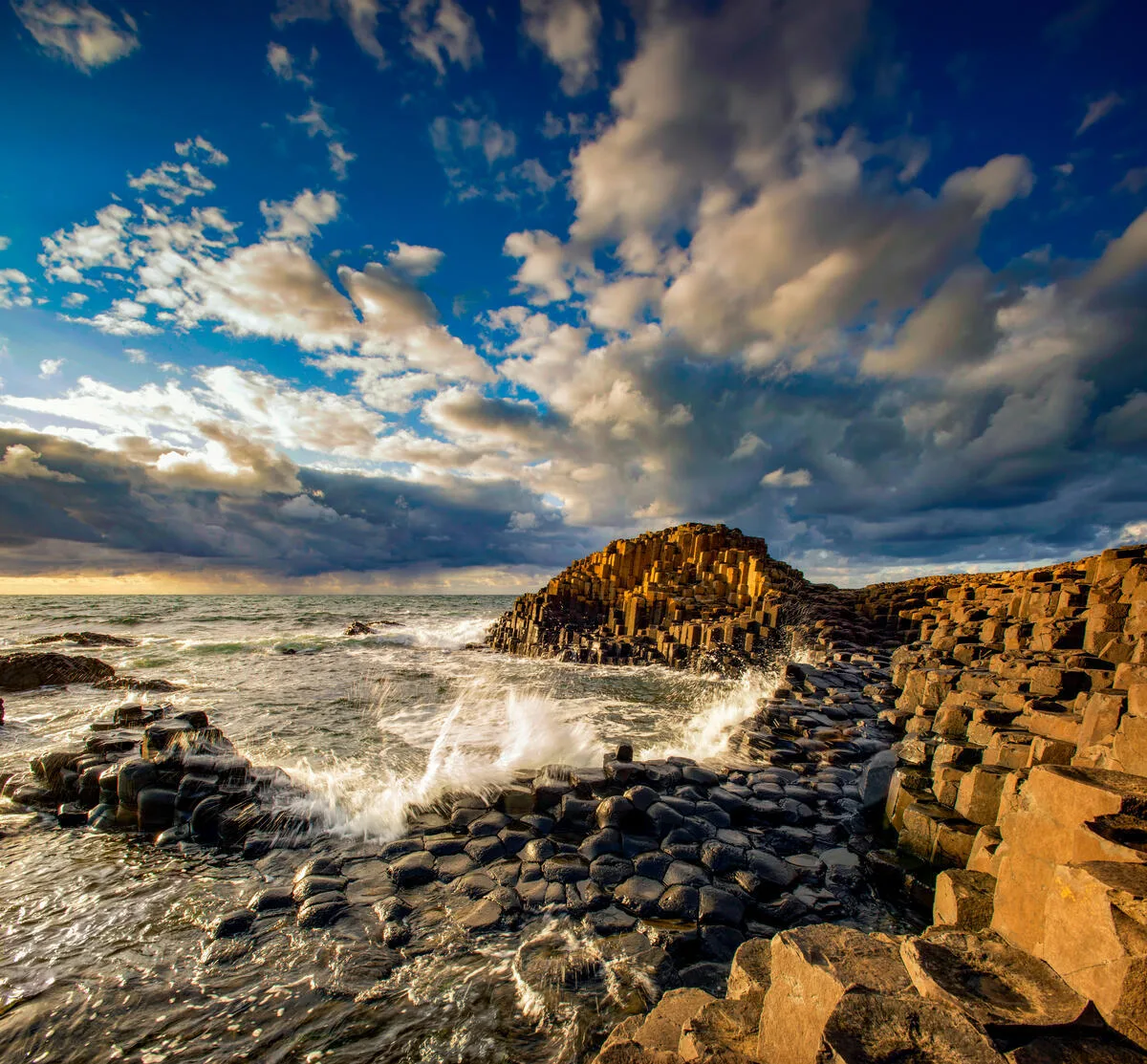
3. Connemara National Park
The smallest of the Ireland national parks at 20 km², but it packs in the famous Twelve Bens mountain range, open blanket bog, a sea cliff or two, and a wonderful visitor centre at Letterfrack. Diamond Hill is the signature walk — a 7 km loop with extraordinary views of Kylemore Abbey and out to Inishbofin. The broader Connemara region stretches well beyond the park boundary and justifies several days' walking on its own.
Best walks: Diamond Hill (7 km, boardwalk and stone path, accessible to most walkers), Benbaun via Glencorbet (11 km, quieter and more demanding), the Western Way stages passing through Lough Inagh.
4. Burren National Park
The Burren is limestone pavement — one of the largest karst landscapes in Europe, stretching across County Clare. The national park protects 15 km² of the most botanically-important area, where Mediterranean, Arctic and Alpine plants share the same pavement. Walking in the Burren is utterly unlike anywhere else in Ireland — no bog, no forest, just rock, orchids, and ring forts. The Burren Way passes through.
Best walks: the Mullaghmore loop (7 km, the iconic terraced hill), Black Head to Ballyvaughan (12 km, coastal and upland combined), the Poulnabrone–Carron section of the Burren Way.
5. Wild Nephin National Park (Mayo)
Formerly Ballycroy National Park — renamed in 2022 when it absorbed the adjacent Wild Nephin wilderness. The largest at 150 km² and the wildest of the Ireland national parks, covering the Nephin Beg Range and vast blanket bog in remote north Mayo. Ireland's only designated Dark Sky park. Walking here is for experienced hillwalkers — signage is minimal, phone reception patchy, and the weather serious.
Best walks: the Claggan Mountain Coastal Trail (4 km, for a gentle introduction), the Bangor Trail (40 km, two days, true wilderness — route-finding required), Slieve Carr from the Bangor Trail (bring a map).
6. Glenveagh National Park (Donegal)
The quietest of the Ireland national parks, and for some walkers that is the whole point. 170 km² of glen, lough, native red deer and open moorland in the Derryveagh Mountains of County Donegal. Home to the dramatic Glenveagh Castle on the shore of Lough Veagh, golden eagles (reintroduced in 2001), and Mount Errigal — Donegal's highest peak at 749 m, just outside the park boundary. The deserted village of Port, on the coast nearby, is one of the most haunting walks in Ireland.
Best walks: the Lakeside Walk from Glenveagh Castle (7 km, easy), Mount Errigal from the Dunlewey road (6 km return, demanding scramble at the top), the Poisoned Glen and Slieve Snaght (15 km, serious hillwalking).
7. Mourne Mountains (Northern Ireland)
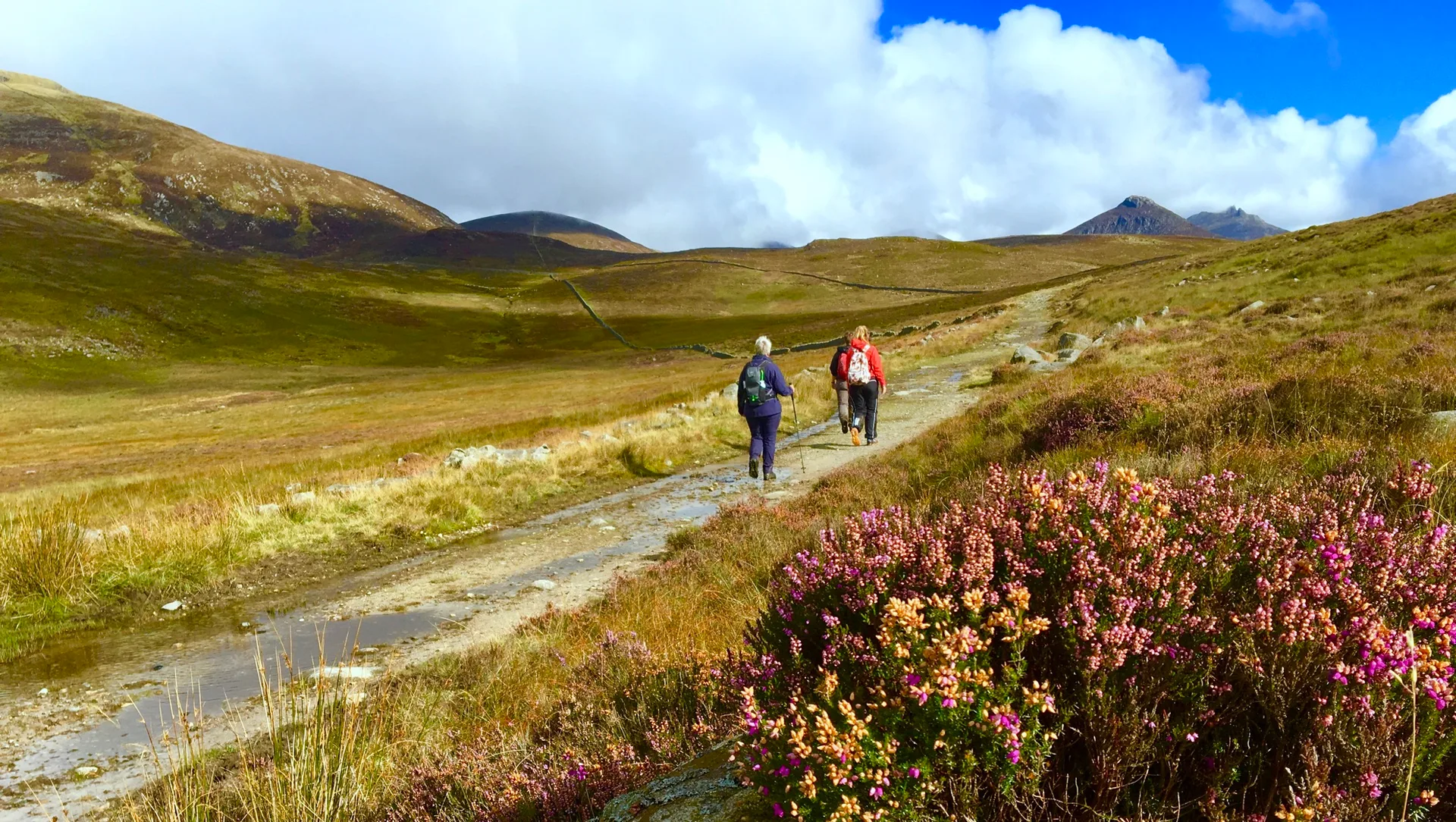
Technically the Mournes are not a national park in the legal sense — the UK designates them as an Area of Outstanding Natural Beauty (AONB), not a national park — but they function as the sixth unmissable upland walking area of the island, and no guide to the Ireland national parks for walkers is complete without them. The granite dome of Slieve Donard (850 m, Northern Ireland's highest) and the 35 km Mourne Wall make them essential.
Best walks: Slieve Donard from Donard Park (9 km), the Silent Valley–Binnian circuit (15 km), the Mourne Wall traverse (35 km, one very long day or two days with a bivvy).
Stringing parks together on one holiday
A week isn't enough for all six. But here are three combinations we send walkers on regularly.
East coast week: Wicklow Mountains + Mournes. Fly into Dublin, three days on the Wicklow Way, drive north, three days in the Mournes. The best introduction to upland Ireland outside the west.
West coast fortnight: Connemara + Mayo + Killarney. A fourteen-day route taking in Diamond Hill, Wild Nephin, and finishing on the Kerry Way. This is the big one — the most demanding and most rewarding way to cover three of the Ireland national parks in a single trip.
Limestone and mountain week: Burren + Killarney. A softer week — four days walking in the Burren and three in Killarney National Park. Good for walkers who want variety without the serious mileage of the west coast fortnight.
Donegal and the north: Glenveagh + Mournes. An underrated two-part week for walkers who've already done the big southern parks. Three days in Glenveagh (the Poisoned Glen, Errigal, the Lakeside Walk) followed by a three-day loop of the Mournes. Fly into Belfast or drive the coastline between the two. Among the Ireland national parks these are the two fewest of our guests have seen.
Walk the Ireland national parks with us
We run self-guided walking holidays that cover all six of these areas — singly or combined. Hand-picked guesthouses, bags moved each morning, route notes, a 24/7 number on the trail.
FAQs about Ireland's national parks
How many national parks does Ireland have?
The Republic of Ireland has six official national parks: Wicklow Mountains, Killarney, Connemara, Burren, Wild Nephin (formerly Ballycroy), and Glenveagh in Donegal. All offer walking, from easy lakeside paths to demanding mountain routes. Northern Ireland has no designated national parks but the Mourne Mountains function equivalently — bringing the practical count of walker-grade upland areas across the island to seven.
Which of the Ireland national parks is best for walking?
Killarney and Wicklow Mountains are the most accessible, best-signed and most likely to suit first-time visitors. Connemara and the Mournes are the most scenic. Wild Nephin is for experienced hillwalkers who want wilderness. The Burren is unique and unmissable for one or two days.
Do I need permits to walk in Ireland's national parks?
No. All Ireland national parks are free to enter and walk in. Some visitor centres charge parking or have donation boxes; the paths themselves are open to the public.
Are the trails well-marked?
Yes in Killarney, Wicklow Mountains, Connemara (Diamond Hill especially), and the Burren. Less so in Wild Nephin — that one requires navigation skills. The Mournes are moderately marked but exposed in poor weather.
Can you camp in Ireland's national parks?
Wild camping is tolerated in some areas (particularly in Wicklow Mountains away from main paths, and in Wild Nephin where it is actively encouraged) but not officially permitted everywhere. Always leave no trace. There are official campsites adjacent to most parks.
Photo Gallery