Leave No Trace Principles Ireland: A Walker''s Guide
After years of guiding walkers across Ireland, I''ve noticed something that worries me. More people than ever are walking our trails—and that''s wonderful—but the signs of careless use are growing. Litter on mountain paths, erosion from shortcutting switchbacks, fire scars in bogland, and dog waste bags hung on fence posts like ugly ornaments. The Leave No Trace principles aren''t about being preachy. They''re about ensuring that the landscapes we love walking through today remain worth walking through tomorrow.
Ireland''s trails are fragile. Our bog, our mountain heath, our coastal dunes—these ecosystems took thousands of years to form and can be damaged in a single afternoon. The seven principles offer a practical framework for walking responsibly, and every walker in Ireland should understand them before setting out on the trail.
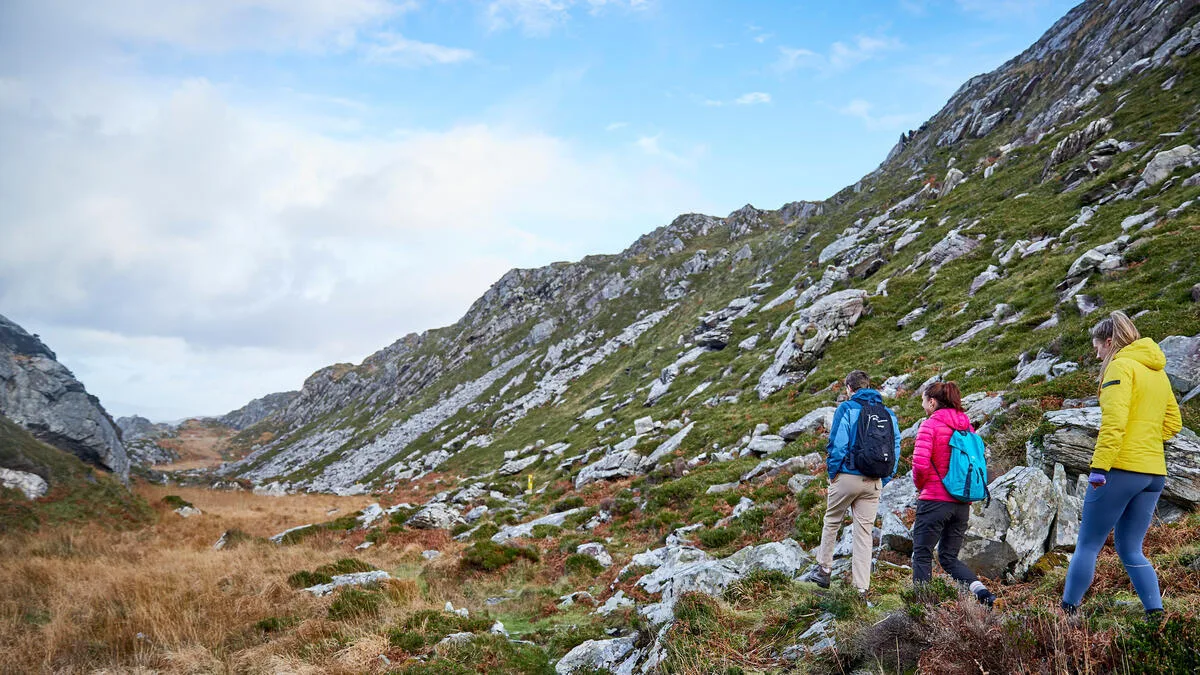
The Seven Leave No Trace Principles in Ireland
Leave No Trace Ireland (leavenotraceireland.org) promotes seven principles adapted for Irish conditions. These aren''t laws—they''re an ethic. Doing the right thing when nobody''s watching. Here''s what each principle means for walkers on Irish trails.
1. Plan Ahead and Prepare
Good planning prevents most trail damage. Know your route before you start. Check weather conditions. Understand the terrain. Carry the right gear so you don''t need to improvise. Walkers who plan ahead don''t get caught out, don''t take shortcuts through fragile ground to escape bad weather, and don''t leave gear behind when things go wrong.
For Irish conditions specifically: check the Mountain Rescue weather forecast, download your route to your phone, tell someone your plan, and carry waterproofs regardless of the forecast. Preparation isn''t just about safety—it''s the foundation of every other Leave No Trace principle.
2. Be Considerate of Others
Irish trails are shared spaces. Walkers, farmers, cyclists, horse riders, and wildlife all use the same landscape. Yield to other trail users. Keep noise levels reasonable—the person ahead of you might be walking for quiet and solitude. Control your dog. Close gates behind you. If you''re in a group, don''t block the entire path.
In Ireland, this principle extends to the farming community. Most trails cross private farmland, and walkers have that access through the goodwill of landowners. Respect livestock, don''t damage fences or walls, and stay on waymarked paths. A single bad encounter between a walker and a landowner can close trail access for everyone. These guidelines ask us to be the kind of walkers that farmers are happy to see on their land.
3. Respect Farm Animals and Wildlife
Ireland''s trails pass through working agricultural landscape. You''ll walk alongside sheep, cattle, and sometimes horses. Give livestock space. Keep dogs on leads near farm animals—Irish farmers are legally entitled to shoot dogs that worry sheep, and incidents have increased with the rise in trail use. Never get between a cow and her calf.
For wildlife, the rule is simple: observe but don''t interfere. Don''t approach nesting birds. Keep your distance from seals on coastal walks. Stay on established paths through sensitive habitats—ground-nesting birds are invisible until you''re standing on their eggs. The mountain hare, red grouse, and hen harrier all depend on undisturbed blanket bog that walkers cross regularly.
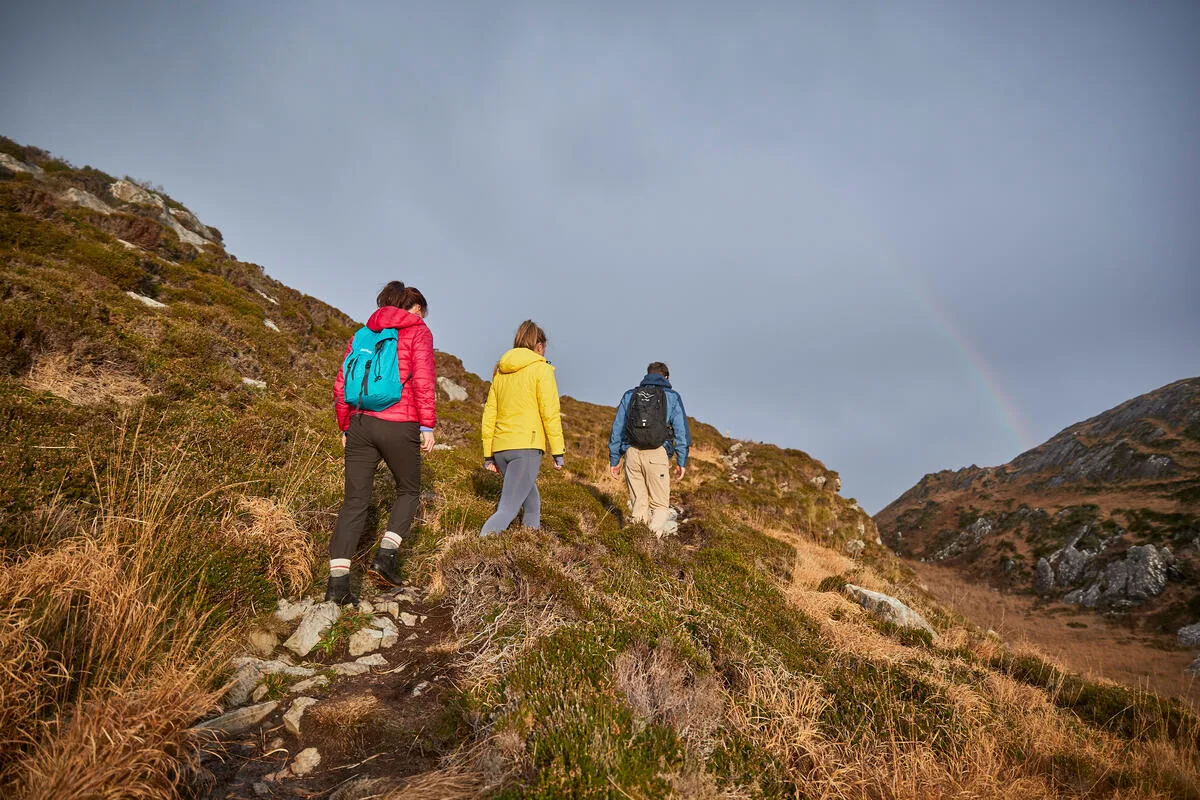
4. Travel on Durable Ground
This is arguably the most important principle for Irish conditions. Our blanket bog is extraordinarily fragile. A single bootprint on wet peatland can start an erosion channel that deepens over years. Walk on established paths, even when they''re muddy. The temptation to walk alongside a muddy trail creates the "braided path" effect—turning a single track into a wide scar across the hillside.
On mountain summits and ridges, stay on rocky ground where possible. Avoid walking on moss cushions, which take decades to recover. On bog sections, use any boardwalks or bog bridges provided—they exist specifically to protect the ground beneath your feet. If no path exists and you must cross open bog, spread your group out rather than walking in single file, which concentrates impact into a single line.
5. Leave What You Find
Everything in the landscape belongs where it is. Don''t pick wildflowers—it''s actually illegal to pick many species in Ireland under the Wildlife Act. Don''t move rocks from cairns or stone walls. Don''t take "souvenirs" from archaeological sites. Ireland''s trails pass through landscapes where every stone has been placed by either nature or human hands over millennia.
This principle also means not adding things. Building rock cairns or "fairy stacks" has become a social media trend that''s genuinely damaging to river ecosystems and archaeological sites. Those rocks provide habitat for invertebrates and fish. Leave them where they are. This outdoor ethic asks that we pass through the landscape, not rearrange it.
6. Dispose of Waste Properly
Pack out everything you bring in. Everything. That includes food packaging, fruit peels (banana skins take up to two years to decompose in Ireland''s cool, wet conditions), tissues, and yes—dog waste. If you brought it onto the trail, you take it home. There are no exceptions.
For human waste on longer mountain walks where toilets aren''t available: dig a small hole at least 30 metres from water sources, trails, and camping spots. Bury waste and pack out toilet paper. In Ireland''s high-rainfall environment, improperly disposed waste reaches streams and rivers quickly, contaminating drinking water for downstream communities.
The most visible waste problem on Irish trails is dog waste bags. People bag the waste but then leave the bag hanging on a fence or tree, which is worse than leaving the waste au naturel. If you bag it, carry it out. Every time.
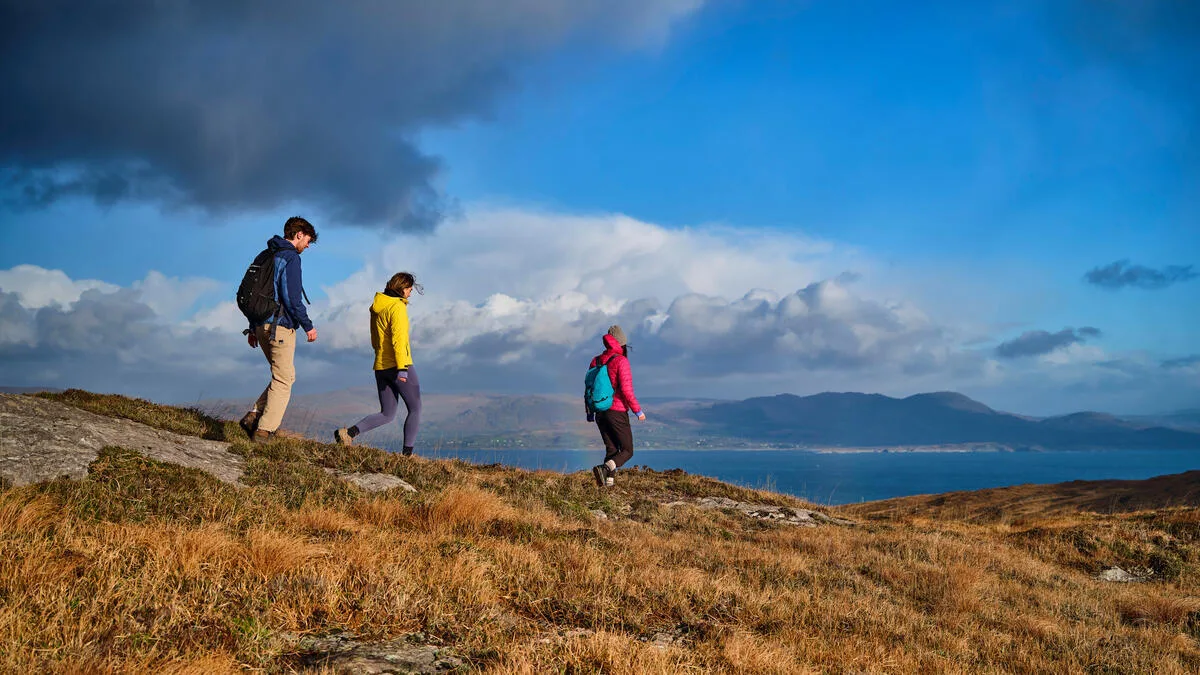
7. Minimise the Effects of Fire
Ireland''s bogland and heathland are fire-sensitive ecosystems. Wildfires in dry spring conditions can destroy thousands of hectares of habitat and take decades to recover. The 2021 fires in the Dublin and Wicklow Mountains showed how quickly things can go wrong. The Leave No Trace principles are clear: don''t light fires on open ground. Use a camping stove for cooking, and if you absolutely must have a fire, use established fire pits and keep it small.
Cigarette butts are a particular problem on Irish trails—both as litter and as fire risk. If you smoke, carry a portable ashtray and never discard butts on the trail or into dry vegetation.
Why Leave No Trace Matters More Than Ever
Ireland''s trails have seen record numbers since 2020. The number of people walking regularly in Ireland increased dramatically, and that growth hasn''t slowed. More walkers mean more pressure on trails, more erosion, more litter, and more potential for conflict with landowners. The Leave No Trace principles aren''t just nice ideas—they''re essential for maintaining the trail access we currently enjoy.
Ireland doesn''t have a legal "right to roam" like Scotland or Scandinavia. Our trail network depends on agreements between landowners, local authorities, and walking organisations. When walkers behave irresponsibly—leaving gates open, allowing dogs to chase sheep, littering, crossing crops—landowners can and do withdraw access. Every walker who follows these principles makes it easier for the next walker to enjoy the same trail.
Frequently Asked Questions
Are the Leave No Trace principles legally enforceable in Ireland?
The seven principles themselves aren''t laws, but several relate to existing Irish legislation. The Wildlife Act protects native plants and animals. The Litter Pollution Act makes littering an offence with fines up to €3,000. Leave No Trace Ireland works as an educational charity—their approach is awareness and behaviour change rather than enforcement. Following these principles keeps you on the right side of both ethics and law.
Can I bring my dog on Irish walking trails?
Dogs are allowed on most Irish trails but must be kept under control at all times. In national parks (Killarney, Wicklow Mountains, Glenveagh, etc.), dogs must be on leads. Near livestock, dogs must always be on leads—farmers are legally entitled to shoot dogs that worry sheep. Always clean up after your dog and carry waste bags out with you. A well-controlled dog is welcome on most trails; an uncontrolled dog creates problems for everyone.
What should I do if I see litter on a trail?
Pick it up. I carry a small bag on every walk specifically for collecting litter I find on the trail. It''s not your mess, but cleaning it up benefits everyone who walks after you. Many walking groups now organise "clean-up walks" that combine exercise with trail maintenance—it''s a rewarding way to give back to the trails you enjoy.
Is wild camping allowed in Ireland?
Wild camping exists in a legal grey area in Ireland. It''s not explicitly prohibited on open mountain land, but it''s not a legal right either. National parks generally don''t permit camping outside designated areas. If you wild camp, follow these principles strictly: camp on durable ground, carry out all waste, don''t light fires, and leave your campsite looking untouched. Be discreet, arrive late, leave early, and never camp on enclosed farmland without permission.
How can I teach children about Leave No Trace?
Children learn by example. Walk with them, explain why you pick up litter, show them how to stay on the path, let them observe wildlife from a respectful distance. Leave No Trace Ireland offers educational resources for families and schools at leavenotraceireland.org. The best approach is making responsible outdoor behaviour normal rather than lecturing—children who grow up walking responsibly become adults who do the same.
The Leave No Trace principles aren''t about restricting your enjoyment of Ireland''s trails. They''re about ensuring that enjoyment lasts—for you, for other walkers, and for the landscapes themselves. Every time you pack out your rubbish, close a gate, or stay on a muddy path instead of widening it, you''re investing in the future of Irish walking.
For more on responsible walking in Ireland, see our packing guide for walking holidays and our self-guided walking holidays guide. And if you''d like to walk Ireland''s trails with a company that takes these principles seriously, get in touch.