Animals in Ireland: What You'll Actually See on the Trail
What animals, birds and plants you'll actually see on Irish walking trails — and where to look.
Hi, I'm Cliff from Walking Holiday Ireland. People walking here for the first time often assume Ireland is a green desert — beautiful, but empty. It isn't. Wildlife in Ireland is quieter and more hidden than in continental Europe — there are no wolves, no wild boar, no bears, no snakes — but the species that are here are often the ones you'd struggle to see anywhere else in western Europe. Red deer, red squirrels, golden eagles, otters, pine martens, puffins, peregrines, and a flora in the Burren that has botanists booking flights.
Here is a working guide to the animals in Ireland you can genuinely hope to see on foot — based on fifteen years of walking these trails ourselves and feedback from thousands of guests.
What animals live in Ireland?
Ireland is home to around 26 native land mammals — including red deer, foxes, badgers, otters, pine martens and mountain hares — along with grey seals, dolphins and whales offshore, and more than 400 recorded bird species. There are no snakes, wolves or bears; the largest wild animal you'll meet on a trail is the red deer.
Ireland's animals at a glance — from most to least likely to see on a walk:
- Rabbits, foxes and hares — near-daily sightings on quiet morning trails
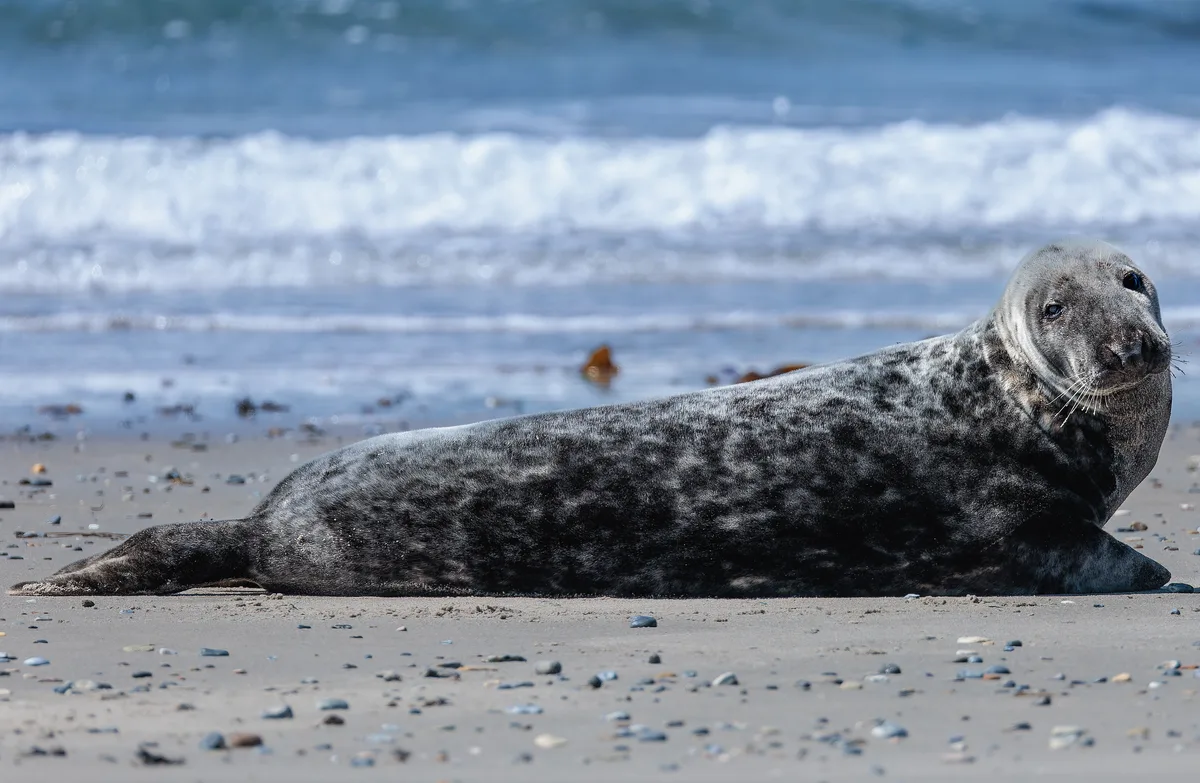
- Grey seals — reliable on coastal walks like the Sheep's Head and Dingle Way
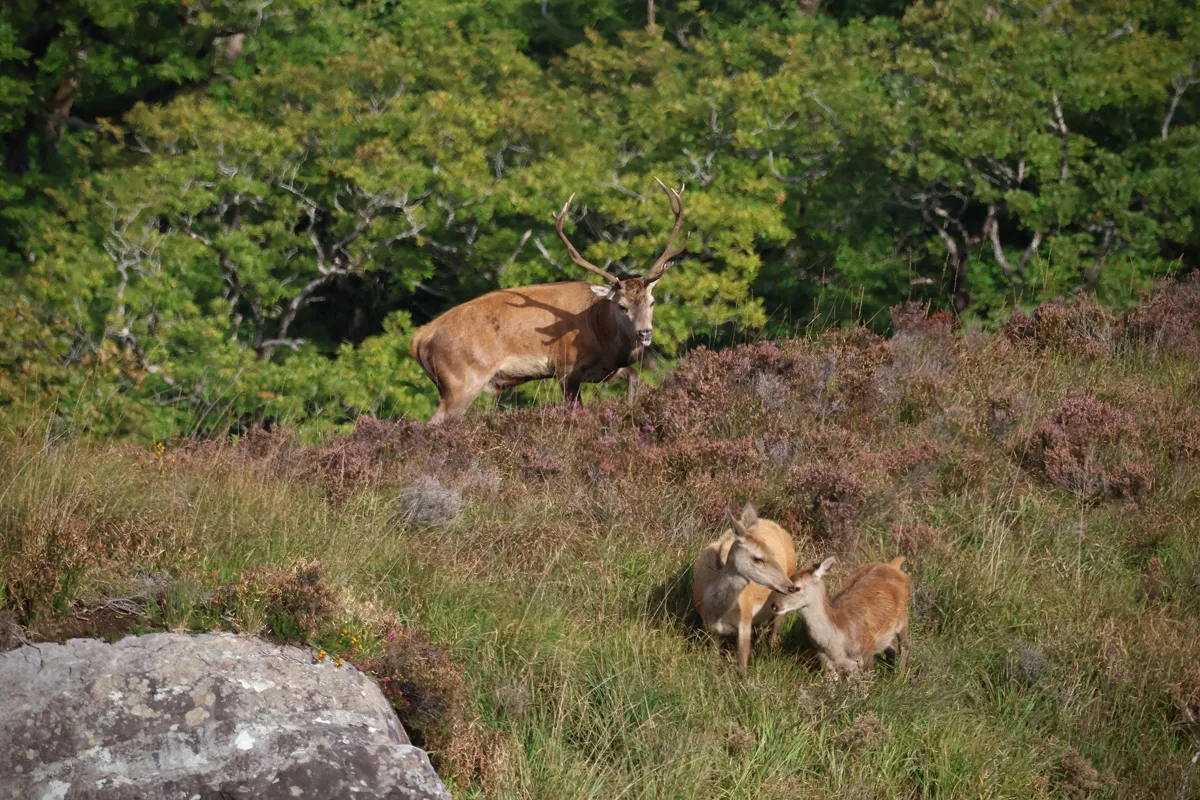
- Red deer — Killarney National Park, especially at dawn and during the autumn rut
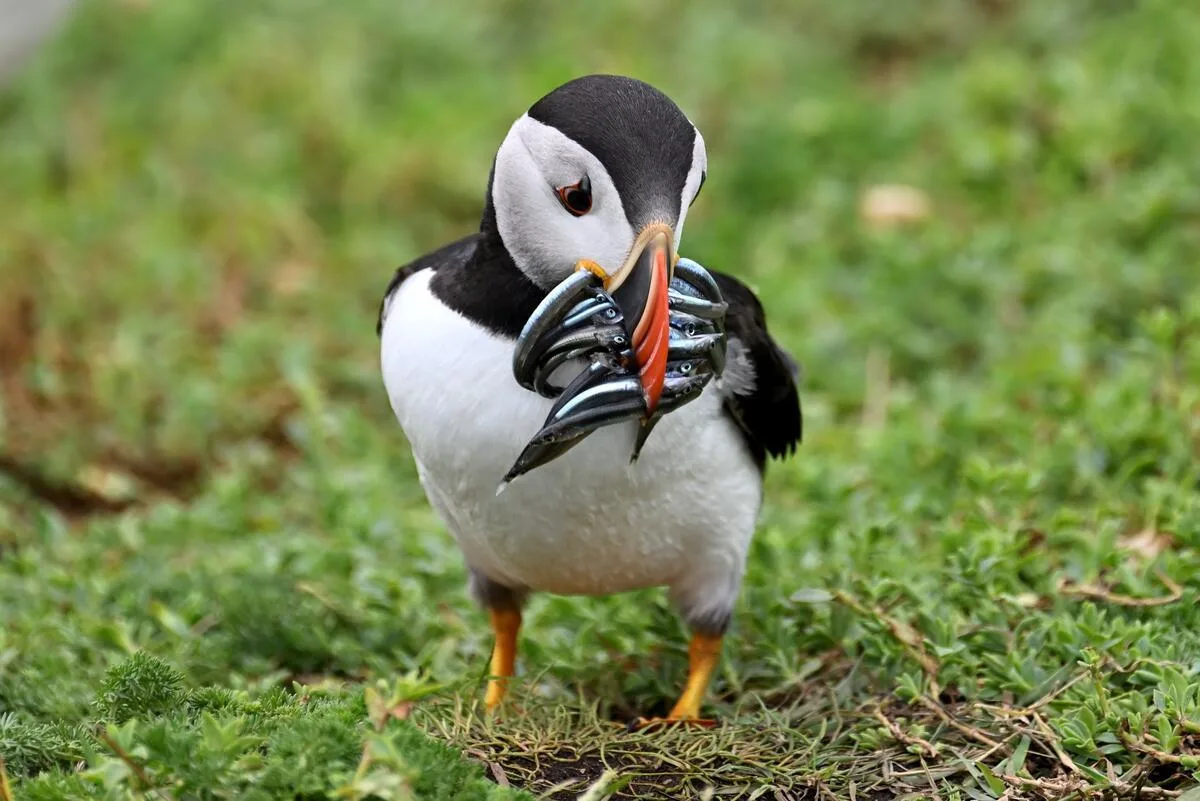
- Seabirds — puffins, gannets and choughs along the Atlantic cliffs (May–July)
- Red squirrels — old woodland in Wicklow and Killarney
- Otters — riverbanks and sea loughs, if you walk quietly at dawn
- Pine martens — the lucky sighting; the Burren is your best chance
- Dolphins and minke whales — headland viewpoints, summer and early autumn
Mammals you may see while walking
Red deer
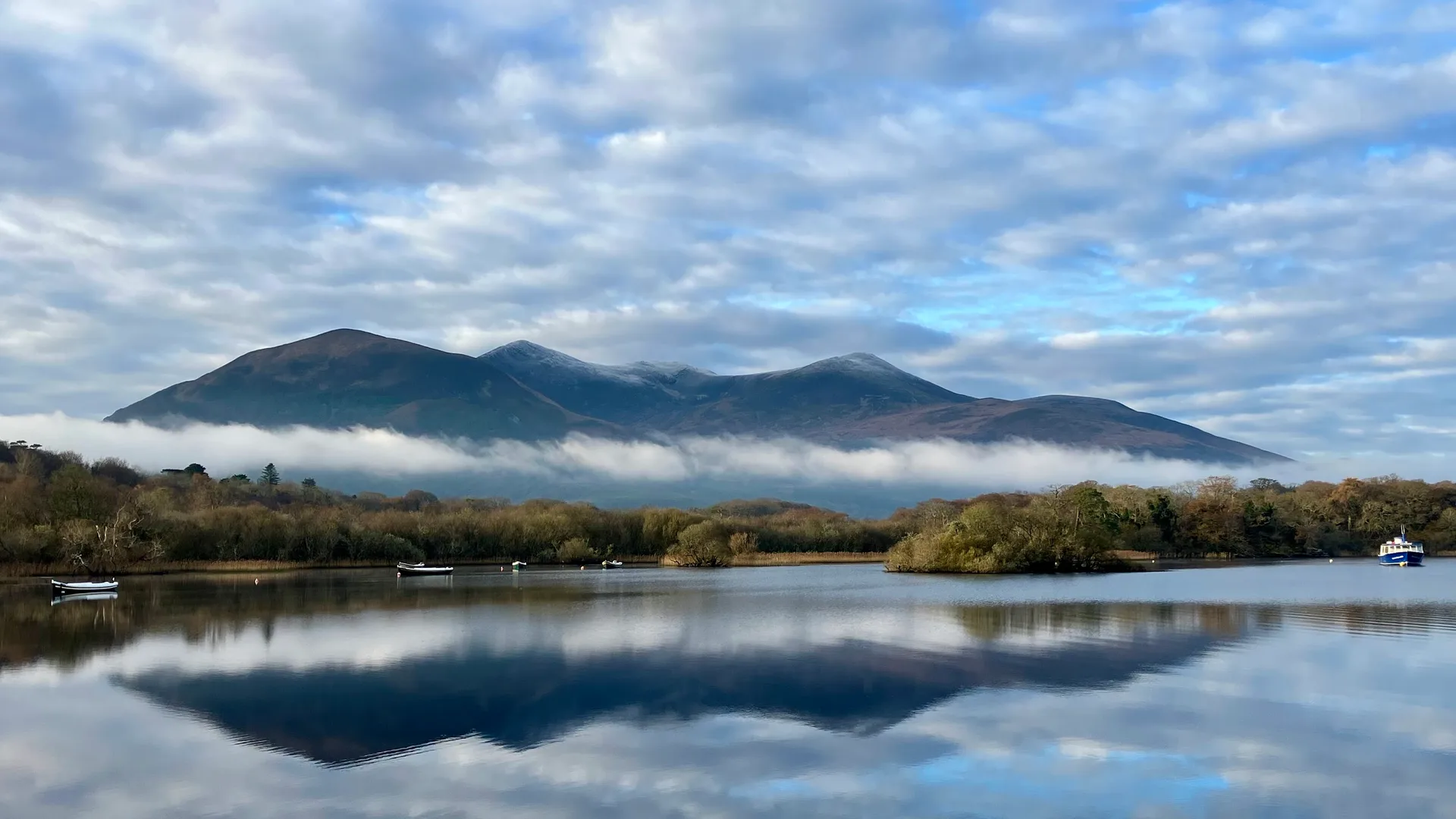
Ireland's only native deer and the largest wild land mammal on the island. The Killarney herd in Kerry is the country's only genuinely wild population, descended from animals that have been here since after the last ice age. You will almost certainly see them walking the Old Kenmare Road section of the Kerry Way, particularly at dawn and dusk. The smaller Wicklow herd is hybridised with sika but still impressive. October bellowing (the rut) is the best time.
Red squirrel
Red squirrels are recovering across Ireland thanks to the surprise ally of the pine marten — martens hunt invasive grey squirrels more readily than reds, and their recovery has quietly brought red squirrels back into mid-Ireland woods. Look up in native oak woodland at Glendalough, Killarney, Glenveagh and the Wexford reserves. Early morning, still days, old stands of trees.
Pine marten
Shy, mostly nocturnal, but increasingly confident in areas like Mayo, Clare and the midlands. Walkers occasionally see them at dusk around woodland edges and along forest roads. The most reliable sign is a black, twisted dropping full of berries or fur on a prominent trail stone — their calling card.
Otter
Ireland has one of the best otter populations in Europe, and you can see them on lakes, rivers and — unusually — on sea coasts. The west coast sea loughs (Clew Bay, Kenmare Bay) are a strong bet. Dawn on a calm day, scanning the far shore with binoculars. Look for the tell-tale trail of bubbles as one dives.
Mountain hare (Irish hare)
The Irish hare is a distinct subspecies found nowhere else. You will see them on high moorland in Wicklow, the Mournes, Connemara and Donegal. Bigger than a rabbit, with longer legs and a more upright stance. They don't fully turn white in winter the way Scottish mountain hares do.
Fox, badger, stoat, hedgehog
All common, mostly nocturnal. You'll see badger setts and fox scats more than the animals themselves. The Irish stoat is a distinct subspecies (we have no weasels).
Birds of the trails and cliffs
Golden eagle
Extinct in Ireland for a century, reintroduced to Glenveagh in Donegal from 2001. A small breeding population now exists. A sighting is rare but not impossible on the Donegal hills — Errigal, the Poisoned Glen, the Bluestacks. White-tailed eagles are also back, in Kerry.
Peregrine falcon
Recovered strongly after DDT-era losses. Sea cliffs all around the island hold breeding pairs — the Cliffs of Moher, Slieve League in Donegal, the Antrim cliffs, and the Saltee Islands. Listen for the high-pitched kek-kek-kek.
Chough
A red-legged, red-billed member of the crow family — Ireland is the last stronghold in the UK/Ireland. Found on the west coast sea cliffs and pastures: the Burren, Sheep's Head, the Dingle peninsula. Their acrobatic flight and distinct "chee-ow" call give them away.
Hen harrier
Declining but still present on the Slieve Aughtys and Slieve Blooms. A graceful, ghost-like bird over rough pasture and bog. The Ballyhoura and Galtee uplands are another stronghold.
Puffin, guillemot, razorbill, gannet
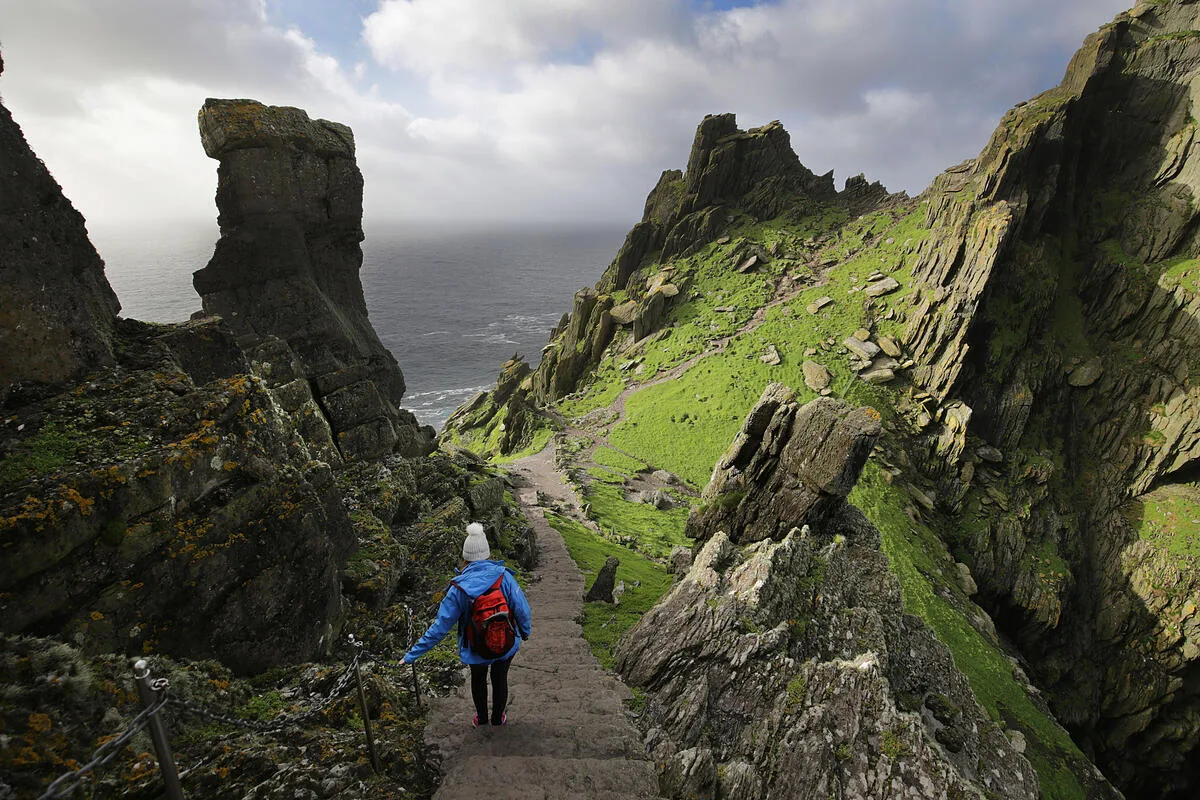
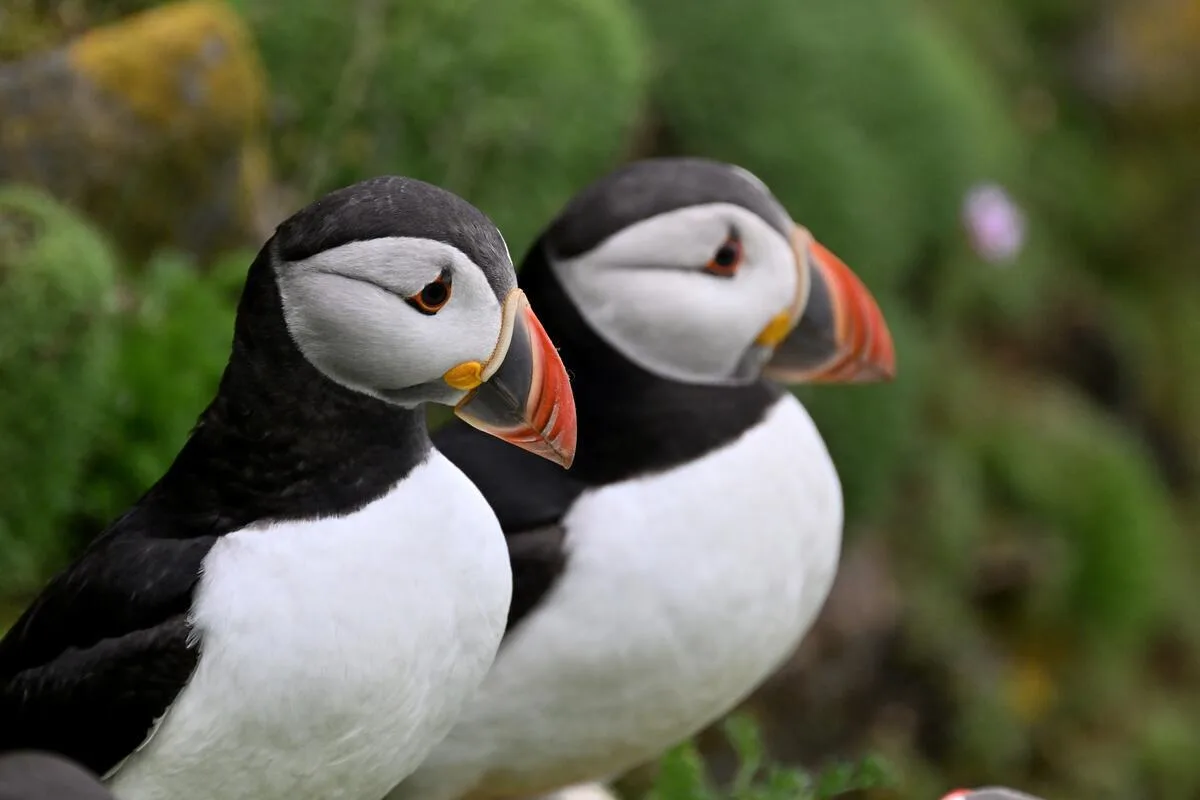
Seabirds are one of the great draws of Irish wildlife. Saltee Island off Wexford, Rathlin in Antrim, the Cliffs of Moher, and most dramatically the Skelligs off Kerry — all deliver huge colonies between May and July. Puffins in particular are approachable at Saltee, where the only access is by small boat from Kilmore Quay.
Corncrake
Almost gone from the country but hanging on in north-west Mayo, Donegal and the Shannon callows. Heard more often than seen — a rasping, rhythmic call from long grass in June.
Marine wildlife from coastal walks
Ireland's west and south coasts are on the migratory highway of the North Atlantic, and a surprising amount of the marine life is visible from land. A patient hour with binoculars on a headland — the Cliffs of Moher, Loop Head, Mizen Head, Malin Head — beats most boat trips.
Atlantic grey seal: common in harbours and on rocks. Easiest on the Beara, Iveragh and Dingle peninsulas. Pups are born in autumn.
Common and bottlenose dolphin: bottlenose pods live year-round off the Shannon estuary and Cork. Common dolphins arrive in summer.
Minke whale and basking shark: seasonal visitors. Basking sharks appear off west coast headlands in May–June — a slow dark fin and a second smaller fin behind it. Minke whales feed through summer.
Orca: rare but seen every year, mostly off Donegal and Antrim in spring.
Are there dangerous animals in Ireland? (Happily, no)
One of the questions we're asked most often: is anything out there going to bother me? The honest answer is no — Ireland is one of the safest places in the world to walk. There are no snakes (blame St Patrick or the Ice Age, depending on who you ask), no bears since prehistoric times, and the last wolf in Ireland was killed in 1786, on the slopes of Mount Leinster.
And no — despite what a glimpse of a large fox at dusk might suggest, there are no coyotes in Ireland either. Nothing on an Irish trail will stalk, chase or bite you, which is why so many of our guests happily walk here solo. The animal that deserves the most respect is a farm one: give cattle a wide berth on field paths, and never walk between a cow and her calf.
The only wild creature worth taking seriously is one of the smallest: the tick. They're present in bracken and long grass in summer, and a small number carry Lyme disease. Long trousers and a quick evening check are all you need — we've covered it properly in our guide to ticks in Ireland.
Flora — the Burren and beyond
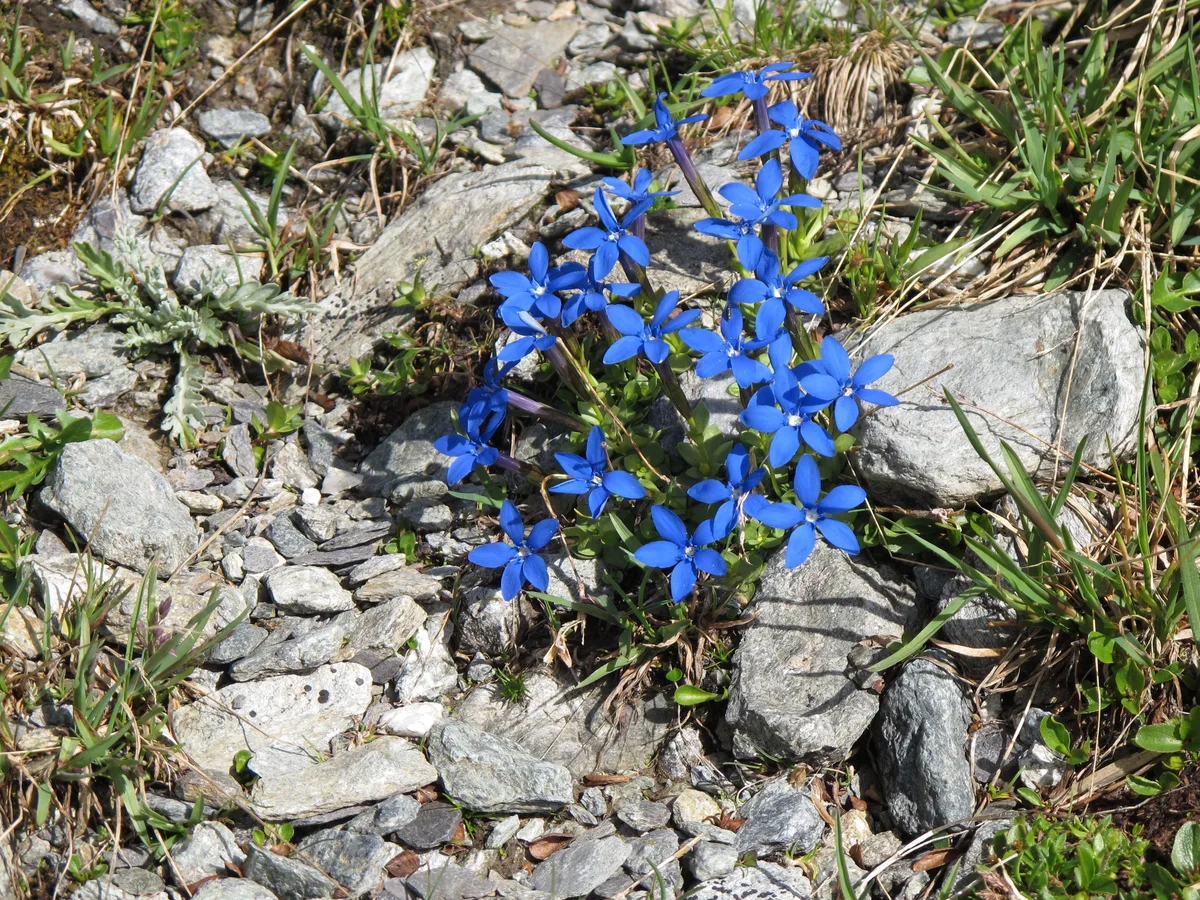
The flora is one of the under-appreciated joys of wildlife in Ireland. The Burren is the headline — 700+ species of flowering plants, including 22 of Ireland's 27 orchid species, and a bizarre combination of Mediterranean, Arctic and Alpine species living on the same limestone pavement. May and early June are the peak weeks.
Burren specials: mountain avens, spring gentian, bloody cranesbill, early purple orchid, fly orchid.
Connemara and Mayo bogs: bog cotton, bog asphodel, sundew (carnivorous), heather in late summer.
Atlantic woodland (Killarney, Wicklow): wood anemone, wood sorrel, bluebell in May, ancient yew (the Muckross yew is one of Europe's oldest).
Coastal: sea thrift (pink cushions on headlands in May), sea campion, samphire, pyramidal orchid in the Dingle machair.
Where to see what, by region
Kerry (Killarney National Park, Iveragh, Beara): red deer, sea eagles, otter, grey seal, peregrine, oak woodland flora. Our single best region for wildlife in Ireland.
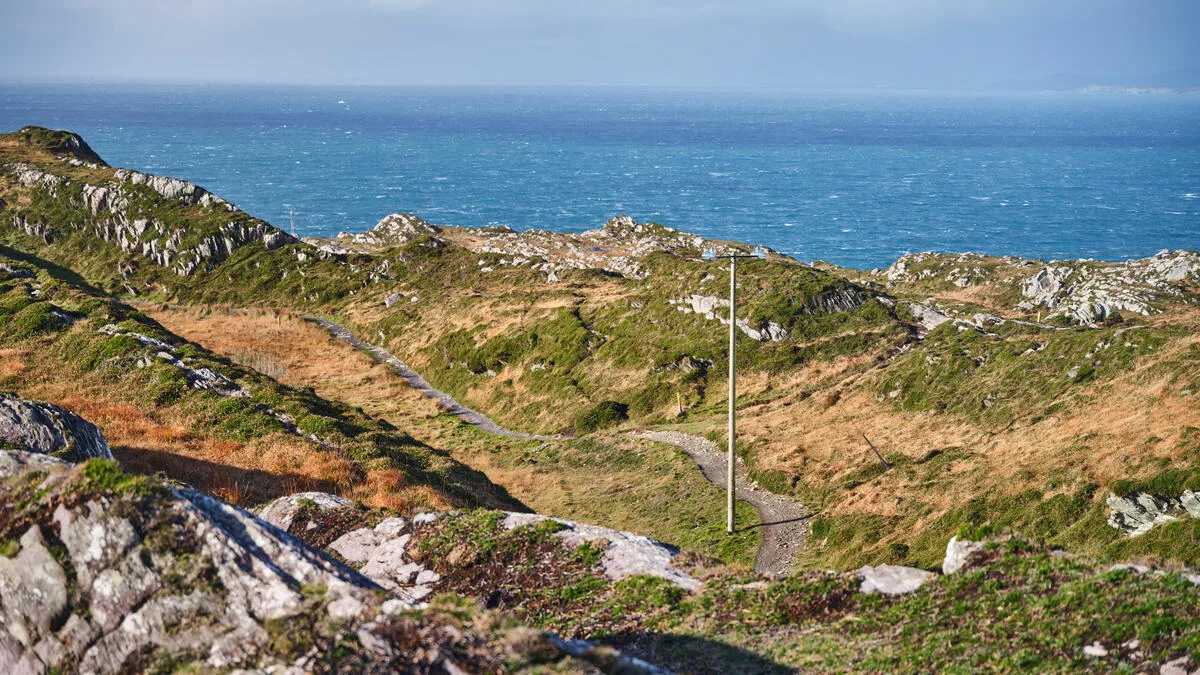
West Cork (Sheep's Head, Mizen): chough, basking shark, dolphin, grey seal, Atlantic flora on the cliffs.
Clare (Burren, Cliffs of Moher): spring flora, chough, peregrine, puffin and razorbill on the cliffs.
Mayo (Wild Nephin, Achill, Clew Bay): otter, corncrake, hen harrier, pine marten, dark sky and occasional sea eagle.
Donegal (Glenveagh, Slieve League): golden eagle, red deer, peregrine, orca (offshore in spring).
Wicklow: red squirrel, mountain hare, peregrine, deer, hen harrier on the uplands.
Antrim (Causeway Coast, Rathlin): puffin, razorbill, guillemot, peregrine, orca offshore.
Wexford (Saltees): the best puffin, gannet and seabird colony within easy reach — May to mid-July only.
The rare ones: Ireland's hardest animals to spot
Some of the rare animals in Ireland take real patience — or plain luck. If you spot any of these, you've earned bragging rights in the pub that evening:
- Pine marten — once nearly gone, now quietly recovering through the hazel scrub of the Burren and the midland woods. Dusk on a still forest road is your best chance.
- Corncrake — down to a few hundred calling males, holding on in north-west Mayo and Donegal. You'll almost certainly hear one before you see one, on a quiet June morning.
- Natterjack toad — Ireland's rarest amphibian, found only around Castlemaine Harbour and the Dingle Peninsula. Listen for the rasping evening chorus in May.
- Kerry slug — spotted like a leopard and found only in Kerry, west Cork and northern Spain and Portugal. Damp mornings on sandstone boulders along the Kerry Way.
- Hen harrier — the "grey ghost" of the uplands, gliding low over bog on the Slieve Blooms and Ballyhouras.
- Red squirrel — pushed out by greys across much of Ireland, but holding on wherever pine martens thrive. The martens hunt the greys — nature's own comeback story.
Best time of year for wildlife
Late April–June: the peak weeks. Seabirds on the cliffs, flora at its best in the Burren, peregrines breeding, basking sharks arriving.
July–August: seals pupping by August, dolphin pods, long evenings good for pine marten and badger sightings.
September–October: red deer rut (the great spectacle of Irish wildlife), autumn migration, otter activity, mushrooms and fungi in oak woods.
Winter: quieter — but white-fronted geese on the Wexford slobs, whooper swans on the callows, seals more visible.
Walking quietly — ethical wildlife watching
Three rules we share with every guest. Never approach or feed wild animals. Never approach seal pups on beaches — the mother is almost certainly watching from the water. Keep dogs on leads on moorland and around cliffs — ground-nesting birds and seabird colonies are especially vulnerable between March and August. Bring binoculars, not a long lens. An 8×42 binocular weighs 600 g, shows you more wildlife in Ireland than any camera ever will, and leaves the animal undisturbed.
Walk the wildlife hotspots with us
We run self-guided walking holidays in all the regions above — the Kerry Way for red deer and sea eagles, the Sheep's Head for chough and marine life, the Burren for flora. Route notes flag the wildlife spots. Bags moved daily, trusted guesthouses, a 24/7 number on the trail.
FAQs about animals in Ireland
Are there dangerous animals in Ireland?
No. Ireland has no snakes, no bears, no wolves, no coyotes and no wild boar. The most dangerous animal you'll meet on a walking trail is an occasional territorial cow on a field path — give a wide berth, never walk between a cow and her calf.
What is the most common animal in Ireland?
Going by what walkers actually see: rabbits, foxes and hares top the list, with grey seals a near-certainty on coastal walks. Ireland's most numerous wild mammals overall are actually bats and pygmy shrews — you'll just rarely notice them.
What is Ireland's most iconic wild animal?
The red deer of Killarney — the only genuinely native wild deer, continuous since the last ice age. The October rut, when stags bellow across the lakes, is one of the great wildlife experiences in Ireland.
Where can I see puffins in Ireland?
Saltee Island off Wexford, the Skelligs off Kerry, the Cliffs of Moher (from below, by boat), Rathlin Island in Antrim. May to mid-July only — after that, they leave for the open ocean until spring.
Where is the best place in Ireland to see red deer on a walking trail?
Killarney National Park in County Kerry is your best bet, particularly on the Old Kenmare Road section of the Kerry Way. The herd here is Ireland's only truly wild native population and sightings are common, especially at dawn and dusk. October is spectacular for hearing the bellowing during the rut.
What is the best time of year to see wildlife in Ireland while walking?
Spring and early summer (April to June) are ideal for wildflowers, nesting seabirds like puffins, and active mammals. Autumn (September to October) brings the red deer rut in Killarney and excellent bird migration along the coasts. Winter is quieter but best for spotting seals, otters, and overwintering waterfowl without the crowds.
What makes the Burren special for wildflowers and plant life?
The Burren's unique limestone landscape creates microclimates where Arctic-alpine plants grow alongside Mediterranean species — something you won't see anywhere else in the world. Spring gentians, bloody cranesbill, and over 20 species of orchid bloom here from May onwards. It's a bucket-list destination for botanists and casual walkers alike.
Is a guide needed to see wildlife in Ireland?
For most species, no — a pair of binoculars, early starts, and patience will get you a long way. For seabird colonies (Saltee, Skellig) you need a boat operator. For orca or whales, a dedicated wildlife tour is worthwhile.
What's the best region for wildlife if I only have a week?
Kerry — Killarney National Park, the Kerry Way, and a side trip to the Blasket Islands or the Skelligs if the weather permits. Red deer, sea eagles, otter, grey seal, puffin, chough, basking shark and the best oak woodland flora on the island, all within 80 km.
Continue exploring
Planning your wildlife walking trip? These guides will help:
Photo Gallery