Hiking Safety Tips: 6 Habits for Safe Walking in Ireland
Practical hiking safety tips for walking in Ireland — not scaremongering, but the habits that fifteen years of running guided and self-guided trips have taught us keep walkers out of trouble.
Ireland's trails look gentle. Compared to the Alps or the Scottish Highlands they mostly are. But the weather turns fast, mobile coverage disappears in the glens, and every year the mountain rescue teams get called to walkers who'd have had a good day out if they'd followed a handful of simple hiking safety tips.
Here's what we tell every guest at their pre-walk briefing — whether they're on a waymarked way like the Kerry Way or up a hill day on Croagh Patrick. None of it is dramatic. All of it stops small problems becoming search-and-rescue ones.
1. Plan the walk before you leave the B&B
The first of our hiking safety tips isn't glamorous. Before you set off each morning on your walking holiday, take fifteen minutes to:
- Read the route card or guidebook description for the day's stage
- Check the forecast on Met Éireann (the Irish forecast; UK Met Office for Northern Ireland)
- Tell someone — B&B host, office, the next night's guesthouse — where you're going and when you expect to arrive
- Agree a "call by" time so they know when to raise the alarm if you don't turn up
In fifteen years, the times our walkers have needed help, it's almost always been because a B&B host rang us before dark saying "they're not here." That's the alarm system working.
2. Respect Irish weather — it's the single biggest risk
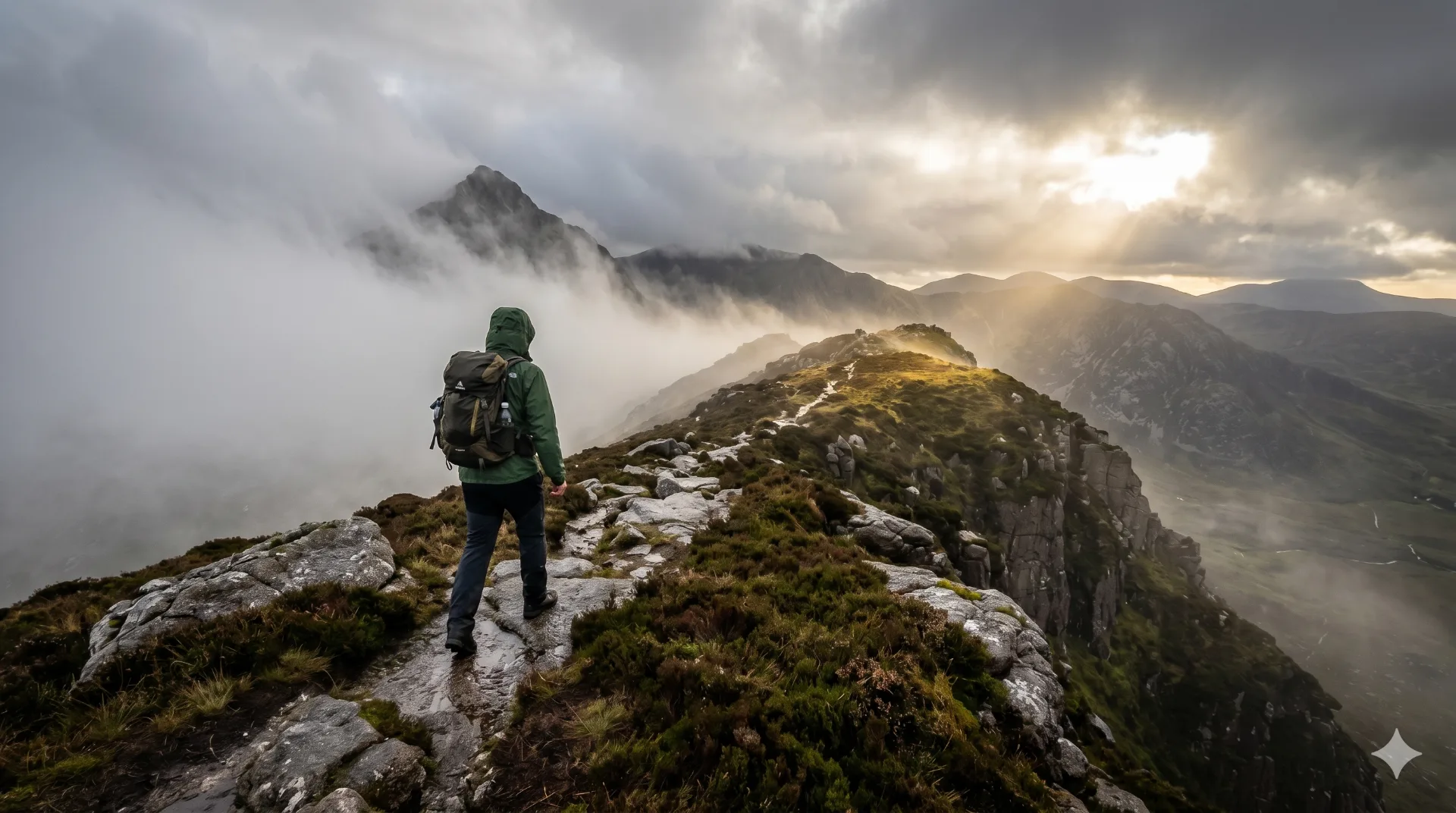
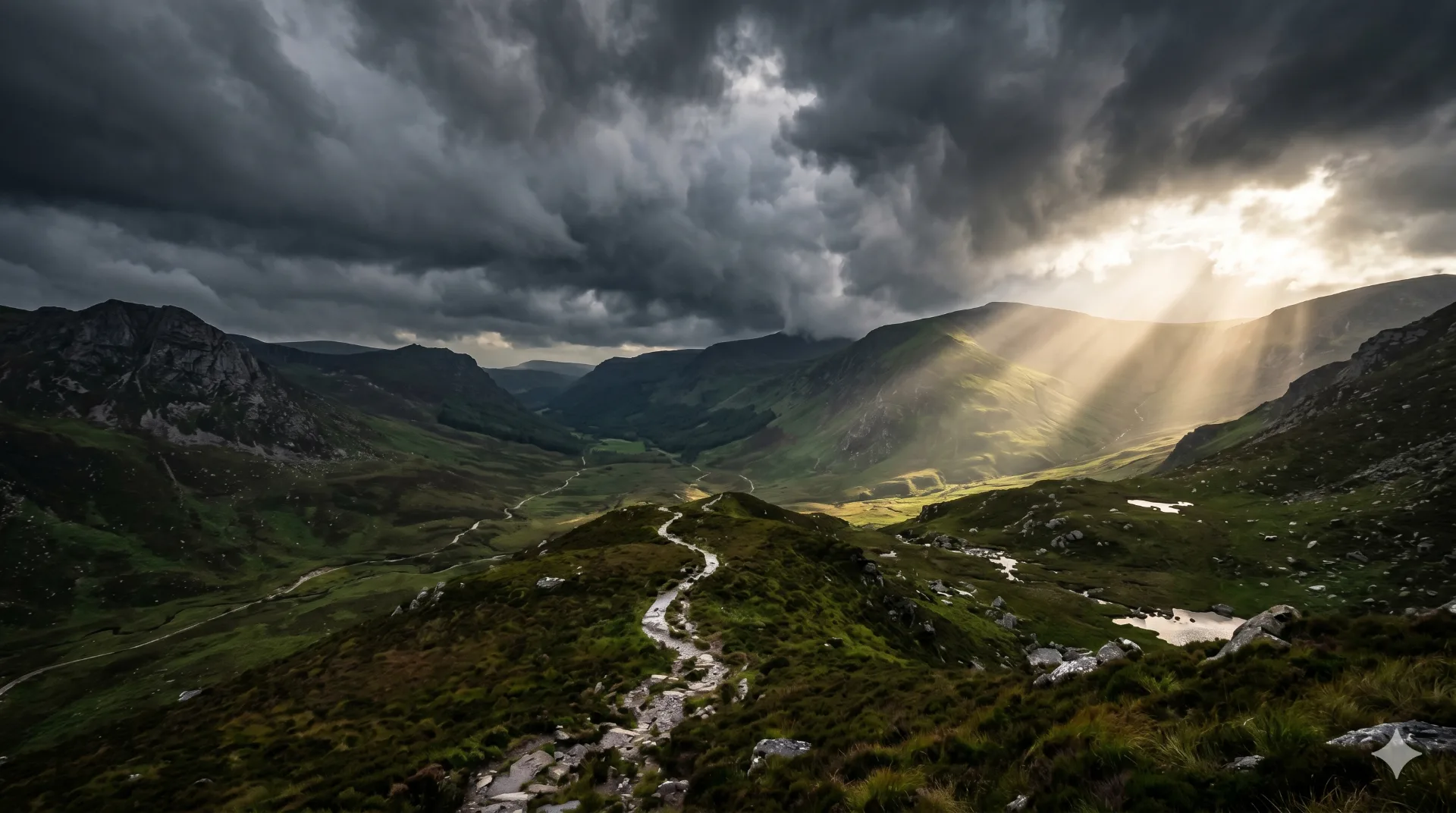
Of all hiking safety tips, this one matters most in Ireland. Our weather turns on a sixpence. A blue-sky morning on the Kerry Way can be driving horizontal rain by noon. Temperature can fall sharply on exposed ground as the wind gets up. This isn't unusual — it's what you should plan for.
Concrete habits:
- Check the forecast the night before AND the morning of. If yellow warnings are up for wind or rain, shorten the day or stay low.
- If visibility drops below 100 metres on a ridge, turn around. No summit is worth a cliff in the wrong direction.
- Pack for the worst version of the day: waterproof jacket and trousers, warm base layer, hat and gloves. Yes, in July.
- Start early on mountain days. Weather typically worsens in the afternoon, and you want hours of daylight in the bank if something goes sideways.
3. The ten things we check every hiker has
Our pre-trip checklist — the ten items we ask walkers to have in the rucksack before a mountain day. Anything missing gets sorted at the hostel or hardware shop in the nearest town.
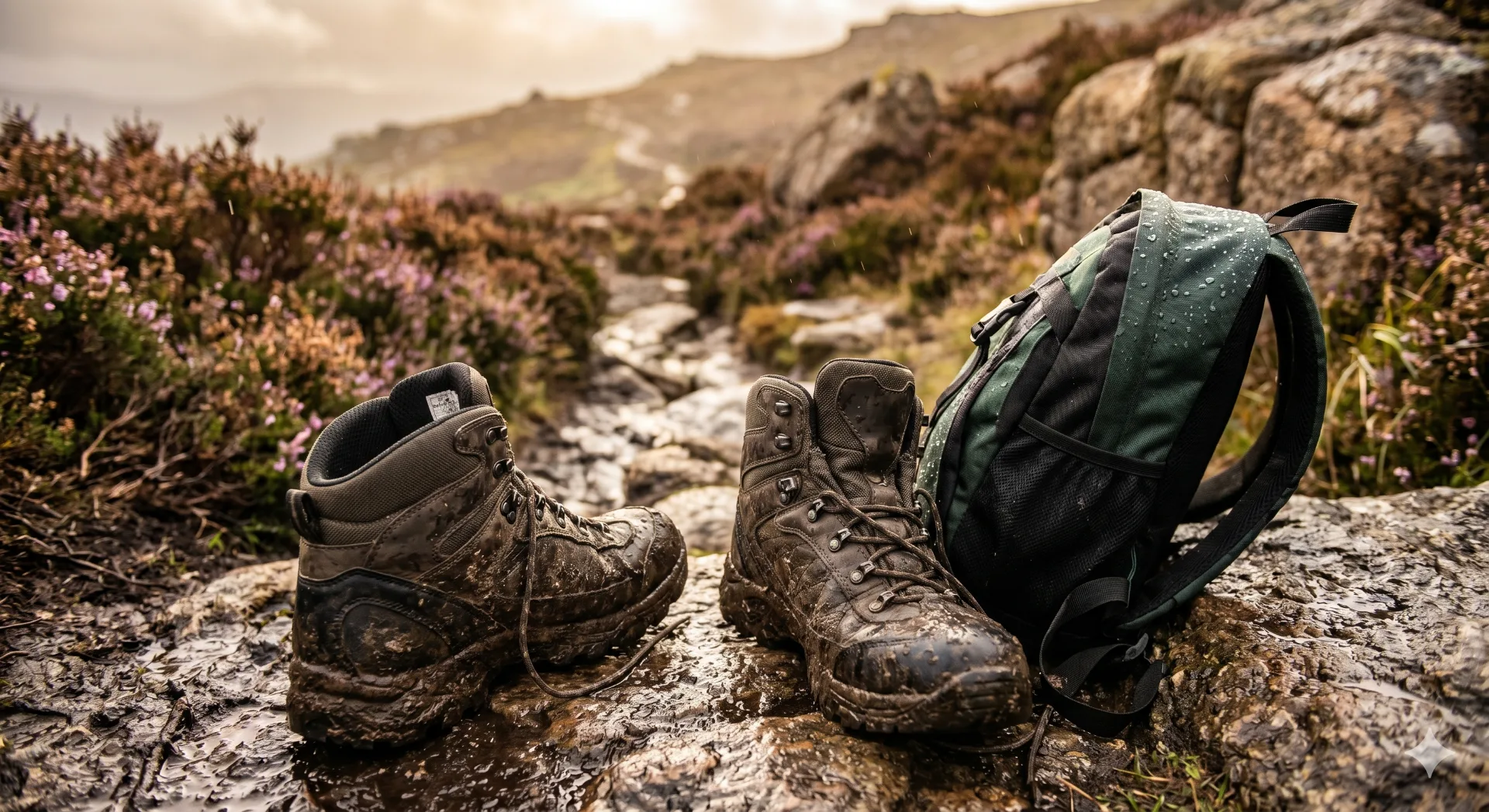
- Broken-in waterproof walking boots with ankle support
- Waterproof jacket and over-trousers (breathable, not a plastic pac-a-mac)
- Warm mid-layer — fleece or wool, not cotton
- Hat and gloves — even in summer, for exposed ridges
- Two to three litres of water, plus a way to treat stream water in emergencies
- Trail food — a day's worth, plus an extra bar or two for delays
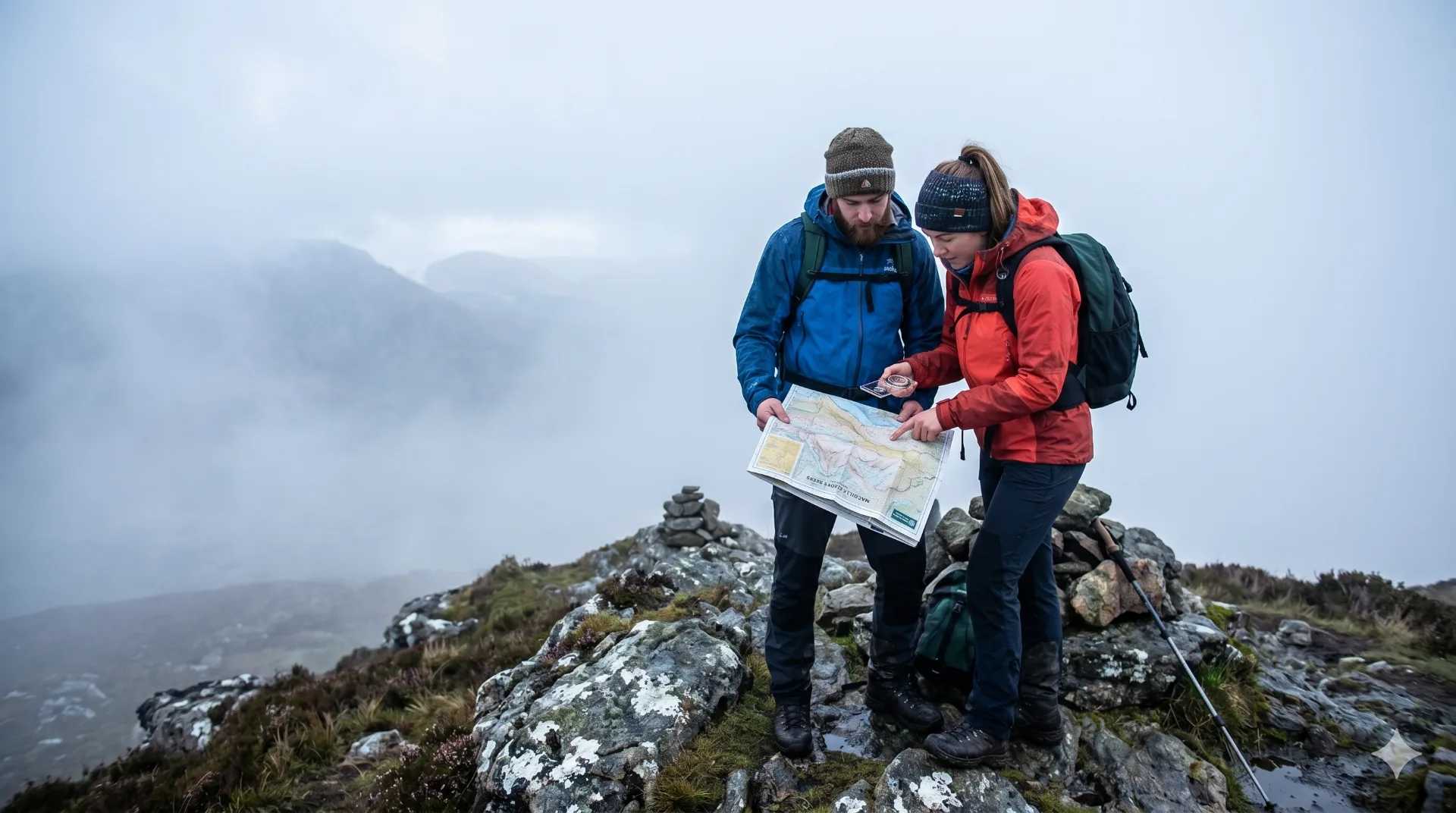
- Paper map and compass — and the basic competence to use them
- Phone with an offline map downloaded before you set out (Outdooractive, AllTrails, Komoot or HiiKER — make sure the map itself is saved to the phone, not just the route)
- Head torch with fresh batteries
- Small first-aid kit: plasters, blister dressings, paracetamol, duct tape
4. Don't rely on your phone for navigation
One of the hiking safety tips we repeat most often: phones fail. Batteries die in cold weather. Touch screens refuse to work with wet fingers. Mobile signal vanishes in Irish glens. A phone is a supplement to a paper map, not a replacement for one.
Before your walking holiday:
- Download offline maps for your whole route
- Carry a 1:25 000 or 1:50 000 OS map of the area as a paper backup
- Know how to take a compass bearing to a feature you can see. If that feels rusty, spend an hour with Mountaineering Ireland's navigation basics before you fly.
- Carry a power bank — a dead phone in a bog is expensive, both as a phone and as a safety tool
5. Solo walking — extra hiking safety tips that matter
A lot of our guests walk Ireland on their own. It's one of the great pleasures of a walking holiday — your pace, your stops, your silence. But solo walkers need a few extra habits:
- Always tell someone your day plan and return time. Our clients text or email us; if you're not on an organised trip, a family member back home works.
- Stick to waymarked trails unless you're confident with off-trail navigation. The Kerry Way, Wicklow Way, Dingle Way and Causeway Coast are all well-marked and lightly travelled enough that you'll see other walkers most days.
- Carry an emergency whistle and a bright outer layer. Six whistle blasts, wait a minute, repeat — the international distress signal.
- Consider a PLB (personal locator beacon) or a satellite device like a Garmin inReach if you're going into the bigger mountains — Wild Nephin, the Mournes, Sliabh Liag. They're cheap insurance.
- Trust your gut. If a pass looks wrong, the weather is nastier than forecast, or you feel unwell — turn back. No decent trail goes anywhere so urgent that it can't wait a day.
6. If something goes wrong
The final hiking safety tip is the one people don't think about until they need it. In an emergency on Irish trails:
- Dial 112 (or 999) and ask for Mountain Rescue. The operator will pass you to the nearest team.
- Give your location as best you can — a 6-figure grid reference from your map, or an Eircode if you can see a building. Expect the operator to work from a grid reference, an Eircode or a named landmark. A what3words address can help as a back-up if you have signal, but don't rely on it alone.
- Stay put if injured. Moving an injury around makes it worse and makes you harder to find. Wrap in your spare layer and shelter.
- If you're the one helping someone, make them warm and safe first, then call for help.
Irish Mountain Rescue is staffed by volunteers. They won't charge you and they won't judge you. If you have any doubt at all that you need them — call.
Walk Ireland with a safety net
Every Walking Holiday Ireland guest gets a briefing pack, paper and digital route notes, a 24/7 emergency number, and pre-booked B&Bs whose hosts are briefed on your arrival time. It's all part of the self-guided experience — you walk independently, we watch your back.
FAQs about hiking safety in Ireland
Is it safe to hike alone in Ireland?
Yes, for the vast majority of our trails. The waymarked long-distance ways — Kerry Way, Wicklow Way, Dingle Way, Causeway Coast — are safe for competent solo walkers who follow the hiking safety tips above. Off-trail mountain walking alone requires more experience.
What's the biggest hiking safety risk in Ireland?
Weather, without question. More Irish walkers get into trouble through cold, wet and poor visibility than anything else. The mountains aren't high by European standards, but weather exposure on an open ridge with no shelter catches people out.
Do I need special training to hike in Ireland?
Not for waymarked trails at a moderate fitness level. For unmarked mountain routes you should be competent with map, compass and basic hill-craft. Mountaineering Ireland runs good introductory courses.
What's the number for mountain rescue in Ireland?
Dial 112 or 999 and ask for Mountain Rescue. Both work in the Republic of Ireland and Northern Ireland. Give your location as a grid reference or an Eircode if you can, and name the nearest landmark.
When is the safest time of year to hike in Ireland?
May, June and September offer the best balance of long daylight, settled-ish weather, and dry trails. Winter hiking (November to March) is fine on low-level waymarked ways but risky on the mountains without proper winter skills.
Do mobile phones work on Irish mountains?
Patchily. Coverage is good near towns and on some ridges, non-existent in glens and behind big hills. Never rely on a phone as your only means of getting help. Carry a paper map and a whistle.
Related reading: For one trail hazard worth understanding, read ticks in Ireland: what walkers really need to know.
Walking alone does not have to mean planning alone. Our solo walking holidays in Ireland are built for independent walkers: a route planned around you, accommodation booked ahead, bags moved daily, and someone on the end of the phone if the weather turns.
Photo Gallery