Winter Hiking Clothing Ireland: 7 Essential Tips
I've spent more winters walking the Irish hills than I can count, and I can tell you with absolute certainty: what you wear matters far more than where you go. I've seen hikers with expensive GPS watches and top-of-the-line backpacks shivering miserably on Ben Bulben, while others with proper winter hiking gear Ireland essentials stayed warm and dry all day. Getting your winter hiking clothing right isn't complicated — but it does require understanding how your body loses heat and what materials actually work in wet, windy Irish conditions.
The Irish winter is deceptive. Our temperatures rarely plunge below -5°C, so you might think it'll be easy. But that's not how it works out on the mountain.
The wind chill on a January ridge can make -2°C feel like -12°C, and our damp cold — the kind that seeps through everything — is far more dangerous than the crisp, dry cold of continental winters. Add in short daylight hours (barely eight hours in December), and you realise that every layer and every material choice matters.
Over the years, I've learnt these winter hiking tips in Ireland come down to seven fundamental principles. Master these and you'll stay warm, dry and actually enjoy your winter hikes.
1. Master the Layering System Hiking Ireland: Your Foundation
The foundation of your winter hiking gear Ireland setup isn't about wearing thick jumpers — it's about understanding how layers work together. Think of it like building a house: you need a strong foundation, insulation in the middle and a weatherproof roof.
Your base layer sits directly against your skin, and its job is to move moisture away from your body. When you're hiking uphill, you sweat — even in winter. If that sweat stays on your skin, you'll get cold the moment you stop moving.
Merino wool hiking Ireland base layers are my personal favourite because they're naturally temperature-regulating and resist odour brilliantly. Synthetics are cheaper and dry faster. Both work — cotton doesn't.
Base Layer: Your Moisture Management Foundation
Merino wool — naturally odour-resistant, regulates temperature, maintains warmth when damp
Synthetic (polyester/polypropylene) — dries fast, moves moisture quickly, budget-friendly
Weight matters — lightweight for high-output days, midweight for cold ridges, heavyweight for rest stops
Your mid layer is your insulation engine, trapping warm air around your body. Fleece works beautifully here, particularly grid fleece that breathes well during climbs. Down is excellent too—incredibly warm for its weight—though it loses insulation when wet.
On Irish hikes, I often opt for synthetic insulation like Primaloft because it retains warmth even when damp, and Ireland will absolutely test that.
Mid Layer: Your Warmth Engine
Fleece — breathes well, dries quickly, works when damp
Down — warmest for weight, compresses small, loses function when wet
Synthetic insulation — retains warmth when damp, dries faster than down, slightly heavier
Your outer layer is your shield against wind and rain. This is your shell jacket, and it needs to be waterproof and breathable. The beauty of the layering system hiking Ireland demands is that you can adjust it throughout the day — wearing all three on a windy ridge, peeling off your mid layer when you warm up, opening your shell jacket vents on a steep climb.
2. Waterproof Jacket Ireland Winter: Choose the Right Shell
Your outer shell jacket is arguably the most important piece of winter hiking gear Ireland hikers can own, and it deserves investment. Gore-Tex is the gold standard for good reason — it's genuinely waterproof, genuinely breathable, and it lasts. A quality Gore-Tex jacket will serve you for ten or fifteen years if you care for it properly.
Modern alternatives like eVent and Polartec Neo Shell hold up remarkably well too. They're often lighter and sometimes more breathable than Gore-Tex.
Breathable rain gear hiking jackets need specific features that matter on Irish trails:
Feature | Why It Matters | Priority |
|---|---|---|
Pit zips | Venting on steep climbs while staying dry | High |
Adjustable hood | Fits over hat, stays in place in wind | Essential |
Taped seams | Prevents water seeping at stress points | Essential |
Waterproof pockets | Protects phone, map, snacks | High |
Bright colours | Visibility in mist and short daylight | Medium |
I learned the visibility lesson on a February afternoon in the Wicklow Mountains when mist rolled in and I lost sight of two walkers in dark jackets within thirty metres. Bright orange or lime makes you visible when it matters most.
3. Protecting Extremities Hiking: Head, Hands and Feet
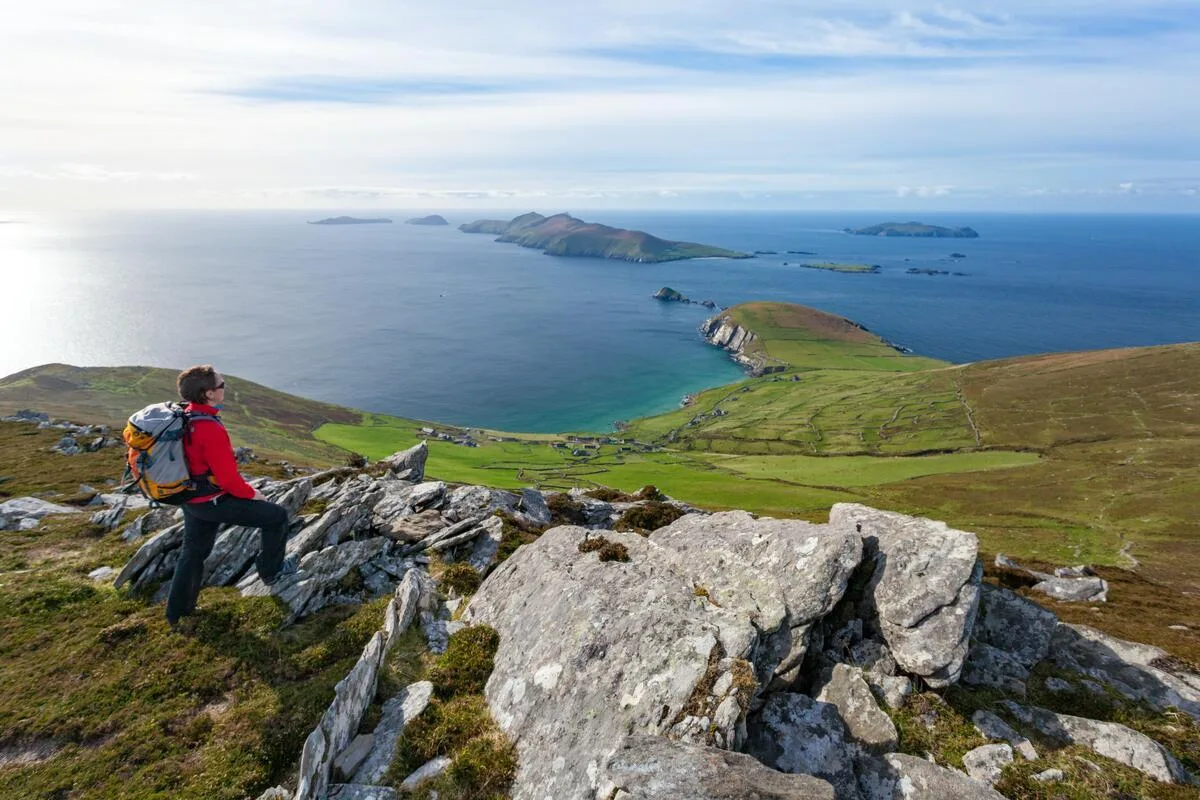
Your body prioritises keeping your core warm, which means your head, hands and feet get cold first. On a winter hike in the Wicklow Mountains or along the Dingle Peninsula, protecting extremities hiking in Ireland's winter conditions isn't optional.
Start with a good merino wool hat or fleece beanie that covers your ears completely. I never set out on a winter hike without one, even if it seems mild at the trailhead. Wind conditions change rapidly as you gain elevation.
Head, Hands and Feet: Your Priority Areas
Head protection: A quality merino wool or fleece hat that covers your ears. You lose significant heat through your head — up to 10% of total body heat on a cold day. Pack a buff or neck gaiter too for exposed ridges.
Hand protection: Cold hands ruin a hike faster than almost anything else – fumbling with map reading, struggling to zip your waterproof, losing grip on steep sections. Invest in waterproof gloves with a Gore-Tex insert or similar membrane, combined with insulation.
I pack mittens as backup for really cold days — they're warmer than gloves because your fingers stay together, though you lose dexterity.
Foot protection: Your feet are where cold becomes genuinely dangerous. Invest in good quality merino wool hiking socks — thicker than summer socks, but not so thick they compress inside your boot and restrict circulation.
I carry a spare pair in my pack and change into them at lunch if my feet feel damp. That single habit has transformed my winter hiking comfort.
4. Don't Forget Your Legs
Your legs are a massive surface area for heat loss. Waterproof hiking trousers are essential for Irish winter conditions — not lightweight rain pants, but proper winter trousers with taped seams and articulated knees. I prefer softshell construction because it breathes better and moves more naturally than hard shell.
Absolutely avoid cotton trousers and jeans on winter hikes. Wet cotton loses all insulation value and conducts heat away from your body faster than almost any other material.
Many hikers pair softshell trousers with lightweight merino wool leggings underneath — this combination gives you flexibility as conditions change on routes like the Kerry Way.
Gaiters: Your Secret Weapon
Gaiters might sound like overkill, but on Irish winter hikes — especially in the west where boggy terrain is standard — they're genuine lifesavers. They seal the gap between your trousers and boots, keeping mud, slush and snow out.
They add a couple of hundred grams to your pack and transform your comfort. I've worn mine on every winter walk for the past five years.
5. Invest in Hiking Boots Wet Conditions Demand
Summer hiking boots won't cut it for winter. Hiking boots wet conditions in Ireland demand need three things: genuine insulation, solid grip and proper ankle support.
Skip the insulated "winter boots" you see marketed for hunting and snow — in Irish winter conditions you will overheat in them, and damp feet from sweat are worse than cold ones. A good 3-season or 4-season walking boot with a waterproof membrane, a stiff sole and real grip, worn with a decent pair of merino socks, is what actually works here.
Insulation — minimum 200g, ideally 400g for prolonged exposure
Grip — Vibram soles are industry standard, deep lugs for mud and wet rock
Ankle support — rigid midsole prevents twisted ankles on hidden obstacles
Waterproofing — full-grain leather or quality synthetic with sealed seams
Grip is critical. Winter surfaces are slippery — wet rock, mud, and sometimes ice or snow. Vibram soles are industry standard for good reason. Ankle support matters more on winter trails than summer ones — snow and ice hide rocks and holes, and a rigid midsole prevents twisted ankles when you step wrong.
6. Carry Spare Layers: Cold Weather Hiking Tips
This cold weather hiking tip has saved me more than once. Irish mountain weather changes at shocking speed. You can set out in mist and drizzle, and by the time you reach the ridge, a wind shift brings clear skies. Or the reverse — clear skies become horizontal rain in fifteen minutes.
Always carry a spare base layer. If your main base layer gets damp through rain finding its way in or sweat from a hard climb, having a dry one makes the difference between a miserable afternoon and a manageable one.
Pack an extra insulated hiking layer too — a lightweight fleece or insulated gilet adds perhaps 150 grams to your pack but gives you huge flexibility.
Winter Pack Essentials
Spare base layer (merino or synthetic)
Extra mid layer (lightweight fleece or gilet)
Spare socks (merino wool)
Spare gloves
Emergency shelter (lightweight bivvy bag)
The rule on winter Irish hikes is simple: conditions change faster than you can hike down. Your spare layers are insurance. I've never regretted carrying them.
7. Avoid Cotton at All Costs
Cotton is genuinely dangerous in winter hiking. It absorbs moisture brilliantly but releases it slowly. Wear a cotton base layer, and sweat gets trapped next to your skin. Stop to rest, and that damp cotton conducts heat away from your body rapidly.
Wind chill amplifies this effect. Within minutes, you go from warm to chilled.
This applies to cotton socks, cotton jumpers, and cotton anything. The Irish winter is consistently wet and windy, and cotton in wet conditions is simply bad engineering.
Merino wool wicks moisture away and maintains insulation when damp. Synthetics dry fast and move moisture quickly. Both work. Cotton doesn't.
Hypothermia sneaks up on you — you don't realise how cold you are, your decision-making starts failing, and you make worse choices that make you even colder. Cotton doesn't cause hypothermia directly, but it creates the conditions where hypothermia becomes possible.
Leave it at home.
The Bottom Line: Your Winter Mountain Clothing Guide
Winter hiking in Ireland is genuinely rewarding. The mountains are quieter, the light is different, and there's something magical about having a ridge to yourself on a winter's day. But this magic only happens when you've got your cold weather hiking clothes sorted properly.
You don't need to spend a fortune on winter hiking gear Ireland essentials. A quality merino base layer, a decent fleece, a Gore-Tex jacket, waterproof trousers, proper boots and a good hat and gloves will set you up for years.
Start with the three-layer system; protect your extremities and get your feet and legs right. Everything else builds from there.
Winter Hiking Clothing Ireland Essentials
Layer properly: merino/synthetic base + fleece/synthetic mid + waterproof breathable shell
Protect extremities: quality hat, waterproof gloves, merino wool socks
Invest in winter boots: minimum 200g insulation, Vibram soles, ankle support
Waterproof matters: Gore-Tex or equivalent with pit zips, adjustable hood, taped seams
Carry spares: extra base layer, mid layer, socks — conditions change fast
Avoid cotton: loses insulation when wet, conducts heat away dangerously fast
Don't forget legs: waterproof trousers, gaiters for boggy terrain
Fancy experiencing the Irish mountains in winter with someone who knows where to go and how to stay warm? Have a look at our walking tours — we'd love to help you plan your adventure. Or get in touch with any questions about winter hiking clothing in Ireland or layering systems for hiking.