Towns and Villages Along the Barrow Way: Your Evening Guide to Food, Pubs and History
The Barrow Way is a walk you measure in pubs rather than peaks. There are no summits, no scrambles, and no vistas earned through hard climbing. What there is, every dozen kilometres or so, is a town. And these are the best part. Each one is a working Irish market town with deep roots — a Cistercian abbey here, an Anglo-Norman bridge there, a Shackleton museum, a holy well, and more pubs than you would think a town of 800 people could possibly support. Walking the Barrow Way is, more than anything, an unhurried journey through small-town Ireland as it actually is.
Part of our complete guide to Ireland's National Waymarked Ways — a trail-by-trail rundown of every long-distance walk in Ireland.
This is our evening guide to the towns and villages of the Barrow Way — where to eat, where to drink, what to see, and a little of the history that gives each place its character. We have walked the route a great many times. These are the places we send our walkers when they ask, "Where will we have dinner?", "Where do you stop for a pint?", or "Is there anything to do in the evening?" Most of the time, the answer to all three is the same.
The Character of Barrow Way Towns
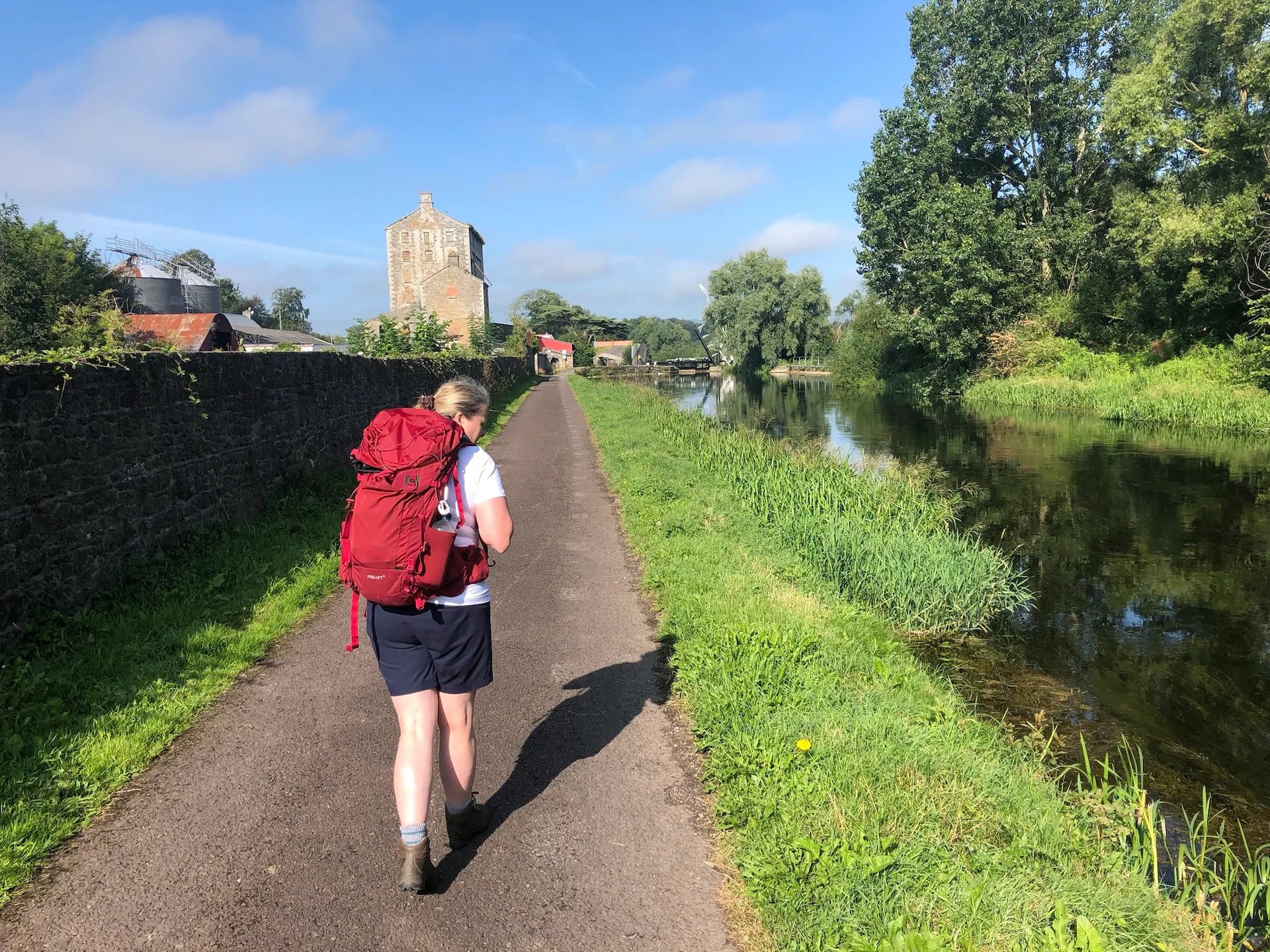
The Barrow Way runs for 114 kilometres from Lowtown in County Kildare to St. Mullins in County Kilkenny, first following the Grand Canal and then the River Barrow southward. Every overnight stop on the trail sits on the water — which means every town has a quay, a stone bridge, and at least one pub that has been pouring pints to barge crews since the 1820s.
What sets the Barrow Way apart from the more famous Irish trails is that you walk into towns rather than past them. There is no climbing back up the trail after dinner; you finish your day in the middle of a working town, with everything within easy walking distance of your bed. By 6pm you are washed and changed and looking at a menu. By 8pm you are in a pub listening to a fiddle. By 10 p.m., you are walking the half-mile back to your B&B in the soft river air. It is one of the most civilised long-distance trails in all of Ireland.
Kildare Town, County Kildare
Kildare town is the natural pre-trail base for the Barrow Way. The trailhead at Lowtown sits about ten kilometres east of the town — most of our walkers spend their first night in Kildare, and we transfer them out to Lowtown to begin walking the next morning. It is also one of the most important ecclesiastical sites in Ireland and well worth an afternoon before you start.
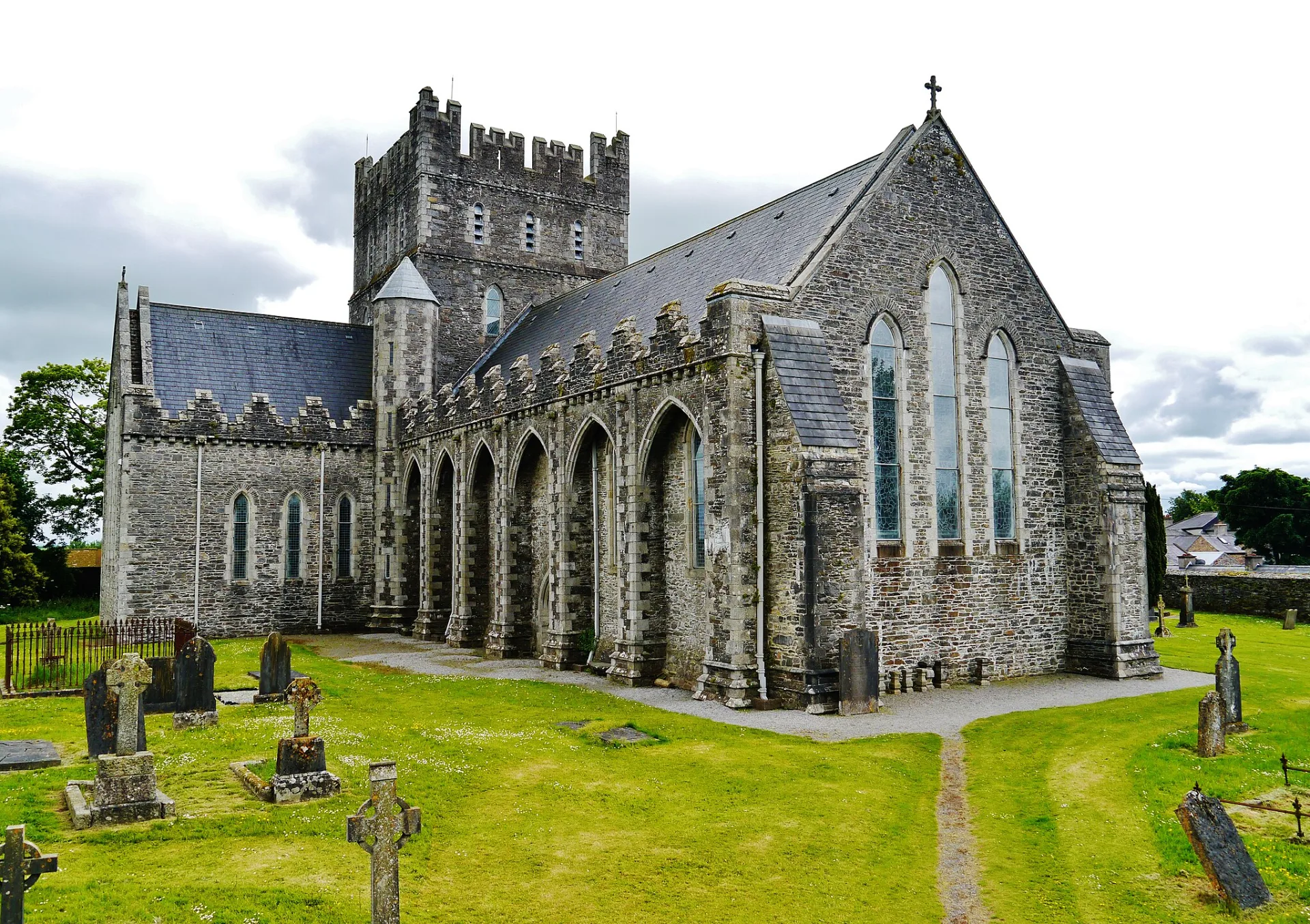
The history: The name comes from Cill Dara, "the church of the oak" — named for the great oak tree under which St Brigid is said to have founded her monastery around 480 AD. Brigid is one of Ireland's three patron saints alongside Patrick and Columcille, and her cult fuses directly with that of the pre-Christian Celtic goddess Brigid – Kildare was a sacred site long before Christianity arrived. A perpetual flame in her honour was tended by nineteen nuns for over a thousand years, until the Reformation suppressed it in 1540. The Brigidine sisters re-lit it in 1993, and it now burns continuously in the town square. St Brigid's Cathedral, on the site of the original monastery, dates from the 12th century. Its round tower — climbable for a small fee — is one of the tallest in Ireland.
Where to eat: Silken Thomas on the main square is the heart of the town — proper Irish cooking, perfect pints, and comfortable rooms upstairs if you stay there. Hartes of Kildare does the best evening menu in town, with a serious wine list.
Where to drink: Silken Thomas again — the bar at the back is where you find the locals and the trad music sessions at weekends.
What else to see: The Irish National Stud and Japanese Gardens are five minutes outside town if you arrive a day early – one of the finest gardens in the country and a chance to see the bloodstock industry up close. The Curragh racecourse is three kilometres east.
Monasterevin, County Kildare
Monasterevin sits where the Grand Canal crosses the River Barrow on a beautiful 18th-century aqueduct — one of the engineering set pieces of the entire trail and one of the most photogenic spots on the canal section.
The history: The town takes its name — Mainistir Eimhín, "the monastery of Emin" — from the 6th-century monastery founded by St Emin nearby. The Grand Canal aqueduct carrying the canal over the Barrow was completed in 1791 and is a wonderful piece of Georgian engineering; you walk straight over it on the trail. Just outside town, Moore Abbey was home from 1925 to 1945 to the great Irish tenor John McCormack – the most famous concert singer in the world in his day, who sang for kings, popes, and a crowd of 100,000 at the Eucharistic Congress in Dublin in 1932. He is buried in Dublin, but Monasterevin remembers him as its own. In the 19th century the town was a brewing and distilling centre — Cassidy's Distillery was one of the largest in the country before the post-Famine decline.
Where to eat: The Hazel Hotel on Main Street does an honest evening menu — pub food cooked properly, with a decent vegetarian option and a good bar list. The Bobby Sox Diner is a local favourite for breakfast before you set off in the morning.
Where to drink: Pat Murphy's on Main Street is the proper old pub — Guinness pulled correctly, a fire in winter, and the kind of conversation that makes a Tuesday evening feel like an event. The Hazel bar is busier and brighter.
What else to see: Walk the towpath at sunset to see the aqueduct lit by the western sky — it is one of the loveliest sights on the Barrow Way. The town's churchyard contains a number of fine 18th-century stones.
Athy, County Kildare
Most of our walkers spend their first night in Athy. It is the largest town on the trail and the natural starting point if you are joining the route at Lowtown.
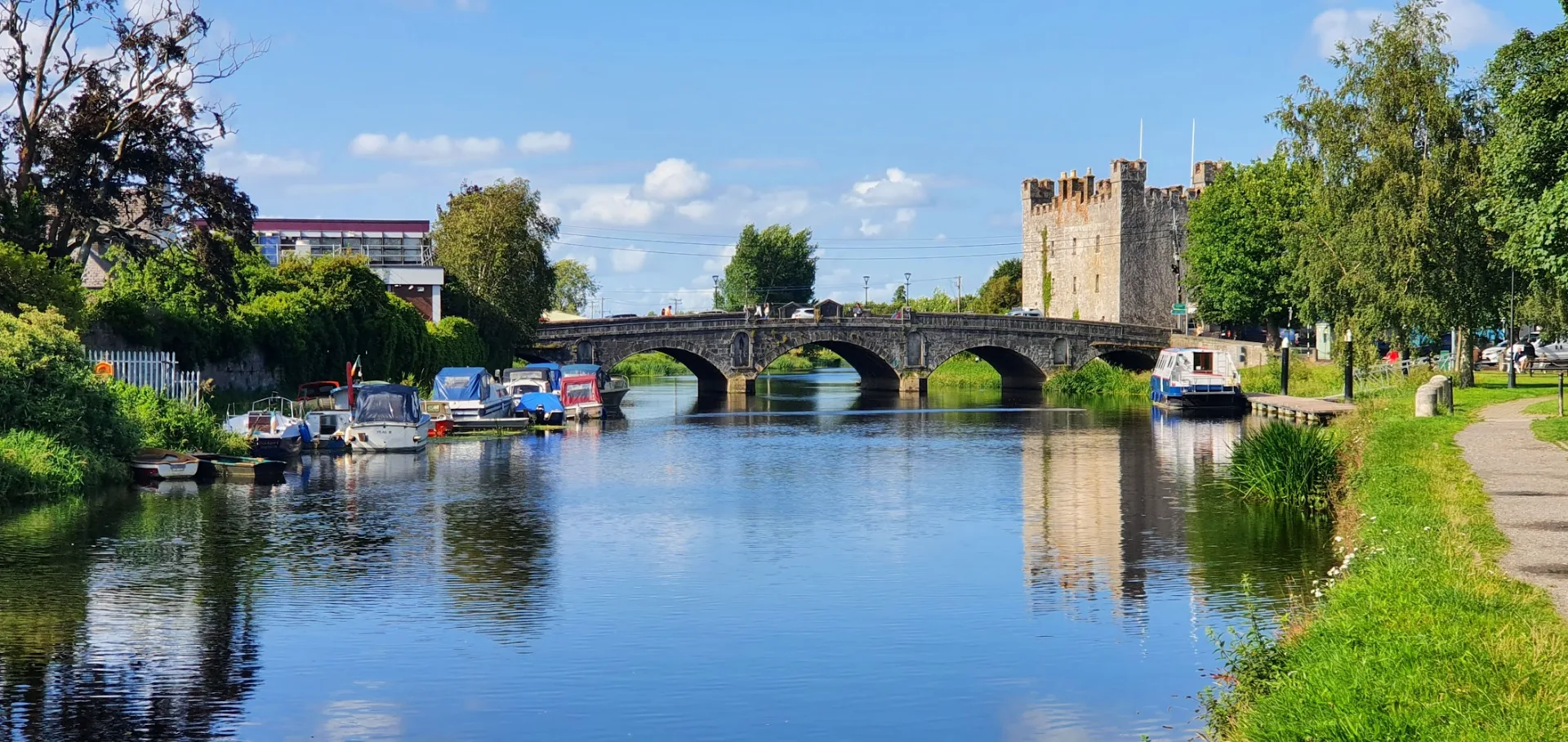
The history: Athy is the town of Sir Ernest Shackleton, the Antarctic explorer born nearby in 1874. The Shackleton Museum on the main square is the best of its kind anywhere — a small, fiercely well-curated place that tells the story of his three Antarctic expeditions with original photographs, letters, and a piece of the Endurance itself. Spend an hour there before dinner. The Crom-a-boo Bridge over the Barrow, dating from 1796, is the oldest road bridge in Ireland still in daily use. The town's mediaeval grid is still visible in the layout of the streets.
Where to eat: The Watergate at Carlow Gate Street does honest Irish cooking with proper portions – exactly what walkers need. Clancy's on the main square is more lively and good for an evening with company. For breakfast before you start walking, Bradbury's Bakery has been operating since 1923.
Where to drink: O'Brien's on Leinster Street is the locals' pub and our pick for a quiet pint. The Town House is louder, with traditional music most weekends.
Carlow Town, County Carlow
Carlow is the only city on the Barrow Way – the county capital of Ireland's second-smallest county and a much better evening than its reputation suggests.
The history: Carlow Castle, in ruins by the bank of the Barrow, was built in 1207 by William Marshal – one of the great Anglo-Norman strongholds. It was partly demolished in 1814 when a local doctor tried to convert it into an asylum using gunpowder, which collapsed most of the structure. The Brownshill Dolmen, just outside town, has the largest capstone of any megalithic tomb in Europe — 150 tonnes of granite balanced on three uprights, in place since around 3000 BC. Visual, the contemporary art centre, is one of the best of its kind in Ireland.
Where to eat: Lennon's Café Bar on Tullow Street does an excellent evening menu — local lamb, fresh fish, and vegetarian options that are not afterthoughts. The Lord Bagenal Hotel in nearby Leighlinbridge is worth the short taxi if you want a special dinner.
Where to drink: Tully's on Tullow Street is the great Carlow pub — it has a Victorian interior, a perfect pint of Guinness, and a fire going from October onwards. Scraggs Alley is the place for music sessions.
Leighlinbridge, County Carlow
Leighlinbridge is a small village just a few kilometres south of Carlow and is one of the most charming overnight stops on the Barrow Way.
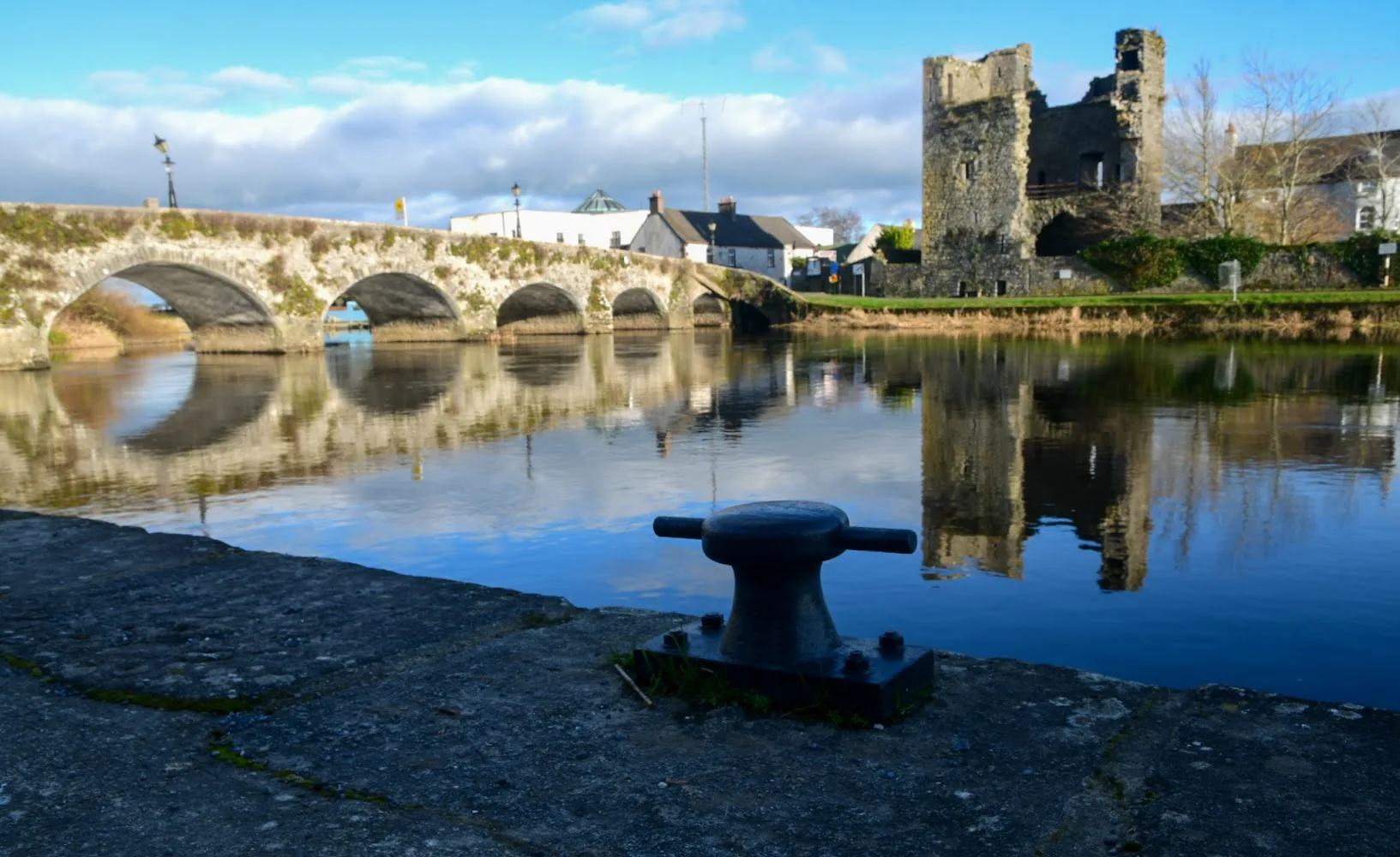
The history: The Valerian Bridge across the Barrow at Leighlinbridge dates from 1320, making it one of the oldest functional bridges in Europe. The Black Castle, a 14th-century Norman tower built to guard the river crossing, still stands on the eastern bank. Old Leighlin, two kilometres up the hill, was the site of the Synod of Whitby in 630 AD, which standardised the date of Easter across the Western Church — an event that most Irish people have entirely forgotten.
Where to eat: The Lord Bagenal Inn is the destination here — a hotel restaurant that punches well above its weight, with a serious wine list, a riverside garden in summer, and proper Irish food cooked properly. Many of our walkers tell us afterwards that this was the best meal of the trip.
Where to drink: The Lord Bagenal bar is open to non-residents and serves until late. The Riverside Inn directly opposite is older and quieter.
Bagenalstown (Muine Bheag), County Carlow
A planned 18th-century town named after a man (Walter Bagenal) who is largely remembered for being unsuccessful at most things he attempted, including founding this town in the wrong place. It was renamed Muine Bheag in Irish — "the little thicket" — though most locals still call it Bagenalstown.
The history: Bagenal originally intended his new town to be on the river at this site, but he set out the streets too wide and lost his investors. Carlow grew while Bagenalstown shrank. What survives is a beautiful, unhurried grid of Georgian streets — exactly the kind of place that rewards an evening walk before dinner.
Where to eat: Lockes Distillery Bar on the main street is the best evening option, with a riverside terrace if the weather holds. The Royal Oak does a respectable carvery if you are tired and just want to be fed.
Where to drink: The Vault on Main Street is the local favourite — a proper old pub, no fuss.
Goresbridge, County Kilkenny
A tiny village built around a single beautiful stone bridge, with a famous summer horse fair (the Goresbridge Sales, in early June and November) that brings buyers in from across Europe. Most walkers pass through Goresbridge for lunch rather than overnighting here — the next stop, Graiguenamanagh, is only a few hours further on.
Where to eat for lunch: The Old Mill pub does sandwiches and soup; the small grocery on the bridge has the makings of a riverside picnic.
Graiguenamanagh, County Kilkenny
Graigue — as everyone calls it — is the heart of the lower Barrow Valley and our favourite overnight stop on the trail. The name means "the village of the monks", and the monks in question built one of Ireland's most important mediaeval abbeys here in 1204.
The history: Duiske Abbey, the largest Cistercian foundation in Ireland, was built between 1204 and 1240 and is still in daily use as the parish church. Step inside before dinner — the carved oak choir stalls, the early Christian high cross, and the simple proportions of the nave are quietly spectacular. Cushendale Woollen Mills, on the other side of the river, have been weaving the same way since 1804, and you can buy direct from the mill shop.
Where to eat: The Waterside Restaurant on the quay does the best evening meal on the whole Barrow Way — fresh fish, local lamb, river views, and the kind of friendly service that makes you want to stay a second night. Bradleys Bar opposite is a more casual option with pub food cooked from scratch.
Where to drink: Mick Doyle's is the proper Graigue pub — fiddles on Friday nights, a hot fire in winter, and the kind of welcome that gets stronger the longer you stay.
St Mullins, County Carlow
The end of the Barrow Way. St Mullins is barely a village — a single lane that drops down to a quay on the tidal Barrow, with a monastic site at the top of the hill and a single pub at the bottom. It is the perfect place to finish a walk.
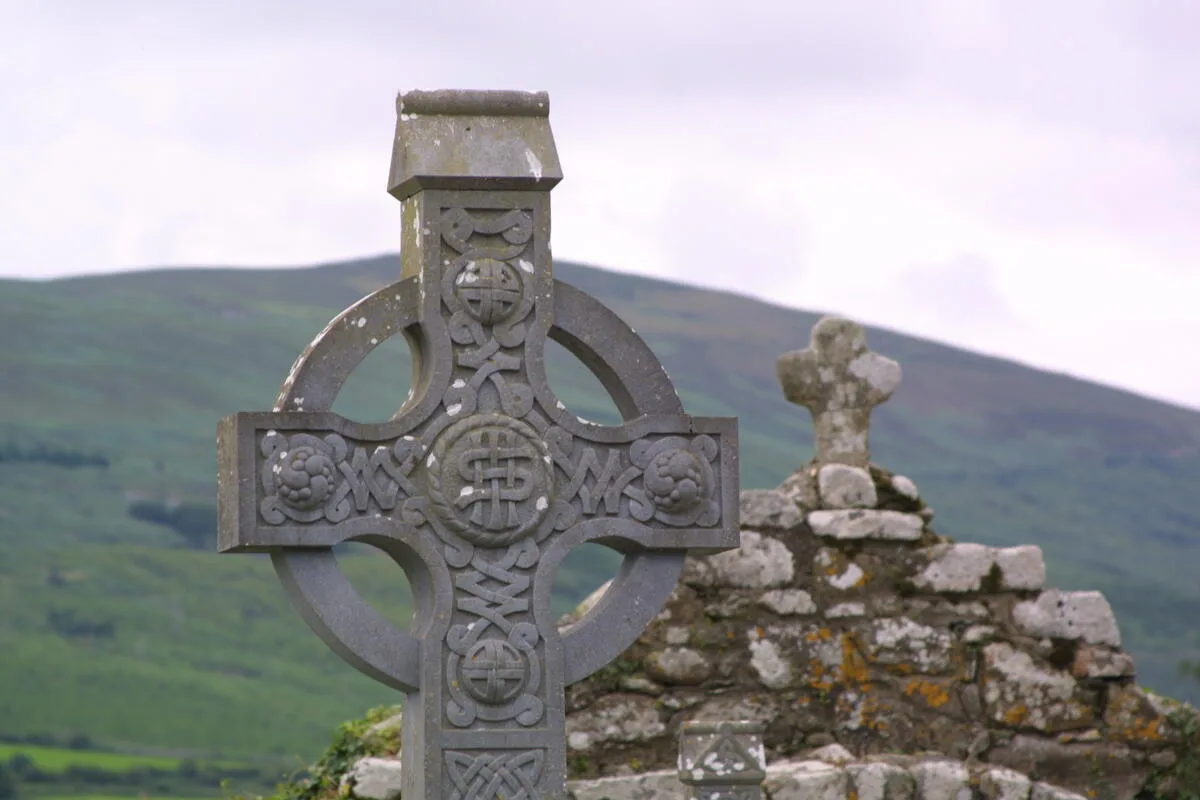
The history: The monastic site at St Mullins was founded by St Moling in the 7th century and contains the remains of a round tower, several early churches, a high cross, and a holy well that pilgrims still visit on the feast day of St James in July. The graveyard around the church holds the remains of the 1798 rebel leaders who fought at the nearby Battle of Bunclody – including the great Wexford pikeman Father Murphy. This is one of the loveliest historic sites in the south-east.
Where to eat and drink: The single pub in St Mullins is Mullichains, just up from the quay. The food is simple and properly cooked, the pints are perfect, and the riverside garden is the right place to drink the celebratory pint you have just walked 114 kilometres to earn. We arrange a transfer back to wherever you need to go the next morning.
How to Walk the Barrow Way
Have a look at our 8-day Barrow Way walking holiday — our most popular option, covering the full 117 km from Athy to St Mullins with overnights in all the towns described above. If you have less time, our 5-day Barrow Way takes you from Athy to Bagenalstown, and our 6-day version finishes in Graiguenamanagh.
For the full trail logistics — distances, surfaces, navigation, and history of the canal — our complete Barrow Way trail guide covers everything you need to know about the route itself.
If you have any questions about which itinerary suits you, just get in touch. We love this trail and are happy to talk anyone through their first crossing.