Diamond Hill Walk, Connemara: A Perfect Introduction to Mountain Hiking
Diamond Hill Walk, Connemara: A Perfect Introduction to Mountain Hiking
The Diamond Hill walk, Connemara offers one of Ireland's most approachable mountain experiences—steep enough to feel genuinely mountainous, short enough for morning or afternoon excursions, and beautiful enough to justify the effort repeatedly. Located in Connemara National Park near Letterfrack, the Diamond Hill walk Connemara serves as an entry point to serious hiking for many walkers and a destination for experienced hikers seeking quick, rewarding climbing.
This guide covers the Diamond Hill walk, explains why it remains so beloved by Irish walkers, and helps you understand what to expect and how to prepare for this remarkable mountain experience.
Why Diamond Hill Matters
Diamond Hill succeeds because it achieves something difficult: it genuinely feels mountainous despite modest elevation. The ascent is steep and sustained. The descent is quick. The views are remarkable. The whole experience fits within a single morning or afternoon.
For beginners, Diamond Hill proves you can climb mountains—that your body is capable of sustained effort. For experienced walkers, this Diamond Hill walk offers quick gratification: genuine mountain feeling without all-day commitment.
The Walk: Standard Route
Distance and Duration
Distance: 6 km round trip
Elevation Gain: Approximately 250 metres
Time: 2–3 hours typically (range 1.5–4 hours depending on fitness and pace)
Difficulty: Easy–Moderate
The route is straightforward: ascend from Connemara National Park visitor centre, climb to the summit, descend back to the car park.
The Ascent
The path starts from the visitor centre and immediately climbs. The trail is obvious and well-marked, but steep. The ascent is sustained—there's no flat section where you can catch your breath. For the first 45 minutes, you're consistently climbing.
The terrain varies: grassy slopes in lower sections transition to rocky terrain higher up. The final approach to the summit is scrambling—hand use occasional, but nothing technical.
The Summit
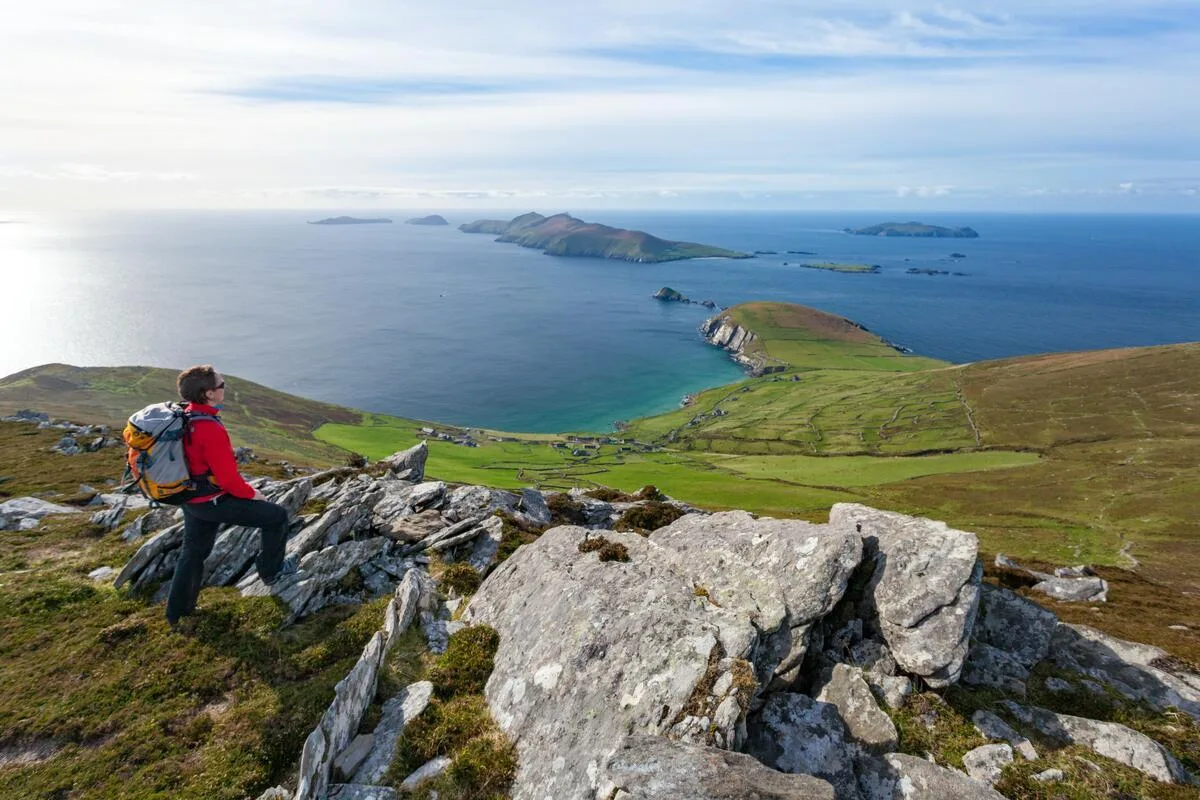
Reaching the summit provides immediate reward. The 360-degree views are genuinely remarkable:
- North: Across toward Galway Bay and the Aran Islands
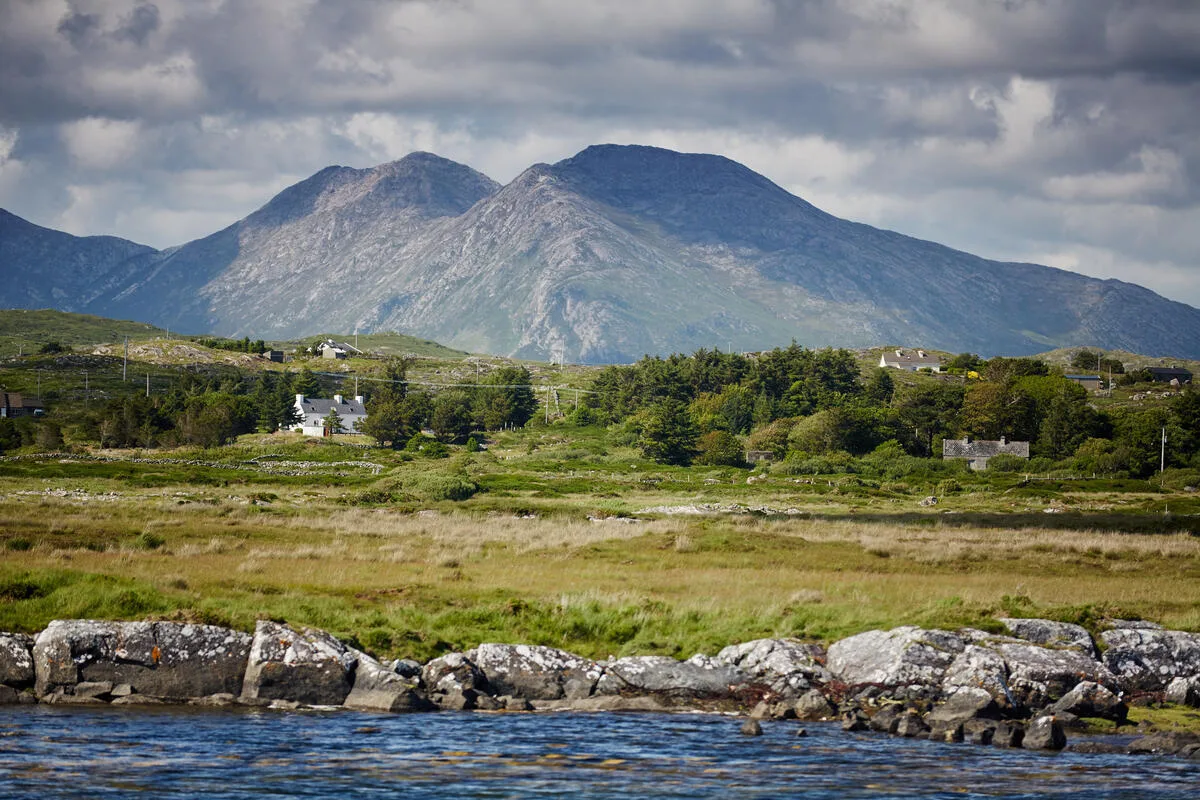
- South: Toward the Twelve Bens and Connemara's interior mountains
- East: Toward the Irish mainland
- West: Toward the Atlantic
Clear days offer views extending 50+ kilometres. Even overcast days provide excellent visibility—the summit sits above most cloud.
The summit features a small stone cairn (stacked rocks). Many visitors add a stone—a tradition creating a collective monument.
The Descent
The descent follows the same route downward. This is where care matters—the steep terrain and gravity make descent potentially hazardous. Move slowly, place feet carefully, use the trail's established switchbacks rather than straight-lining down.
Descent typically takes 45 minutes to 1.5 hours depending on pace and caution.
Practical Information
Getting There
Connemara National Park is located near Letterfrack village in County Galway, approximately 2 hours west of Galway city. The visitor centre has a large carpark (free parking). Trailhead is immediately accessible from the visitor centre.
Facilities
The visitor centre offers:
- Toilets (essential before walking)
- Café (excellent for pre/post-walk snacks)
- Information desk (knowledgeable staff)
- Visitor information (displays about Connemara and Diamond Hill)
These facilities make Diamond Hill particularly beginner-friendly—you're not starting from a remote carpark without resources.
Best Time to Visit
Spring (April–May): Wildflowers blooming on lower slopes, lengthening days, improving weather. Excellent season.
Summer (June–August): Warmest, longest days, busiest. The walk is popular—expect other hikers, especially weekends.
Autumn (September–October): Golden light, fewer crowds, generally excellent weather. Many consider this ideal.
Winter (November–March): Shorter days, harsh weather, fewer tourists. Possible but requires appropriate gear.
What to Carry
- Water: Carry 1–1.5 litres; no water sources on mountain
- Snacks: Trail mix, energy bars, fruit
- Waterproof jacket: Essential—Irish weather changes rapidly
- Layers: Fleece or merino wool
- Hat and gloves: Even summer
- Walking boots: Strong ankle support essential for rocky descent
- Map: Small map available from visitor centre
- Headtorch: Even for daytime walks (emergencies extend day)
Fitness Requirements
Diamond Hill is achievable for most people with reasonable fitness:
- Beginners: Should have basic fitness; spend 4 weeks walking 8–10 km on flat terrain first
- Intermediate: Completely manageable; good conditioning walk
- Advanced: Quick, easy walk; can be combined with other activities
If you've never walked hills before, the Diamond Hill walk Connemara route is a reasonable first serious mountain walk. It's steep enough to be genuinely challenging, short enough to be achievable.
Pacing
Average pace is approximately 2 km per hour on ascent (includes steepness and altitude effect). Most people take 1.5–2 hours ascending, 30 minutes summit time, 1–1.5 hours descending.
Don't rush. The mountain isn't going anywhere. A leisurely pace where you can hold conversation is ideal—you're walking to enjoy the experience, not to compete.
Safety Considerations
Weather
The mountain is exposed. Weather can deteriorate rapidly. The summit is genuinely windy—strong gusts are common. If weather becomes dangerous (severe wind, lightning risk, poor visibility), descend safely.
Terrain
The rocky descent is where injuries occur. Move slowly, place feet carefully. Using trekking poles aids stability.
Navigation
The trail is well-marked and obvious. Getting lost is extremely unlikely. However, in dense mist (rare but possible), the trail remains marked—follow the markers carefully.
Crowding
Diamond Hill is popular, especially summer weekends. The trail accommodates crowds reasonably, but busy periods mean slower movement. Ascending early (before 9 am) avoids much of the crowds.
The Experience Beyond the Physical
Diamond Hill's enduring popularity comes from more than physical achievement. Standing on the summit, you're experiencing something genuine—real mountain landscape, genuine 360-degree views, legitimate sense of accomplishment.
Many people who walk Diamond Hill discover that mountain hiking is for them. What seemed impossible (climbing a genuine mountain) becomes achievable. That realization—that you're capable of more than you thought—transforms perspective.
For experienced hikers, Diamond Hill offers something different: uncomplicated pleasure. No navigation required, no serious technical challenge, no all-day commitment. Just good climbing, excellent views, genuine achievement in a compact package. If you're looking for other beginner-friendly hiking trails in Ireland, this walk serves as an excellent reference point for what's achievable.
Diamond Hill Route Options for Every Fitness Level
The Lower Trail: Accessible Mountain Beauty (3 km, 1.5-2 hours)
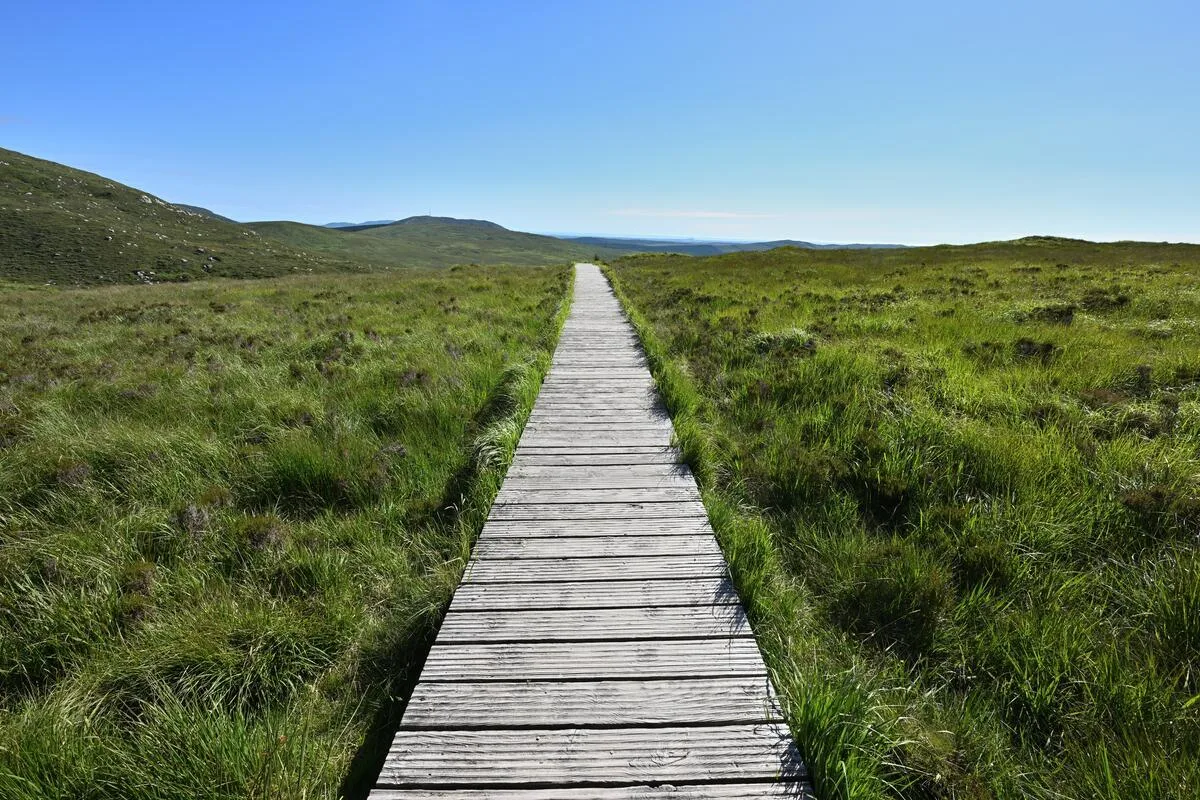
The lower boardwalk route circles Diamond Hill through bogland without climbing the summit. This 3-kilometer loop features a raised wooden boardwalk protecting the delicate wetland ecosystem while allowing intimate bog exploration.
Perfect for: Families with young children, first-time hikers, those with limited time, and anyone preferring to avoid scrambling. The boardwalk remains accessible year-round, even after rain when muddy conditions plague other trails.
Highlights: Wildflower displays in spring/summer, changing light across the bog, interpretive panels explaining wetland ecology, stunning mountain backdrops from ground level.
What to Expect: Flat-to-gentle terrain, firm boardwalk footing, excellent views of Diamond Hill's distinctive conical peak from below, clear day glimpses of the Atlantic and Aran Islands.
The Upper Trail: Full Summit Experience (7 km, 3-4 hours)
The upper route climbs Diamond Hill to its summit via steep sections, rocky scrambles, and exposed ridgelines. This 7-kilometer loop provides genuine mountain climbing experiences with proportional rewards.
Perfect for: Reasonably fit hikers, those with mountain hiking experience, and anyone seeking the complete Diamond Hill experience. Hikers should be comfortable with exposure and steep descents.
Highlights: 360-degree mountain and ocean panoramas from the 445-meter summit, dramatic quartzite rock formations, sweeping views of Twelve Bens, Aran Islands rising from the sea, the full Connemara landscape spread below you.
What to Expect: Initial steep climbs through gorse and heather, rocky sections requiring hand-scrambling, exposed ridges, excellent weather-dependent views, sustained elevation gain in the final ascent, well-defined trails despite rocky terrain.
| Route Option | Distance | Elevation | Duration | Difficulty | Best For |
|---|---|---|---|---|---|
| Lower Boardwalk Trail | 3 km | Minimal | 1.5-2 hrs | Easy | Families, beginners, relaxed pace |
| Upper Summit Trail | 7 km | 445m peak | 3-4 hrs | Moderate-Challenging | Fit hikers, experienced walkers |
| Combined Loop | 10 km | 445m peak | 5-6 hrs | Challenging | Very fit hikers, full adventure |
Diamond Hill in Different Seasons
Spring (March-May)
Wildflowers begin blooming across bogland and lower slopes. Days lengthen rapidly, extending hiking daylight. Weather remains unpredictable; rain is frequent. Upper trails dry slowly in spring; bog can remain waterlogged longer than the established path.
Summer (June-August)
Peak season brings longest days and warmest temperatures. Lower clouds sometimes obscure summit views despite comfortable ground temperatures. Peak crowds occur July-August; avoid these months for solitude. Facilities in nearby villages operate at full capacity.
Autumn (September-October)
Ideal hiking season. Comfortable temperatures, golden light, stable weather patterns, and fewer crowds make autumn perfect. The bog displays rich color changes. Weather remains relatively predictable compared to other seasons.
Winter (November-February)
Dramatically shorter days (sunrise around 8 AM, sunset by 4 PM) limit hiking windows. Unpredictable weather, potential ice, and snow create hazards. Visibility often poor due to low clouds. Only experienced winter mountaineers should attempt upper routes.
Ready to Climb Diamond Hill?
The Diamond Hill walk, Connemara is genuinely excellent. Whether you're proving to yourself that mountain walking is achievable or seeking quick mountain pleasure, the walk delivers. Connemara National Park offers excellent infrastructure. The view reward is substantial. For more hiking safety tips and challenges, review our comprehensive guide before you go.
Plan a morning or afternoon, bring appropriate gear, lace your boots, and climb. You'll understand why the Diamond Hill walk remains among Ireland's most beloved mountain experiences. Consider pairing this hike with a multi-day Burren walking tour for a more comprehensive Connemara and West Ireland experience.
Photo Gallery