Summer Hiking Clothes for Ireland: A Real Packing List
What to wear on an Irish walking holiday between May and September — written after fifteen years of watching what works and what quickly goes in the luggage transfer bag.
Hi, I'm Cliff. I run Walking Holiday Ireland, and the question I'm asked most often in May and June is "what do I actually pack?" The honest answer is: fewer items than you'd think, but the right ones. Irish summer weather can be 22°C and sunshine at lunchtime and 12°C in horizontal rain by four o'clock — sometimes on the same ridge. Choosing summer hiking clothes for Ireland is less about staying cool and more about staying comfortable across a surprising range of conditions in a single day.
Here is our complete summer hiking clothes list for guests, head to toe, with a brutally honest note on what to leave at home.
Why Irish summer weather shapes the kit list
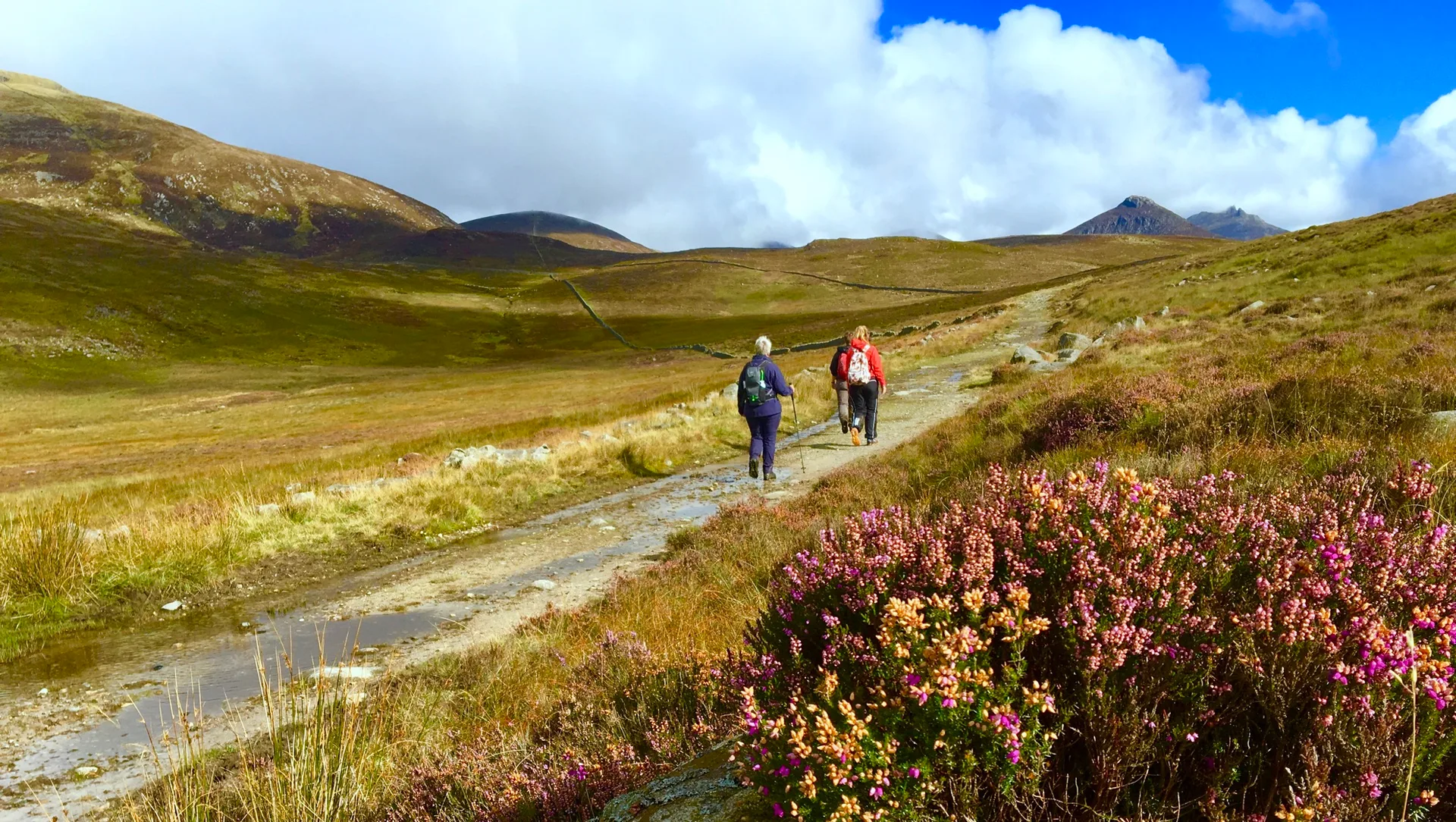
Before we talk fabrics, a quick reality check. Ireland sits in the path of the North Atlantic, and even in July the average daytime temperature is only around 17–19°C. Tops of 25°C happen, but not often. Rain is possible any day, and wind on the higher trails (Mournes, Wicklow, Connemara) can make a mild day feel cold within minutes of stopping to eat lunch. So the guiding principle for summer hiking clothes in Ireland is simple: thin layers that dry quickly, and one reliable waterproof. Good summer hiking clothes for Ireland weigh almost nothing in the pack and handle three different weathers on a single walk.
1. Base layer — the item everything else works around
Your base layer is the shirt against your skin. It has one job: move sweat off your body so you don't chill when the breeze hits. Synthetic (polyester) or merino wool. Never cotton.
For summer we suggest a short-sleeved technical T-shirt for warm days and a long-sleeved merino or synthetic top in the pack for cooler mornings and breezy ridges. Merino stays comfortable for several days of walking without getting smelly, which is a real advantage when you're on a week-long self-guided holiday and your baggage is being moved ahead each morning. Two tops is enough for a week; three if you like a fresh one on the rest day. Put the previous day's top on in the morning if it's dry — it will be by lunchtime anyway.
2. Mid layer — the one you remove and put back on
A lightweight fleece or a thin synthetic pullover is the second layer. You'll wear it at the start of the day, take it off within the first twenty minutes of climbing, and put it back on at every summit, lunch stop, and viewpoint. A 100- or 200-weight fleece works perfectly for Irish summer walking. You don't need anything heavier — if you're still cold in a 200-weight fleece on an Irish summer day, the waterproof goes over the top and solves the problem.
3. Waterproof jacket — yes, even in July
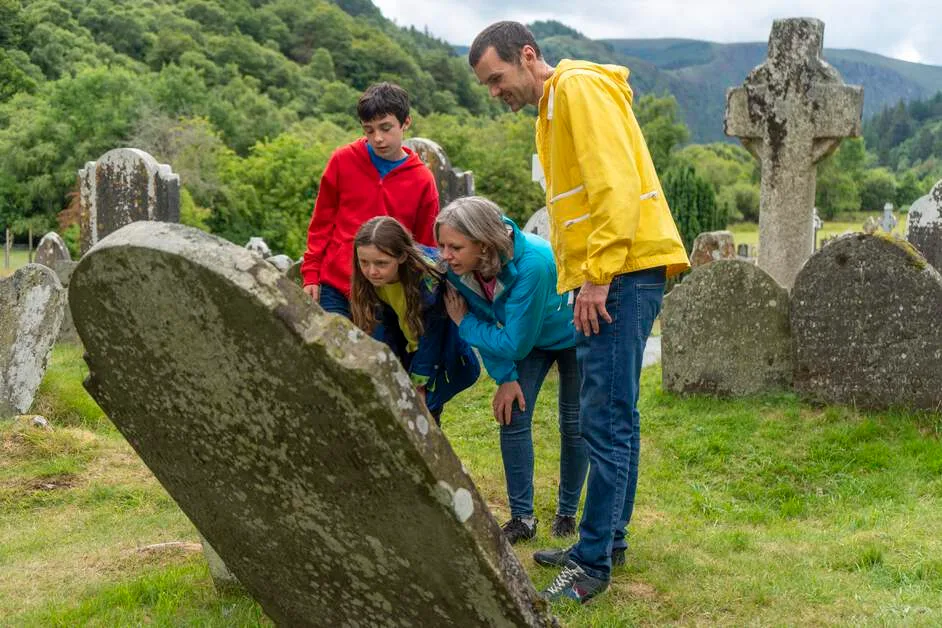
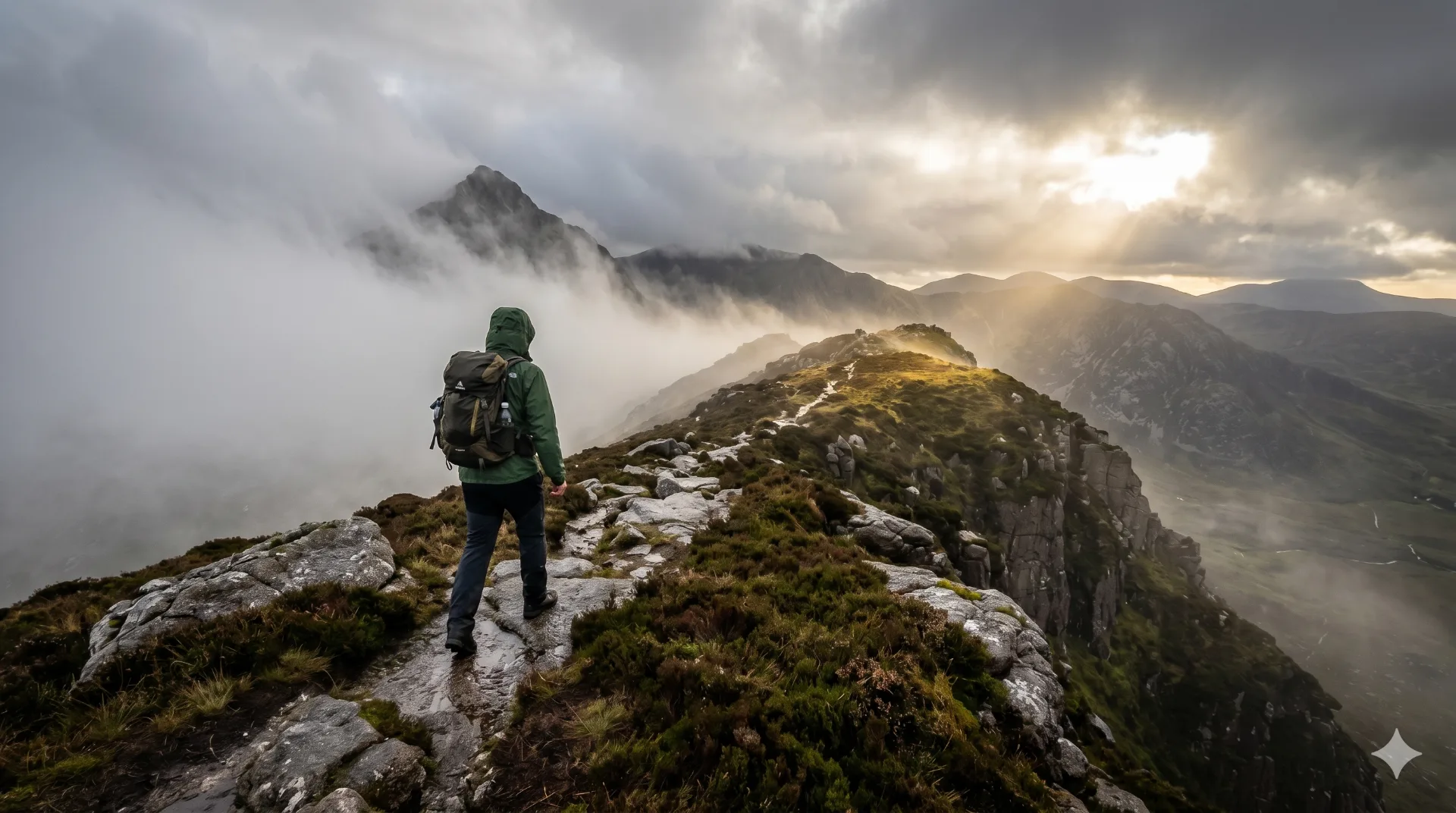
This is the one piece of kit we beg people not to skimp on. Irish summer rain is usually not dramatic — it's a steady two or three hours of mist and drizzle that soaks everything that isn't properly waterproof. A decent jacket with a hood, taped seams, and a hydrostatic head of 10,000 mm or above is what you need. Brand names people bring that tend to perform well: Rab, Berghaus, Jack Wolfskin, Patagonia, Arc'teryx, Páramo.
The waterproof lives near the top of your day pack, not at the bottom, so you can reach it without unpacking. Lightweight waterproof over-trousers are worth throwing in too — they weigh 150 grams, take ten seconds to pull on, and save a cold wet lunch on the occasions they're needed.
4. Trousers or shorts?
Most Irish walkers wear lightweight hiking trousers rather than shorts, even in high summer. The Irish trails include bracken, gorse, and a cheerful amount of low thorny scrub, all of which are unpleasant on bare legs. A pair of quick-drying synthetic trousers with a bit of stretch is what you want. Zip-off "convertible" trousers are a fine compromise if you want the option of shorts for forest and lowland sections — Glendalough, Tollymore, Killarney National Park are all fine in shorts on a warm day.
Bring two pairs for a week. Rinse one in the sink at night if things get muddy; they'll dry by morning on a radiator.
5. Socks and boots — don't cheat on these
Your feet will make or break the holiday. Two rules for summer hiking clothes from the knees down:
Socks: merino or a merino-synthetic blend, mid-calf height. Two pairs minimum for a week — ideally three, so you can alternate. Never cotton socks. Cotton holds sweat, rubs, and is the single commonest cause of blisters we see. Brands like Darn Tough, Bridgedale, Smartwool or Icebreaker are all reliable.
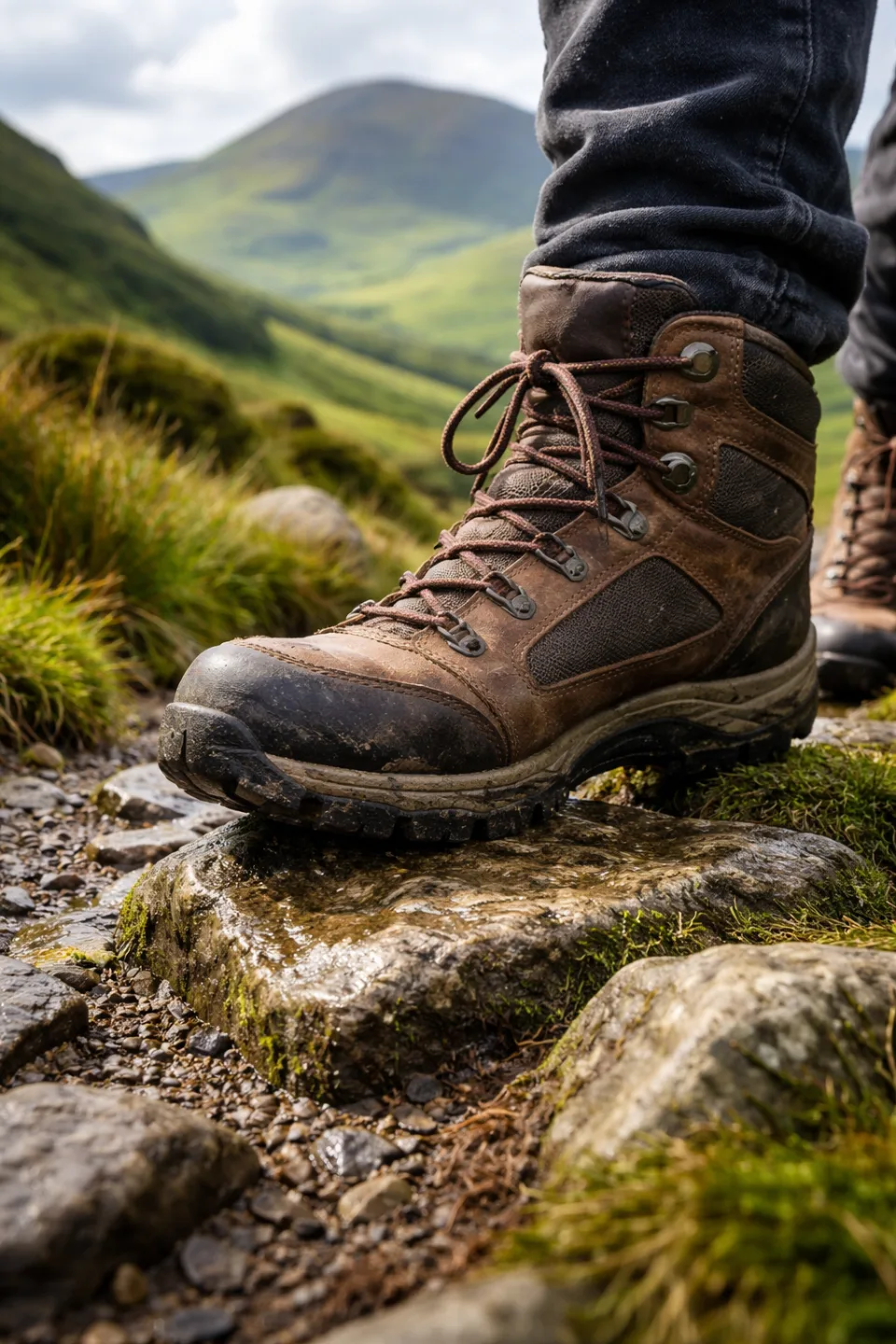
Boots: a mid-cut, waterproof walking boot broken in before you travel. Not brand new out of the box. Not trail-runners unless you already walk in them at home. Irish trails include boggy ground, wet slabs, stream crossings, and long days of descent — ankle support and a grippy sole (Vibram or similar) is worth the investment. If your boots are old favourites, check the soles for wear before the holiday. A thin, smooth sole on a wet limestone descent is an excellent way to break a wrist.
6. Hat, sunglasses, sun cream, midge repellent
The things people forget and then ask to borrow by day three.
A peaked cap or sun hat — Ireland's latitude (53°N, same as Labrador) doesn't feel hot, but you will burn surprisingly fast on a clear day, especially on water or limestone (the Burren). Sunglasses for the same reason, plus the occasional low sun on coastal walks. Factor 30+ sun cream in a travel-sized tube. A peaked beanie or buff for cool mornings. Lightweight gloves if you're walking the Mournes or MacGillycuddy's Reeks.
Midge repellent — Smidge or Incognito — for still, damp evenings anywhere west or south (Connemara, Kerry, West Cork). Midges don't fly in a breeze, so they're not a trail problem; they're a getting-back-to-the-car and pub-garden problem.
What to leave out of your suitcase
The four things we quietly watch ending up in the baggage transfer bag, unused, every summer:
Jeans. Cold, heavy when wet, slow to dry, uncomfortable to walk in. If you wear them to the pub in the evening, fine — but not on the trail.
Cotton T-shirts. See "base layer" above. One cotton T-shirt for the evening is fine; they don't belong in the day pack.
Heavy fleeces or down jackets. Ireland is not the Alps. A 300-weight fleece or a winter down jacket is too much for May–September; you'll carry it all week and never wear it. A thin down or synthetic gilet can be nice for cool evenings on the B&B patio, but it's a luxury, not essential summer hiking clothes.
Brand-new boots. Walked in for the first time on day one. The number of blister casualties we patch up in the first three days of the season because of this is remarkable. Wear new boots for at least 30 km at home before you fly out.
What lives in the day pack
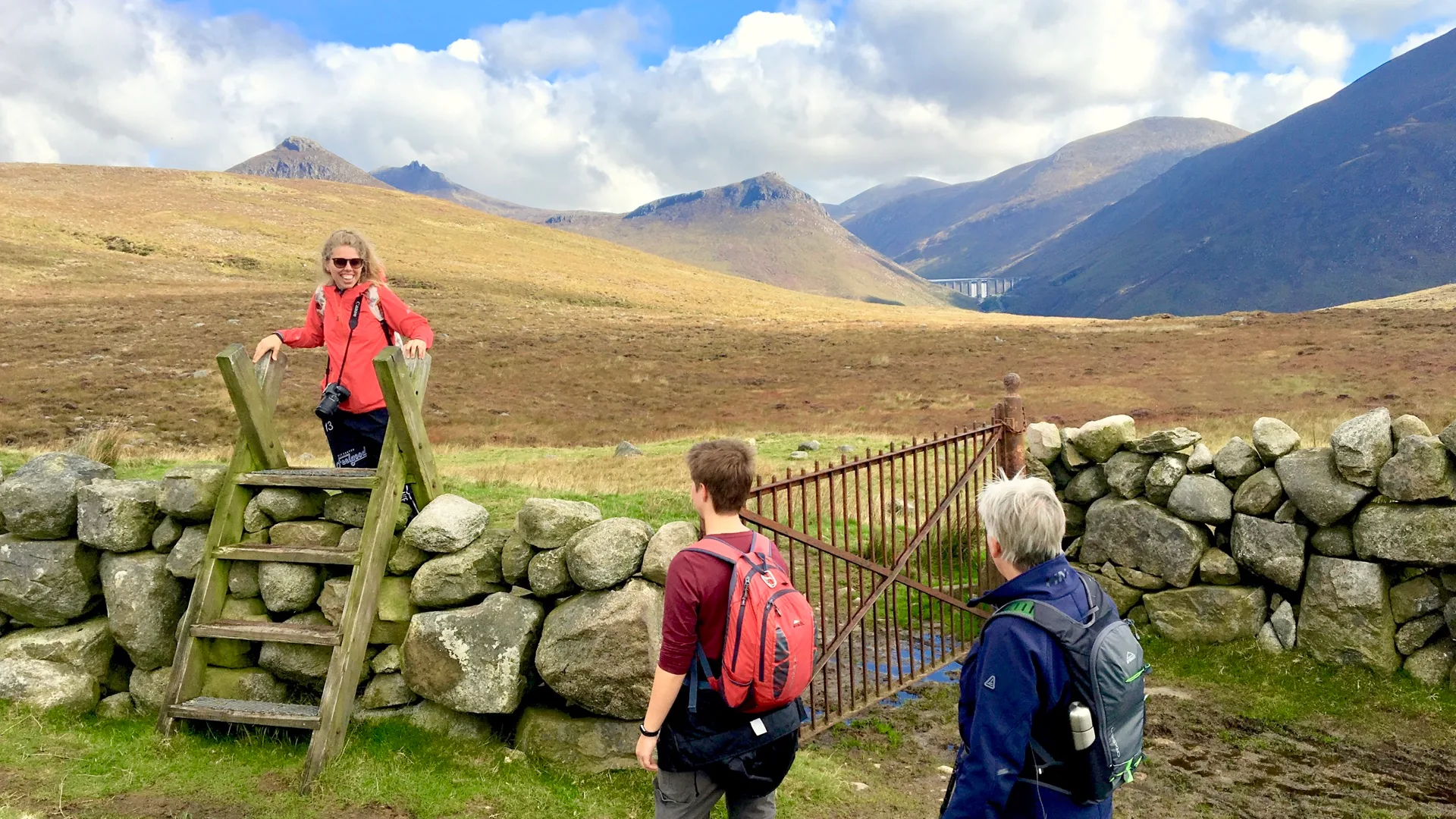
Once your summer hiking clothes are sorted, the day pack is the next decision. A 20–30 litre day pack is right for a typical Irish walking day. Inside, along with your waterproofs, you want: two litres of water in a bottle or bladder, a packed lunch from your B&B (they'll make one up if you ask), a small first-aid kit with plasters and blister patches, a whistle, a fully charged phone, a printed route card or offline map, a light snack, and a warm layer. That's it. Any heavier and you'll feel it by lunchtime.
Walking in Ireland this summer? We'll handle the rest.
We run self-guided walking holidays from May through September on Kerry, Wicklow, Connemara, the Burren and the Mourne coast. Hand-picked B&Bs, luggage moved each morning, full route notes and a number you can call from anywhere on the trail.
FAQs about summer hiking clothes in Ireland
Do I really need a waterproof jacket in July and August?
Yes. Irish summers see more rainy days than dry ones, especially on the west coast. A reliable waterproof is the single most important item of summer hiking clothes you'll pack. Skipping it to save space in your bag is a false economy — you'll end up cold, soaked, and shopping for a replacement in a tourist town.
Is merino wool worth the extra money for a week-long walking holiday?
For base layers and socks, yes. Merino stays comfortable for two or three days of wear without odour, dries quickly, and regulates temperature better than synthetics. Two merino T-shirts will get you through a week comfortably. Fleeces and trousers don't need to be merino — synthetic is lighter and cheaper for those layers.
Are hiking shorts OK for walks in Ireland?
For lowland forest walks and warm sunny days, yes. For upland trails with gorse, bracken or exposed weather, trousers are better. Zip-off convertibles are a reasonable compromise if you want the option of both without packing two pairs.
Do I need gaiters for Irish summer walking?
Usually not. Most waymarked trails are dry enough in summer that decent boots and trousers are sufficient. Gaiters help on the high Mournes, MacGillycuddy's Reeks or across bog — bring a lightweight pair if your itinerary includes those, skip them otherwise.
What should I wear in the evening at the B&B?
Casual trousers or jeans and a clean shirt. Irish pubs and restaurants are extremely informal; no one expects anyone to dress up after a day on the trail. A pair of lightweight trainers or loafers to give the boots a break is the single most appreciated item on a week-long walking holiday.
How do I pack light if baggage is moved each day?
Our luggage limit is one bag per walker up to 15 kg, and most people come in well under that. Two walking T-shirts, two pairs of trousers, a fleece, a waterproof, three changes of underwear and socks, evening clothes, toiletries. That really is enough summer hiking clothes for a week in Ireland.
Planning around a festival? Many of the trails featured here host walking festivals during the season — see our complete 2026 walking festivals calendar to time your trip with one.
Photo Gallery