Croagh Patrick: Ireland's Holy Mountain—Complete Pilgrimage Guide
Croagh Patrick: Ireland's Holy Mountain—Complete Pilgrimage and Hiking Guide
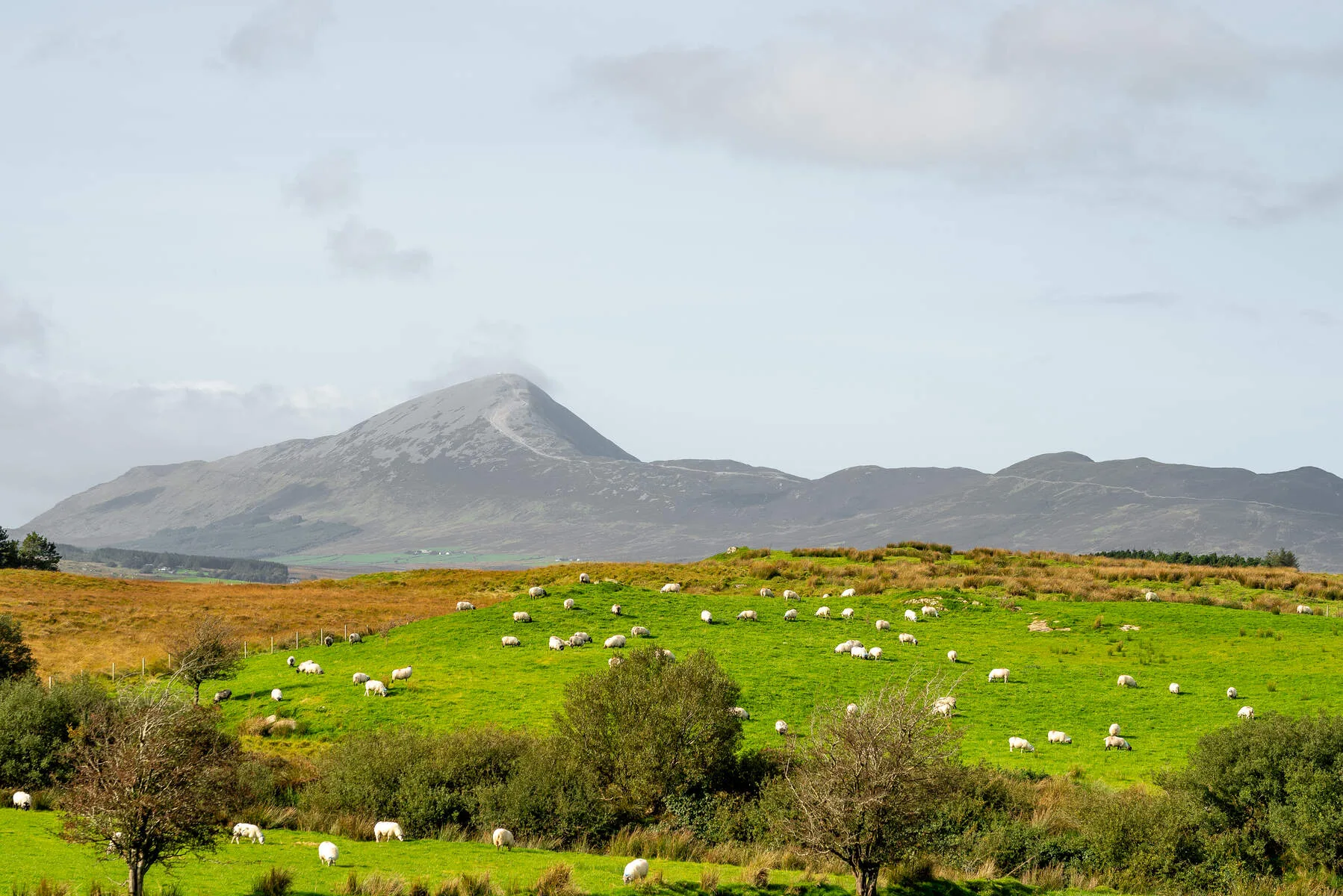
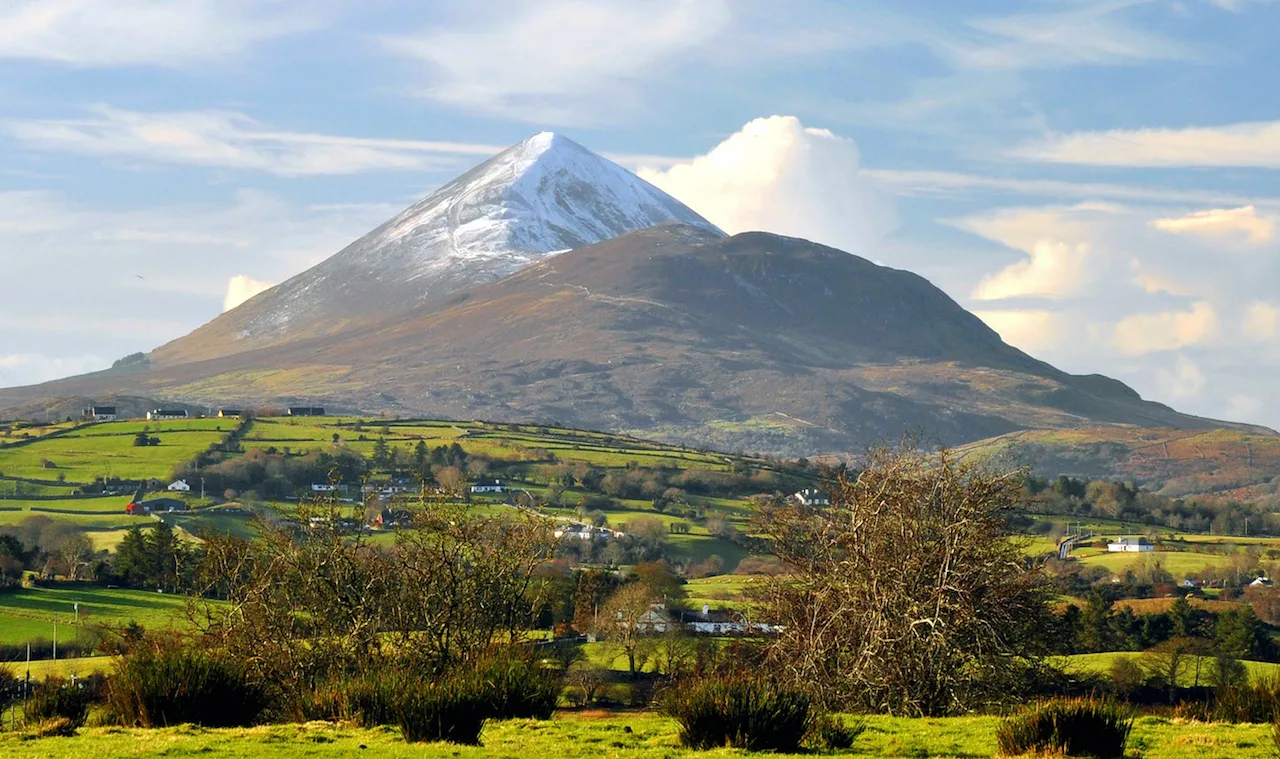
Croagh Patrick (764 metres) isn't Ireland's highest mountain, but it's arguably the most spiritually significant—a place where faith, pilgrimage, and genuine hiking converge. Located on the Mayo coast overlooking Clew Bay, Croagh Patrick draws approximately 1 million pilgrims annually. For many, ascending Croagh Patrick is religious pilgrimage; for others, it's mountain hiking; for most, it's some combination of both.
This guide covers practical information for ascending Croagh Patrick, explains the mountain's spiritual significance, and helps you approach the experience—whether you're coming for faith, hiking, or curiosity—with appropriate preparation and understanding.
The Mountain and Its Significance
Physical Character
Croagh Patrick rises from sea level to 764 metres in approximately 3 kilometres, creating steep and sustained elevation gain. The mountain's western face (the pilgrimage route) is relentless climbing over rough terrain. The ascent is neither technical nor genuinely difficult, but it's seriously challenging for unprepared walkers.
Spiritual Significance
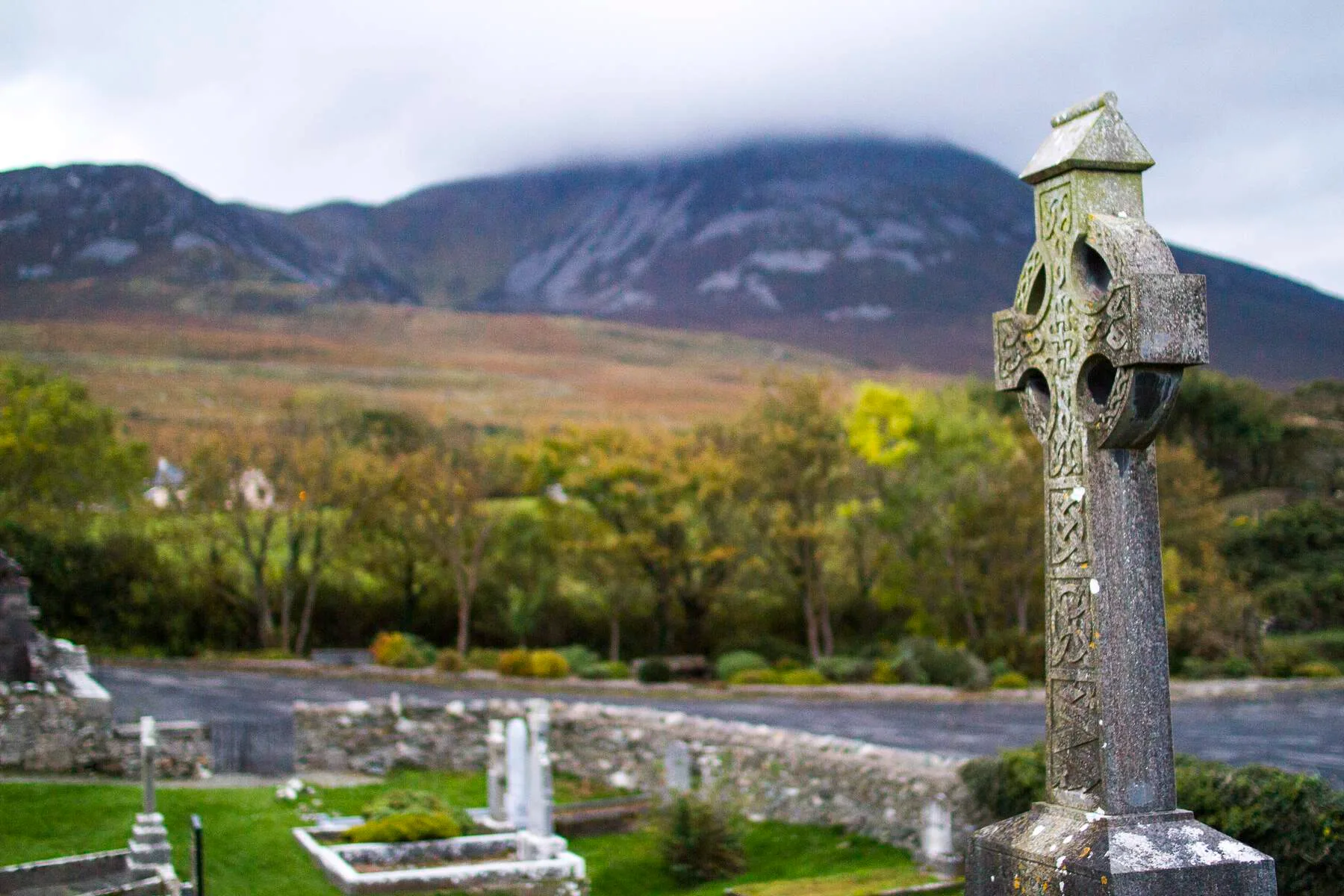
According to Irish tradition, Saint Patrick spent 40 days fasting on the summit (Lent) in 441 AD, banishing snakes from Ireland (symbolically, evil from the land). The summit features a chapel where pilgrims have gathered for centuries, making Croagh Patrick one of Catholicism's most significant pilgrimage sites.
The annual pilgrimage culminates on Reek Sunday (last Sunday of July), when tens of thousands ascend simultaneously. While impressive, the crowds on Reek Sunday can transform the experience into an endurance test rather than a pleasant hike. Off-season ascents offer similar spiritual atmosphere with less congestion.
Historical Layers
Croagh Patrick's significance predates Christianity—the mountain likely held pre-Christian spiritual importance. Walking the mountain means ascending terrain that has held human meaning for millennia.
The Ascent: What to Expect
The Standard Route
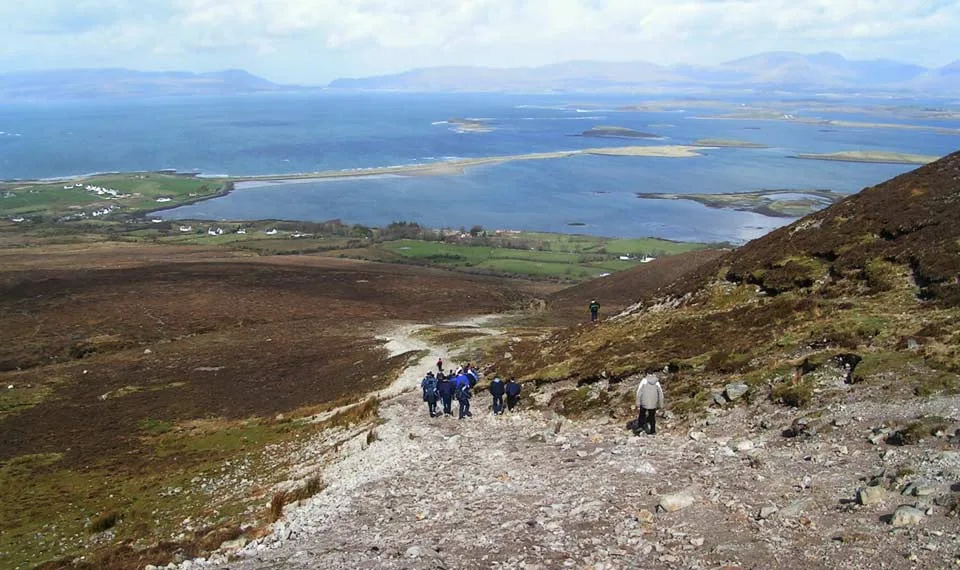
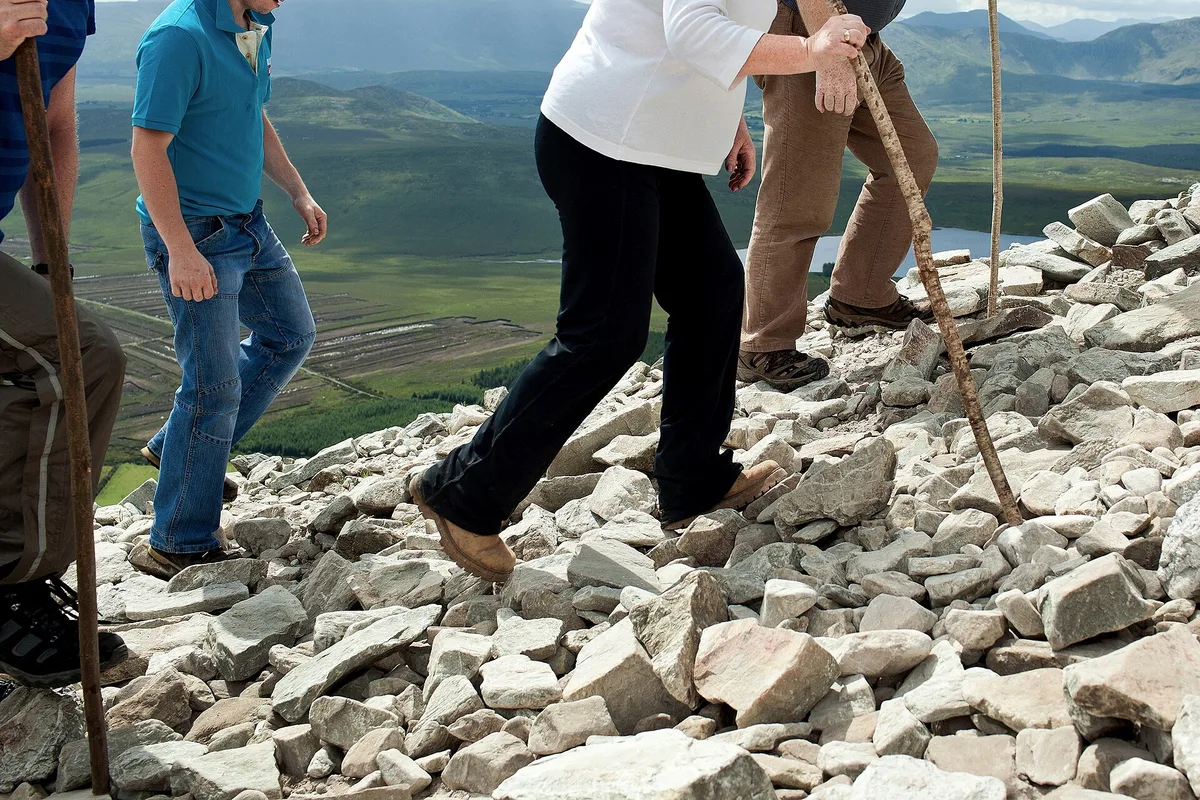
Starting from a carpark near the mountain's base, the main route is obvious and well-trodden. The path climbs unrelentingly—there's no flat section, no respite. The terrain is rough stone and scree—uneven footing demands attention.
Distance: 6 km round trip (3 km ascent, 3 km descent)
Time: 2–4 hours depending on fitness (most people 2.5–3.5 hours)
Difficulty: Moderate–Strenuous for unprepared walkers; Easy–Moderate for fit hill walkers
Most people take 1.5–2 hours ascending, spend 30 minutes at the summit, then 1–1.5 hours descending.
The Physical Challenge
Expect:
- Relentless climbing: Every step goes upward; no level sections
- Rough footing: Scree and loose stones require careful placement
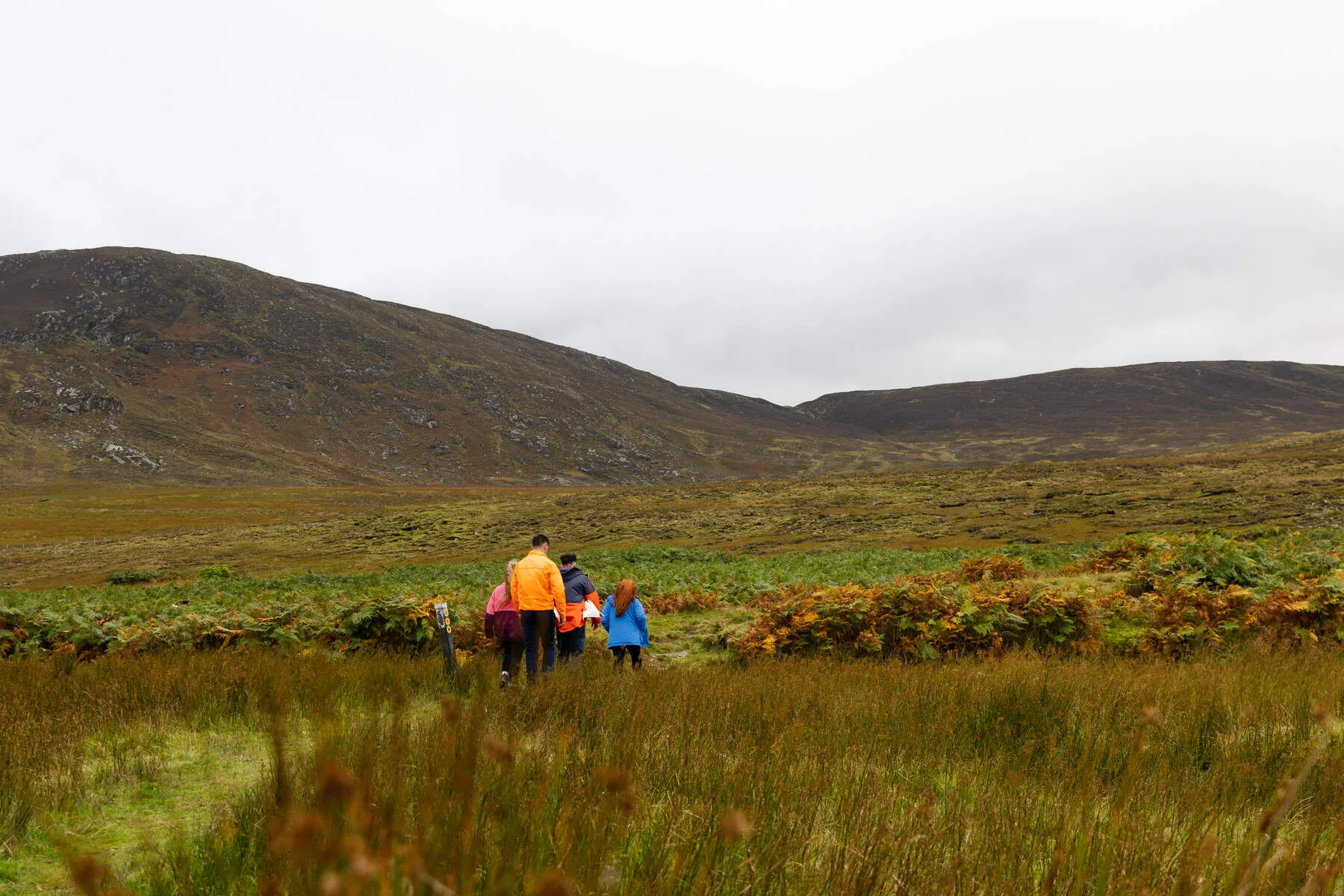
- Exposure to weather: The mountain is exposed; wind and rain are genuinely possible
- Altitude impact: While modest elevation, the rate of ascent affects many walkers
- Descent challenge: Coming down is often harder than ascending—knees and ankles take strain
The mountain isn't technically difficult, but it's genuinely hard. Unprepared walkers frequently struggle.
The Summit Experience
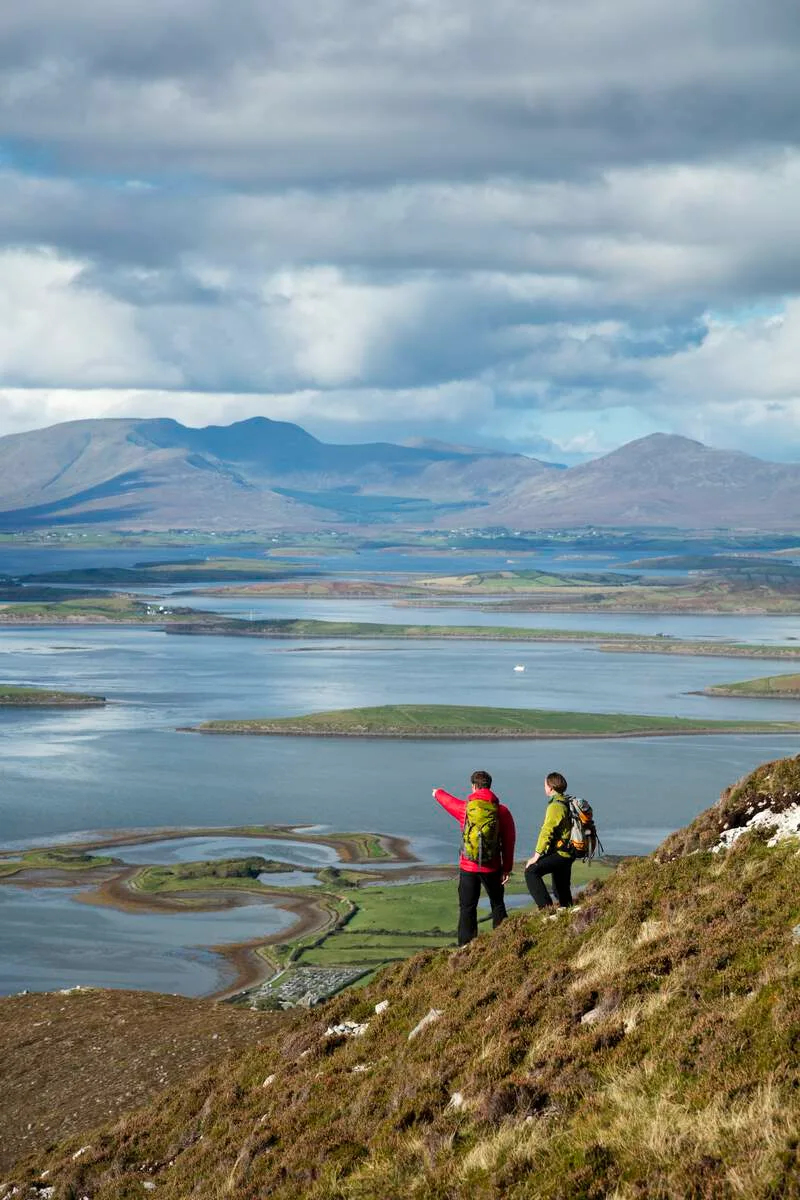
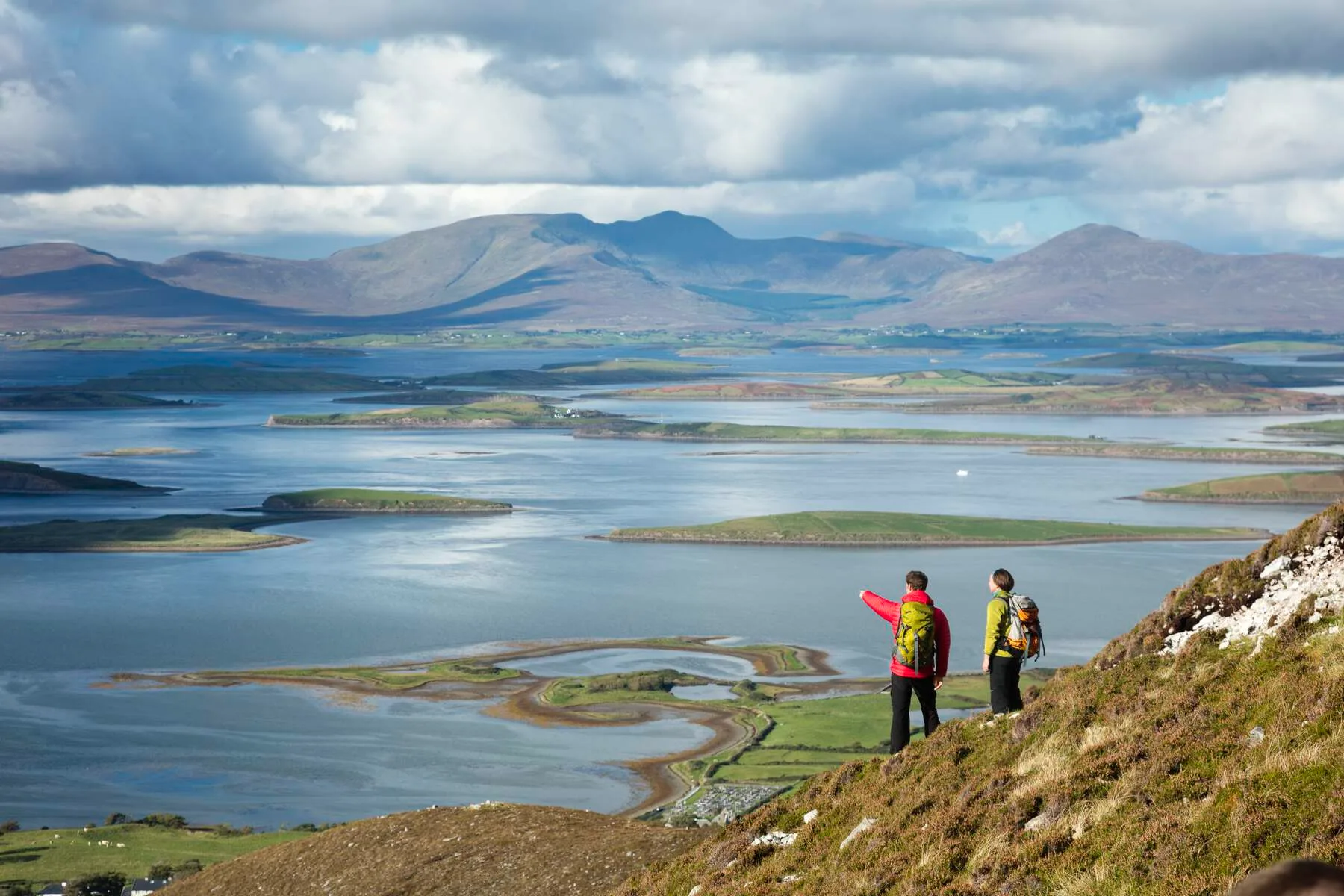
Reaching the summit—whether on crowded Reek Sunday or quiet Tuesday—creates genuine sense of achievement. The 360-degree views extend across County Mayo, over Clew Bay, and toward Connemara.
The summit features a small chapel maintained year-round. Whether you're coming for faith or hiking, the chapel and summit crowds create something spiritually significant regardless of personal belief.
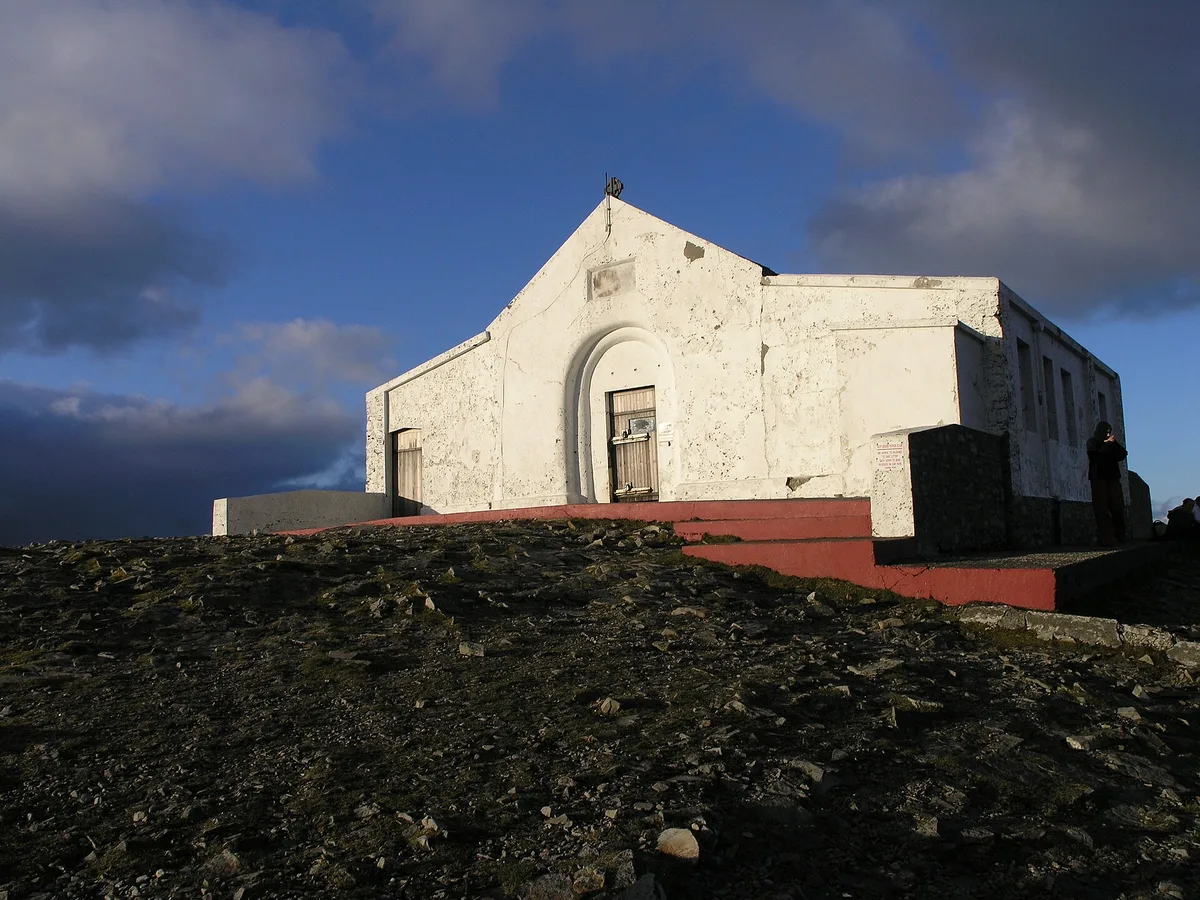
Many pilgrims spend time in quiet reflection. The experience of standing on the summit, looking out toward ocean and landscape, carries weight that transcends simple hiking accomplishment.
Preparation and Training
Fitness Requirements
Croagh Patrick demands reasonable fitness:
- Regular walking: At least monthly 10 km walks
- Hill experience: Previous experience with sustained climbing
- Leg strength: Descending is hard; strong legs prevent injury
If you're not currently walking regularly, spend 4–6 weeks building fitness before attempting Croagh Patrick.
Training Walks
Recommended preparation:
- Week 1–2: 8–10 km walks on flat terrain
- Week 3–4: 8–10 km walks with modest elevation gain
- Week 5–6: 10–12 km walks with more significant elevation (500+ metres)
Then you're ready for Croagh Patrick.
Equipment
- Walking boots: Strong, supportive boots are essential. The scree and loose stone demand ankle support.
- Gaiters: Optional but helpful—they prevent scree entering boots
- Waterproof jacket and trousers: Essential; the mountain is exposed
- Warm layers: Even summer, the summit is cool
- Hat and gloves: Yes, even in July
- Backpack: 10–15 litre day pack
- Water: Carry 1.5–2 litres; no water sources on mountain
- Food: High-energy snacks, lunch if spending time on summit
- First aid: Blister supplies, pain relief, basic kit
- Headtorch: Even for daytime ascents (emergencies)
Timing and Season
Best Times to Ascend
April–May: Spring weather improving, wildflowers emerging, fewer pilgrims. Excellent season.
June–August: Warmest weather, longest days, busiest. July's Reek Sunday sees massive crowds.
September–October: Golden light, improving weather again, fewer pilgrims. Many consider this ideal.
November–March: Harsh weather, short days, few pilgrims. Only for experienced walkers with excellent preparation.
Reek Sunday vs. Off-Season
Reek Sunday (late July): Tens of thousands of pilgrims creating processional atmosphere. Spiritually powerful but crowded. Plan for 3–4 hours to move up the mountain. Not for those seeking solitude.
Off-season: Spiritual atmosphere remains, but you can walk peacefully. Fewer crowds, better experience for most people.
The Pilgrimage and Faith Dimensions
For Non-Religious Walkers
You don't need to be Catholic or particularly religious to ascend Croagh Patrick meaningfully. The mountain's significance transcends religious boundaries. Walking as pilgrimage (whether spiritual or physical) carries meaning regardless of theology.
Many non-religious walkers find the experience profoundly moving—something about thousands of people converging on a mountain to climb together creates powerful communal atmosphere.
For Pilgrims
If ascending as pilgrimage, you're participating in ancient tradition. The chapel on summit receives pilgrims year-round. Many carry intentions, say prayers, or participate in reflection.
The pilgrimage aspect deepens the climb's meaning—you're not just hiking; you're participating in spiritual practice.
The Barefoot Tradition
Some pilgrims ascend barefoot. This is genuinely painful—the scree is sharp and unforgiving. Barefoot pilgrims are typically deeply religiously motivated. As a hiker, you should absolutely wear boots.
Safety Considerations
Weather
The mountain is exposed. Weather can deteriorate rapidly. If mist descends obscuring the path, or wind becomes dangerous, descend carefully. The summit isn't worth injury.
Descent Safety
Descending is where injuries occur. Loose scree, gravity, and tired legs create hazard. Move slowly, place feet carefully, use trekking poles if you have them.
Crowding
On busy days, the trail becomes congestion—many people, narrow sections, variable paces. This creates potential for accidents. Descending crowds is particularly hazardous.
Practical Information
Getting There
Croagh Patrick is located near Murrisk village, approximately 65 km west of Galway city and 50 km north of Westport. The carpark is well-signposted. Allow approximately 2 hours driving from Galway or 1.5 hours from Westport.
Accommodation
Westport: Larger town, good accommodation range, good restaurants.
Murrisk: Smaller village at mountain base, simpler accommodation.
Croagh Patrick Visitor Centre: Information about the mountain, religious material, café.
Cost
Access to the mountain is free. A small donation at the summit chapel is traditional.
The Experience: Beyond Just Hiking
Croagh Patrick's significance lies beyond its physical challenge. Whether you're a pilgrim seeking spiritual experience, a hiker chasing summits, or a curious tourist, ascending the mountain connects you to something larger—tradition, spirituality, human aspiration, landscape.
Many people describe Croagh Patrick as transformative. This isn't exaggeration—walking thousands of steps upward, reaching a summit sacred for centuries, standing with other pilgrims gazing across Irish landscape—these experiences shift perspective.
If you're preparing to ascend Croagh Patrick, we recommend reviewing our guide to Tochar Phadraig, another significant Irish pilgrimage walk. You might also find value in our resource on Saint Patrick's Trail, which explores related pilgrimage experiences across Ireland.
Ready to Climb?
If you're considering ascending Croagh Patrick, prepare appropriately—train for 4–6 weeks, acquire proper boots, practice walking hills. Then choose your timing (off-season provides better experience for most), gather your supplies, and climb.
You'll understand why 1 million pilgrims annually ascend this striking mountain. Whether you're coming for faith, fitness, or curiosity, Croagh Patrick offers something genuinely significant.
The mountain awaits.
Photo Gallery