Tóchar Phádraig: The Ancient Pilgrim Road to Croagh Patrick
Walking Tóchar Phádraig feels like stepping backward through time. This ancient pilgrim path Ireland has carried pilgrims toward Croagh Patrick for over a thousand years, and the moment your boots hit the first stretch, you understand why. I walked this 35-kilometer route from Ballintubber Abbey in County Mayo on a cool March morning, mist clinging to the boglands, and felt the quiet pull of something genuinely sacred. The trail combines real history with manageable terrain—steep enough to feel earned, honest enough to ask something of you. Whether you're walking for faith, fitness, or simply because the path calls, Tóchar Phádraig is Ireland's most authentic pilgrim walk experience.
The History Behind the Pilgrim Path
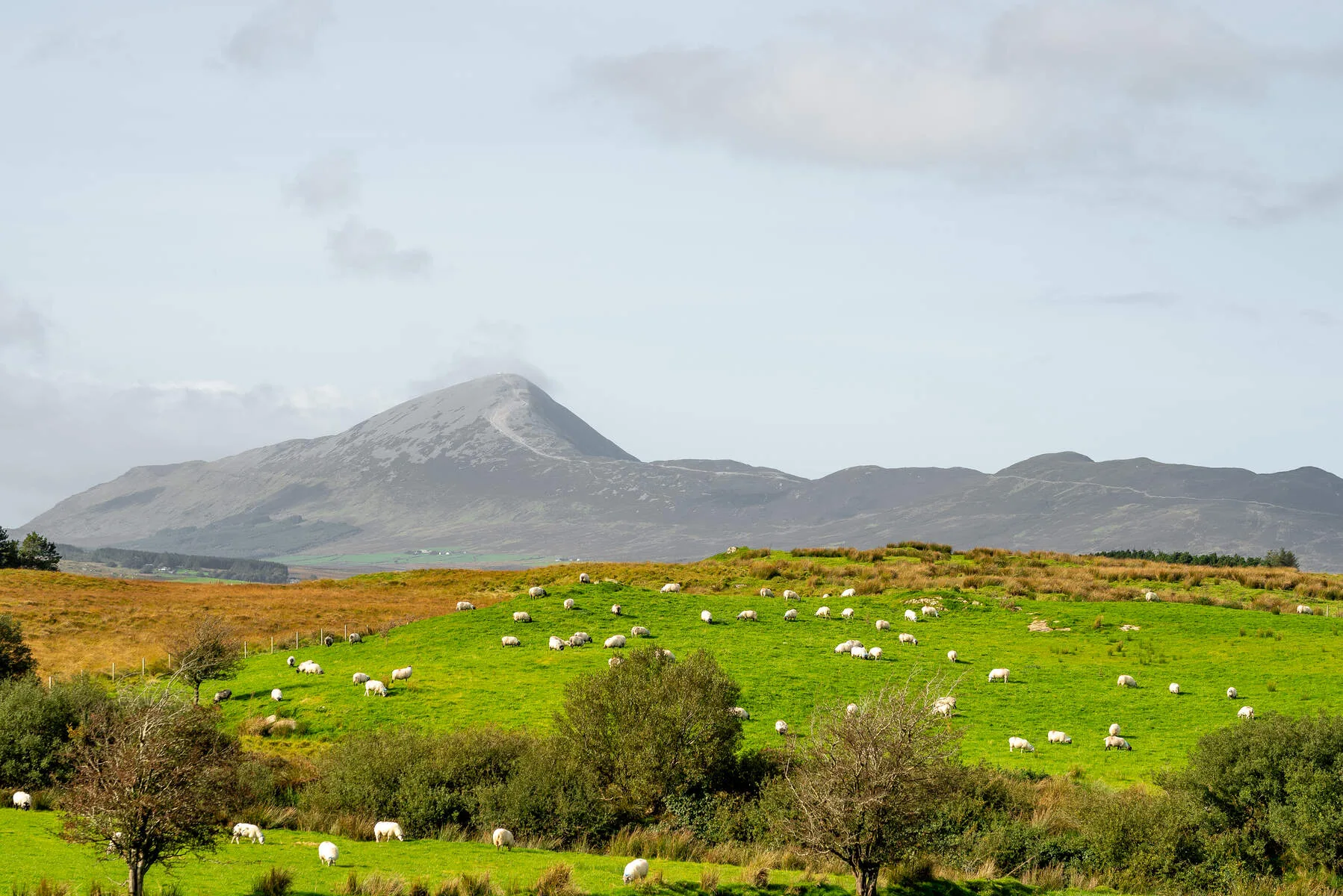
Tóchar Phádraig—the "Way of Patrick"—has roots that go back further than most Irish trails. Saint Patrick himself is said to have walked this route when traveling to preach to the people of Connaught. The formal pilgrimage tradition, though, grew strongest in medieval times, when Irish believers made their way to Croagh Patrick's summit as an act of devotion.
Croagh Patrick became one of Ireland's most important pilgrimage destinations after Patrick supposedly banished snakes from Ireland from its peak. (The snakes, historians note, were likely a metaphor for pagan beliefs.) By the 17th century, thousands walked this route each year, some barefoot, some in penance. Today that tradition continues—though most walkers come for the journey itself rather than suffering.
What strikes me most about this pilgrim path Ireland is that it's still a working pilgrimage route. You'll meet walkers of genuine faith, families hiking together, and solitary travelers seeking time alone with their thoughts. Tóchar Phádraig holds space for all of them without judgment.
Understanding the Tóchar Phádraig Route: 35 Kilometers from Abbey to Summit
The full Tóchar Phádraig runs 35 kilometers from Ballintubber Abbey to the summit of Croagh Patrick. Most walkers break this pilgrim walk Ireland into two days—the first pushing to a village halfway, the second climbing to the top.
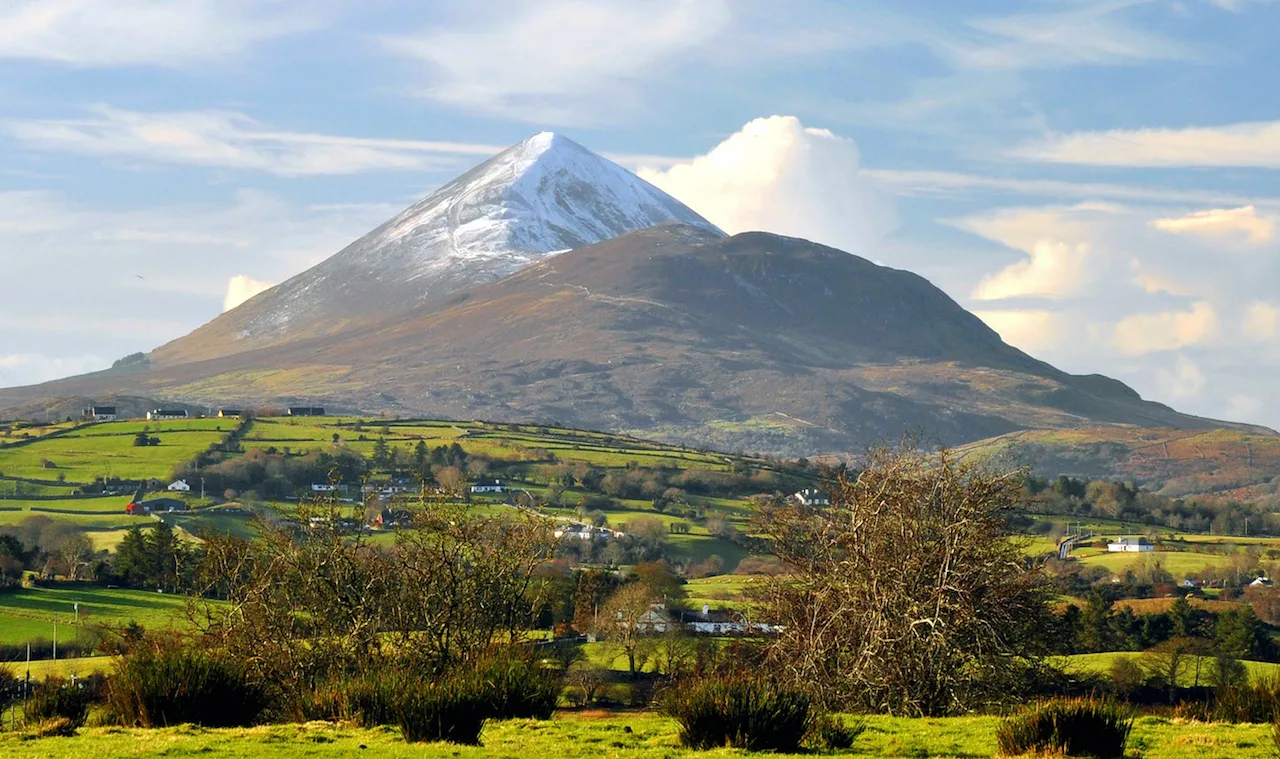
The route begins at Ballintubber Abbey, a medieval monastery that's still in use today. The path heads northeast through bog and moorland, climbing gradually until it reaches the higher plateau country. From there, it descends into the green valleys around Aghagower village, then makes the final steep push up Croagh Patrick itself.
The terrain is mixed. You'll cross bogland (often wet), climb through hill country, and walk along quiet country roads for sections. Mobile signal is spotty. This isn't a manicured tourist route—it's a working trail that asks you to pay attention.
Walking the Trail Section by Section
Ballintubber Abbey to Aghagower (approximately 18 km, 5-6 hours)
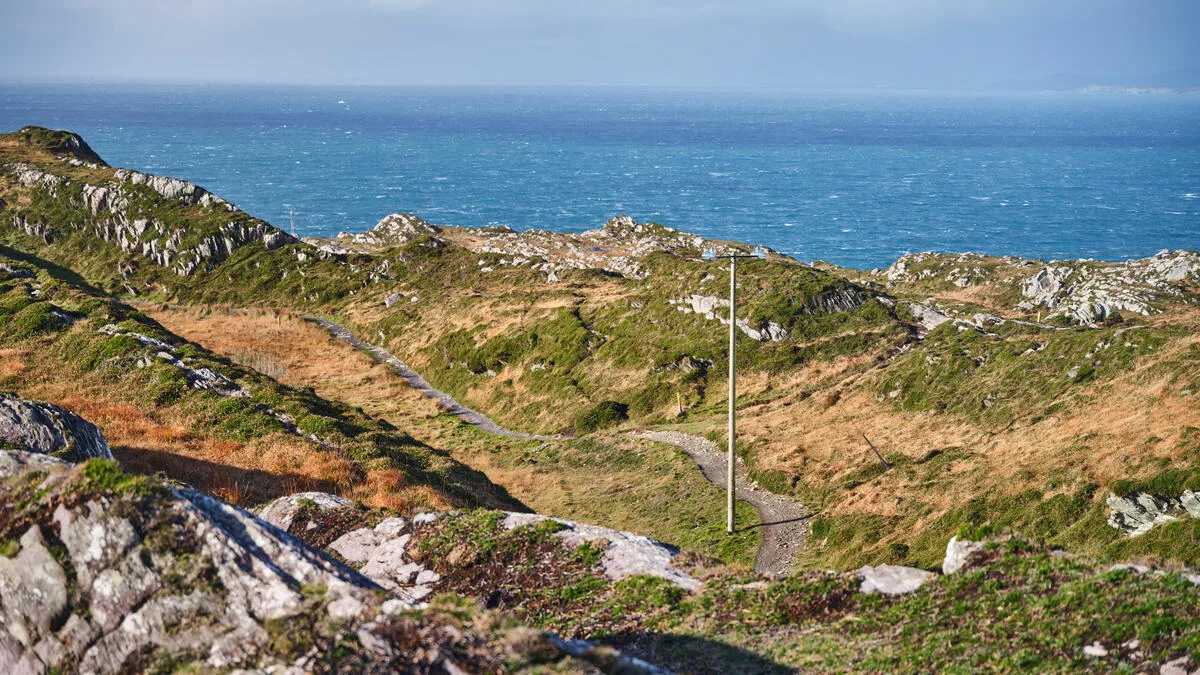
The opening stretch leaves Ballintubber Abbey and heads through bog moorland. You'll pass Máméan Mountain, climbing steadily but never steeply. I walked this section of the Tóchar Phádraig in low cloud, and visibility dropped to maybe 50 meters at points. The bog is genuine Irish bog: spongy underfoot, bogwater pools to step around, heather turning red in spring light when you can see it.
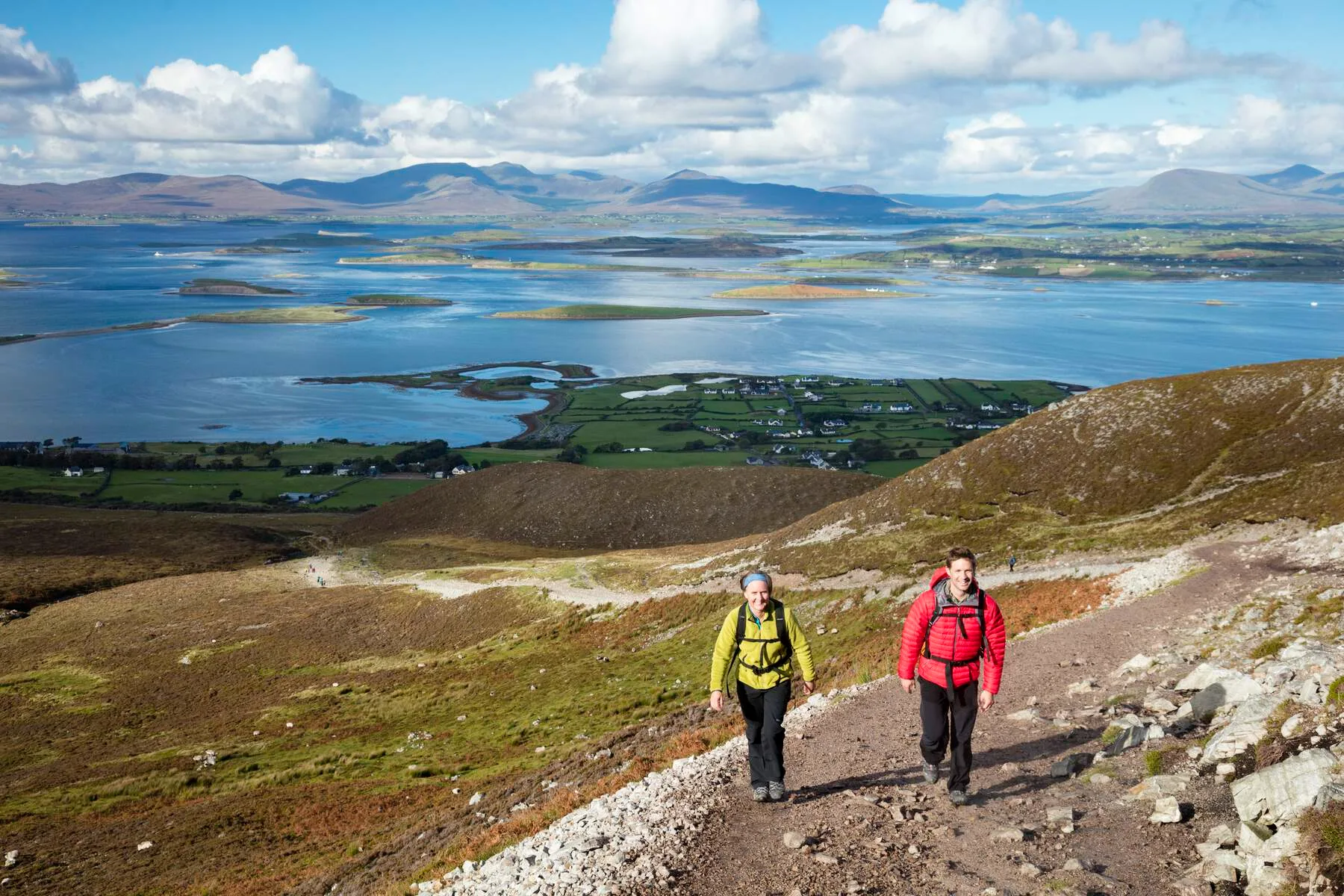
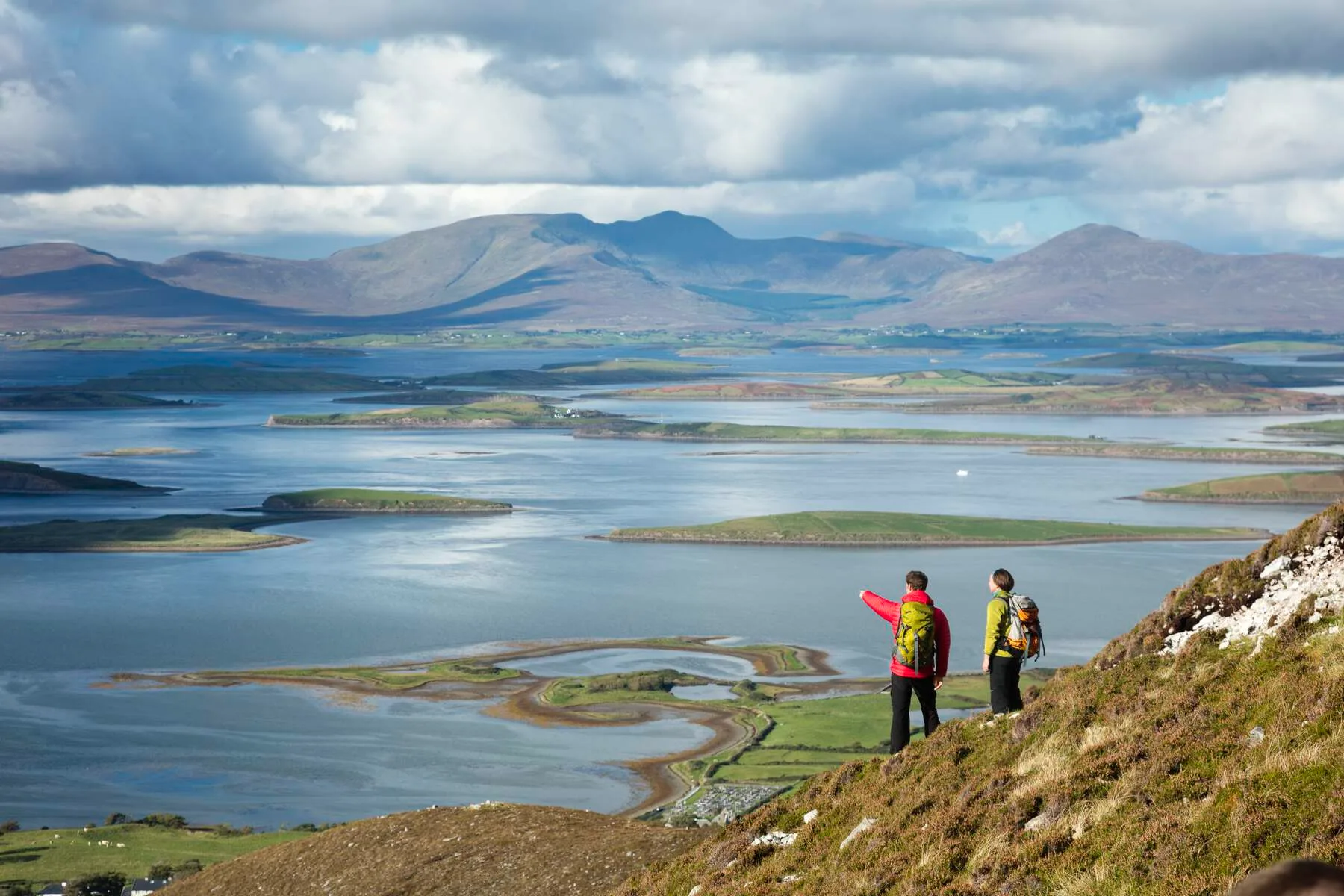
Around the midway point, you drop into more sheltered terrain. The landscape opens up to show Clew Bay in the distance. Aghagower has accommodation, a small shop, and the atmospheric round tower of an ancient monastery.
Aghagower to Croagh Patrick Summit (approximately 17 km, 5-7 hours)
The second day starts less steeply than you might expect. The path winds through farmland and conifer plantations, climbing gradually toward the base of Croagh Patrick.
The final Croagh Patrick walk begins at the car park at the mountain's base. From here, you climb the quartzite scree slopes to the summit—steep, uneven footing, and 764 meters of elevation over about 3 kilometers. On the day I summited, I climbed above the cloud layer and found blue sky at the top while the lowlands remained fogged in.
What to Expect on the Ground
Walking this pilgrim path means accepting uncertainty. Bog sections are genuinely muddy after rain. I crossed sections where water was above my boot tops. The higher moorland is exposed. Wind picks up fast.
The people you meet matter too. I shared a meal with a group of pilgrims from Dublin who walk this route annually. A walker from Germany told me she'd come to Croagh Patrick every year for fifteen years. The path brings intention to every step.
Practical Information
Getting There: Ballintubber Abbey is in County Mayo, roughly 60 km west of Galway city. Westport is your nearest proper town.
Best Time to Walk: May through September. The main pilgrimage occurs on Reek Sunday, the last Sunday in July. See our guide on the best time to visit Ireland.
Gear: Waterproof jacket and trousers, waterproof hiking boots, gaiters, trekking poles. Check our packing list.
Accommodation: Aghagower for overnight stop. Westport as main base. Book ahead during Reek Sunday season.
The Irish Pilgrim Paths guide covers other sacred routes. We also offer self-guided walking holidays throughout County Mayo.
Trail Overview
Section | Distance | Elevation | Terrain | Difficulty |
|---|---|---|---|---|
Ballintubber to Máméan | 7 km | 250 m | Bog, moorland | Moderate |
Máméan to Aghagower | 11 km | -150 m | Moorland, roads | Moderate |
Aghagower to Croagh Patrick base | 11 km | 200 m | Farmland, forest | Easy-Moderate |
Summit push | 3 km | 764 m | Steep scree | Hard |
Total | 35 km | ~1,100 m | Mixed | Moderate-Hard |
Ready to Walk the Tóchar Phádraig Pilgrim Path?
We can help organise your Tóchar Phádraig walk from Ballintubber Abbey—accommodation, transport, and local knowledge. Get in touch and let's plan your pilgrim walk from Ireland to Croagh Patrick's summit.
Frequently Asked Questions
Can I walk Tóchar Phádraig solo?
Yes, many people do. Carry a mobile phone and let someone know your plans. Weather changes fast on the bog. Walking with a partner is safer on the summit section.
How difficult is the Croagh Patrick summit?
Steep and scree-based with 764 m of elevation over 3 km. Use trekking poles and turn back if weather deteriorates. I took roughly 90 minutes from the base.
Which routes are most challenging?
How should I train before my walking holiday?
What fitness level do I need for a walking holiday in Ireland?
How does Tóchar Phádraig compare to other pilgrim paths in Ireland?
It's a two-day intensive trail to a sacred summit. Other routes like St Finbarr's Way are longer and more distributed. The Croagh Patrick walk is uniquely steep at its conclusion.