Mythological Hiking Ireland: Where Ancient Legends Meet Trails
Irish mythology walking routes: Walk Where Ancient Heroes Once Trod
What stories lie beneath your boots as you traverse Ireland's wild landscapes? I've spent twenty years guiding walkers across this island, and I can tell you that Irish mythology walking routes offer something extraordinary—trails where folklore and landscape intertwine so completely that every step becomes a journey through time. The hills remember Cú Chulainn's final stand. The valleys still echo with tales of Fionn MacCumhaill and his warriors. The ancient mounds whisper of the Tuatha Dé Danann, who retreated into the earth itself.
I've watched the sunrise over the Cooley Peninsula, where Ulster's greatest hero breathed his last, tied upright to a standing stone. I've stood in Wicklow glens where the Fianna once hunted. These aren't museum pieces behind glass—they're living landscapes where Irish folklore walking routes let you experience legends exactly where they originated.
This guide reveals the most powerful connections between mythology and trail, offering you practical Irish mythology walking routes and the timeless stories that transform ordinary walks into unforgettable adventures.
Why Ireland's Landscape and Myths Cannot Be Separated
Ireland's mythology didn't simply draw inspiration from the landscape—the land shaped every story. Ancient Celts saw divinity in natural features: mountains became sleeping giants, lakes held enchanted swans, and coastal formations marked battles between supernatural beings.
Unlike artefacts locked away, Celtic legends hiking Ireland experiences place you directly in the narrative. You're not reading about the Táin Bó Cúailnge—you're walking the peninsula where Queen Medb's armies marched and Cú Chulainn held them at bay single-handedly.
How Oral Tradition Shaped the Folklore Trails Ireland Offers
For centuries, Irish myths survived through storytelling around hearths and at gatherings. Travelling bards and seanchaí carried tales from village to village, often following routes that modern hikers traverse today.
The trails became memory aids. A distinctive rock prompted the story of Diarmuid and Gráinne's flight. A mountain pass recalled Fionn's hunting exploits. When you walk these mythology themed walks Ireland offers, you're literally following storytellers' footsteps.
The Four Mythological Cycles Along Ireland's Trails
Irish mythology is organised into four cycles, each represented at different hiking spots in Ireland.
The Mythological Cycle: Tales of the Tuatha Dé Danann and ancient gods, concentrated in the Boyne Valley and at Tara
The Ulster Cycle: Cú Chulainn and the Red Branch Knights, centred on the Cooley Peninsula
The Fenian Cycle: Fionn MacCumhaill and the Fianna, woven throughout Wicklow and beyond
The Historical Cycle: Semi-mythical kings and queens around ancient royal sites
Essential Irish Mythology Walking Routes for Folklore Lovers
I've selected trails where mythology and landscape merge most powerfully. Each offers exceptional hiking and profound connections to Ireland's folklore heritage.
Cooley Peninsula: Cú Chulainn's Final Battleground
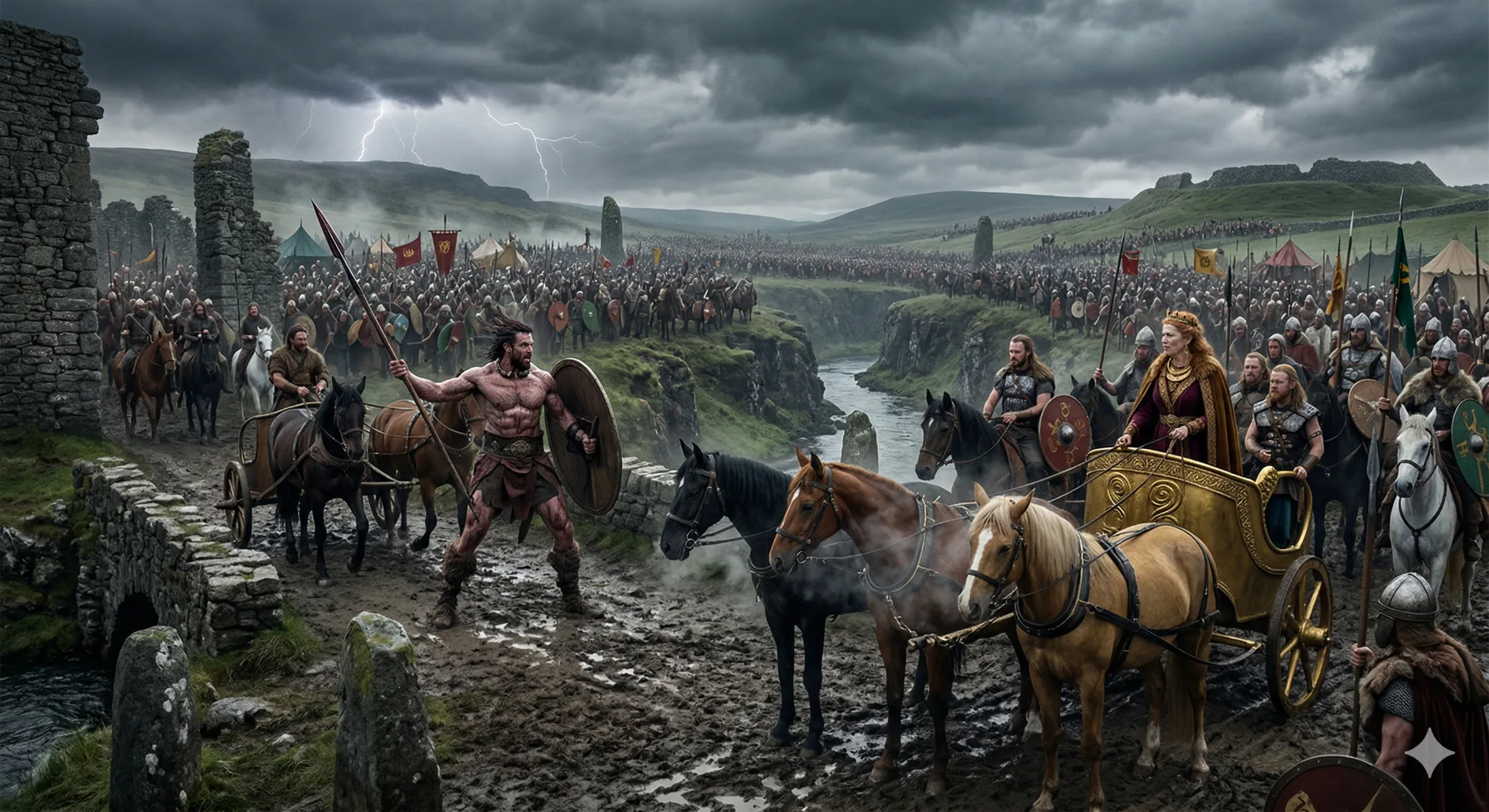
The Cooley Peninsula in County Louth is hallowed ground for anyone exploring Cú Chulainn hiking trails and the ancient Irish legends trails preserve. This dramatic landscape forms the backdrop to Ireland's greatest epic, the Táin.
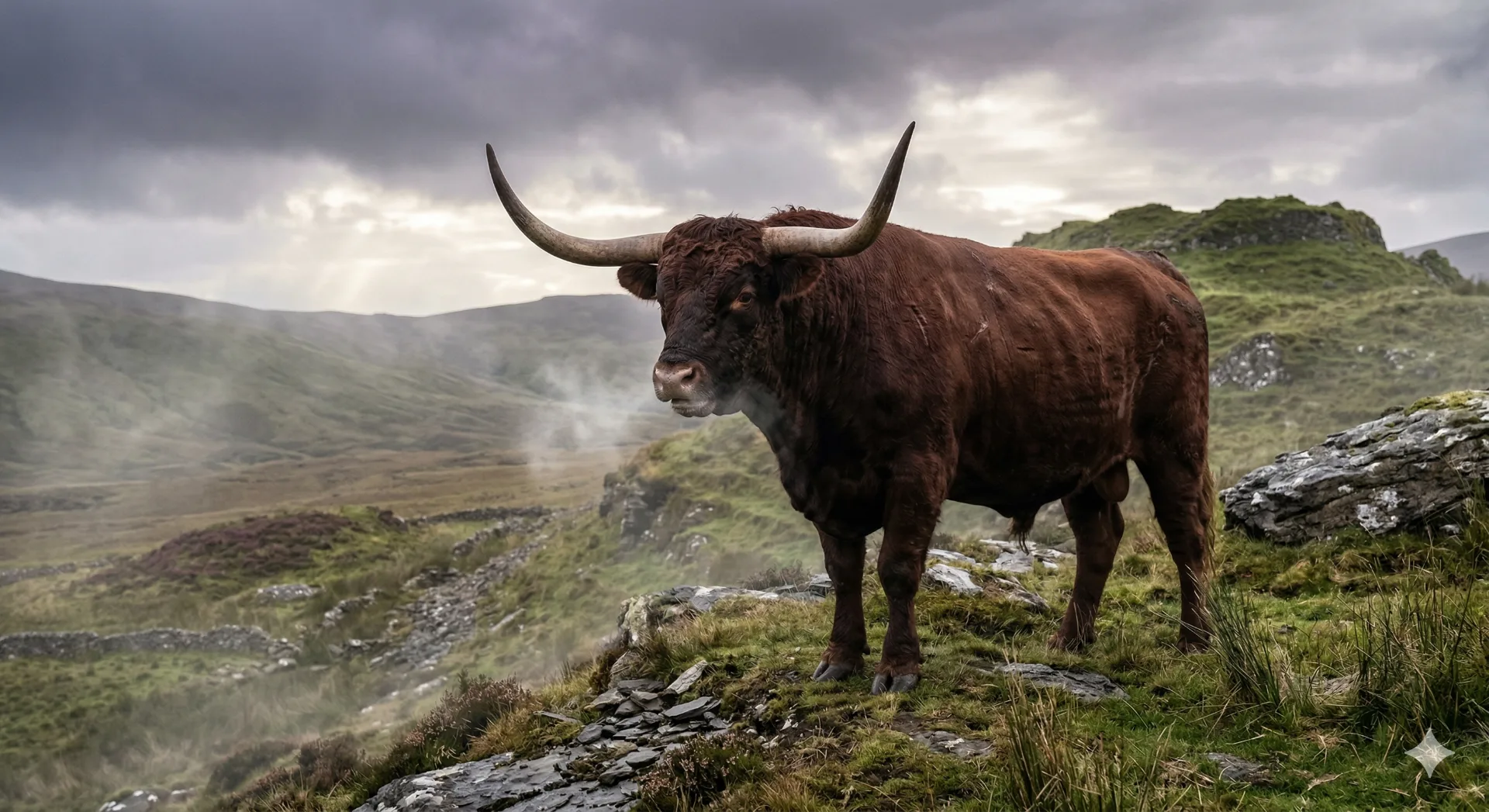
The Táin Way (40 km/25 miles) traces Queen Medb's invasion route as she seeks to steal Ulster's Brown Bull. The trail's emotional center is the standing stone, where Cú Chulainn tied himself upright while dying, refusing to fall before his enemies even in death.
I pause here with every group I guide. The monument to defiance still moves visitors centuries later.
Trail highlights include:
Spectacular views across Carlingford Lough to the Mourne Mountains
The Windy Gap, where Cú Chulainn fought his foster-brother Ferdia in single combat
Slieve Foy (589 m / 1,932 ft), offering panoramic summit views
Bronze Age passage tombs and ring forts throughout
Our guided groups stop at key sites for storytelling sessions, bringing the Ulster tales to vivid life against the very hills where they unfolded.
Wicklow Way: Following Fionn MacCumhaill and the Fianna
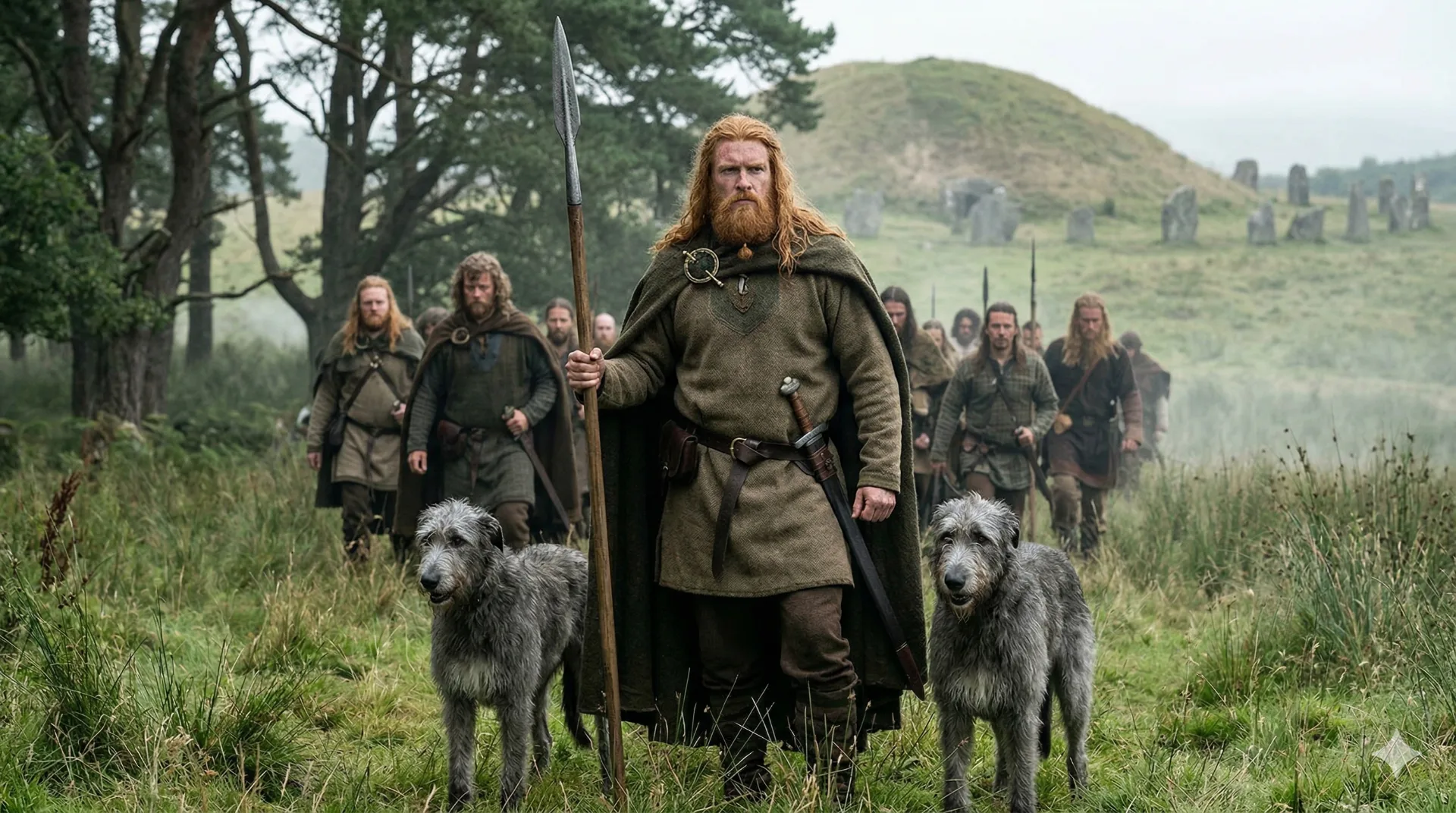
Ireland's oldest long-distance trail, the Wicklow Way (127 km / 79 miles), threads through landscapes saturated with Fenian lore and offers some of the finest Fionn MacCumhaill walking paths. Created by legendary hillwalker J.B. The 1981 Malone route winds from Marlay Park in Dublin through the Wicklow Mountains to Clonegal in Carlow.
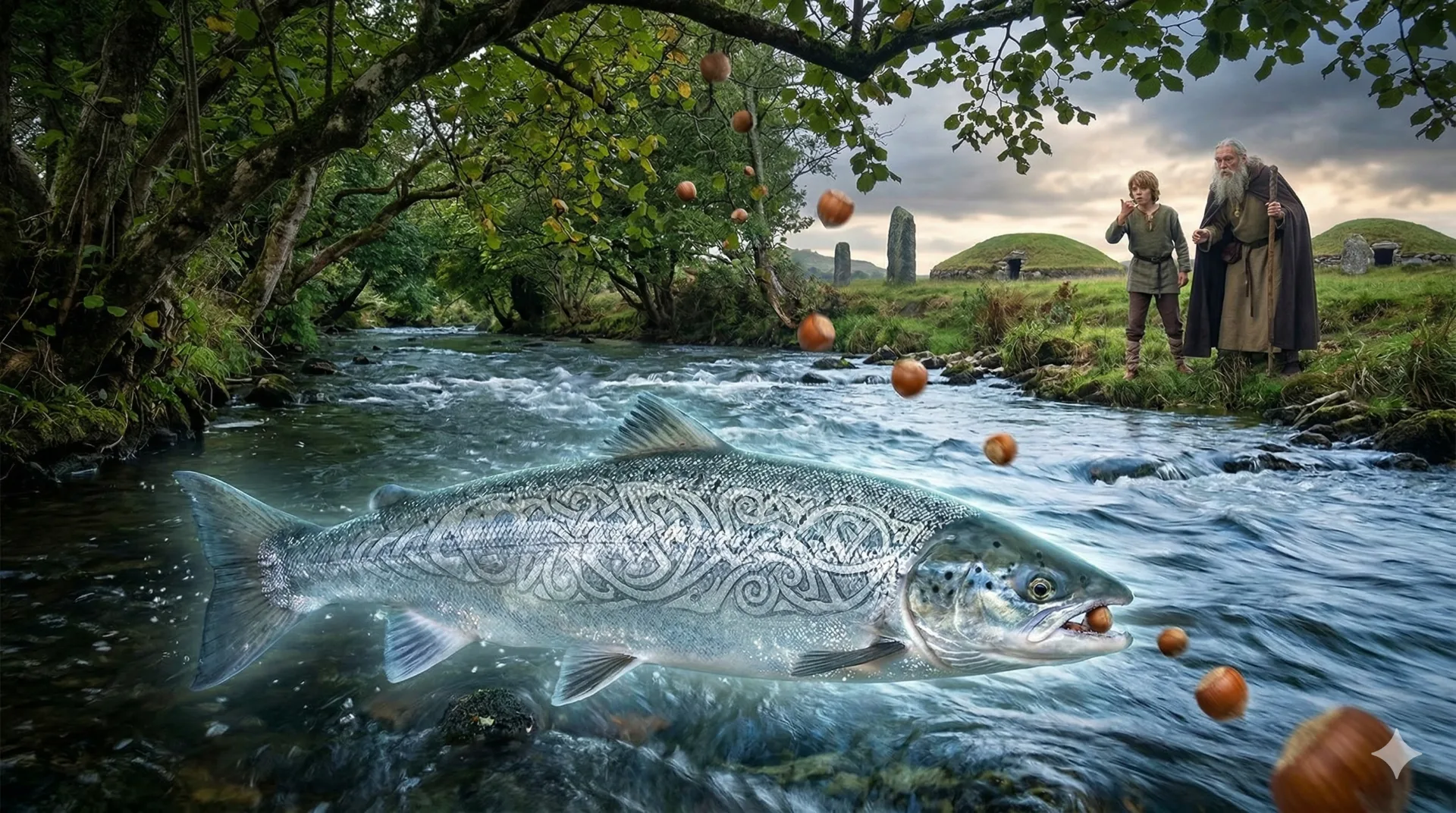
These mountains feature in countless tales of Fionn MacCumhaill. The Fionn MacCumhaill walking paths here trace where he gained supernatural wisdom after accidentally tasting the Salmon of Knowledge while cooking it for poet Finn Eces.
Mythological highlights:
Glendalough's monastic settlement, said to be under fairy protection
The Military Road, cutting through valleys where the Fianna hunted
Lugnaquilla (925 m / 3,035 ft), Leinster's highest peak, named after the god Lugh
Ring forts and standing stones marking sacred sites throughout
I typically recommend seven to eight days to complete the full route. This allows time to absorb both the stunning mountain scenery and the mythological atmosphere that makes this one of Ireland's premier folklore trails Ireland has to offer.
Our team arranges accommodation and luggage transfers and provides detailed route notes enriched with folklore and Irish myth walking stories.
Boyne Valley: Where Myth Becomes Stone
The Boyne Valley holds Ireland's densest concentration of prehistoric monuments, making it essential for exploring Tuatha Dé Danann sites Ireland preserves. The Boyne Greenway and surrounding trails offer accessible routes through this UNESCO World Heritage landscape.
Newgrange, Knowth, and Dowth—the magnificent passage tombs of Brú na Bóinne—predate Egypt's pyramids. Irish mythology claims these weren't merely tombs but sídhe (fairy mounds), entrances to the Otherworld where the Tuatha Dé Danann retreated after defeat.
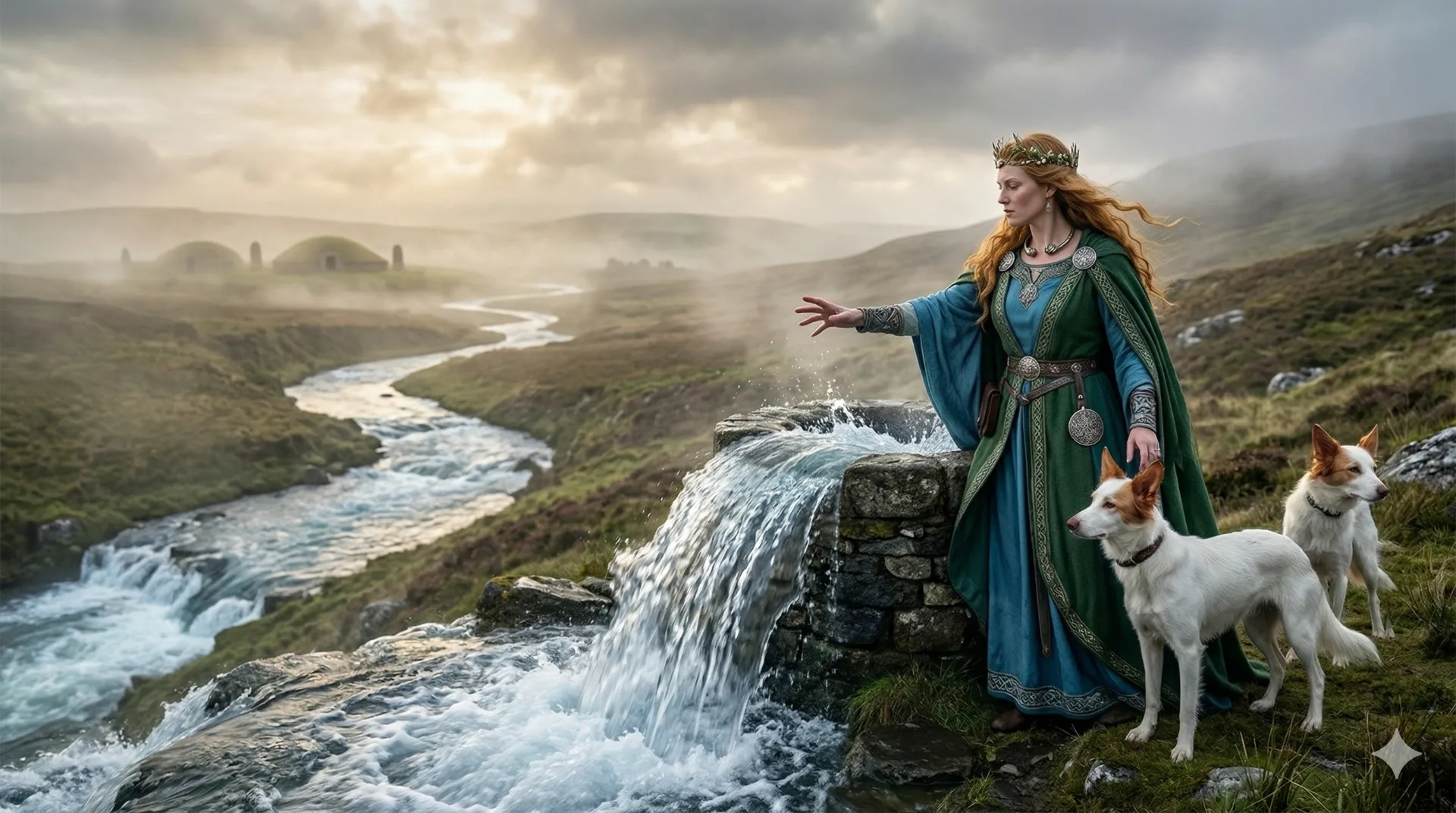
The goddess Boann, who gives the River Boyne its name, features prominently. Her forbidden approach to the Well of Segais unleashed the river itself, drowning her—a cautionary tale about respecting divine boundaries.
Key sites along Boyne Valley trails:
Newgrange, aligned to capture the winter solstice sunrise
The Hill of Tara, ceremonial seat of Ireland's High Kings
Knowth, with intricate megalithic art spanning millennia,
The Battle of the Boyne site, where myth meets documented history
Interpretive signage throughout helps connect landscape to mythology, though I find that guided walks offer far richer storytelling and context.
Slieve Bloom: Ireland's Quiet Fairy Kingdom
Rising unexpectedly from Ireland's central plain, the Slieve Bloom Mountains (527 m/1,729 ft at Arderin) feel removed from time. The Slieve Bloom Way (77 km/48 miles) circles the range through blanket bogs, oak woodlands, and heather moorland.
This is fairy country at its most authentic. Local folklore warns against disturbing lone hawthorn trees or building on certain mounds. I've collected numerous accounts—some surprisingly recent—of unexplained phenomena attributed to the Good People.
The mountains take their name from Bladhma, a warrior from the Fenian Cycle. The area's isolation has preserved traditional beliefs longer than more accessible regions, making it one of the most atmospheric mythical Ireland walks you can experience.
What makes Slieve Bloom special:
Remarkably quiet trails, even during peak season
Rich biodiversity including red deer and peregrine falcons
Glendine East, where ancient oaks create an otherworldly atmosphere
The Ridge of Capard, offering 360-degree views across five counties
Legendary Figures You'll Meet on Celtic Legends Hiking Ireland Adventures
Understanding key characters enriches any walk along mythology hiking spots Ireland offers. Here are the heroes and beings you'll encounter most frequently.
Cú Chulainn: Ulster's Tragic Hero
Cú Chulainn remains Ireland's greatest warrior—a figure of superhuman strength and tragic destiny. Born Sétanta, he earned his name after killing the hound of Culann the smith and offering to take its place as guardian.
The Cooley Peninsula preserves his memory most vividly. The standing stone epitomises the warrior code that defined the Ulster Cycle, marking the spot where he tied himself upright while mortally wounded—refusing to die lying down.
When you hike the Táin Way, you're walking through his greatest trial: the single-handed defence of Ulster while the rest of its warriors lie under Macha's curse. For months, he fought Queen Medb's forces alone.
Fionn MacCumhaill: Warrior, Poet, Visionary
Fionn MacCumhaill (anglicised as Finn McCool) leads the Fianna, elite warriors bound by strict codes. Unlike the purely martial Cú Chulainn, Fionn combines physical prowess with wisdom gained by tasting the Salmon of Knowledge.
His presence permeates the Wicklow Mountains, where the Fianna hunted and trained. The Giant's Causeway in County Antrim also bears his mark; legend claims he built it to reach Scotland and confront the giant Benandonner.
Stories featuring Fionn explore themes of leadership, time's passage, and fame's bittersweet nature. His son Oisín narrated many Fenian tales after returning from Tír na nÓg—another layer of storytelling within the mythology.
The Children of Lir: A Tale of Transformation
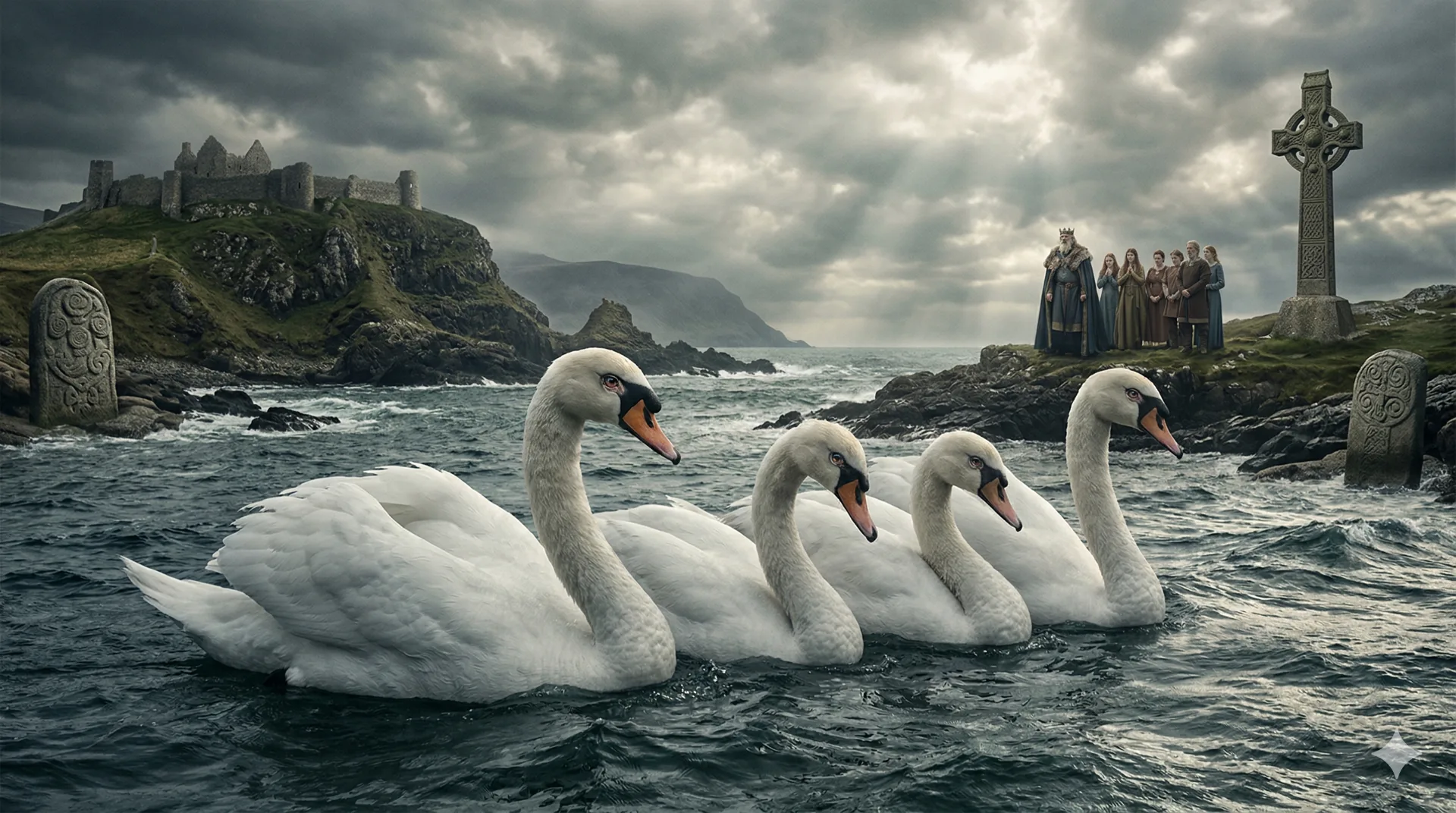
One of Ireland's most poignant myths involves four royal children transformed into swans by their jealous stepmother. They spent 900 years in swan form across three locations: Lough Derravaragh, the Sea of Moyle, and the Atlantic near Mayo.
Lough Derravaragh in County Westmeath offers gentle lakeside walks where you can almost hear the swans singing the mournful songs that, legend says, moved all who heard them.
The myth addresses transformation, endurance, and Ireland's Christianization—the spell finally broke when the children heard church bells, only to immediately age and die, receiving baptism moments before death.
The Tuatha Dé Danann: Ireland's Divine Race
The Tuatha Dé Danann (People of the Goddess Danu) represent Ireland's pre-Christian deities. After defeat by the Milesians, they retreated into the sídhe mounds, becoming the fairy folk of later tradition—and their presence defines many Tuatha Dé Danann sites Ireland preserves today.
The Boyne Valley holds their strongest presence. Newgrange served as the dwelling of the Dagda and his son Aonghus Óg, god of love. Walking near these monuments at dawn or dusk creates an almost tangible connection to this divine past.
How to Deepen Your Experience on Mythical Ireland Walks
Simply walking these trails offers value, but these approaches significantly deepen the experience.
Join Guided Mythological Hikes
Our mythology themed walks Ireland experiences combine expert trail knowledge with storytelling skills I've honed over two decades. At key landmarks, we pause to share relevant myths, creating immersive moments where landscape and legend merge.
A professional guide offers context that signage cannot—explaining how myths evolved, how they reflected Celtic worldviews, and how Christian monks later recorded (and sometimes altered) the stories. We also ensure you don't miss subtle features: a lone fairy thorn, a hidden holy well, and easily overlooked carved stones.
Self-Guided Resources and Interpretive Signage
Many folklore trails Ireland offers now feature interpretive signage explaining mythological connections. The Boyne Greenway excels here, with panels detailing 5,000 years of heritage.
We provide our clients with detailed route notes that include not just navigation and practical information but also key myths associated with each day's walk. This allows you to pause and reflect at your own pace.
Timing Your Walk for Atmosphere
Celtic mythology emphasises liminal times—dawn, dusk, mist—when the boundary between our world and the Otherworld grows thin. Walking during these conditions (safely, with proper preparation) adds atmospheric depth.
Samhain (31st October), Imbolc (1st February), Bealtaine (1st May), and Lughnasadh (1st August)—the four Celtic quarter days—hold special significance. Some trails host storytelling events or guided walks on these dates.
Respectful Engagement with Sacred Sites
Many sites along folklore hiking destinations remain sacred to local communities. Whether visiting a holy well, ring fort, or fairy thorn, approach with respect:
Don't remove stones, coins, or offerings left by others
Avoid damaging or climbing on archaeological features
Keep voices low near sacred sites
Follow Leave No Trace principles rigorously
This isn't mere politeness—it acknowledges the living relationship between Irish people and their mythological heritage.
Planning Your Mythological Hiking Ireland Adventure
Ready to walk where legends were born? Here's how I recommend you prepare.
Best Seasons for Irish Mythology Walking Routes Exploration
Spring (April–May) and autumn (September–October) offer the best balance of manageable weather, fewer crowds, and atmospheric conditions. The landscape transforms with seasonal colouring, and the mist often adds ethereal beauty to mythological sites.
Summer (June–August) provides longer daylight and generally drier conditions, though trails—especially the Wicklow Way—see peak traffic. Winter walking (November–March) requires greater preparation but rewards you with solitude and dramatic weather that brings myths to life.
Essential Gear for Irish Conditions
Irish weather changes rapidly. Even on lower-elevation ancient legends Irish trails, prepare for the following:
Item | Specification | Why Essential |
|---|---|---|
Waterproof jacket | Breathable, taped seams | Rain can arrive within minutes |
Waterproof trousers | Full-zip sides preferred | Easy to add/remove on trail |
Base layers | Merino wool or synthetic | Temperature regulation, quick-dry |
Hiking boots | Ankle support, waterproof | Boggy ground, uneven terrain |
Navigation tools | Map, compass, GPS/smartphone | Weather can obscure landmarks quickly |
We provide comprehensive packing lists tailored to your specific trail and season when you book with Walking Holiday Ireland.
Accommodation and Luggage Logistics
Most legendary hiking locations Ireland offers pass through or near villages with excellent B&Bs, guesthouses, and small hotels. I prebook accommodation along your route and arrange daily luggage transfers, so you carry only a daypack while hiking.
This supported approach lets you focus on the experience—the stories, the landscape, the connection to ancient Ireland—rather than logistics.
See our supported walking holidays
Fitness Requirements by Trail
Trail difficulty varies significantly across these mythical Ireland walks:
Boyne Valley trails: Gentle, suitable for most fitness levels
Wicklow Way: Moderate to challenging; requires good general fitness and hill-walking experience
Cooley Peninsula: Moderate; some steep sections but manageable with reasonable fitness
Slieve Bloom Way: Moderate; gentler than Wicklow but with sustained climbs
Regular walking (three to four hours, two to three times weekly) for six weeks before your trip provides adequate preparation for most routes.
Deepening Your Knowledge Beyond the Trail
Your engagement with mythological hiking in Ireland needn't end when the walk concludes.
Recommended Reading for Trail Preparation
These books enrich your understanding of Irish mythology:
Early Irish Myths and Sagas (translated by Jeffrey Gantz): Accessible translations of core texts
Irish Folk Tales (edited by Henry Glassie): Traditional stories from across Ireland
The Táin (translated by Thomas Kinsella): The definitive Ulster Cycle epic
The Penguin Book of Irish Fiction: How mythology influences modern Irish literature
Cultural Centres Worth Visiting
Complement your trail experience with visits to:
Brú na Bóinne Visitor Centre (County Meath): Outstanding interpretation of the Boyne Valley's ancient monuments
National Museum of Ireland – Archaeology (Dublin): Bronze Age and Iron Age artefacts from mythological periods
The Epic Museum (Dublin): Interactive exhibits on Irish emigration and mythology
Your Journey into Ireland's Mythological Heart
Irish mythology walking routes offer something beyond beautiful scenery or physical challenge—they provide connection to a heritage that has shaped Western literature, art, and imagination for millennia. When you walk the Cooley Peninsula, you're treading ground where Cú Chulainn made his final stand. In the Wicklow Mountains, Fionn MacCumhaill's presence feels almost tangible.
These trails prove that Ireland's greatest stories aren't locked in museums or books—they're alive in the landscape, waiting for you to discover them step by step, mile by mile.
I've spent years perfecting these journeys at Walking Holiday Ireland, combining expert trail knowledge with deep appreciation for the mythology that makes Ireland's walks so special. We handle every detail—accommodation, luggage transfers, and route notes rich with folklore—so you can focus entirely on the experience.
Whether you're drawn to the tragic heroism of the Ulster Cycle, the adventurous spirit of the Fianna, or the otherworldly mysteries of the Tuatha Dé Danann, there's a trail calling your name.
Walk Where Legends Were Born
Let me craft your perfect Irish mythology walking adventure. From the windswept Cooley Peninsula to the mystical Wicklow Mountains, I'll take care of every detail while you immerse yourself in Ireland's greatest stories.
Explore Our Mythological Trail Packages
TL;DR – Quick Summary
Mythological hiking in Ireland combines stunning landscapes with ancient folklore. Key trails include the Cooley Peninsula (Cú Chulainn's battleground), Wicklow Way (Fionn MacCumhaill's hunting grounds), Boyne Valley (Tuatha Dé Danann sites), and Slieve Bloom (fairy country). Spring and autumn offer the best conditions. Guided walks provide deeper storytelling; self-guided options offer flexibility. Walking Holiday Ireland handles all logistics—accommodation, luggage transfers, and mythology-rich route notes—so you can focus on experiencing Ireland's legendary trails.