Mindfulness Walking in Ireland: Trails for Wellbeing
Mindfulness Walking Ireland: Best Trails for Wellbeing
There's a particular quality to silence in Ireland that you don't find in many places. Not the absence of sound — Irish landscapes are rarely actually silent — but a quality of sound that carries no human noise. Wind across a blanket bog. Water moving over limestone. Birdsong without traffic underneath it. These are the conditions that make mindfulness walking in Ireland one of the finest practices in the world for genuine attention.
Mindfulness walking Ireland — moving through a landscape with full sensory attention to the present moment rather than to thoughts and screens and the accumulated noise of ordinary life — is not a technique invented by wellness culture. It is simply what walking was before walking became exercise. Ireland's trails, with their specific combination of ancient landscape, Atlantic climate, and low population density, make the experience unusually accessible.
This guide covers the best Irish trails for mindful walking, the science that supports walking in nature for wellbeing, and the practical techniques that transform a walk into something more than a walk.
Why Walking in Nature Works
The evidence for walking in nature as a genuine wellbeing practice is substantial and specific.
Forest bathing Ireland — or shinrin yoku in its Japanese origination — describes the practice of spending time in forest environments with full sensory engagement. Research on nature therapy and walking consistently shows measurable effects: reduced cortisol levels, lower blood pressure, improved immune function, reduced anxiety and depression scores. The mechanism involves a combination of phytoncides (volatile organic compounds released by trees), the sensory complexity of natural environments, and what researchers call "attention restoration" — the way natural environments allow directed attention to recover.
The Wicklow Mountains oak woodland, the Burren's ancient limestone flora, and Killarney National Park's yew and oak forest are all environments with the specific sensory richness that forest bathing research describes. Ireland's persistent softness in the air — that particular quality of Atlantic moisture — adds a layer of sensory engagement that drier landscapes simply don't have.
Walking as cognitive reset is well documented: 20 minutes of outdoor walking reliably reduces the physiological markers of stress. The regular rhythm of footfall, combined with forward movement through changing scenery, produces a mild meditative state in most people without any conscious effort. Ireland's long-distance trails, with their multi-day rhythm and absence of urban noise, deepen this effect considerably.
Best Trails for Mindful Walking Ireland
The Burren, County Clare
The Burren is the most extraordinary landscape in Ireland for walking with attention. The bare limestone pavement — clint and grike, the formal geological terms for the flat slabs and the fissures between them — creates an experience that has no equivalent anywhere in Western Europe. The surface underfoot changes every few steps. The flora growing from the rock cracks represents an impossible botanical convergence: Mediterranean, Arctic, and Atlantic plants growing within metres of each other, the Burren's unique microclimate sustaining species that have no business being in the same place.
Walking meditation here — deliberately, attentively — is the only pace that makes sense for mindful walking in Ireland's most extraordinary landscape. The Burren rewards slow observation in a way that faster landscapes don't. The Burren Way covers the full multi-day route; for a mindful day walk, the section above Mullaghmore reveals the full limestone scale.
At dusk on the Burren, when the light comes low across the pavement and the stone catches it horizontally, the landscape becomes something close to otherworldly. This is one of the specific Irish experiences that cannot be planned — only waited for.
Glendalough, County Wicklow
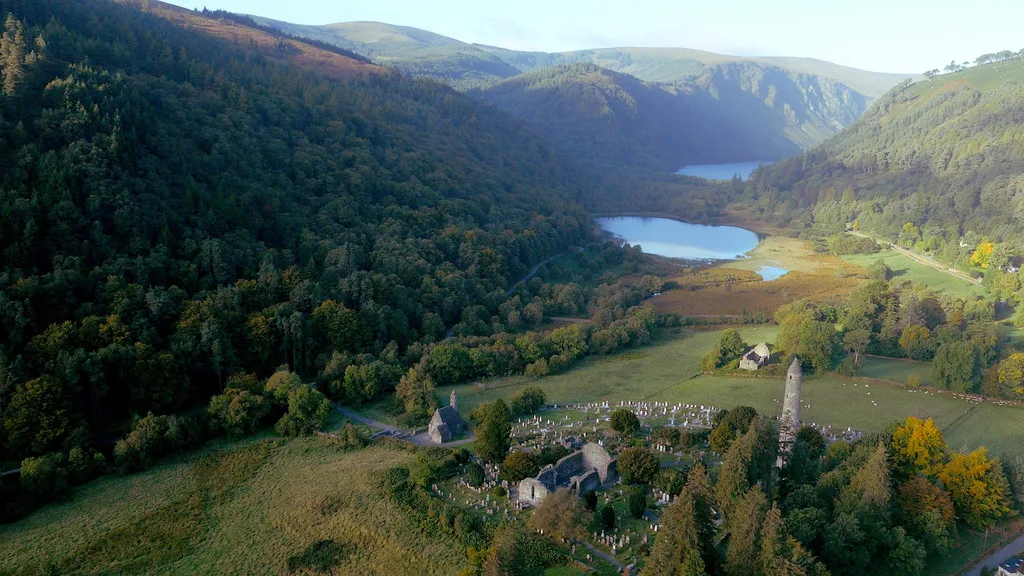
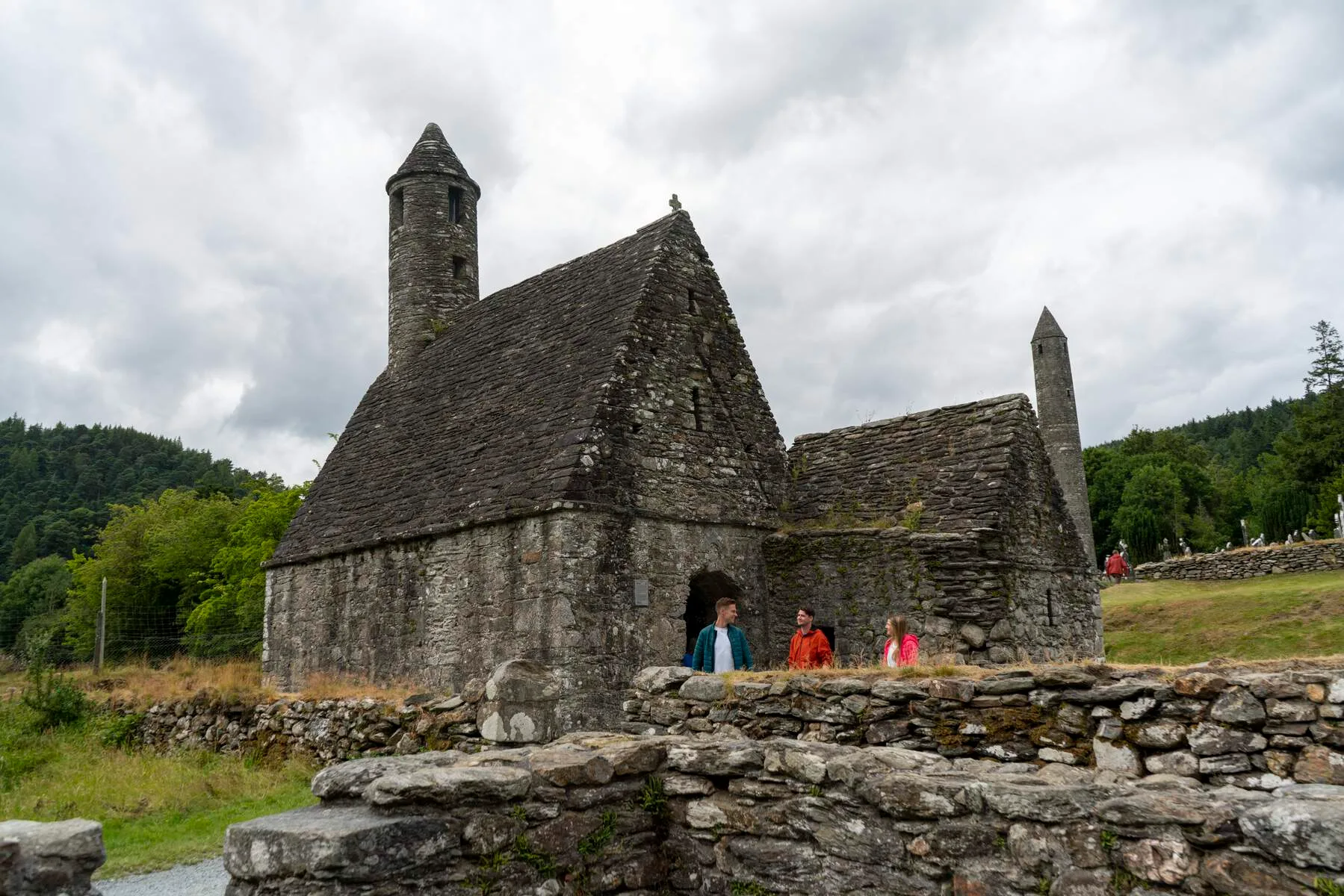
The glacial valley of Glendalough carries weight that goes beyond its physical beauty. St Kevin established his monastic community here in the 6th century specifically for the qualities of the place: the sheltered valley, the twin lakes, the surrounding mountains, the quality of the light and sound. He was, in a sense, the first person to document what the Glendalough environment does to the attentive mind.
The upper lake walk — 2.5 km through ancient oak woodland above the water — is one of Ireland's finest short wellness walking routes. The oak canopy creates a filtered light unique to old woodland; the lake opens through the trees; the sound of water on the valley floor carries up from below. The Glendalough walks guide covers the full range of routes from the easy valley floor to the mountain ridges above.
For walkers on the Wicklow Way, Glendalough provides both a physical midpoint and a psychological reset — ideal for those seeking wellbeing hiking in Ireland — the kind of place where the walking holiday's accumulated physical effort starts to feel like something larger.
Connemara's Blanket Bog
There is no landscape in Ireland more conducive to the specific stillness that mindful walking produces than Connemara's blanket bog. The bog is essentially flat, essentially open, and essentially silent — a quality of silence that amplifies rather than empties. The colour changes are extraordinary and continuous: the bog shifts from burnt orange to green to purple with the light and the season, the cottongrass moves in the slightest breeze, and the pools of dark water reflect the sky with complete fidelity.
The Connemara National Park provides accessible bog walking with the Diamond Hill ridge for elevation above it. For those committed to mindfulness walking Ireland-style, the open bog tracks west of Leenaun offer a remoteness that most of Europe has lost entirely.
Mindful walking on bog in mist — something Connemara provides reliably — removes the horizon and creates a quality of immersion in the immediate landscape that is unlike anything else, approaching what shinrin yoku practitioners describe. The world narrows to what is directly around you: the texture of the vegetation underfoot, the smell of peat and water, the sound of wind without obstruction.
Killarney National Park: Ancient Woodland
Killarney National Park contains the largest area of native oak and yew woodland in Ireland — and some of the oldest. The ancient yew wood at Reenadinna is particularly striking: a dense, dark, profoundly quiet woodland of extraordinary age, growing on a limestone pavement above Muckross Lake.
Walking meditation through old woodland produces a specific quality of experience that forest bathing research identifies: the combination of dappled light, the soundscape of wind in different canopy layers, the smell of moss and bark and earth, and the sense of inhabiting a living system of enormous complexity. The Killarney National Park hikes guide covers the full range of routes.
The Antrim Coast: Sound and Sea
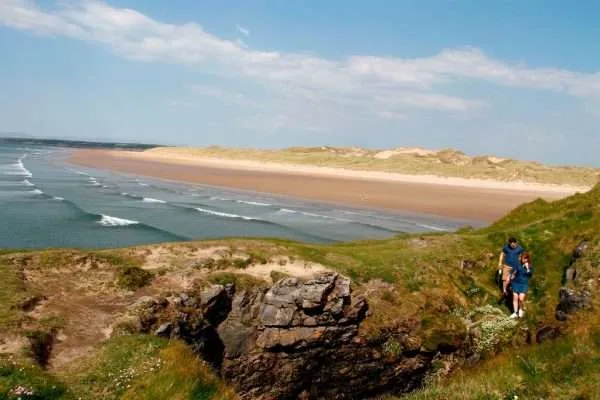
The Antrim coastal path provides a different kind of mindful walking environment — the Atlantic rather than forest or bog as the dominant sensory experience. The sound of the sea on the basalt cliffs, the smell of salt and seaweed, and the perpetual movement of water and light create an environment that holds attention without effort.
Our Antrim coast walk guide covers the full coastal route. For mindful walking specifically, the early morning sections between Waterfoot and Cushendall — before the day warms and the coast path empties of other walkers — are particularly good.
Practical Techniques for Mindfulness Walking in Ireland
The 5-4-3-2-1 sense check
Every 20 minutes, pause briefly and name: five things you can see, four you can hear, three you can touch (ground, air, clothing), two you can smell, one you can taste. This is a simple sensory grounding technique that interrupts the pattern of walking-while-thinking-about-something-else. On Irish trails, particularly in the Burren or on bog, this nature therapy technique produces genuinely different results from the same practice in urban environments.
Walking speed
Slow down by at least a third of your normal walking pace for any section you want to walk mindfully. Mindful walking is not exercise walking — the two are genuinely different activities. This is particularly valuable on short sections of particular beauty or complexity: the limestone pavement, the old woodland, the cliff edge.
Deliberate pauses
Stop completely for two minutes at points of particular interest or beauty. Not to photograph — to look. The difference in retention between a paused observation and a moving glance is significant; the difference in the quality of the memory is even greater.
Devices
Leave them in your pocket. The habitual check — the urge to photograph every remarkable view rather than simply be in it — is the primary obstacle to mindful walking. One photograph per location as a aide-memoire is reasonable; the ongoing documentation of the walk while the walk is happening is the opposite of mindful engagement.
Mindful Walking and the Solo Experience
Walking alone in Ireland is one of the conditions most conducive to genuine mindful engagement with a landscape. The social dynamics of group walking — conversation, pacing together, the natural tendency to match another person's attention — are pleasures, but they are different pleasures. Solo walking in Ireland, particularly on the quieter trails, gives access to a quality of attention that is genuinely different.
Our solo walking holidays in Ireland page covers how WHI supports solo walkers through self-guided routes. The women's guide to solo hiking in Ireland addresses the particular considerations for solo women walkers.
Many of WHI's guests who describe their walking holidays in terms of mental health and renewal — the need to genuinely disconnect, to reset, to remember something about themselves that ordinary life obscures — are describing, essentially, a wellness walking Ireland experience. The trails provide the environment. The self-guided structure provides the pace. Ireland provides the rest.
The Benefits of Hiking for Mental Health
The evidence base is strong and growing. Walking in natural environments consistently outperforms urban walking on measures of mental health benefit. The specific combination of moderate aerobic exercise, exposure to natural light, sensory complexity, and absence of urban stressors produces measurable and lasting improvements in mood, anxiety, and cognitive function. Our benefits of hiking article covers the research in detail.
For WHI's primary audience — walkers in their 50s and 60s, often managing the combined pressures of work transition, family change, and the recalibration that midlife brings — a walking holiday in Ireland often serves a purpose beyond the physical. The guests who come back say something in that direction: that they arrived tired in a way that sleep doesn't fix, and left somewhere nearer themselves.
That's not a wellness slogan. It's what happens when you walk for several days through landscapes of genuine quality, at a pace that allows observation, with nothing more pressing than the next overnight stop. The walking holidays for over-50s page covers the specific WHI approach for this age group.
Plan a Mindful Walking Holiday in Ireland
If you'd like to explore the Burren, Glendalough, Connemara, or the Antrim coast as part of a walking holiday — or discuss what pace and structure would suit you best — I'm happy to help.
Drop me a message through the contact page or WhatsApp me on +353 87 957 3856.
Browse our self-guided walking holidays in Ireland for the full range of routes.
— Cliff, Walking Holiday Ireland
You Might Also Enjoy
Benefits of Hiking for Health and Wellbeing
Wildlife on Irish Hiking Trails
The Burren National Park Walking Guide
Frequently Asked Questions
Are the trails well-marked?
What kind of boots should I wear?
What are the most essential items to pack for a walking holiday in Ireland?
What is the most popular route?
Photo Gallery