Ring of Kerry Walking Routes: Not Just a Drive
Ring of Kerry Walking Routes: Not Just a Drive
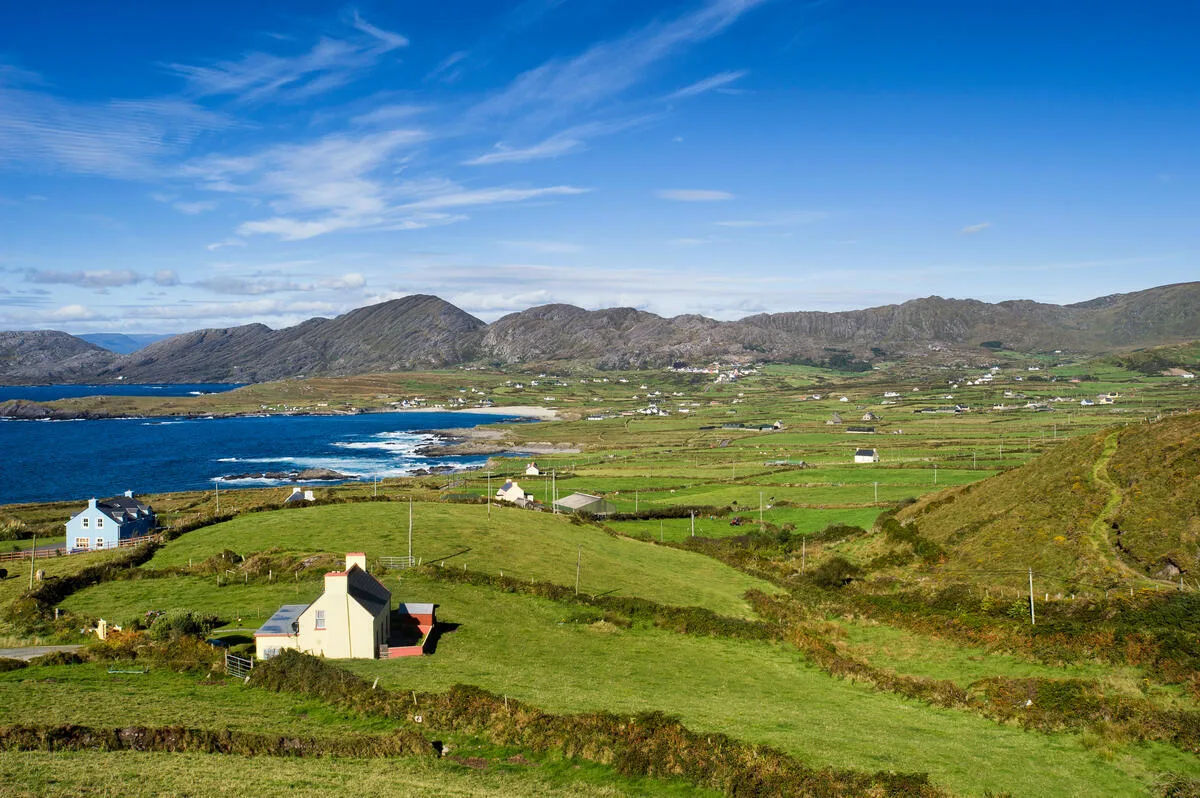
The Ring of Kerry is one of the most famous scenic routes in Ireland. The 179 km loop around the Iveragh Peninsula in County Kerry is genuinely spectacular — mountain passes, Atlantic coastline, remote valleys, and the distant silhouettes of the Skellig Islands offshore. It earns its reputation.
But most people see it from a bus window.
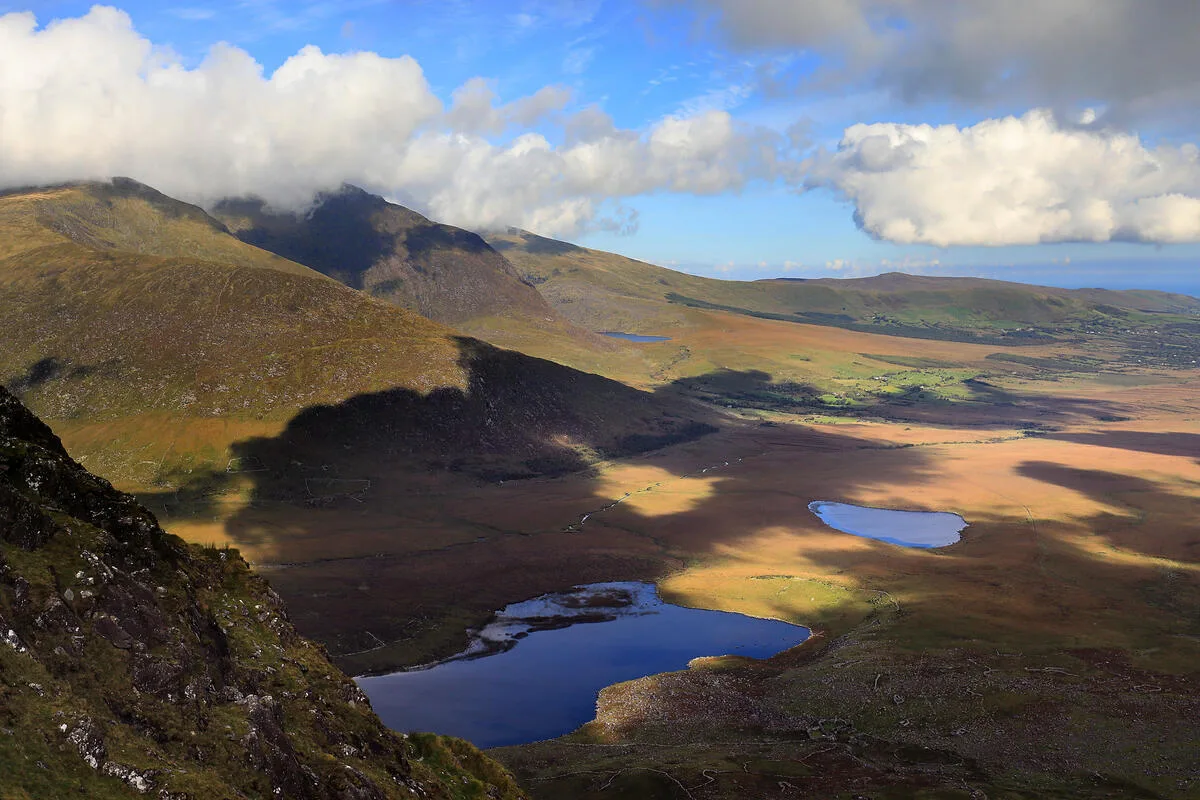
There's a version of the Ring of Kerry that almost none of the tour groups experience — walked slowly, over days, on the old droving roads and ancient paths that people used long before cars existed. The modern drive follows much of the same route, but moving at 60 km/h through a windscreen is a fundamentally different experience from standing on the Iveragh Peninsula with the Atlantic directly below and nothing but mountain and ocean in every direction.
This guide covers the Ring of Kerry as a walking destination: the Kerry Way long-distance trail that loops the peninsula, the day walks around Killarney, the Skellig Coast section, and how to plan a walking holiday here that gives you the Iveragh Peninsula properly — not through glass.
What Is the Ring of Kerry?
The Ring of Kerry is a designated scenic driving route that circumnavigates the Iveragh Peninsula — Ireland's largest peninsula, jutting into the Atlantic from the southwest corner of County Kerry. It passes through Killarney, Killorglin, Cahirciveen, Waterville, Caherdaniel, Kenmare, and back to Killarney.
The road was developed as a tourism route in the 19th century and has been popular with visitors ever since. It's genuinely beautiful. The problem for walkers is that the road follows valley floors and coastal roads — avoiding the mountain interior entirely. To see the Iveragh Peninsula properly, you need to get above the road.
That's what the Kerry Way does.
The Kerry Way: Walking the Ring of Kerry
The Kerry Way is a 214 km long-distance walking trail that makes a full circuit of the Iveragh Peninsula — broadly following the Ring of Kerry route but taking to the mountains, high passes, and coastal paths rather than the road. It is Ireland's longest waymarked trail and one of the finest long-distance walks in Western Europe.
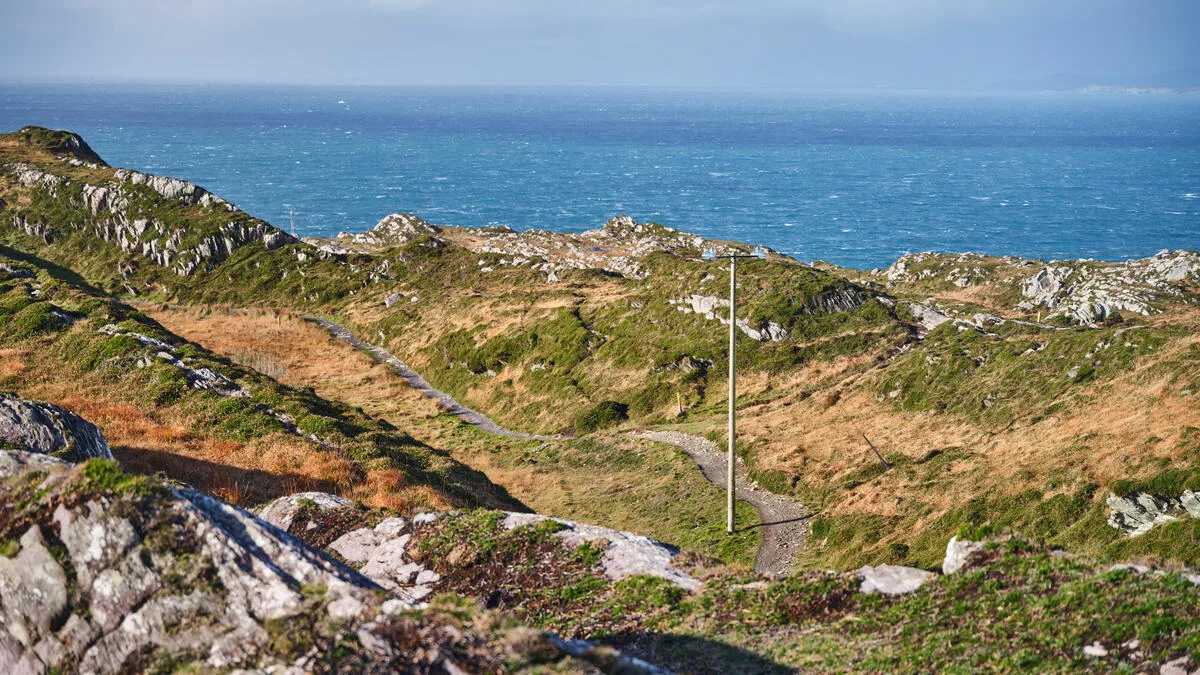
Walked fully, the Kerry Way takes 9 to 12 days. Most walkers cover 16 to 22 km per day through demanding but magnificent terrain. The trail passes through Killarney National Park, climbs mountain passes above 600 metres, traces remote river valleys where you're unlikely to see another walker, and follows a stretch of Atlantic coastline between Waterville and Caherdaniel that is, in my view, the finest section of coastal walking in Ireland.
For detailed information on the route, stages, accommodation, and what to expect, our Kerry Way walking guide covers everything in full. The Kerry Way tour page shows how we support walkers through it as a self-guided holiday.
The Best Day Walks on the Ring of Kerry
You don't need to walk the full Kerry Way to experience the Iveragh Peninsula on foot. The area around the Ring of Kerry contains some of Ireland's finest day walking, anchored around Killarney and the peninsula's key villages.
Killarney National Park
Killarney National Park is the most accessible walking base on the Ring of Kerry — a UNESCO Biosphere Reserve containing ancient oak woodland, three major lakes, and the MacGillycuddy's Reeks mountain range (Ireland's highest). The park is immediately adjacent to Killarney town, making it uniquely convenient.
The best walks in the park range from the easy lakeside path through Muckross to the full-day Reeks Ridge traverse for experienced mountain walkers. Our best hikes in Killarney National Park guide covers the full range. For a good first day in Kerry, the circuit around Muckross Lake and through the Friarstown wood is 10 km and delivers the full atmosphere of the park without significant elevation.
The Skellig Coast: Waterville to Caherdaniel
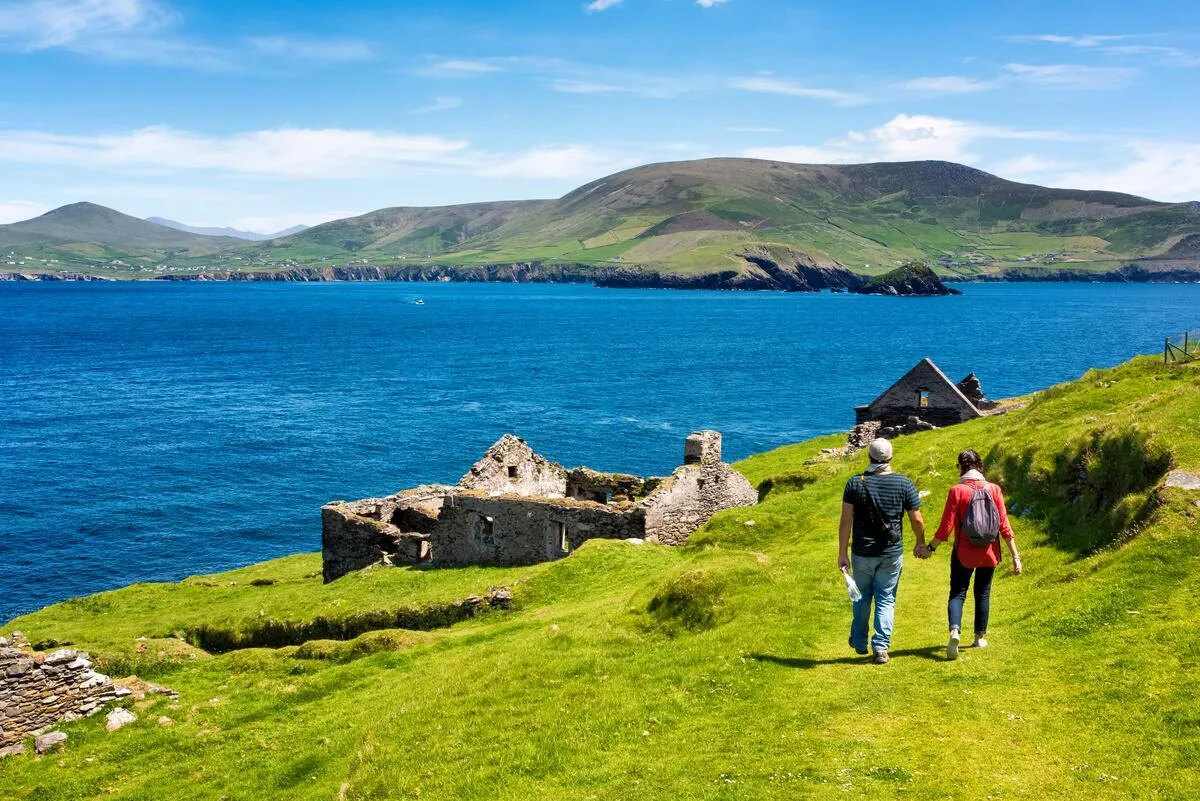
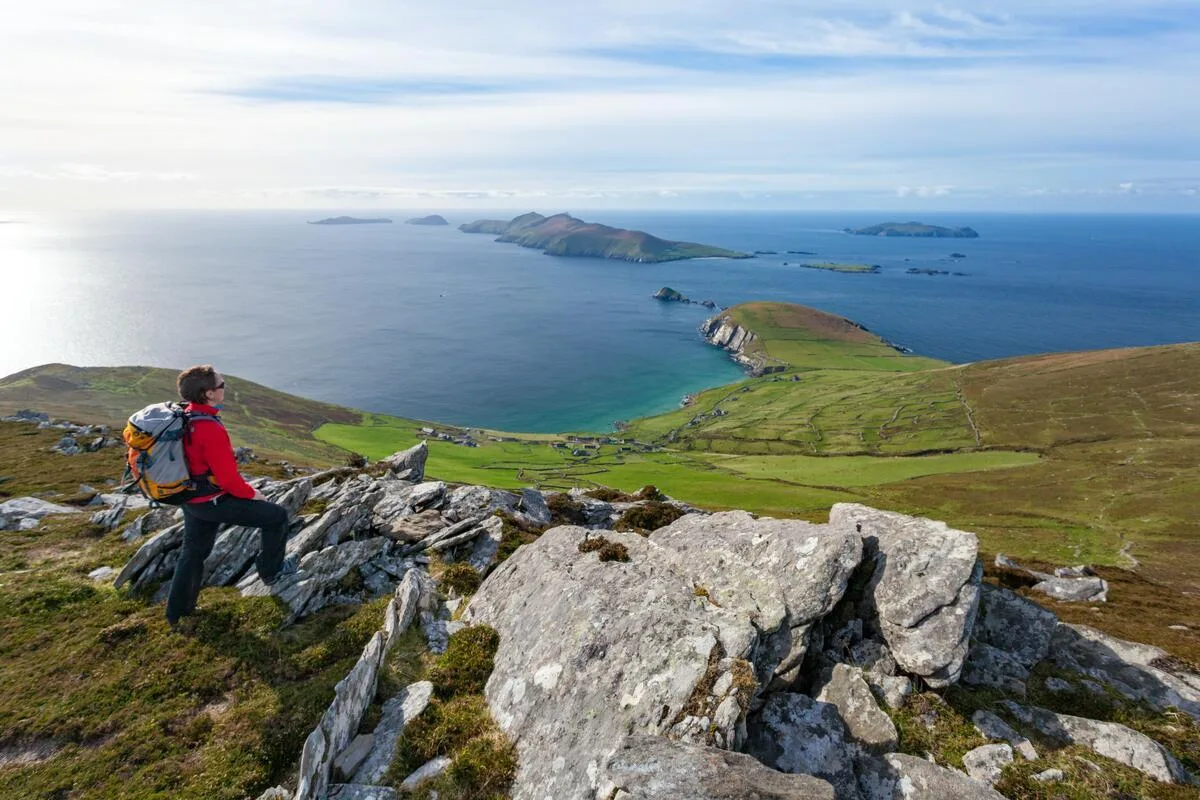
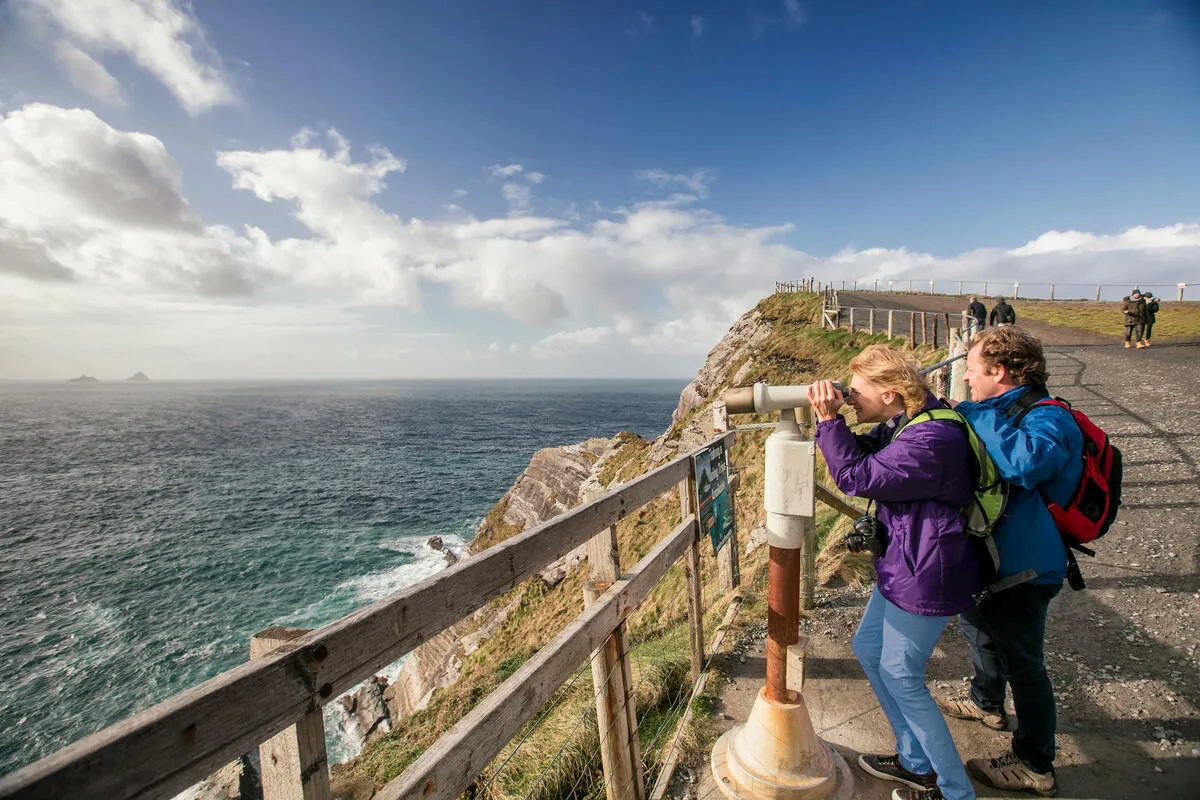
The coastal section of the Kerry Way between Waterville and Caherdaniel is the route's emotional climax. The path follows cliff edges above Ballinskelligs Bay with views directly west to the Skellig Islands — two pyramidal rocks rising from the Atlantic 12 km offshore, topped by a 6th-century monastic settlement that UNESCO classes as one of the most remarkable early Christian sites in the world.
Skellig Michael itself is accessible by boat from Portmagee or Ballinskelligs between April and October. Combining a morning boat trip to the island with an afternoon on the coastal walking path gives a full day of extraordinary experience that no tour bus itinerary can replicate.
Valentia Island
Valentia Island sits just off the Iveragh coastline near Cahirciveen, connected to the mainland by a bridge. The island's 11 km perimeter walk takes in clifftop paths, an extraordinary slate quarry that supplied the Houses of Parliament roof, and a tetrapod trackway — footprints left by one of the first vertebrates to walk on land, 385 million years ago.
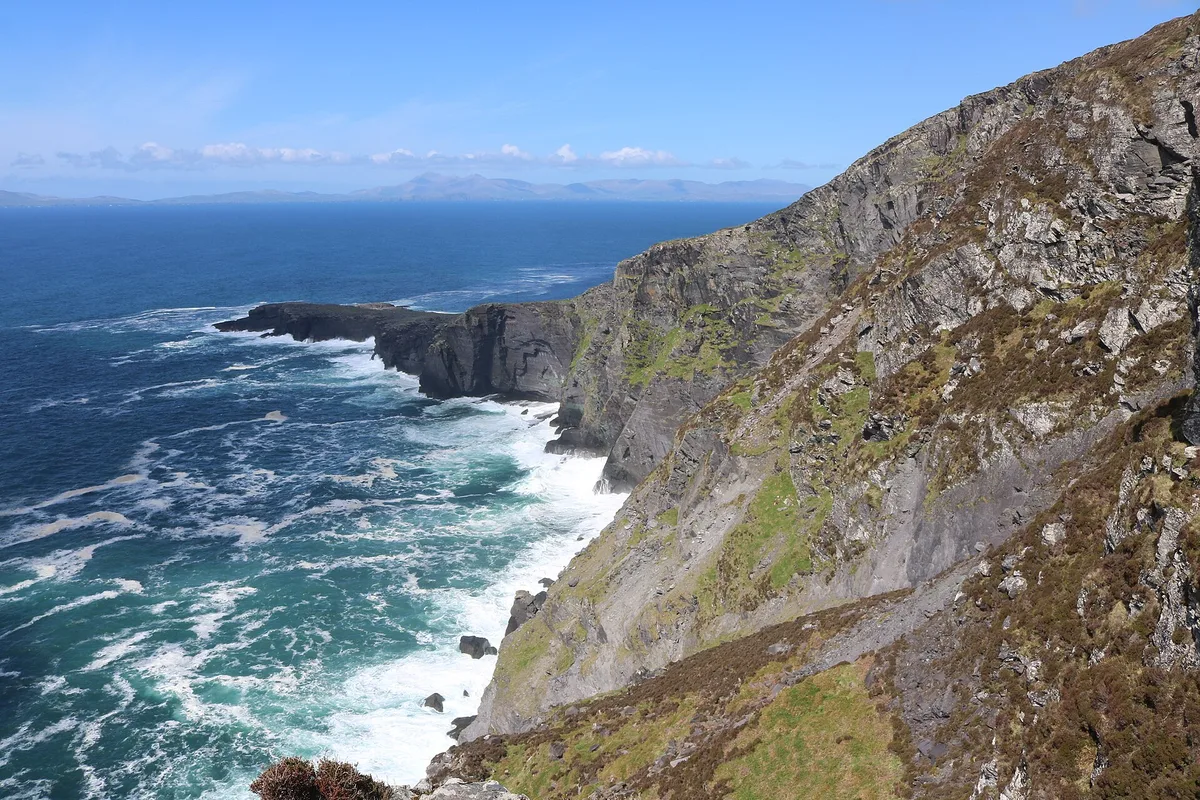
The island is small enough to walk fully in half a day and makes an excellent addition to a Kerry Way stage or a standalone day trip.
The Gap of Dunloe
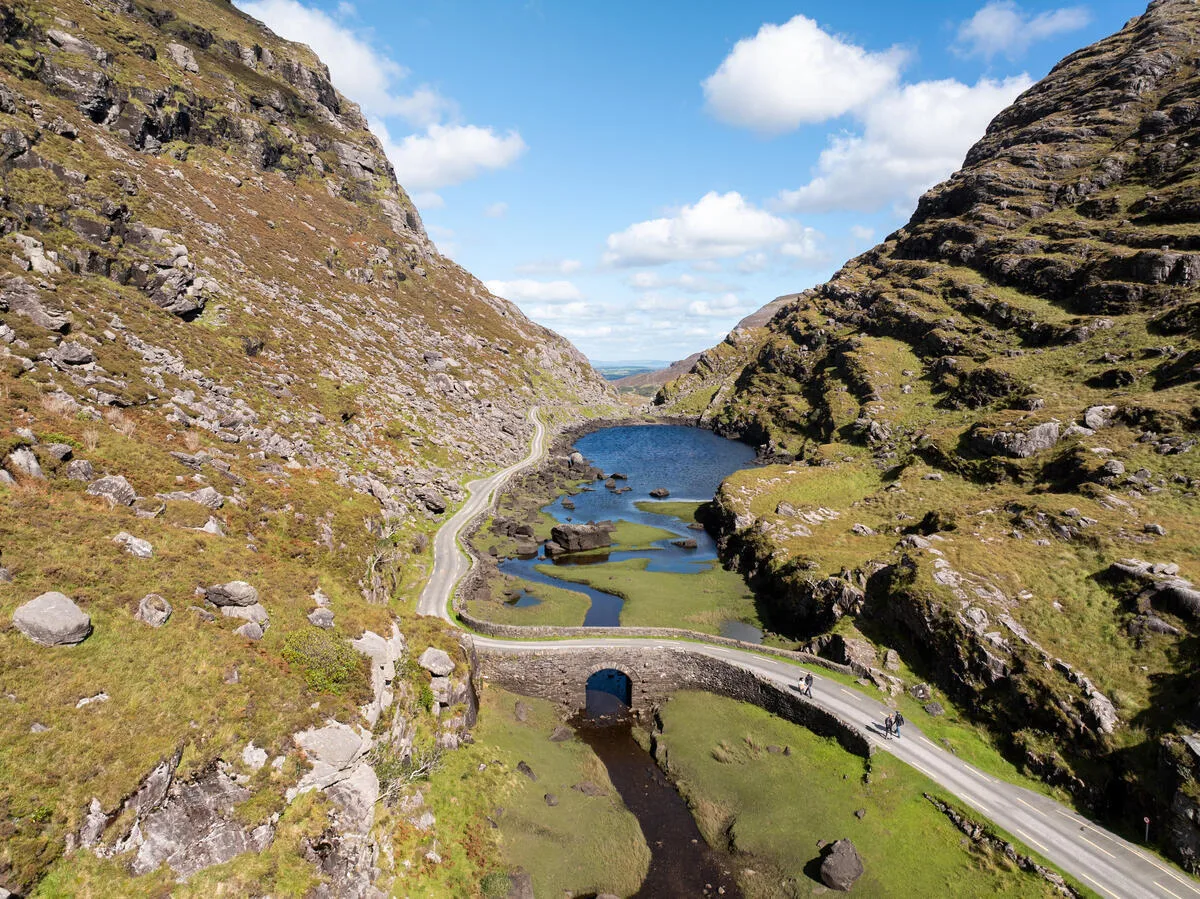
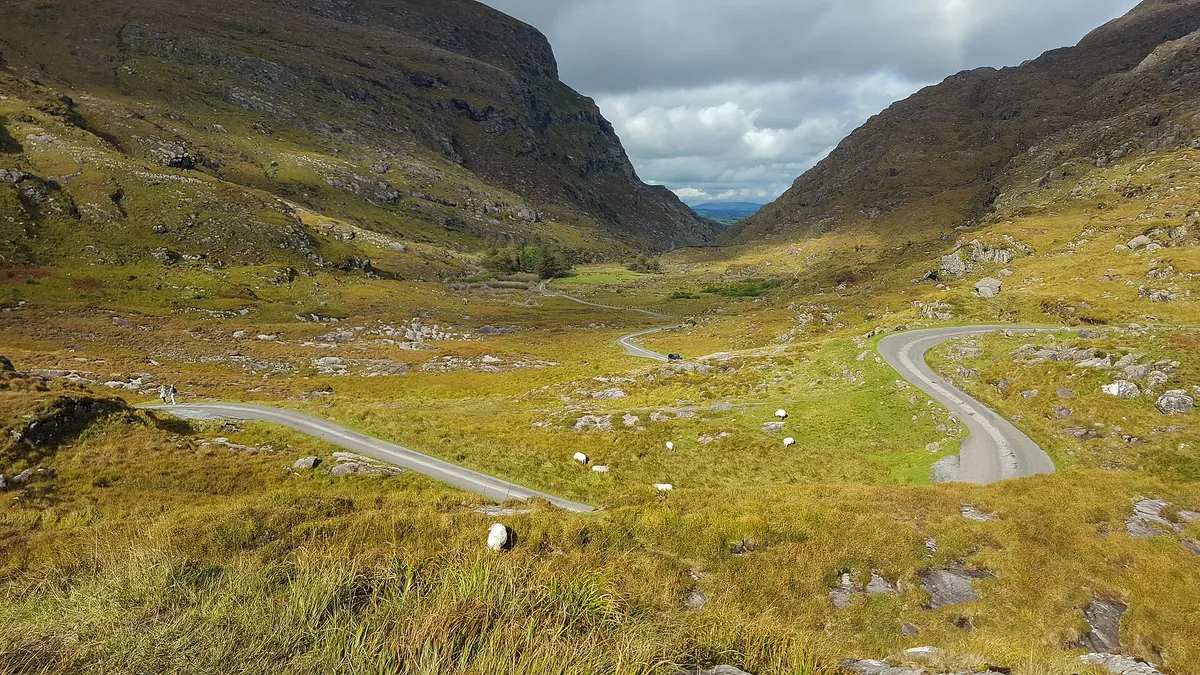
The Gap of Dunloe is one of Kerry's most dramatic landscapes — a narrow mountain pass through the MacGillycuddy's Reeks, carved by glaciers and flanked by the highest peaks in Ireland. Walking the Gap (approximately 11 km one way from Kate Kearney's Cottage to Lord Brandon's Cottage) takes 3 to 4 hours and is one of the most atmospheric walks in Ireland.
Most visitors take a pony trap or jaunting car through the Gap, which is fine. Walking it is better. The narrow V-shaped valley, the string of glacial lakes, the sound of water everywhere: the experience at walking pace is wholly different from a vehicle.
Ring of Kerry vs Dingle Peninsula
Walkers planning a Kerry trip regularly ask which peninsula to walk — the Iveragh (Ring of Kerry) or the Dingle. Here's the honest version:
Ring of Kerry (Kerry Way) | ||
|---|---|---|
Distance | 214 km | 162 km |
Duration | 9–12 days | 7–9 days |
Terrain | Mountain + coastal | Ridge + coastal |
Crowds | Moderate on circuit | Low to moderate |
Best for | Full southwest experience, serious walkers | Slightly shorter, excellent village base |
Highlight | Skellig Coast, Killarney National Park | Brandon range ridges, Dingle Town |
If you have 10 or more days: walk the Kerry Way fully. If you have 7 to 8 days: the Dingle Way delivers comparable drama in a more compact form. Many walkers do both on separate trips — and that's absolutely the right approach.
Our Dingle vs Kerry Way comparison goes into more detail for walkers deciding between the two.
Practical Information
Getting to the Ring of Kerry
Killarney is the natural base town — 90 km from Cork city, 300 km from Dublin. Both are served by regular train services to Killarney station. The town has excellent accommodation across all price points and is the starting point for both the Kerry Way and day walks in the national park.
Best time to walk
May, June, and September are the optimal months for the Ring of Kerry walking routes. Weather is most reliable in early summer; September combines good conditions with noticeably fewer visitors than the July–August peak.
The Kerry coastline and mountain terrain demands respect year-round. Our weather risk guide for Irish trails covers what to expect and how to prepare for Kerry's conditions specifically.
Accommodation
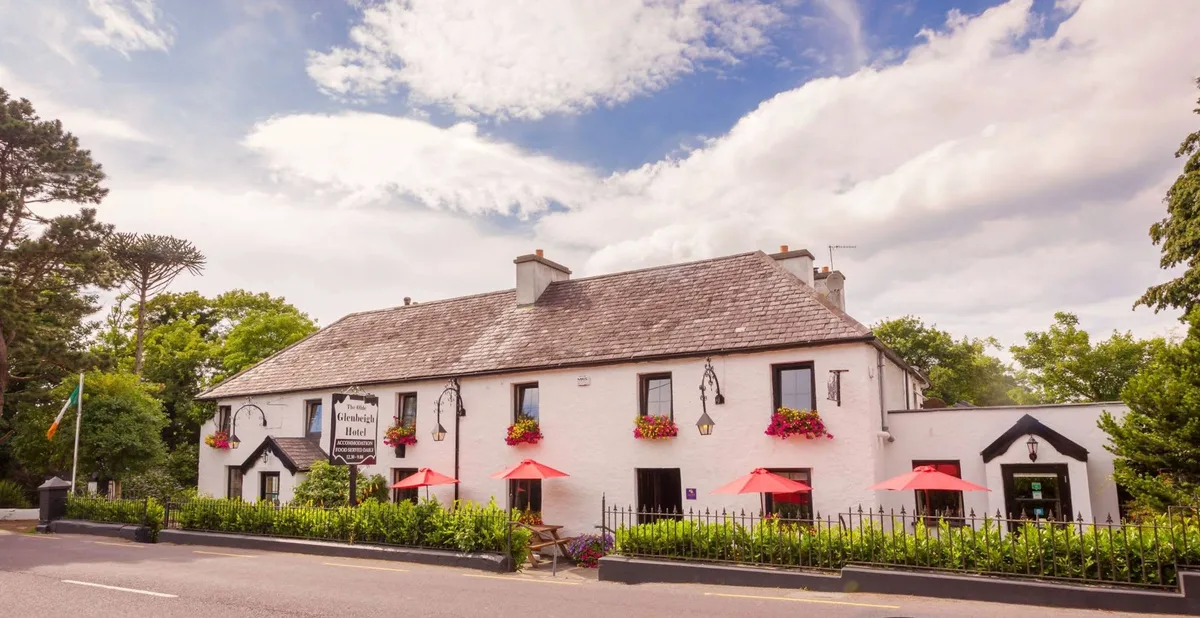
The Kerry Way passes through a string of excellent small towns and villages — Glencar, Caherdaniel, Waterville, Sneem, Kenmare — all with good B&B and guesthouse options. Kenmare in particular is outstanding: excellent restaurants, good accommodation, and a genuine character that makes it one of the best overnight stops on any Irish walking trail.
We book all accommodation and luggage transfers on our Kerry Way self-guided tour. Your bags travel between stops each day; you walk with a daypack.
Fitness requirements
The full Kerry Way is a serious multi-day walk. Daily distances of 16 to 22 km with significant elevation gain require solid walking fitness and consecutive-day experience. For walkers who want the Ring of Kerry experience without the full route, the Killarney National Park day walks and the Skellig Coast section work well as a 3 to 5 day short trip.
Our tour grading guide explains what the fitness requirements mean in practice.
Ready to Walk the Ring of Kerry?
The Iveragh Peninsula is one of the great walking destinations in Western Europe. Walking it — rather than driving past it — is one of those travel experiences that changes how you think about a place.
If you'd like help planning a Ring of Kerry walking trip, I'm happy to talk through options — whether that's the full Kerry Way, a shorter version, or a combination of day walks from Killarney.
Drop me a message through the contact page or WhatsApp me on +353 87 957 3856.
Browse our Kerry Way tour and our Kerry Way walking area for full route and tour details.
— Cliff, Walking Holiday Ireland
You Might Also Enjoy
Best Hikes in Killarney National Park
Wild Atlantic Way Walking
Frequently Asked Questions
Are the trails well-marked?
What kind of boots should I wear?
What is the most popular route?
What are the most essential items to pack for a walking holiday in Ireland?
Photo Gallery