Dingle Way vs Kerry Way: Which Trail Should You Walk?
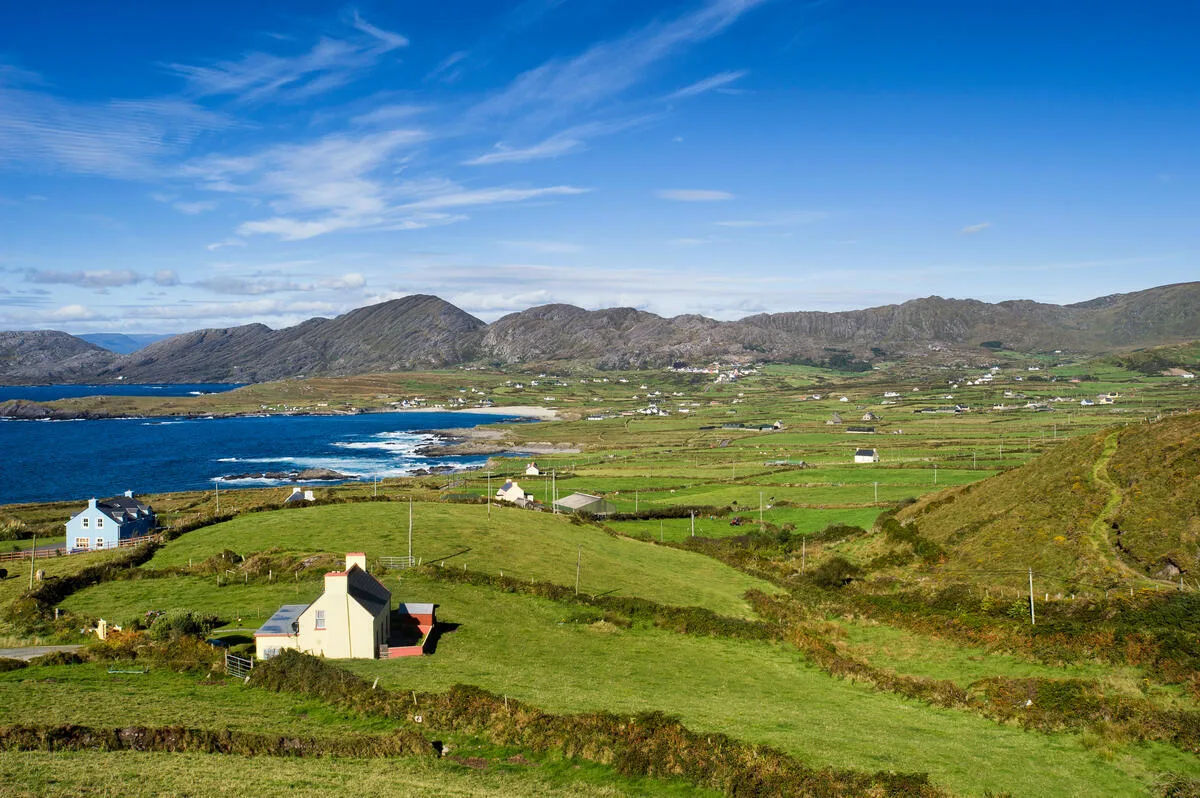
When comparing the Dingle Way vs the Kerry Way, this is one question I hear more than almost any other. Both trails loop around Atlantic peninsulas in County Kerry, both rank among Europe's finest long-distance walks, and both deliver world-class scenery. But they're completely unique experiences.
I've walked every kilometre of both routes dozens of times and organised hundreds of holidays on them. This guide breaks down the key differences so you can choose the trail that matches what you're looking for— or decide to walk them both.
The Dingle Way Ireland: Overview and Character
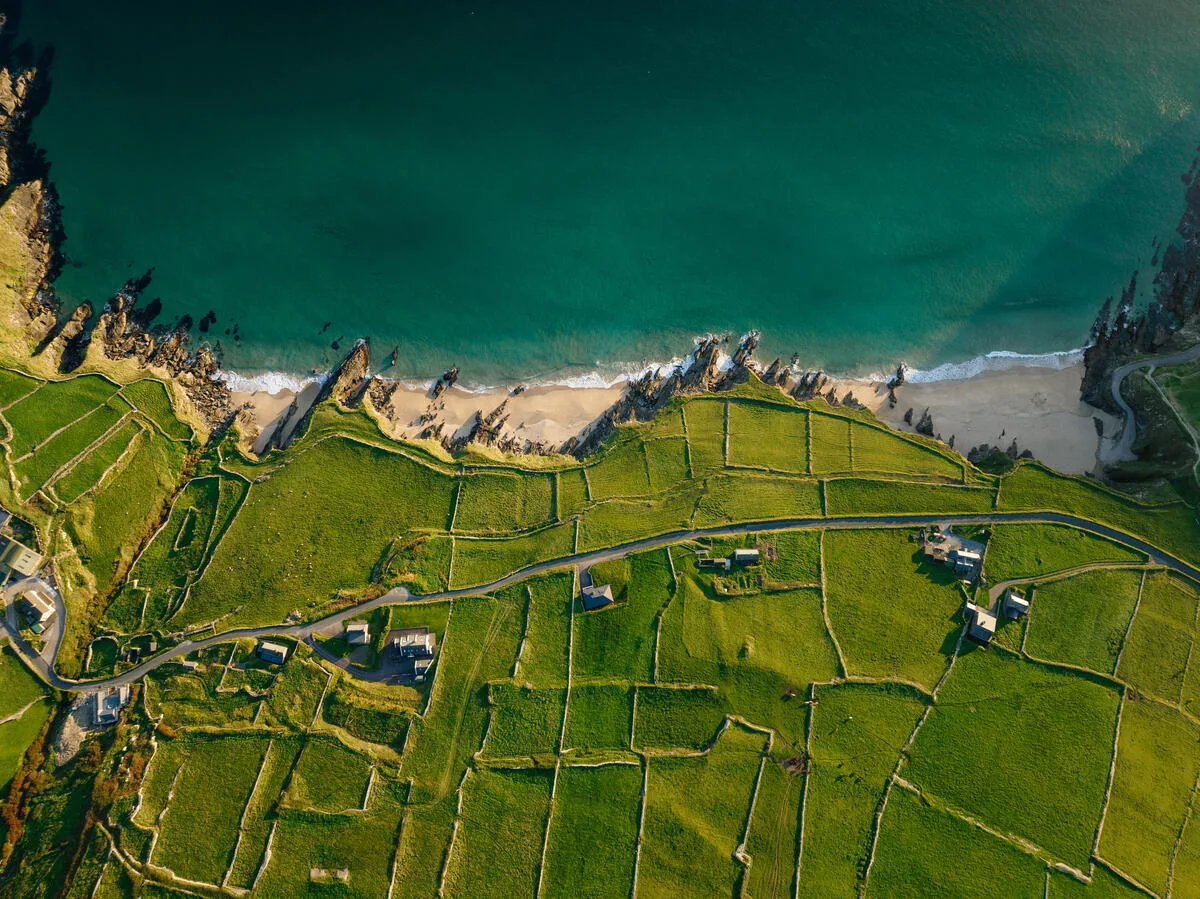
The Dingle Way, Ireland, is a 179 km loop around the Dingle Peninsula in the far southwest. The trail starts in Tralee and finishes in Cloghane at the foot of Mount Brandon, with a coach transfer back to Tralee.
Along the way, it passes through Camp, Annascaul, Dingle Town, Dunquin, and Cuas. Most walkers complete the full circuit in 8 days, though we offer versions from 5 to 10 days depending on your pace and available time.
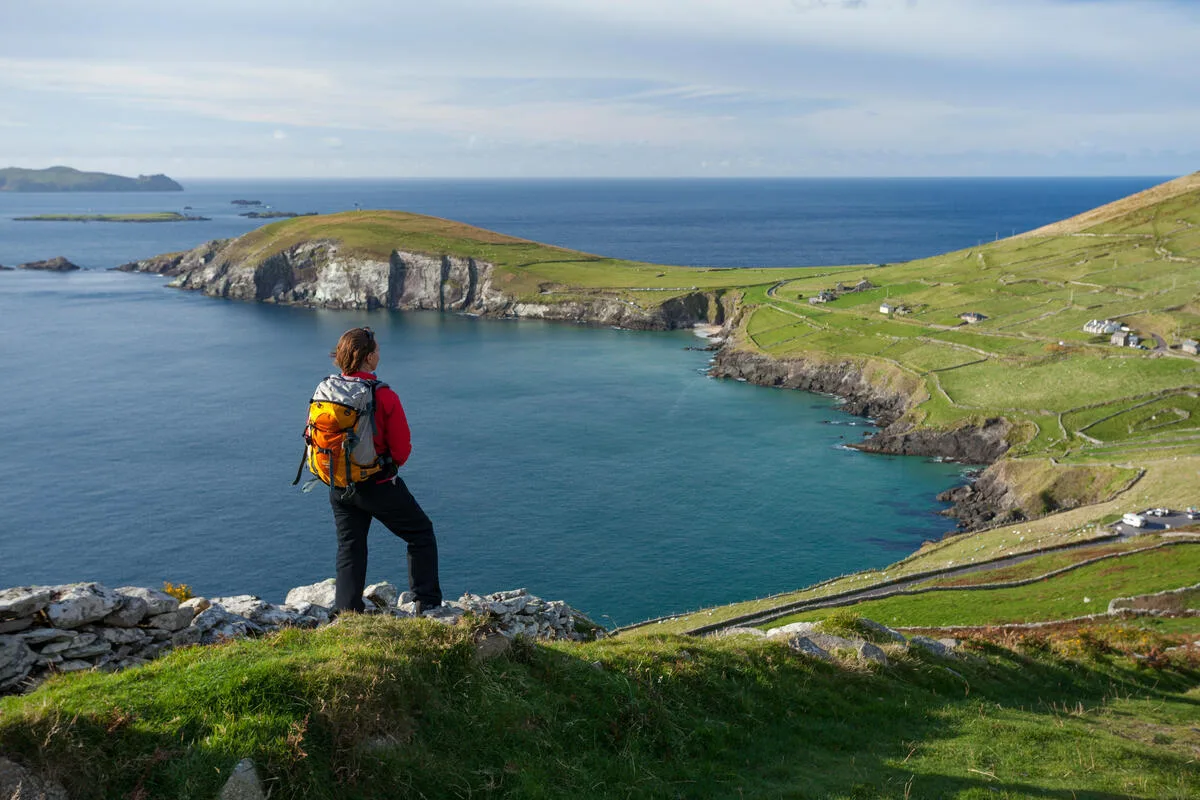
The Dingle Peninsula is compact and intimate. Mount Brandon—Ireland's second-highest peak, at 952 meters— rises steeply from the sea. The coastline switches between sandy beaches, high cliffs, and rocky headlands.
Ancient beehive huts, ogham stones, and early Christian sites dot the landscape. Much of the western peninsula is a Gaeltacht area where Irish is the daily language, giving the place a cultural depth that goes beyond scenery.
Daily Terrain and Distances
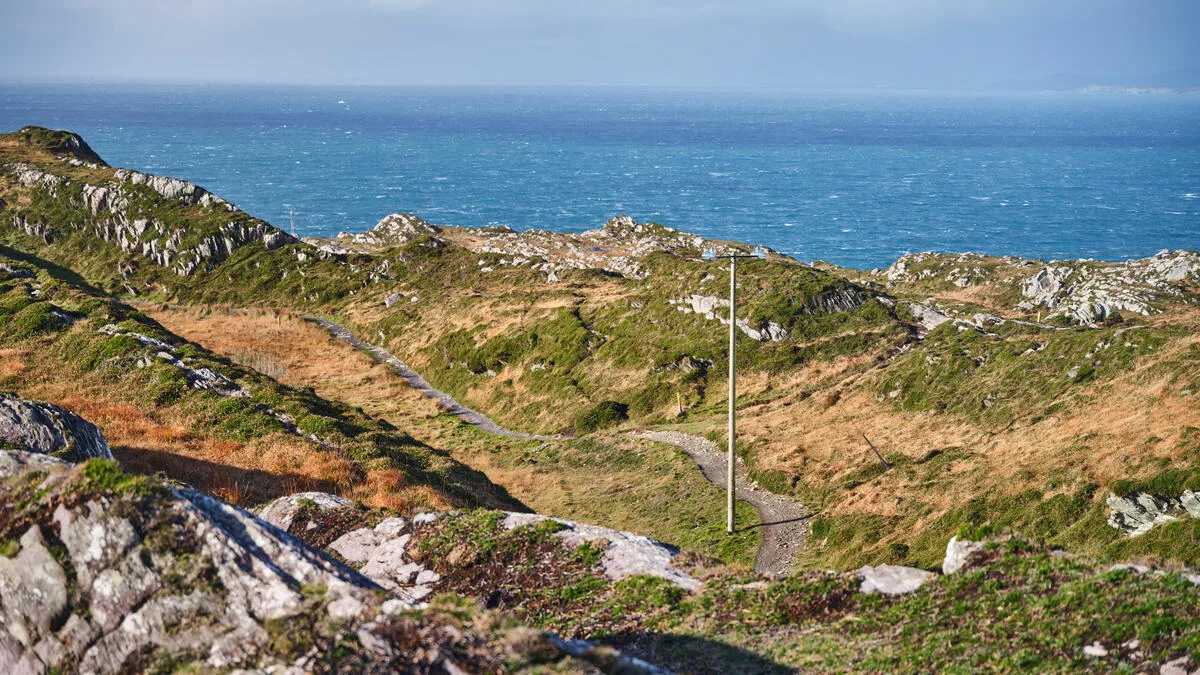
The Dingle Way walking trail mixes coastal paths, mountain passes, quiet country roads, and green lanes. Daily distances are manageable—typically 18–25 km— but there are some stiff climbs.
The toughest section is the final day from Cuas, which goes up over the flanks of Mount Brandon (776 m of ascent) and down into Cloghane. You need to be comfortable on rough ground and prepared for changing weather.
Accommodation along the route is excellent. You'll stay in small family-run B&Bs where the hosts know the trail and the area inside out.
The Kerry Way Ireland: Overview and Character
The Kerry Way, Ireland, is a 193 km circuit around the Iveragh Peninsula, starting and finishing in Killarney. It's Ireland's longest waymarked trail and one of the most popular walking routes in Europe.
The trail passes through Killarney National Park, Black Valley, Glencar, Glenbeigh, Cahersiveen, Waterville, Sneem, Kenmare, and back to Killarney. Our tours run from 5 to 8 days.
The Iveragh Peninsula is bigger and more varied than Dingle. The Kerry Way hiking route covers a wider range of terrain — lakeshores, mountain passes, river valleys, coastal cliffs, and woodland.
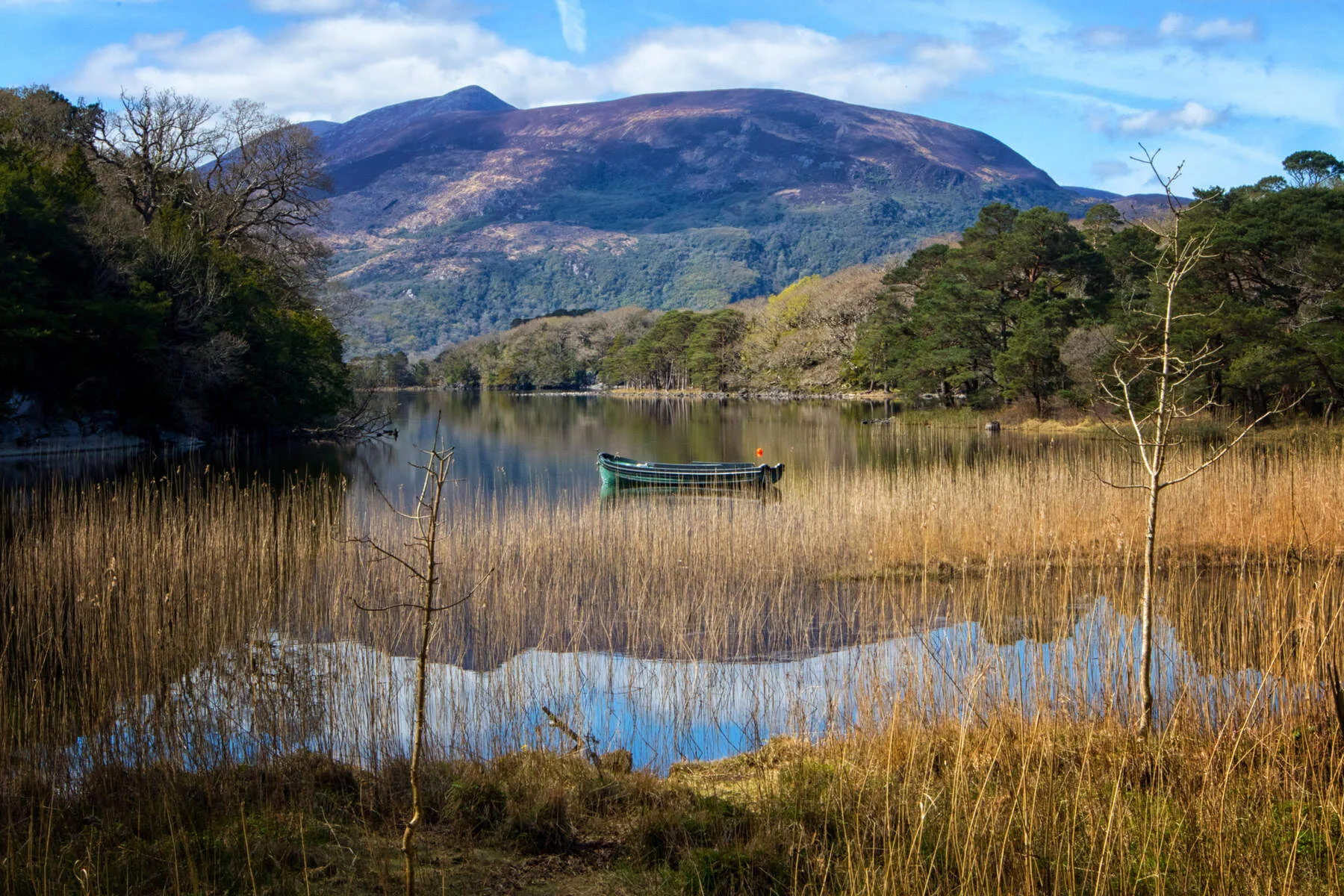
Killarney National Park alone offers ancient oak forests, the Lakes of Killarney, and views of the MacGillycuddy's Reeks, Ireland's highest mountain range. The trail passes through larger villages with more services, pubs, and restaurants.
Daily Terrain and Distances
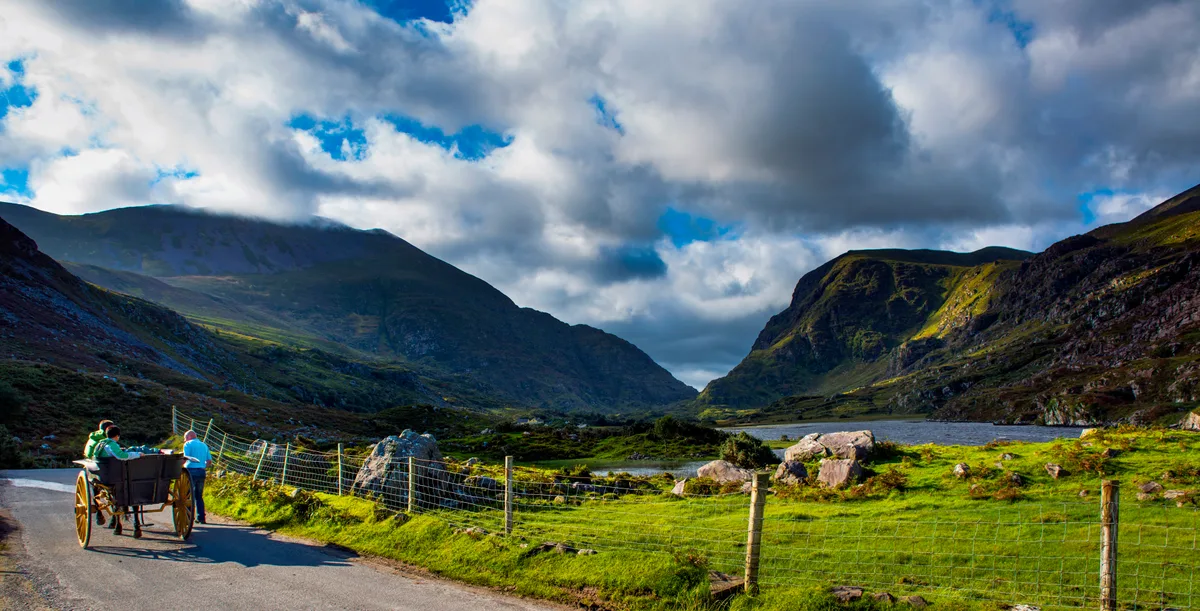
The daily stages average 20–28 km, with some longer days. The terrain is generally less mountainous than the Dingle Way, though the Black Valley and Windy Gap sections have real elevation.
Accommodation ranges from guesthouses in Killarney and Kenmare to cosy B&Bs in quieter villages, like Sneem and Glencar. You'll have more choice at each overnight stop than on the Dingle Way.
Dingle Way vs Kerry Way: Distance and Duration Comparison
When comparing the Kerry Way vs the Dingle Way for distance, the Kerry Way is longer at 215 km compared to the Dingle Way's 179 km. On a standard itinerary, most walkers need 8 days for either trail when walking the full route.
Trail | Total Distance | Standard Duration | Daily Average |
|---|---|---|---|
Dingle Way | 179 km (111 miles) | 8 days | 18–25 km |
Kerry Way | 193 km (120 miles) | 8 days | 20–28 km |
If you have 5 to 6 days, either trail works. We select the best sections and arrange transfers to skip the less scenic road walking.
If you have a full 8 to 10 days and want to walk every kilometre, the Dingle Way is the more achievable complete circuit. The Kerry Way demands more stamina for the full route.
Dingle Way vs Kerry Way for Scenery: Concentrated Drama vs Daily Variety
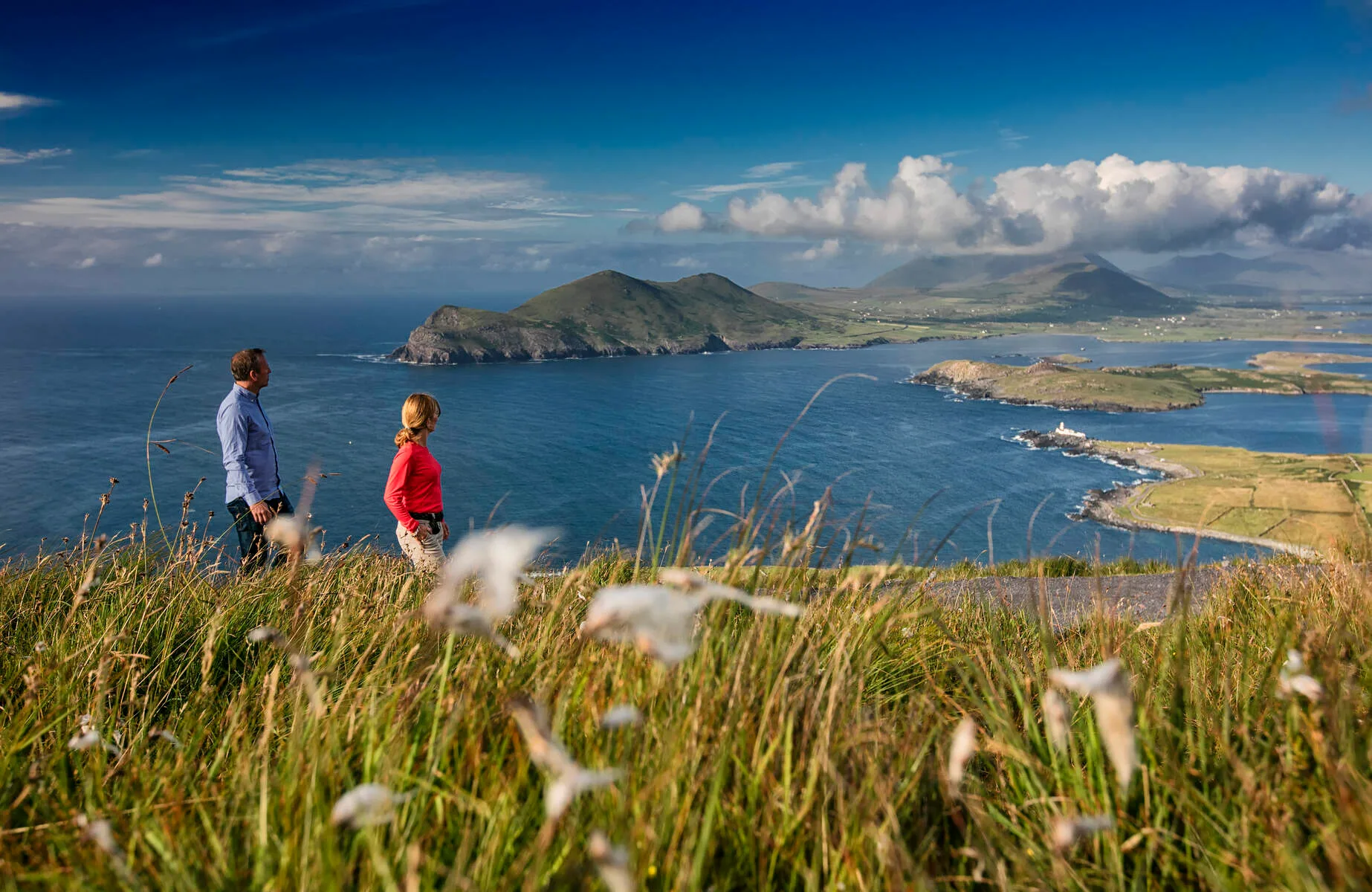
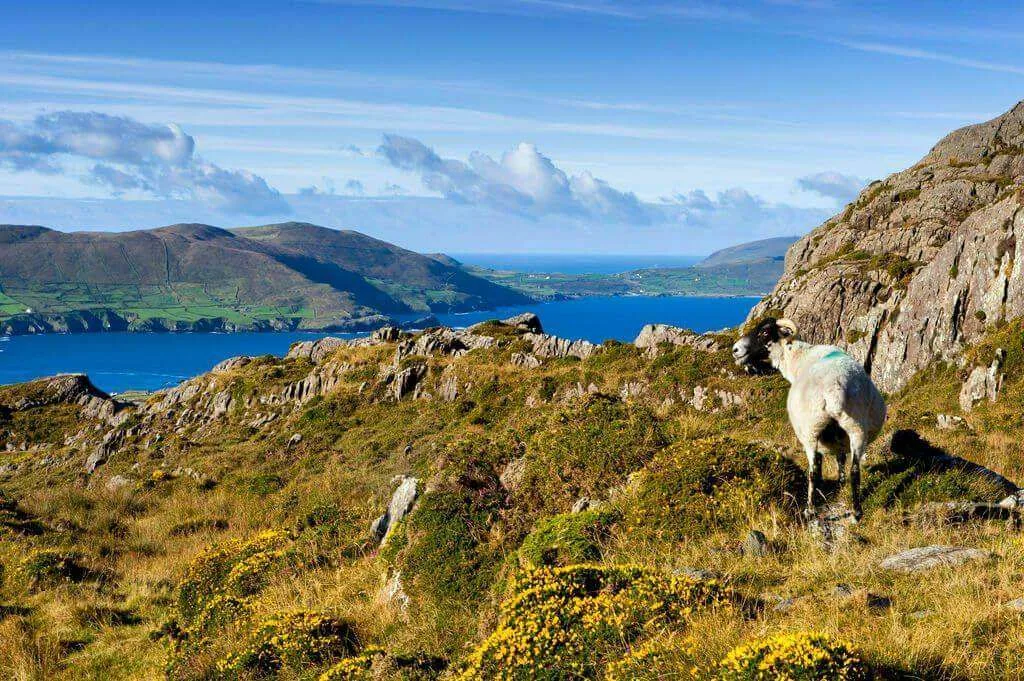
This area is where the Dingle Way vs Kerry Way comparison gets personal, and choosing between Kerry trails depends on your preferences. The Dingle Way offers raw, concentrated coastal drama — cliff edges, crashing Atlantic waves, sandy coves, and Mount Brandon towering above.
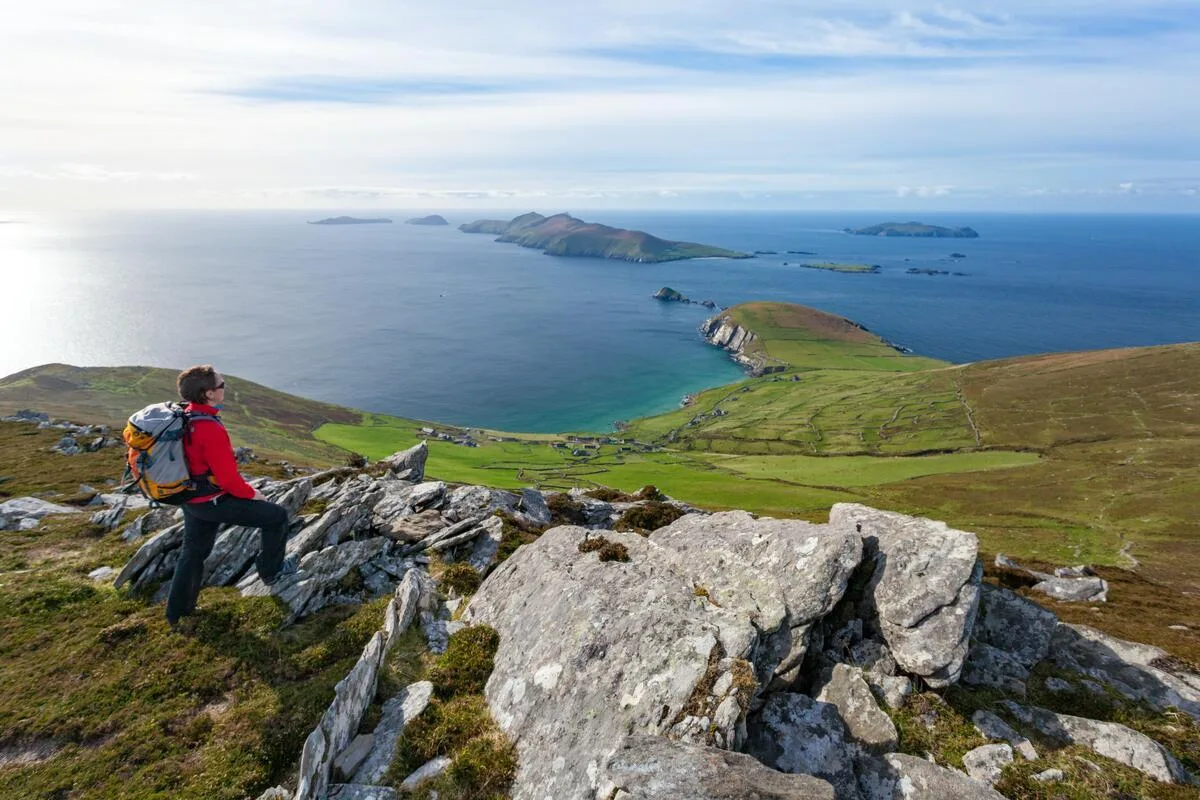
The scenery feels wild and ancient. You're never far from the ocean. The Blasket Islands appear off the coast, adding to the sense of being at the edge of Europe.
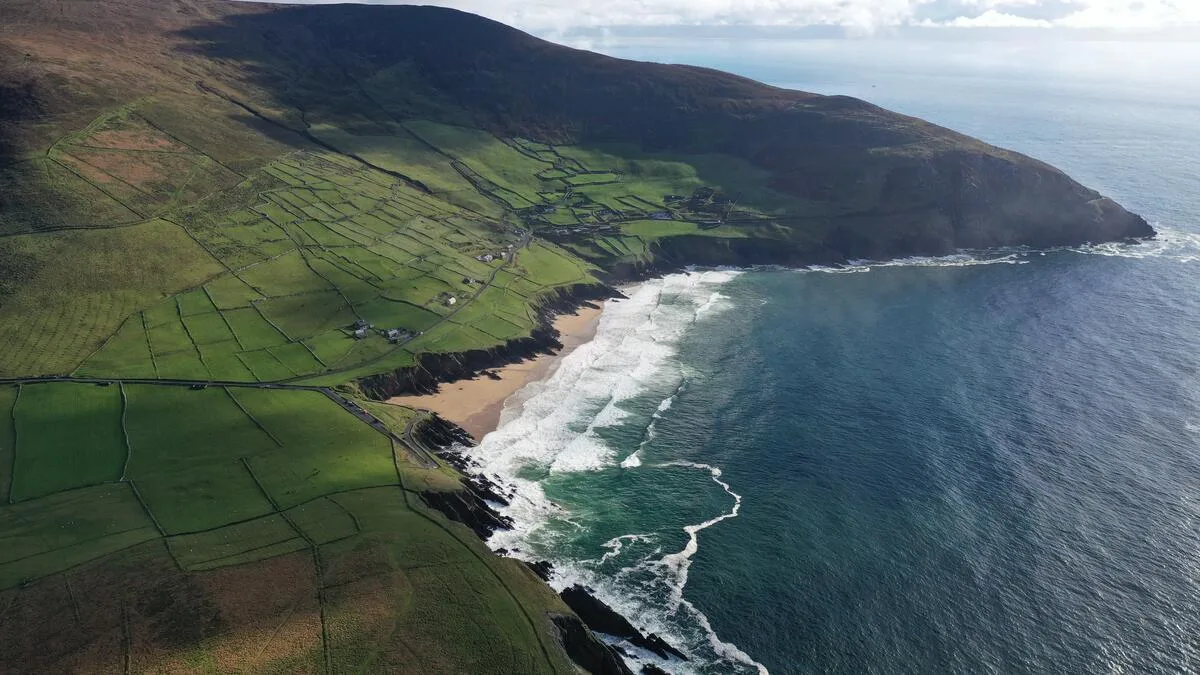
The Kerry Way offers more variety. You get lakes and ancient oakwoods in Killarney National Park, high mountain passes with views of the Reeks, green valleys with tumbling rivers, and coastal stretches around Waterville and Cahersiveen.
The scenery changes dramatically from day to day. If the Dingle Way is an intense coastal painting, the Kerry Way is a gallery with a different landscape in every room.
Both trails deliver some of the best walking trail Ireland scenery you'll find anywhere in Europe. You won't be disappointed by either.
Dingle Way vs Kerry Way Differences: Difficulty and Terrain
The Dingle Way walking route is moderately challenging. The final day over the flanks of Mount Brandon involves a steep, exposed climb of 776 meters, where you need to be comfortable on rough ground.
Some sections are remote, with limited shelter. Fitness level should be moderate to excellent. I've seen walkers surprised by how demanding that final day can be, especially in poor weather.
The Kerry Way hiking route is moderate overall, with a few harder sections. The Black Valley – Glencar stage and the Windy Gap are the toughest stretches.
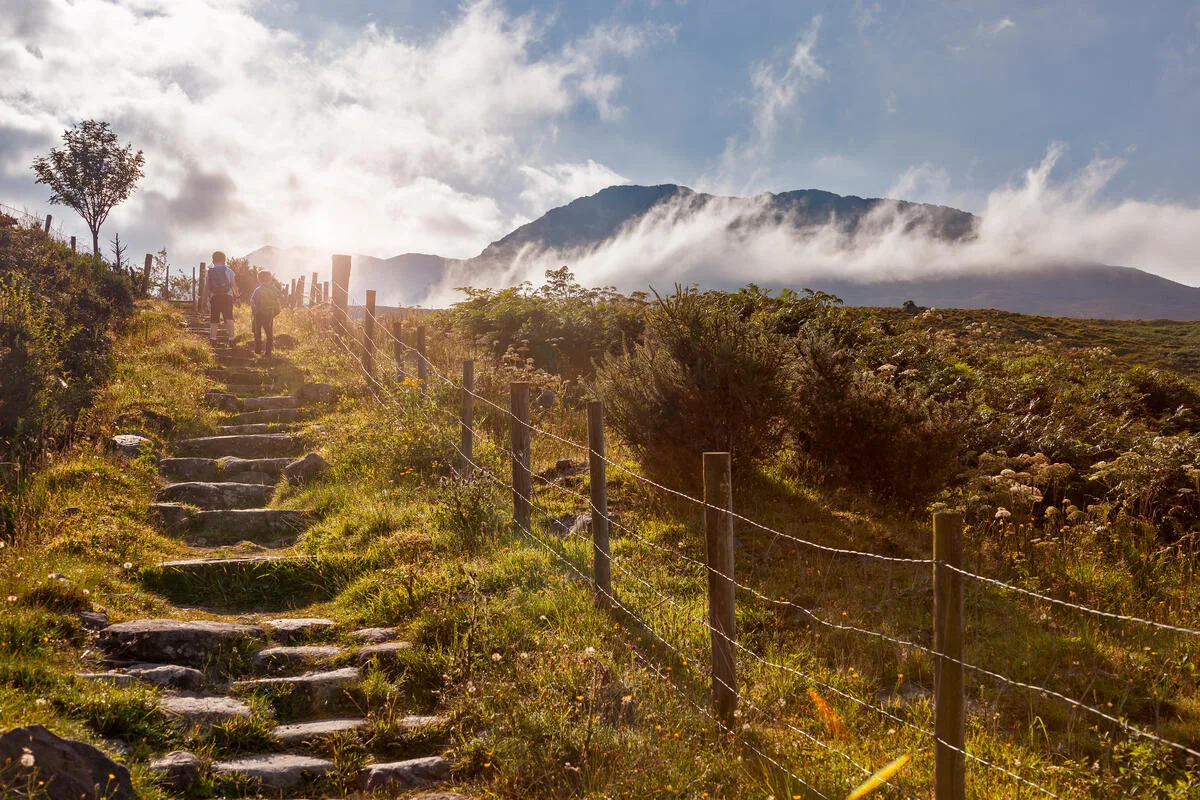
Much of the trail follows old droving roads and quiet lanes, making it slightly easier underfoot than the Dingle Way. The longer daily distances on some stages mean you need endurance even if the terrain is less technical.
Check our tour grading for detailed difficulty ratings on each route. Good hiking boots are essential for both.
Villages and Cultural Experience
Dingle town is one of the most charming small towns in Ireland. colourful shopfronts, traditional music sessions in pubs every night, and some of the best seafood restaurants on the west coast.
The Gaeltacht villages on the western peninsula – Ventry, Dunquin, and Ballyferriter – have a quieter, more traditional character. You'll hear Irish spoken in the shops and on the street.
The Kerry Way passes through more and larger villages. Killarney is a bustling tourist town with every amenity. Kenmare is an elegant foodie destination. Sneem is a postcard-gorgeous village with painted houses around a green.
Waterville has wild Atlantic beaches and a famous golf course. Each night brings a different village with its own character.
If you want deep cultural immersion in a compact area, the Dingle Way wins. If you prefer more variety in your evening stops and a wider range of dining and entertainment, the Kerry Way has the edge. This Dingle or Kerry Way difference is key when deciding between the two trails.
Accommodation and Logistics
Accommodation serves both trails well. We personally select every B&B and guesthouse for our self-guided walking holidays. Your luggage is transferred each day, you carry just a daypack, and we provide detailed route notes with maps.
The Dingle Way has slightly fewer accommodation options in the more remote western sections. We book well in advance to secure the best places.
The Kerry Way has more choice at each stop, particularly in Killarney, Kenmare, and Waterville. This gives us more flexibility if you need to adjust your itinerary.
Getting There
Both trails are simple to reach:
The Dingle Way starts in Tralee, which has a train station and regular bus services from Cork and Limerick.
The Kerry Way starts in Killarney, one of the best-connected towns in the southwest with direct trains from Dublin and Cork.
Kerry Airport is 15 km from Killarney and 30 km from Tralee.
Which Kerry Trail to Choose: Dingle Way vs Kerry Way Decision Guide
Choose the Dingle Way if you:
Love dramatic coastal scenery and want to be close to the Atlantic every day
Seek a more intimate and culturally rich experience in a Gaeltacht area
Enjoy challenging terrain with mountain elements
Prefer smaller villages with traditional character
Want to complete an entire long-distance trail in a single trip
Choose the Kerry Way if you:
Prefer varied scenery that changes dramatically from day to day
Want more village amenities and dining options each evening
Prefer gentler terrain for most of the walk (though still with some elevation)
Like the idea of starting from Killarney with its national park and lakes
Want a longer adventure with more variety in landscape and overnight stops
Can You Walk Both Trails?
If you're still comparing Irish walking trails and weighing the Dingle Way vs Kerry Way options and can't decide, consider doing a shorter version of each on the same trip. Walk 4 to 5 days on the Dingle Way, transfer to Killarney, and walk 4 to 5 days on the Kerry Way.
We can arrange the entire combination as a single holiday. You'll experience the concentrated coastal drama of Dingle and the varied terrain of the Kerry Way in one trip.
This combination gives you the best of both peninsulas without committing to the full 8 days on either trail.
Planning Your Walk: Timing and Weather
The best time to visit Ireland for either trail is May through September. June offers the longest daylight hours—up to 17 hours at the solstice, giving you flexibility if stages take longer than expected.
September brings quieter trails and golden fall colours. The weather is often more settled than July and August.
Irish weather in Kerry is mild and wet. Waterproofs are essential regardless of season. I always pack a waterproof jacket, overtrousers, and a spare pair of socks in my daypack, even on sunny mornings.
Check our packing list for the full gear rundown. Layering is key — the temperature can swing 10°C between valley and summit on the same day.
Summary: Making Your Decision
The decision between the Kerry Peninsula walking comparison and the Dingle Way vs the Kerry Way ultimately hinges on your personal preferences for a walking holiday. Both offer world-class scenery, warm hospitality, and the satisfaction of traversing the landscape on foot.
When examining this Dingle Way vs Kerry Way comparison, Dingle offers concentrated coastal drama, cultural depth, and a more challenging mountain element. The Kerry Way offers daily variety, more village amenities, and slightly gentler terrain across a longer circuit.
I've walked both trails in every season and every weather condition, and this Iveragh vs Dingle Peninsula walk comparison should help you make the right choice between these Irish walking trails. Neither will disappoint. Both rank among the finest long-distance walks in Europe.
Browse our full range of self-guided walking holidays to see all available Kerry and Dingle options. Read our detailed Kerry Way walking guide and Dingle Way walking guide for stage-by-stage breakdowns.
Get in touch with Walking Holiday Ireland and I'll help you plan the perfect trip based on your fitness, available time, and what you want from your walking holiday.
Frequently Asked Questions
Are the trails well-marked?
What kind of boots should I wear?
What is the difference between a self-guided and a guided walking tour?
What is the most popular route?
Photo Gallery