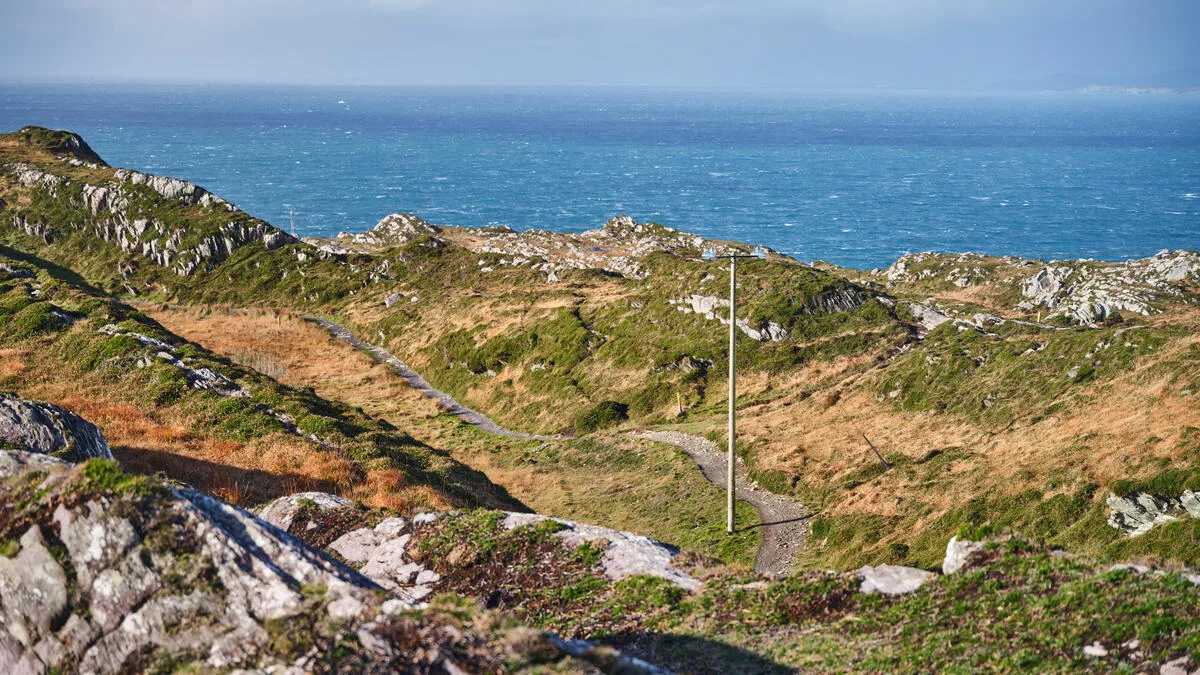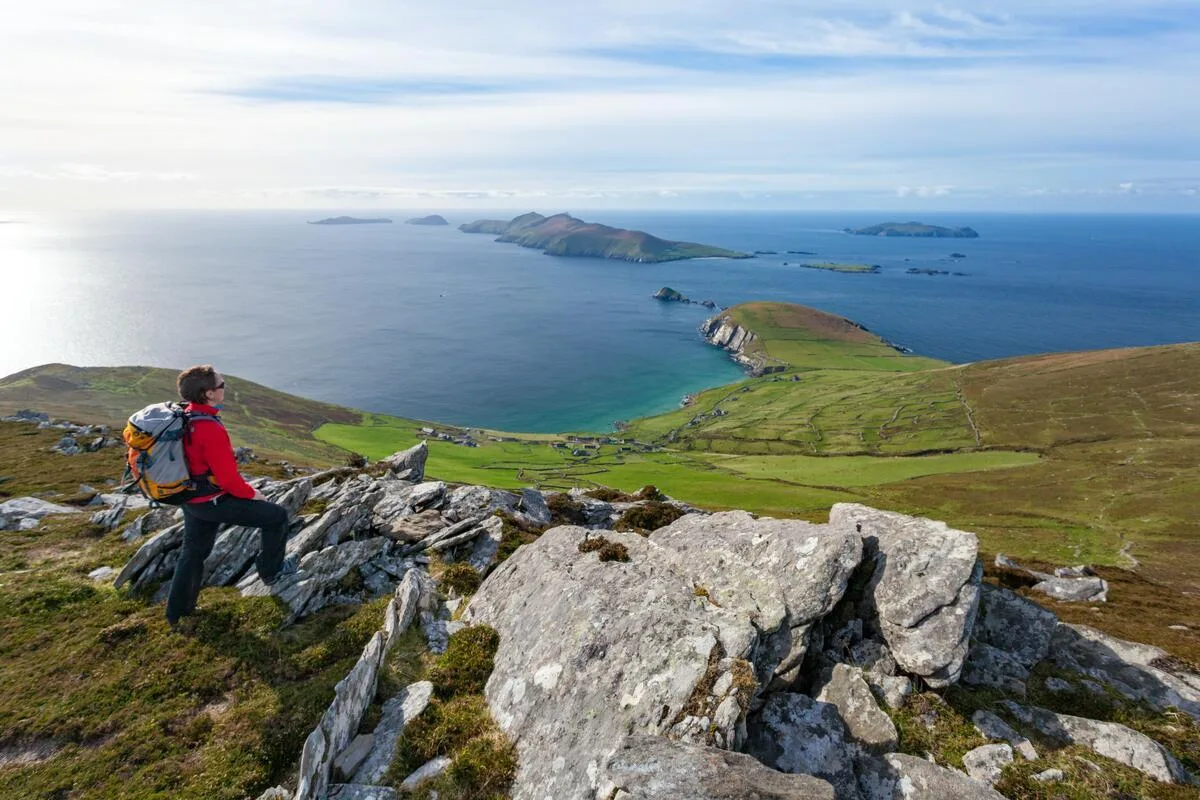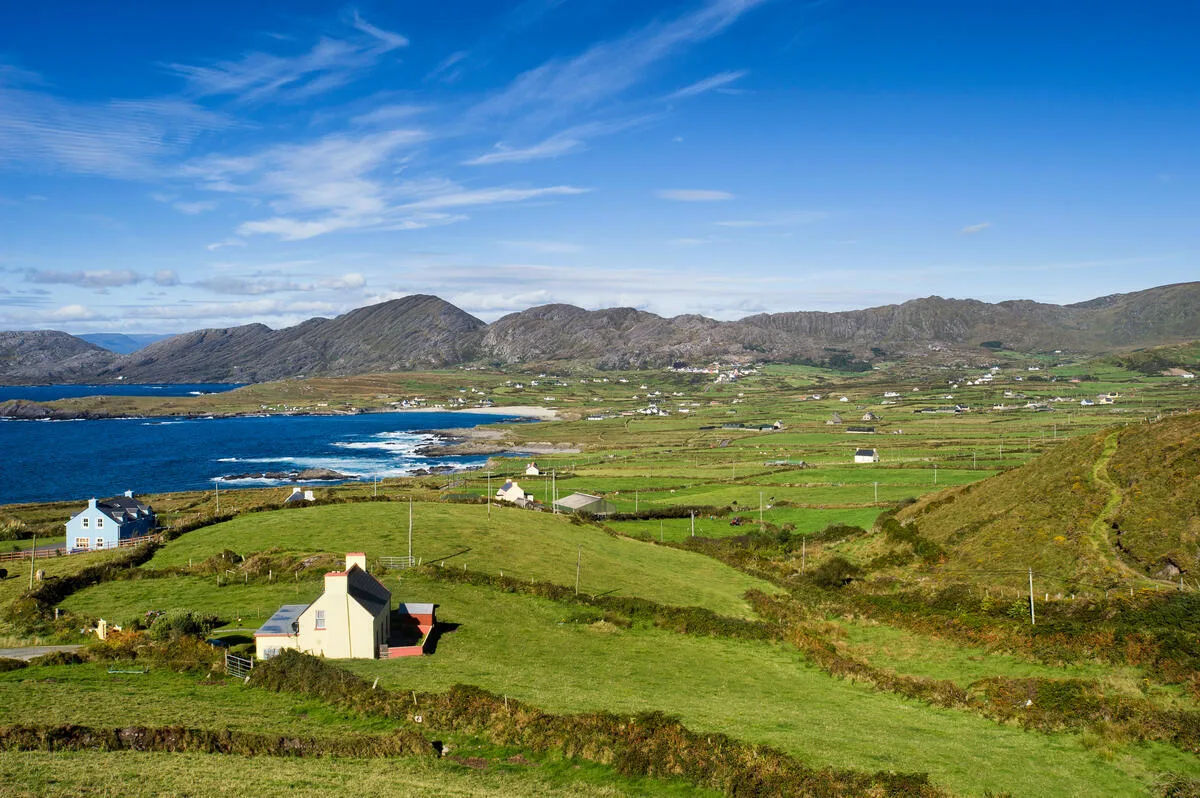
Slieve League Walk Donegal: Europe's Highest Sea Cliffs Guide
Slieve League Walk Donegal: Your Complete Guide to Europe's Highest Sea Cliffs
What would you choose: a clifftop view shared with hundreds of tourists, or one three times higher where you'll meet maybe a dozen walkers all day? The Slieve League walk in Donegal offers exactly that — Europe's tallest sea cliffs at 601 metres, towering over the Atlantic with a fraction of the crowds that gather at the Cliffs of Moher.
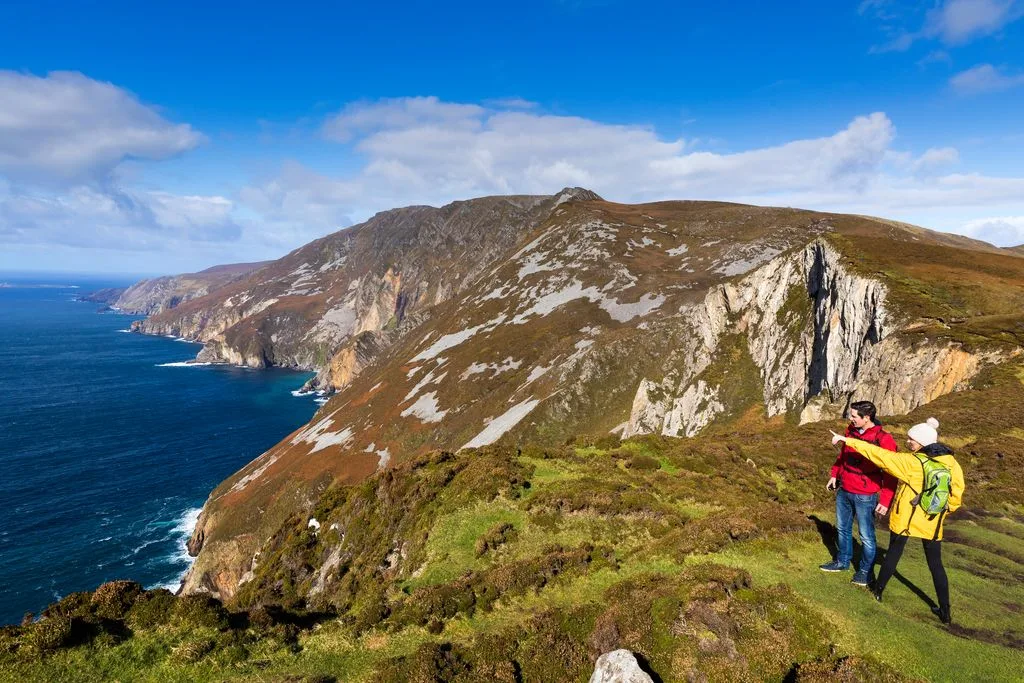
I've walked the Slieve League cliffs dozens of times, and the moment that stops people every single time comes about an hour in. You round a bend and the full scale hits you — a near-vertical wall of ancient rock plunging straight into the ocean below.
This is one of Ireland's great under-visited places. While tour buses queue at Moher, Slieve League Donegal remains gloriously quiet. If you're planning a walking holiday on the Wild Atlantic Way, this walk belongs at the top of your list.
Understanding the Slieve League Cliffs
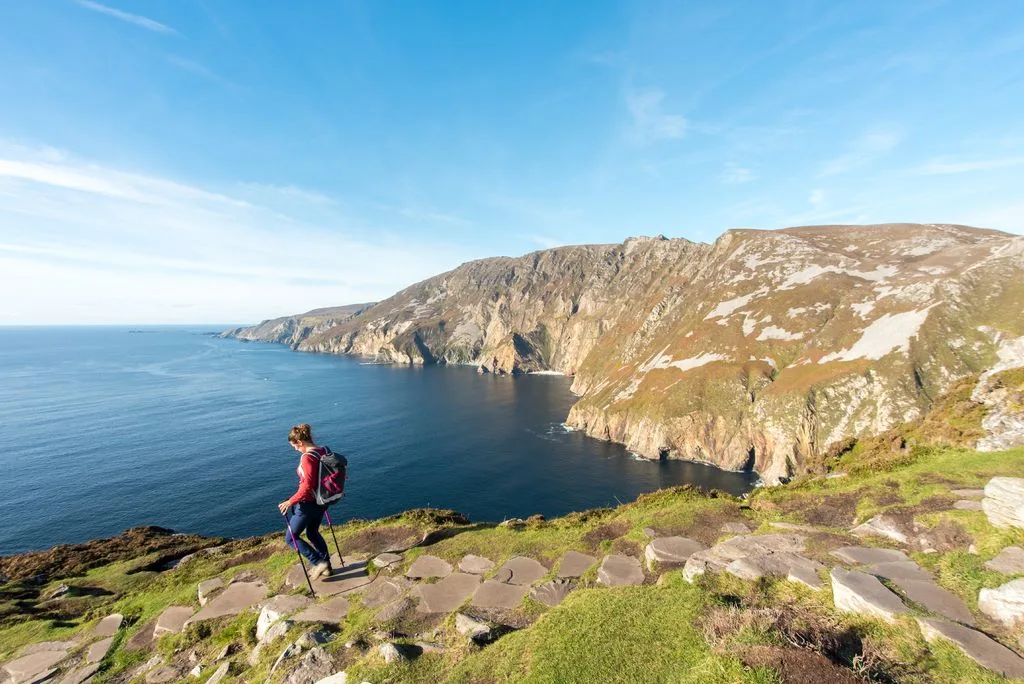
Sliabh Liag — the Irish name meaning "Mountain of Slabs" — forms the southern face of a mountain in southwest County Donegal. At 601 metres, these are definitively Europe's highest sea cliffs, nearly three times the 214-metre height of the Cliffs of Moher.
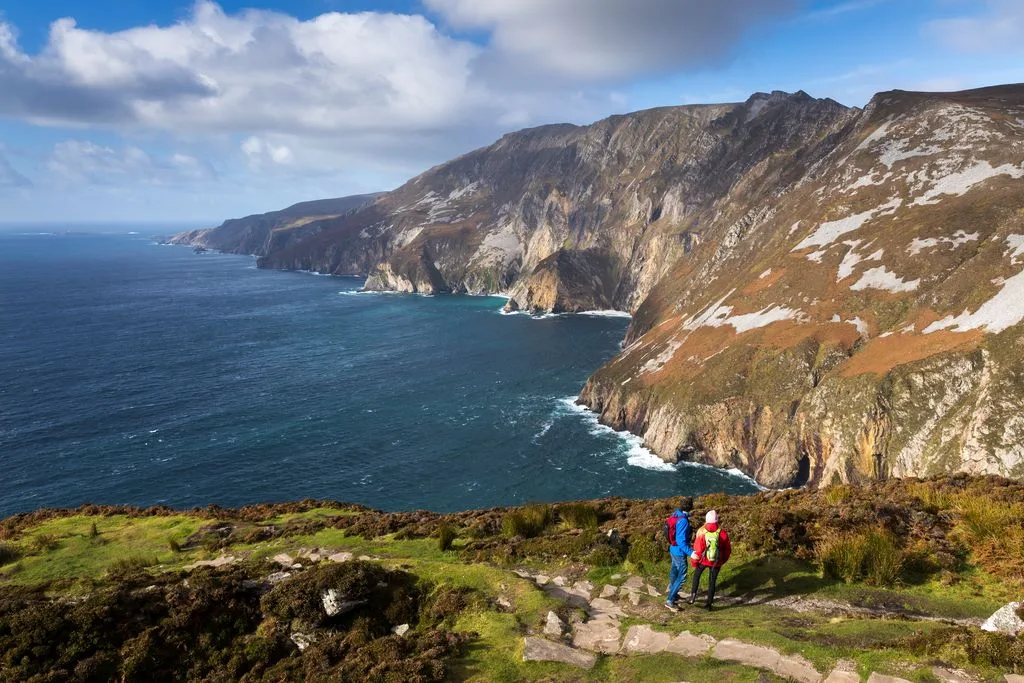
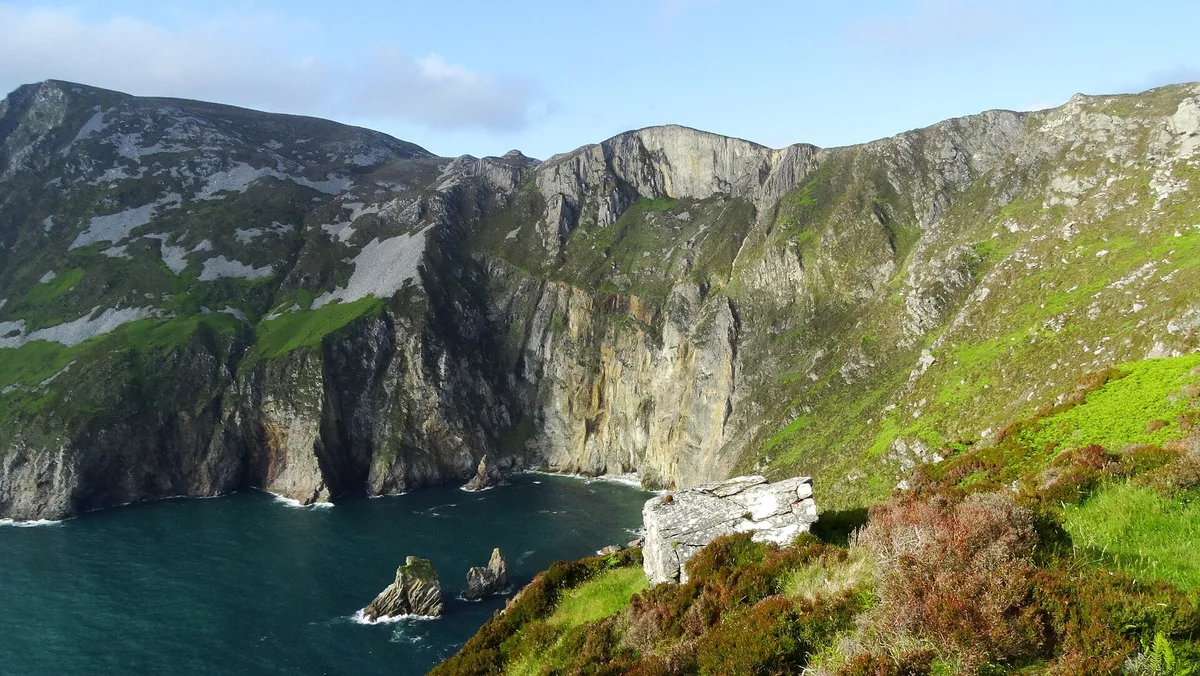
The geology tells a story spanning hundreds of millions of years. You'll see Silurian sandstone, quartzite, and shale laid down in horizontal bands, then tilted by ancient tectonic forces into near-vertical positions. The rock strata are clearly visible in the cliff face — striped layers that catch the light differently throughout the day.
What makes the Slieve League cliffs extraordinary isn't just height. It's the continuous, uninterrupted drop. Stand at the summit ridge and the ground simply vanishes beneath you, falling 601 metres straight to the Atlantic. On calm days, you'll hear the ocean far below. On rough days, you'll feel the vibration through the rock.
The cliffs sit on the Wild Atlantic Way Donegal stretch, arguably the most dramatic section of Ireland's 2,500-kilometre coastal route.
Choosing Your Route: Two Very Different Experiences
The Slieve League walk Donegal offers two distinct options. Your choice determines whether you spend an hour at a spectacular viewpoint or commit to a full mountain day.
Route 1: Lower Car Park to Bunglass Viewpoint
Distance: 2 km return
Time: 45–60 minutes
Difficulty: Easy
Elevation gain: 120 metres
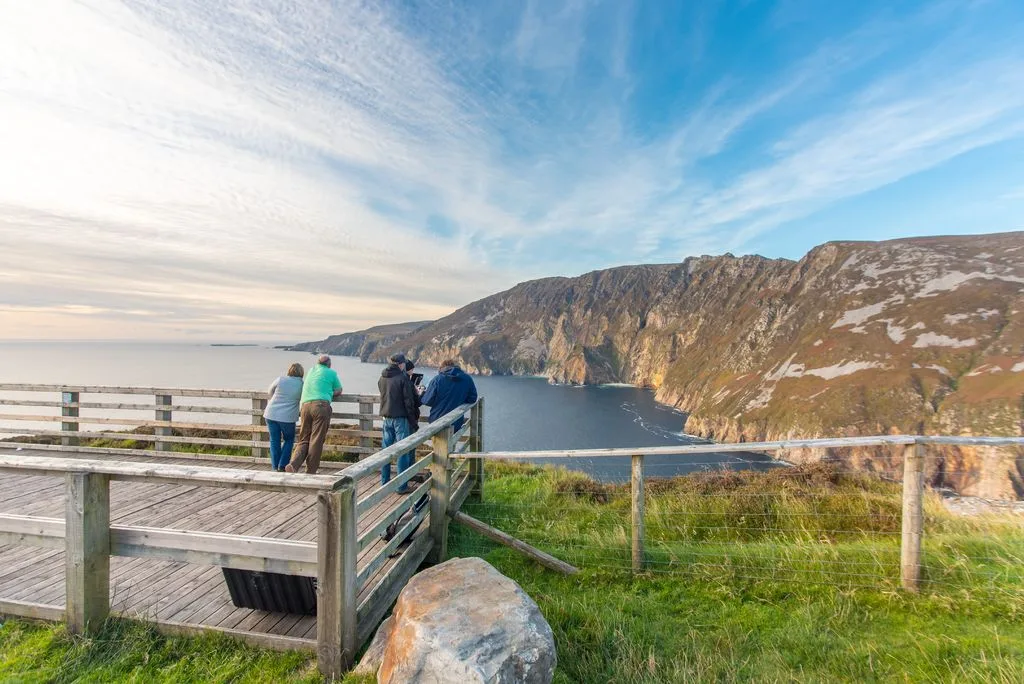
This short walk from the Slieve League Cliffs visitor centre near Teelin village delivers one of Ireland's finest coastal views without requiring mountain fitness. The path climbs steadily past the ruins of an old signal tower to a clifftop platform where the full face of the Slieve League cliffs unfolds before you.
I recommend this route for:
Families with children
Anyone with limited time (under 2 hours available)
Walkers who prefer not to tackle exposed ridges
Those visiting in uncertain weather
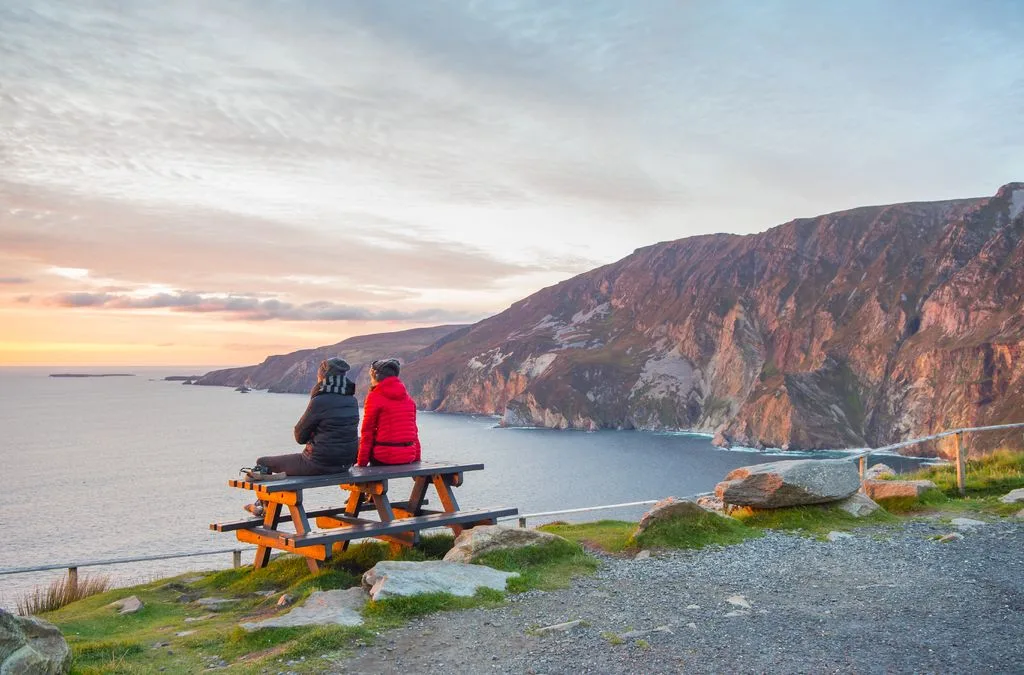
The Bunglass viewpoint is where most photographs are taken. It's where people fall silent, then reach for their cameras, then fall silent again. Many walkers consider this complete — and it is, as a viewpoint experience.
Route 2: The Full Ridge Walk via One Man's Pass
Distance: 9–12 km (depending on return route)
Time: 4–6 hours
Difficulty: Moderate to challenging
Elevation gain: 550 metres
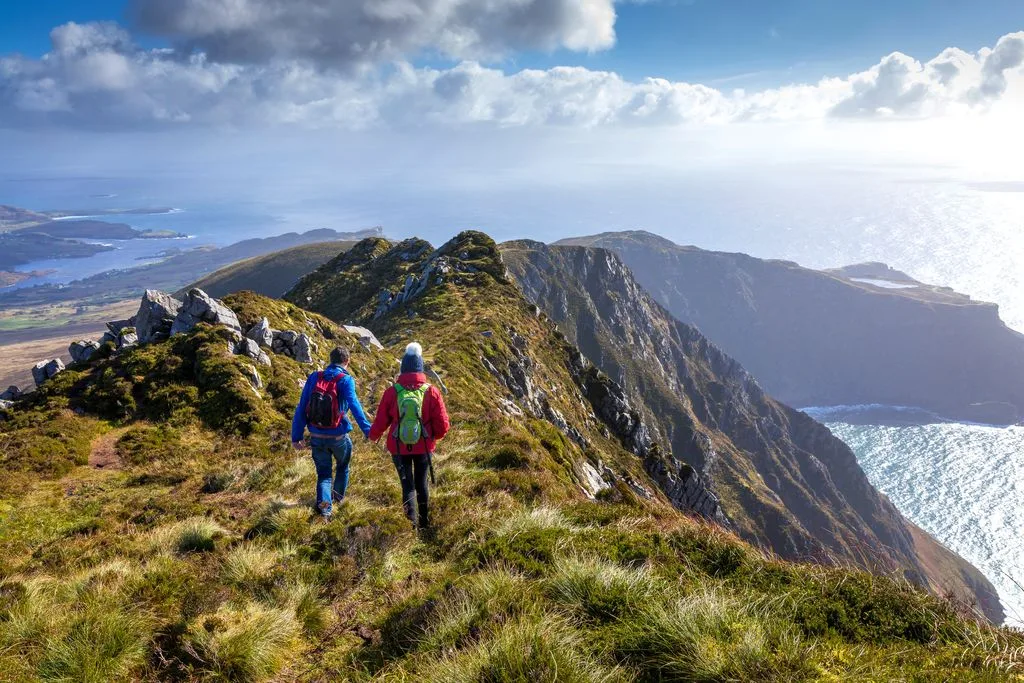
This is the Donegal cliffs walk that people remember for years. From Bunglass, the route continues along the clifftop ridge — one of Ireland's finest — eventually crossing the notorious One Man's Pass Slieve League section before ascending to the 601-metre summit.
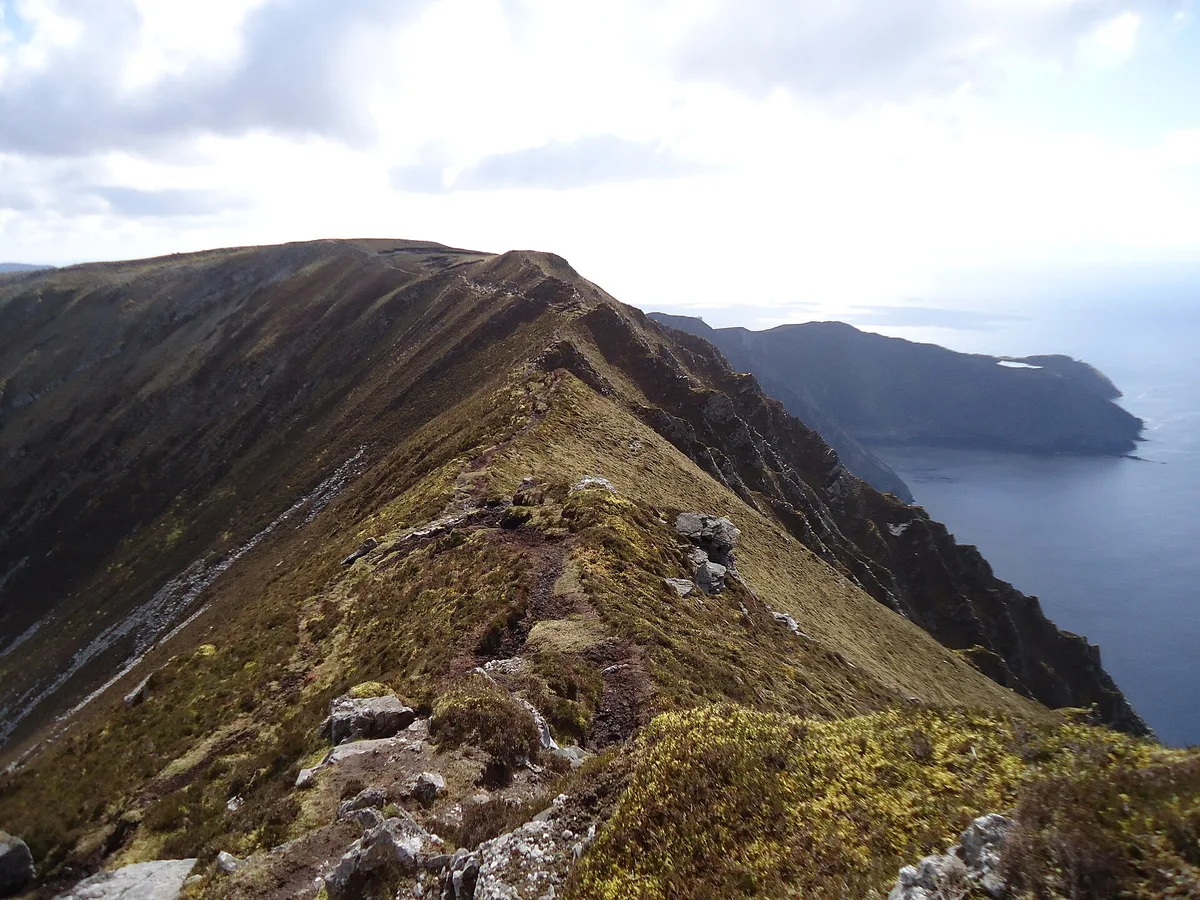
The ridge walking is extraordinary. You'll follow the cliff edge with the Atlantic hundreds of metres below on your left and the rolling Donegal uplands spreading out to your right. The exposure is genuine, and the views compound at every turn.
Key sections include:
Bunglass to the Amphitheatre — gentle clifftop walking with constant views
The Amphitheatre — a dramatic curved section where the cliffs form a natural bowl
One Man's Pass — the narrow exposed ridge that gives the route its reputation
Final ascent — steep but straightforward climb to the summit cairn
You can return via the same route or, if you're an experienced walker with good navigation skills, descend via alternative paths back to Teelin. I always recommend the return route to first-timers — you'll see everything from a different angle.
One Man's Pass: What You Actually Need to Know
Let's address what everyone asks about. One Man's Pass Slieve League is a narrow ridge section that earned its name honestly — at the tightest point, the path narrows to barely a metre wide with significant drops on both sides.
Here's my honest assessment after guiding dozens of walkers across it: One Man's Pass is not technically difficult, but it demands composure.
In dry conditions, the path is secure underfoot. There are no scrambling moves, no hand-holds required, no technical climbing skills needed. You're walking, just walking along a narrow path. The challenge is entirely psychological — the exposure is real, and if heights make you uncomfortable, this will be stressful rather than exhilarating.
When One Man's Pass Becomes Serious
Weather changes everything. In wet or windy conditions, One Man's Pass transforms from manageable to genuinely hazardous:
The rock becomes slippery when wet
Wind at 600 metres elevation can be powerful even when valleys feel calm
Visibility can drop suddenly in mist or low cloud
The consequences of a slip are severe
I've turned back at One Man's Pass multiple times when conditions deteriorated. There's no shame in it — the Bunglass viewpoint delivers most of the visual drama without the exposed ridge.
For regular walkers in good conditions: One Man's Pass is manageable and the reward is one of Ireland's great walking experiences.
For walkers uncomfortable with heights: Stop at Bunglass. It's magnificent, and you'll enjoy it far more than white-knuckling your way across an exposed ridge.
Slieve League vs Cliffs of Moher: The Honest Comparison
I'm asked this comparison constantly by people planning walking holidays in Ireland. Here's the complete picture:
Factor | Slieve League | Cliffs of Moher |
|---|---|---|
Height | 601 m (Europe's highest) | 214 m |
Access | Walking required | Visitor centre, paved paths |
Typical crowds | 10-20 people on busy days | 1,000+ visitors daily in season |
Experience type | Mountain walk, solitude, adventure | Scenic viewpoint, family-friendly |
Difficulty | Moderate to challenging | Easy (accessible paths) |
Time needed | 1 hour (viewpoint) or 4-6 hours (full walk) | 1-2 hours |
Weather impact | Significant — can close routes | Moderate — viewing still possible |
Best for | Walkers, adventurers, solitude-seekers | All visitors, families, quick stops |
The bottom line: Slieve League vs Cliffs of Moher isn't about which is "better" — they serve different purposes. The Cliffs of Moher are accessible to everyone and impressive in their own right. Slieve League is more dramatic, more remote, and infinitely more rewarding for walkers.
If you can do both, do both. If you have to choose and you're a walker, choose Slieve League. If you're travelling with non-walkers or have mobility limitations, Moher makes more sense.
Practical Details for Your Slieve League Walk
Getting There
Slieve League sits in southwest Donegal, accessed via Carrick village (approximately 25 km west of Donegal Town). From Carrick, follow signs for Bunglass and Teelin. The road narrows significantly in the final kilometres — drive slowly and use passing places for oncoming vehicles.
The Slieve League Cliffs visitor centre at the lower car park provides:
Free parking (donations welcome)
Public toilets
Basic café (seasonal)
Trail information
A shuttle bus operates from the lower car park to an upper viewpoint area during peak season (June–August). This is useful if you want the viewpoint experience without the uphill walk, though I'd argue the walk is half the pleasure.
There's no public transport to Slieve League. You'll need a car, or you can arrange a taxi from Carrick or Killybegs.
Best Time to Walk Slieve League
May to September offers the most reliable walking conditions. Long daylight hours in June and July give you comfortable margins — the summit ridge walk needs at least five hours, and you don't want to rush it.
I've walked Slieve League in every month. Here's what to expect:
Season | Conditions | Recommendation |
|---|---|---|
May–June | Long days, wildflowers, moderate temperatures | Excellent for full ridge route |
July–August | Warmest, longest days, busiest (relatively) | Best for beginners, families |
September | Clear light, fewer walkers, can be windy | Ideal for photography |
October–April | Short days, unpredictable weather, strong winds | Bunglass viewpoint only unless experienced |
Avoid the ridge route in strong winds. The Donegal coast is fully exposed to Atlantic weather systems. Wind speeds at cliff-edge elevation can be significant even on days that feel calm inland. Check the Met Éireann forecast specifically for the Donegal coast and be prepared to adjust plans.
Winter visits are possible for the Bunglass viewpoint, but the full ridge route should only be attempted by experienced mountain walkers with winter skills, appropriate gear, and navigation ability. Short daylight makes timing margins tight.
What to Wear and Bring
Donegal weather is famously changeable. I've experienced four seasons in a single Slieve League walk more times than I can count.
For the Bunglass viewpoint walk:
Comfortable walking shoes (trainers acceptable in dry conditions)
Windproof jacket (essential — it's always windy at the cliffs)
Waterproof layer (always sensible in Donegal)
Water bottle
Camera
For the full ridge route:
Walking boots with ankle support and good grip (not trail runners)
Waterproof jacket and trousers (not "water-resistant" — proper waterproofs)
Warm mid-layer (fleece or insulated jacket)
Hat and gloves (even in summer — it's cold at 600 metres in wind)
At least 2 litres of water
Food for the day (you'll be out 5-6 hours)
OS map (Discovery Series Sheet 10) or downloaded offline map
Charged mobile phone
Basic first aid kit
Headtorch (just in case you're slower than planned)
Our layering guide for hiking covers the right approach to dressing for Irish mountain weather, and how to prepare for a hike explains the essentials in detail.
Fitness Requirements
The Bunglass viewpoint walk is suitable for anyone with basic mobility. If you can manage a 20-minute uphill walk with occasional stops, you'll be fine.
The full ridge route requires solid walking fitness — the equivalent of being comfortable with 5-6 hours of walking at moderate pace, with some steep sections. You don't need to be an athlete, but you should be accustomed to full-day walks.
If you're unsure about your fitness level, our tour grading guide explains the different levels in practical terms. The full Slieve League ridge route sits at Grade 3 (Moderate-Challenging) in our system.
Slieve League and the Wild Atlantic Way, Donegal
The Slieve League walk, Donegal, doesn't exist in isolation. Southwest Donegal contains some of Ireland's most extraordinary walking landscapes, and Slieve League is the centrepiece rather than the complete picture.
Within an hour's drive you'll find:
The coastal path from Malin Beg to Glencolmcille
The Silver Strand (Tráigh Bhéal Bán) — one of Ireland's most remote beaches
Glen Head loop walk
Assaranca Waterfall
The Bluestack Mountains
If you're planning more than a day in the area, my hiking in Donegal guide covers the full range of walking options across the county, from gentle coastal paths to serious mountain routes. The Donegal hiking experience article explains what makes this county so compelling for walkers.
Slieve League sits on the Wild Atlantic Way Donegal stretch, the northernmost section of Ireland's 2,500-kilometre coastal route. Our Wild Atlantic Way walking guide covers how to tackle the route in sections.
For a properly organised Donegal walking holiday with accommodation arranged, luggage transfers, detailed route notes, and emergency support, browse our self-guided walking holidays. We can build a custom itinerary around Slieve League and the surrounding Donegal walks.
Common Questions About the Slieve League Walk
How high are the Slieve League Cliffs?
601 metres at their highest point — definitively Europe's tallest sea cliffs, nearly three times the height of the Cliffs of Moher.
Are the Slieve League Cliffs dangerous?
The Bunglass viewpoint is accessible and safe for most walkers. The full ridge route involves genuine exposure, particularly at One Man's Pass. In wet or windy conditions, the exposed sections become serious. Always check weather forecasts and turn back if conditions deteriorate.
Is One Man's Pass really that scary?
It's exposed but not technically difficult in good conditions. Most regular walkers find it manageable. If you're uncomfortable with heights, it will feel stressful. The Bunglass viewpoint is magnificent without crossing it.
How long does the Slieve League walk take?
Bunglass viewpoint: 45–60 minutes return. Full ridge route via One Man's Pass: 4–6 hours. Build in extra time — you'll stop frequently for photographs and to simply take in the views.
Can I visit without doing the full walk?
Absolutely. The Bunglass viewpoint requires only a gentle 2 km walk and delivers one of Ireland's finest coastal views. Many visitors do just this and leave thoroughly satisfied.
Is Slieve League better than the Cliffs of Moher?
For walkers seeking drama and solitude, yes. Slieve League is three times higher and vastly quieter. The Cliffs of Moher are more accessible and better for families or those with limited mobility. Both are impressive; they serve different purposes.
When is the best time to walk Slieve League?
May to September offers the most reliable conditions. June and July provide the longest daylight. September often brings clearer light and fewer walkers. Avoid the ridge route in winter unless you're an experienced mountain walker.
Ready to Experience the Slieve League Walk?
I've walked the Slieve League walk Donegal route dozens of times, and it never loses its impact. The scale, the light, the sense of standing at the edge of Europe — it's one of Ireland's truly great walking experiences.
Quick summary:
Height: 601 metres — Europe's highest sea cliffs
Two routes: Easy 1-hour viewpoint walk or challenging 5-hour ridge route
Best time: May–September, with long daylight in June–July
Key section: One Man's Pass requires composure but isn't technical
Comparison: Three times higher and far quieter than Cliffs of Moher
Location: Southwest Donegal on the Wild Atlantic Way
If you'd like help planning a Donegal walking trip built around Slieve League — including accommodation in the area, timing advice, and other routes worth combining — I'm happy to help.
Drop me a message via the contact page or WhatsApp me on +353 87 957 3856.
Browse our self-guided walking holidays in Ireland for the full range of options across the country.
— Cliff, Walking Holiday Ireland
Frequently Asked Questions
Are the trails well-marked?
What kind of boots should I wear?
What are the most essential items to pack for a walking holiday in Ireland?
What is the most popular route?
Photo Gallery