Traveling to Ireland Guide: Complete Walking Holiday Logistics
Complete Traveling to Ireland Guide for Walking Holidays
Planning a walking holiday in Ireland starts with one simple question: how do I actually get there — and from the airport to the trailhead — without stress, delays, or logistical surprises?
I've spent years refining this traveling to Ireland guide to answer exactly that. Whether you're flying from the US, Europe, or Australia, this article covers flights to Ireland for hiking, Ireland airport transfers, the UK ETA you need for Northern Ireland, and everything else you need to know before you land.
Ireland welcomes walkers from around the world. The island has excellent flight connections from major cities globally, efficient transfer options from airports to trailheads, and accommodation built specifically for walkers. The logistics of getting to Ireland walking holiday are genuinely straightforward — once you know what to expect.
This guide covers Ireland entry requirements tourists, visa requirements Ireland walking, ferry to Ireland hiking, Ireland travel logistics hikers, and practical tips for arriving rested and ready to walk.
Visas & Immigration: Ireland Entry Requirements for Tourists
Before booking flights to Ireland for hiking, check your specific visa requirements Ireland walking. Entry rules vary by nationality, and a new ETA system is being introduced.
USA, Canada & Australia
🇺🇸 Visa-free entry for tourism up to 90 days. Your passport must be valid for the full duration of your stay. No advance application required — immigration is processed on arrival.
EU & UK Citizens
🇪🇺 Simple entry with a valid passport. The Republic of Ireland has no ETA or visa-waiver scheme — you are not in the Schengen area here, and ETIAS does not apply.
Walking in Northern Ireland? You Probably Need a UK ETA
⚠️ This one catches people out, so please read it carefully. Several of our routes — the Causeway Coast, Cooley & Mournes and Saint Patrick's Way — cross into Northern Ireland, which is part of the UK. Most visitors now need a UK Electronic Travel Authorisation (ETA) before they travel.
- Who needs one: most visa-exempt visitors, including citizens of the EU and EEA, the USA, Canada, Australia, New Zealand and Japan. British and Irish citizens do not.
- Cost: £20, non-refundable.
- Validity: two years, or until your passport expires. Multiple entries, up to six months per visit.
- How to apply: the official UK ETA app, or gov.uk/eta. You need your passport, an email address, a payment card and a photo. Most decisions come back within a day, but allow three working days.
The part people get wrong: the exemption is based on where you live, not on which way you travel. It only applies if you are legally resident in Ireland. If you are a visitor flying into Dublin and walking north across the border, you still need a UK ETA — even though there are no passport checks on the land border. Apply before you fly; you cannot get one at the border.
⚠ Check Before You Book: entry rules change. Verify your own nationality's requirements at gov.uk/eta (for Northern Ireland) and dfa.ie (for the Republic) before finalising flights.
Flight Options to Ireland: Choosing the Right Airport
Ireland has three main international airports. Choosing the right one for your walking tour minimises ground travel time and gets you to the trailhead faster.
Dublin Airport (DUB)
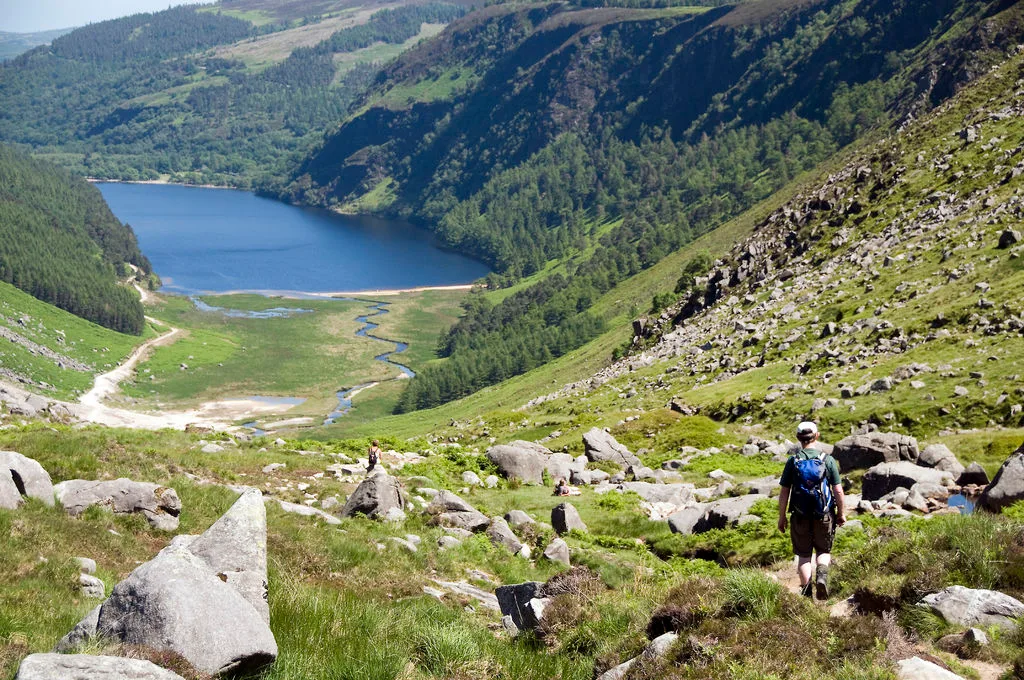
🛬 Ireland's largest hub. Most transatlantic and European routes land here. Direct flights from Boston, New York, Washington, Chicago, and major European cities. Perfect for the Wicklow Way — you can be on the trail within 90 minutes of landing.
Cork Airport (ORK)
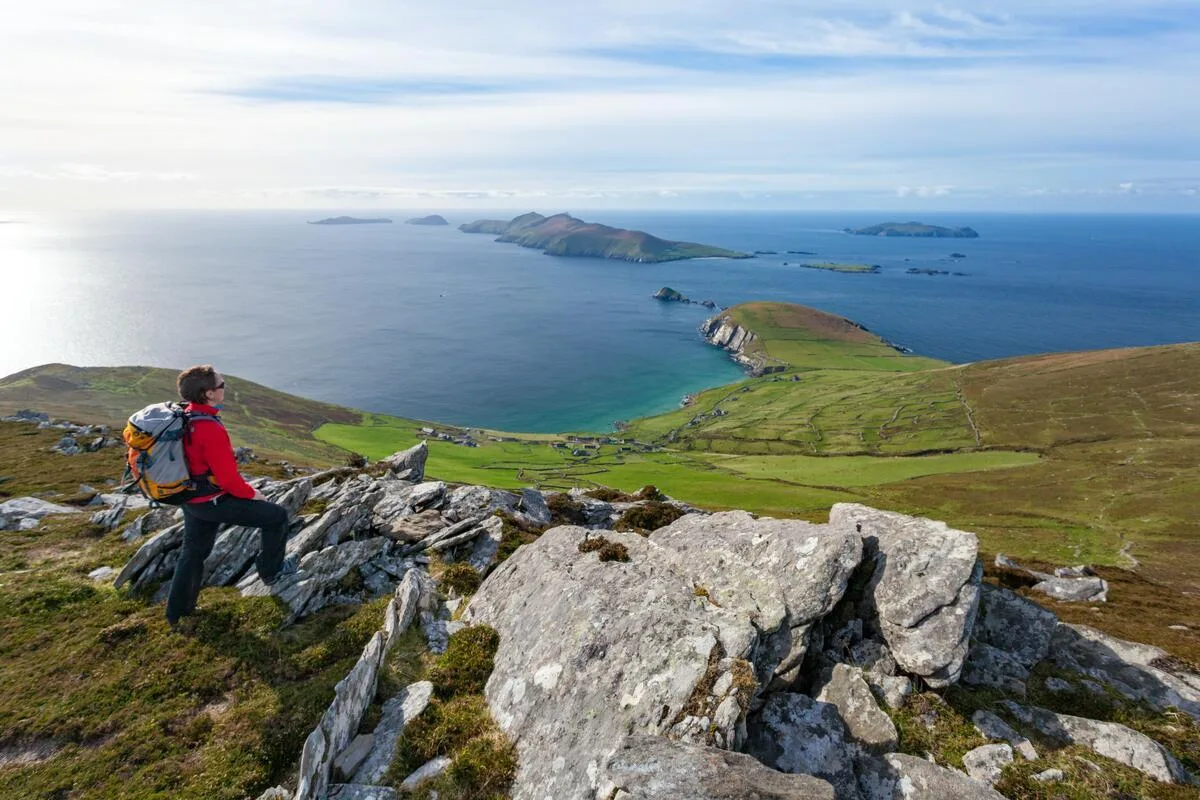
🛬 Ideal for southern trails. Fewer international connections but no onward transfer needed for the Kerry Way and Dingle Way. Direct flights from London, Paris, and some seasonal US routes.
Shannon Airport (SNN)
🛬 Gateway to the west. Good for the Burren and Cliffs of Moher and Wild Atlantic Way routes. Fewer crowds than Dublin. Direct transatlantic flights from New York, Boston, and Newark.
Booking Flights to Ireland for Hiking: Practical Tips
Book 6–8 weeks ahead for the best balance of price and seat availability
Fly Tuesday or Wednesday — typically cheaper than weekend departures
Morning or afternoon arrivals give you time to settle before an early night (jet lag tip)
Late afternoon departures on your last day allow a final morning walk
Consider flight insurance — if injured on the trail, coverage protects your return flight
Typical Return Airfares
Origin | Typical Return | Notes |
|---|---|---|
US East Coast | $500 – $1,200 | Direct routes available to Dublin |
US West Coast | $600 – $1,400 | Usually 1 connection |
Europe | €100 – €300 | Budget airlines (Ryanair, easyJet) available |
Australia / NZ | $800 – $1,500 | Typically 1–2 stopovers |
Ferry to Ireland Hiking: Alternative Routes from the UK & Europe
If travelling from the UK or mainland Europe, ferries offer a relaxed alternative to flying — and many walkers enjoy the crossing as part of the adventure. A ferry to Ireland hiking trip also means you can bring your own car and all your gear without baggage restrictions.
Route | Duration | Approx. Cost |
|---|---|---|
Holyhead (Wales) → Dublin | ~2 hours | €50–100 (foot passenger) |
Liverpool → Dublin | ~8 hours | €80–150 |
Cherbourg / Roscoff → Cork | ~14 hours | €200–400 (with cabin) |
💡 Pro Tip: Overnight ferries from France to Cork are popular with walkers — you sleep on board and wake up ready to start your tour.
Ireland Airport Transfers Walking: Getting from the Airport to the Trailhead
Once you land, you need to reach your starting point. Ireland airport transfers walking options range from public buses to private door-to-door service.
Dublin Airport → Wicklow Way
Option | Cost | Notes |
|---|---|---|
Tour operator coach (to Glendalough) | ~€20–30 pp | 1.5–2 hrs; synchronised with tour schedules |
Rental car | ~€30–50/day | Left-side driving — allow adjustment time |
Public bus (Bus Éireann) | ~€10–15 | Budget option: slower and less direct |
Private transfer | €60–100+ | Door-to-door: book through your tour operator |
Cork / Shannon → Kerry Way & Dingle Way
Option | Cost | Notes |
|---|---|---|
Rental car | ~€30–50/day | Cork → Dingle ~2 hrs; Cork → Kenmare ~1.5 hrs |
GoBus/coach | ~€10–20 | Slower but budget-friendly |
Private transfer | €70–150+ | Arranged by your tour operator; door-to-door |
💡 Pro Tip: Most walkers spend one night in Dublin before heading to the trailhead. It eases jet lag, lets you pick up any forgotten gear, and means you start your walk refreshed rather than rushed.
Driving in Ireland: What Walkers Need to Know
If you're hiring a car as part of your Ireland travel logistics hikers plan, here's what to expect:
Left-side driving: Ireland drives on the left like the UK and Australia. Allow significant adjustment time if you're unfamiliar.
Narrow country roads: Rural roads are considerably narrower than North American highways — reduce your speed accordingly.
International Driving Permit: US travellers can drive with a US licence, but an IDP (from AAA) provides useful backup.
Car insurance: Rental cars include basic cover; an excess waiver (~€10–20/day) is advisable.
Parking: Free at trailheads and in small villages. It can be expensive in Dublin and Cork city centres.
Best Time to Visit Ireland for Walking
When you travel matters. Ireland's weather is famously unpredictable, but certain months offer better conditions for getting to Ireland walking holiday adventures.
Peak Season (June – August)
⛅ Most reliable weather and longest daylight, but highest prices and busiest trails. Book 2–3 months ahead.
Shoulder Seasons (May & September–October)
🍂 Sweet spot. Excellent weather, fewer crowds, better pricing. Mid-May to June 1 and all of September are particularly ideal. Book 6–8 weeks ahead.
Autumn & Winter (October – February)
🌧️ Experienced walkers only. Dramatic skies and autumn colour, and very few other walkers. Weather is less predictable.
Packing & Preparation: What to Bring
Your traveling to Ireland guide isn't complete without a packing list. Ireland's weather can change four times in one day, so layering is essential.
Essential Walking Gear
🧥 Waterproof jacket (non-negotiable)
👢 Broken-in hiking boots
🧦 Two pairs of walking socks
🧣 Thermal layers
🧢 Hat and gloves (even in summer)
🌞 Sunscreen
🩹 First aid basics
🔌 Type G power adapter (UK plug)
The Two-Bag Approach
🎒 Day backpack (15–20L): Water, snacks, waterproof layer, camera. This is what you carry on the trail each day.
🧳 Main luggage: Clothes and overnight kit. On a Walking Holiday Ireland tour, this is transferred between accommodations every day — you never carry it on the trail.
Physical Training Timeline
Ireland's long-distance trails involve 15–20 km per day with elevation gain. Moderate fitness is sufficient, but preparation makes all the difference — especially on day 3 and beyond.
Your 3-Month Training Plan
Timeframe | Training Goal |
|---|---|
3 months out | Walk 30–45 minutes, 3–4 times per week, including some hills to build leg strength |
2 months out | Increase to 45–60 minutes with sustained elevation, 3–4 times per week |
1 month out | 60+ minute walks wearing your full day pack — get used to the weight and break in your boots |
2 weeks out | Maintain fitness only — no peak training. Allow your body to taper and recover |
Jet Lag Strategies for Walkers
Arriving from North America or Australia means crossing multiple time zones. Here's how I manage jet lag to start walking refreshed:
Arrive in the morning or afternoon if possible — gives you time to settle before Irish bedtime
Stay awake your first day — light activity and eating at local times reset your rhythm fastest
Walk on your first full day — physical activity is one of the most effective jet lag remedies
Get morning sunshine — daylight is the most powerful circadian reset available
Start walking after 1–2 rest days — arriving early means you begin the trail refreshed, not exhausted
Documents & Travel Insurance
Essential Documents
📄 Valid passport · Travel insurance · Flight & accommodation confirmations · Walking tour booking · Credit cards & euros · Driver's licence if hiring a car
Digital Backups
☁️ Store copies of your passport, insurance, and all confirmations in a cloud service accessible offline in an emergency.
Travel Insurance
🛡️ Strongly recommended. Covers trip cancellation, emergency evacuation, lost luggage, and medical expenses. Typically €30–80 for a 1–2 week trip.
Arrival Day Logistics: Your First Two Days
Resist the urge to start walking immediately. Two easy days before your first trail day transforms the entire experience.
Day 1: Arrival Day
Clear immigration & collect bags
Transfer to accommodation
Early dinner and rest
Early night — resist jet lag temptation
Day 2: Orientation Day
Light walk or local exploration
Finalise gear and layers
Good meal and early night
Review route maps and notes
Day 3: Trail Start 🥾
Begin your walking holiday
Full energy, adjusted rhythm
Enjoy every single step
Planning Steps: Start to Trail
Choose your trail — Kerry Way, Dingle Way, Wicklow Way, Barrow Way, Causeway Coast, or a combination.
Decide your dates — May–September is optimal. Book 6–8 weeks ahead at a minimum.
Book your flights — secure airfares early; prices rise significantly within 4 weeks of departure.
Book your walking tour — this locks in accommodation, luggage transfers, and route notes in one step.
Arrange airport transfers — coordinate with your tour operator or book independently.
Sort your documentation — ETA, if required; travel insurance; and digital backups of all confirmations.
Begin your training — follow the 3-month plan above. Your legs will thank you on day 3 of the Kerry Way.
Pack strategically — a day pack for the trail and main luggage for transfers. Lighter is always better.
Arrive, rest, and walk — two easy days before the trail. Then enjoy every step of Ireland's finest landscapes.
Ready to Start Your Irish Walking Holiday?
I've been organising self-guided walking holidays in Ireland for years. We take care of accommodation, luggage transfers, and route notes – so you can focus entirely on the walking.
Popular Routes
Kerry Way — 8 Days from €1,065
Dingle Way — 8 Days from €985
Causeway Coast — 8 Days from €985
About Walking Holiday Ireland
We specialise in fully supported self-guided walking holidays on Ireland's finest long-distance trails. All accommodation is pre-booked, your luggage is transferred between guesthouses every morning, and detailed route notes are included — so you can focus entirely on the scenery, the villages, and the trail.
Traveling to Ireland Guide Summary
Visa requirements Ireland walking: Most visitors enter visa-free for 90 days; ETA system coming soon.
Flights to Ireland for hiking: Dublin, Cork, or Shannon — choose based on your trail. Book 6–8 weeks ahead.
Ferry to Ireland hiking: Great option from UK/Europe; overnight crossings available.
Ireland airport transfers walking: Options range from €10 public buses to €100+ private transfers.
Ireland travel logistics hikers: Allow 1–2 rest days after arrival before starting your walk.
Getting to Ireland walking holiday: May–September offers best conditions; shoulder seasons (May, September) are ideal.
Frequently Asked Questions
How far in advance should I book?
How do I get to the start of my walking tour?
How does the luggage transfer service work?
Can I do a tailor-made or custom itinerary?
Can I modify my booking after it is confirmed?
Photo Gallery