Hiking Checklist: What to Pack for a Day Hike in Ireland
Picture this: you're an hour into a beautiful ridge walk in Kerry, the Atlantic stretching out below you, when the wind picks up and rain sweeps in from the west. You reach for your waterproof jacket—except it's back at the guesthouse. I can tell you that what you carry in your pack makes a real difference to your day on the trail. Pack too little and you'll be cold, wet, or hungry. Pack too much and your shoulders will be aching by lunchtime. This hiking checklist covers everything you need for a day hike in Ireland — no more, no less.
Whether you're walking coastal cliffs in Kerry, mountain trails in Wicklow, or green roads in the Burren, this guide is your essential packing list for a day hike.
Ireland's weather is mild but changeable. Rain can arrive without warning, temperatures drop on exposed ridges, and sunshine can follow showers within the hour.
The right gear keeps you comfortable through all of it. This hiking packing list is built around Irish conditions, but it works for day hiking anywhere in northern Europe.
Footwear: The Foundation of Your Hiking Gear Checklist
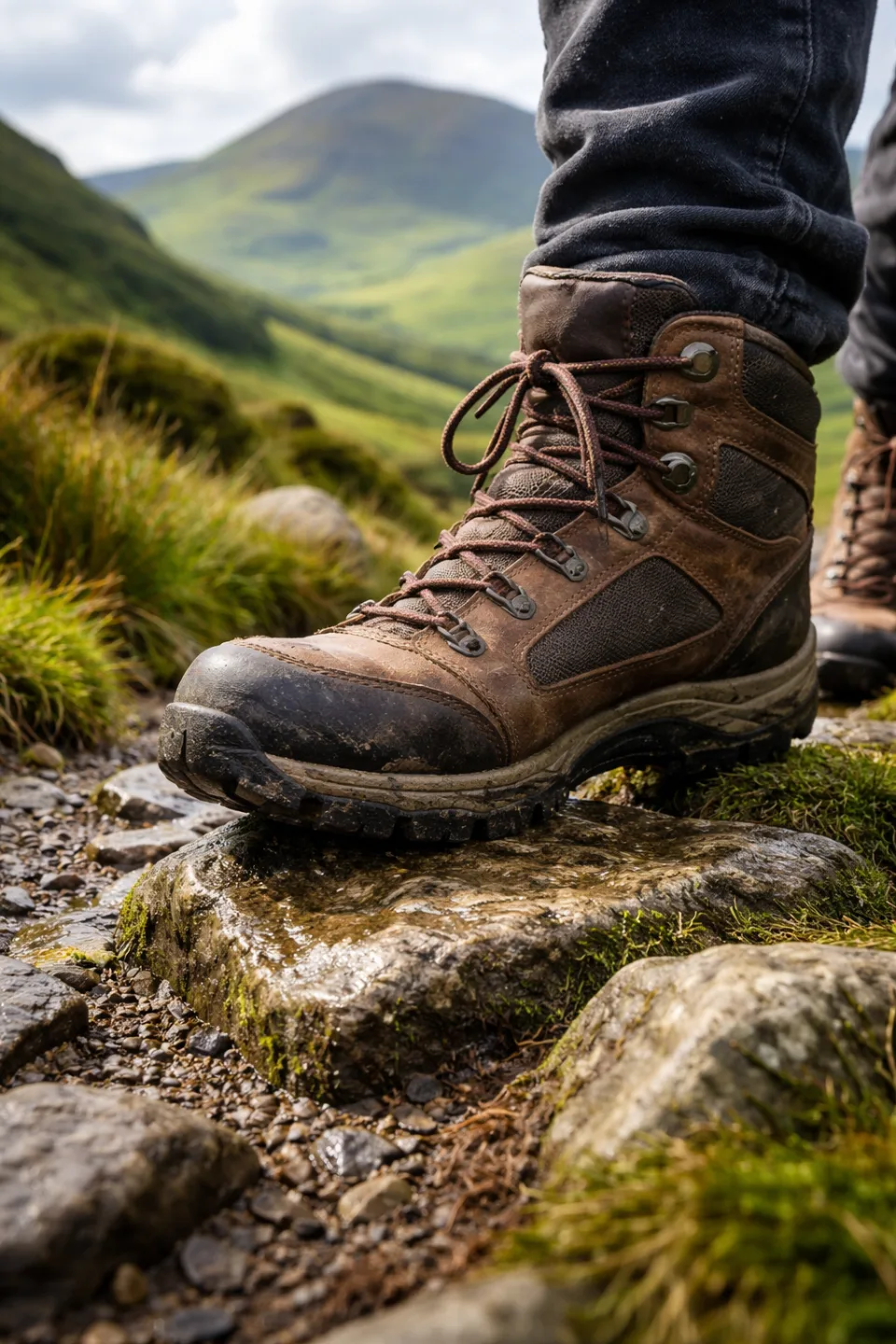
Good boots are the most important item on any hiking gear checklist. For Irish trails, you need ankle support, a waterproof membrane, and a sole with proper grip.
The ground here is often wet — mud, boggy sections, and rain-slicked rock are standard on mountain trails. Trail shoes work for short, well-surfaced paths, but for anything over 5 km (3 miles) or on uneven terrain, walking boots are the right choice.
Break your boots in before your trip. New boots cause blisters, and blisters ruin walks. Wear them around town, on short walks, and up and down stairs for at least two weeks before a walking holiday.
choosing the right hiking boots
Socks matter more than most people think. Merino wool hiking socks wick moisture, cushion your feet, and resist blisters far better than cotton. Carry a spare pair in your pack — changing into dry socks at lunch can transform the second half of your day.
The Sock Strategy
Primary pair: Merino wool or synthetic blend, worn from the start
Spare pair: Packed in a waterproof bag for lunch-time changes
Never cotton: It holds moisture and creates friction
Waterproofs: Essential for Every Day Hike Checklist
A waterproof jacket is the single most important clothing item on your day hike checklist for Ireland. Not a light rain shell, but a proper hillwalking jacket with sealed seams, a hood that adjusts, and breathable fabric so you don't overheat on the climbs.
You'll use it most days, even in the summer. I've guided walks in July where the waterproof jacket came on and off four times in a single afternoon.
Waterproof trousers are worth carrying on mountain walks and in winter. They pack small and weigh very little, but they make a big difference when the rain comes sideways on an exposed ridge.
An umbrella has no place on an Irish mountain — the wind will destroy it in less than five minutes.
Clothing Layers: The Smart Way to Pack
The layering system is the foundation of comfortable hiking in Ireland. Three layers cover every condition, and understanding this principle transforms your hiking pack list.
Base Layer
A base layer sits against your skin and wicks sweat. Merino wool or synthetic — never cotton, which holds moisture and chills you when you stop moving.
In winter or on exposed mountain routes, I wear a long-sleeve merino base. In summer on lower-altitude trails, a short-sleeve technical T-shirt works well.
Mid-Layer
A mid-layer provides warmth. A fleece, a softshell jacket, or a lightweight down layer works well. On warmer days you might not need it while walking, but carry it anyway — you'll want it at summit viewpoints or lunch stops where the wind bites.
Outer Layer
Your waterproof jacket is the outer layer, blocking wind and rain while letting moisture out. This is where breathability matters — a cheap plastic jacket will leave you as wet from sweat as you would be from rain.
Extremities
Pack a warm hat and lightweight gloves for mountain walks, even in summer. Temperatures at 600 metres (2,000 feet) can be ten degrees cooler than the valley floor, and wind chill adds to the effect.
A buff or neck gaiter is versatile—use it as a scarf, a hat, or sun protection.
Layer | Purpose | Material | Pack It? |
|---|---|---|---|
Base | Wicks moisture | Merino wool, synthetic | Wear it |
Mid | Insulation | Fleece, softshell, down | Always carry |
Outer | Weather protection | Waterproof breathable | Always carry |
Hat & gloves | Warmth at stops | Merino or fleece | Mountains & winter |
Backpack: Choosing the Right Size
Every hiking checklist starts with the right bag. For day hiking, a pack between 20 and 30 litres is ideal. It's big enough for your layers, waterproofs, food, water, and extras, but small enough to stay comfortable all day.
Look for a pack with a hip belt to take weight off your shoulders and a rain cover if the pack itself isn't waterproof.
On our walking holidays with luggage transfer, your main bag moves between accommodations by vehicle. You only carry your daypack with the items you bring for that day's hiking trail. This makes the walking far more comfortable, especially over multiple days.
Food and Water: Fuel for the Trail
No hiking checklist is complete without food and water. Carry at least one litre of water for a day hike, more in warm weather or on longer routes. Dehydration causes fatigue, headaches, and poor decision-making — all things you want to avoid on the trail.
A reusable water bottle is better for the environment than single-use plastic, and many Irish villages have public water fountains where you can refill.
What Food to Pack
Pack more than you think you'll need. A sandwich or wrap for lunch, plus energy bars, nuts, dried fruit, and chocolate for trail snacks.
Eating little and often keeps your energy steady. Avoid heavy meals that make you sluggish on the afternoon climbs.
A flask of hot tea or coffee is a luxury that earns its weight on a cold day — there's nothing better than a hot drink at a windy viewpoint.
Lunch: Sandwich, wrap, or packed lunch from your accommodation
Trail snacks: Energy bars, mixed nuts, dried fruit, chocolate
Emergency rations: Extra bar or gel in case the walk takes longer than planned
Hot drink: Flask of tea or coffee (optional but recommended)
Navigation: What Your Hiking Checklist Should Include
Even on well-waymarked trails, carry a map of the area. An Ordnance Survey Ireland map at a 1:50,000 scale covers most walking areas. Keep it in a waterproof map case.
A compass is worth carrying on mountain walks, especially if you're walking above the tree line where mist can reduce visibility to a few metres.
Your phone is a useful backup. Download offline maps before you leave your accommodation – signal drops in valleys and on mountain faces. A portable battery pack keeps your phone alive through a long day.
But don't rely on your phone as your only navigation tool — batteries die faster in cold weather, and a cracked screen from a fall makes a phone useless.
self-guided walking holidays
On our self-guided walking holidays, I provide detailed route notes that describe every turn, every landmark, and every potential confusion point. Combined with waymarks on the ground, navigation becomes straightforward even for first-time walkers.
Safety Essentials: The Non-Negotiables
A basic first aid kit belongs on every hiking essentials list. Pack blister plasters, adhesive bandages, antiseptic wipes, painkillers, and any personal medication.
A small roll of zinc oxide tape is useful for hot spots on feet before they become blisters. I've saved countless walks by applying tape at the first sign of rubbing.
Communication and Emergency Items
A fully charged phone with emergency numbers saved. In Ireland, call 112 or 999 for emergencies and ask for Mountain Rescue if you're on the hills.
A whistle is a lightweight safety item — six blasts in a minute is the international distress signal. Most hiking packs have a built-in whistle on the chest strap.
Sun Protection
Sun protection is often forgotten on the day hike packing list, but Irish summer sun can burn, especially at altitude and near water, where UV rays reflect.
A small bottle of sunscreen and sunglasses weigh almost nothing and prevent a miserable evening. According to Met Éireann, UV levels in Ireland can reach high or very high between April and September.
Optional Extras That Earn Their Place
Walking poles take pressure off your knees on descents and add stability on uneven ground. They're especially useful on longer walks and for anyone with knee concerns. Telescopic poles pack down small for travel.
Gaiters keep mud, water, and stones out of your boots on boggy Irish trails. They're not essential for well-surfaced paths, but they make a real difference on mountain routes after rain.
A sit mat — a small square of closed-cell foam — gives you a dry seat anywhere. It weighs nothing and means you can stop for lunch on wet grass or a damp rock without soaking through.
Your Complete Hiking Checklist for Ireland
Here is the complete hiking checklist for a day walk in Ireland:
Category | Item | Essential? |
|---|---|---|
Footwear | Walking boots (broken in) | Yes |
Merino hiking socks + spares | Yes | |
Waterproofs | Waterproof jacket with hood | Yes |
Waterproof trousers | Mountains/winter | |
Layers | Base layer | Yes |
Mid-layer (fleece/down) | Yes | |
Warm hat and gloves | Mountains/winter | |
Pack | 20-30L daypack with rain cover | Yes |
Food & Water | 1L+ water | Yes |
Lunch and trail snacks | Yes | |
Navigation | Map in waterproof case | Yes |
Compass | Mountain routes | |
Phone with offline maps | Yes | |
Safety | Basic first aid kit | Yes |
Sunscreen and sunglasses | Yes | |
Whistle | Yes | |
Optional | Walking poles | Recommended |
Gaiters | Boggy trails | |
Sit mat | Nice to have | |
Flask of hot tea | Nice to have |
That's it. Every item earns its place, and nothing is there to weigh you down.
Walking Holidays with the Packing Sorted
If you're joining me for a self-guided walking holiday, the packing is simpler than you'd think. I arrange luggage transfer between accommodations each day, so you only carry your daypack on the trail.
That means you can bring comfortable evening clothes, extra layers, and all the gear you need without carrying it over the mountains.
I provide detailed route notes, local support, and accommodation booked in advance. My tour grading system helps you choose the right trail for your fitness level.
Check the best time to visit Ireland for walking, pack the items on this hiking checklist, and let the Irish weather do what it does. You'll be ready for anything the trail brings.
Summary: Your Day Hike Packing List at a Glance
This hiking gear checklist is built from twenty years of guiding experience on Irish trails. Pack
waterproof jacket and trousers,
three-layer clothing system,
broken-in boots with spare socks,
20-30L daypack,
one litre of water,
lunch plus snacks,
map and compass,
first aid kit,
phone with offline maps,
sunscreen,
and whistle.
Optional but recommended:
walking poles,
gaiters, and a
sit mat.
On our walking holidays, you only carry your daypack — we transfer your main luggage between accommodations so you can walk light and comfortably.
Ready to put this hiking pack list to use? Browse our range of self-guided and guided walking holidays across Ireland. From coastal paths to mountain trails, I'll make sure you have everything you need for an outstanding walking experience. Get in touch today to start planning your Irish walking adventure.