Irish Pilgrim Paths: A Walker's Guide to Sacred Routes
People have been walking Ireland's sacred routes for over fifteen hundred years. Saints, monks, and ordinary people seeking healing or spiritual renewal — they all walked these same paths across bogland, mountain, and coastline. Today, pilgrimage in Ireland is drawing a new wave of walkers, and not just the devout. People come for the depth, the history, and the slower pace that lets you see the country instead of racing through it.
Ireland's pilgrim paths are among the oldest walking routes in Europe. They follow in the footsteps of Saint Patrick, Saint Columba, Saint Finbarr, and others whose names are written into the landscape. Some routes have been walked continuously since the early medieval period. Others fell out of use and have been carefully reconstructed in recent decades, following historical records and local memory. Whether you approach these routes with spiritual purpose or simply want a walking experience with real meaning, there's something here worth lacing your boots for. Some people call these routes Ireland's answer to the Camino — a camino ireland experience that combines physical walking with something deeper. The comparison holds up well.
Croagh Patrick — Ireland's Holy Mountain
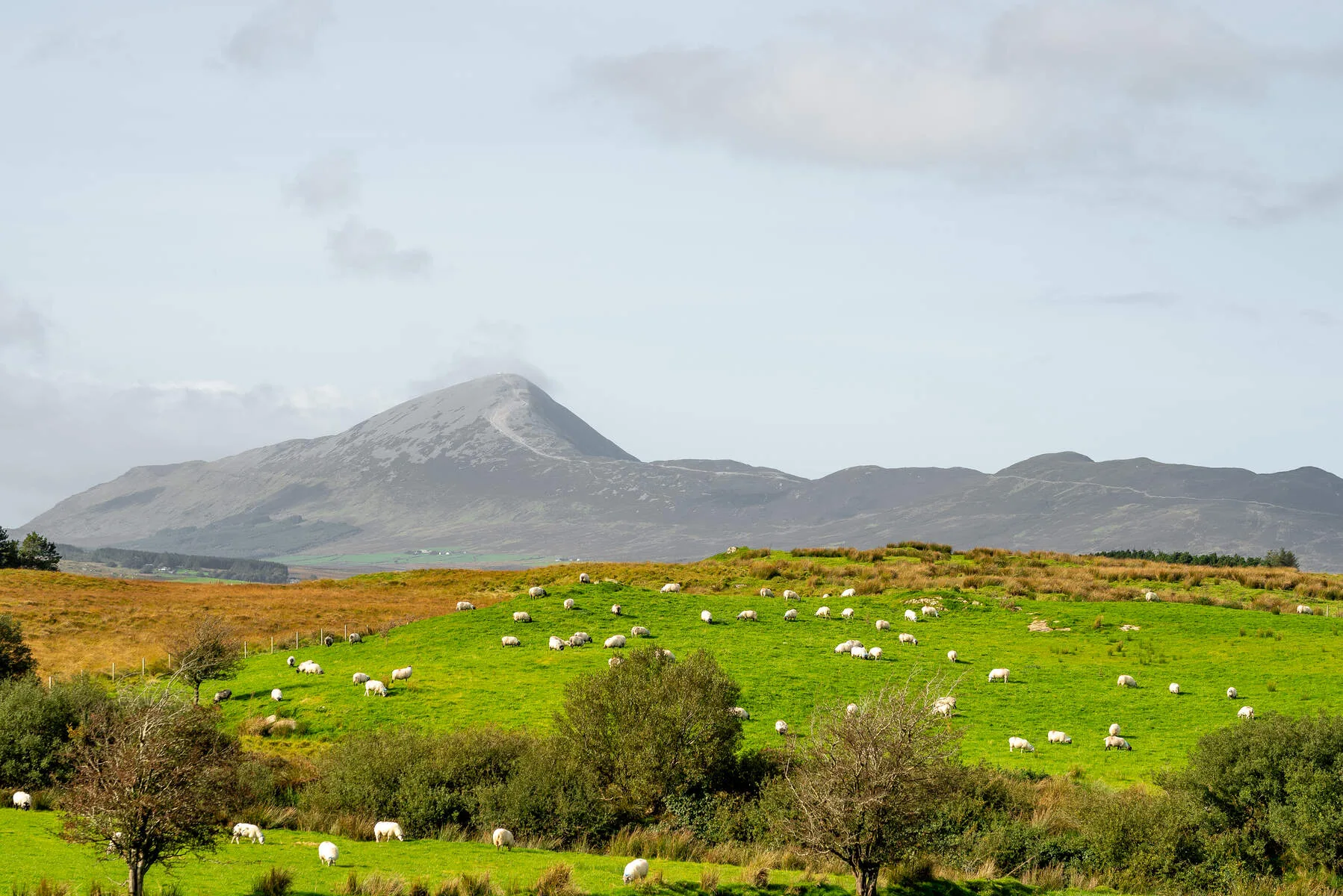
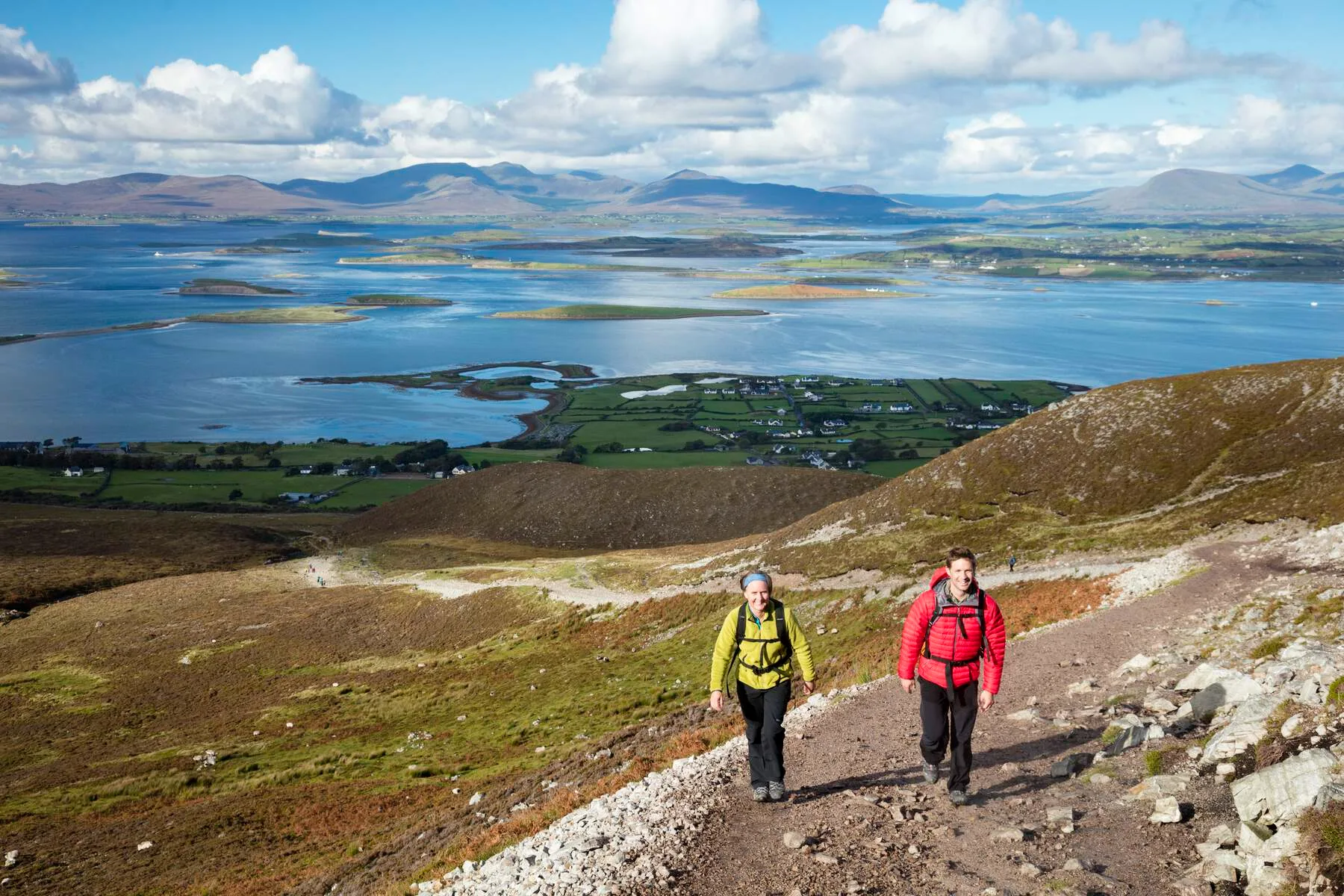
No guide to pilgrim paths in Ireland would be complete without Croagh Patrick. This holy mountain rises 764 metres above Clew Bay in County Mayo and has one of the most recognisable profiles in Ireland. Saint Patrick is said to have fasted on the summit for 40 days, and the Croagh Patrick pilgrimage has been an annual tradition for centuries.
The ascent is a 7 km return walk with 764 metres of elevation gain over rocky terrain. Allow 4 to 6 hours depending on your pace and fitness. The upper section crosses loose scree, which is demanding in wet conditions, so good hiking boots are essential.
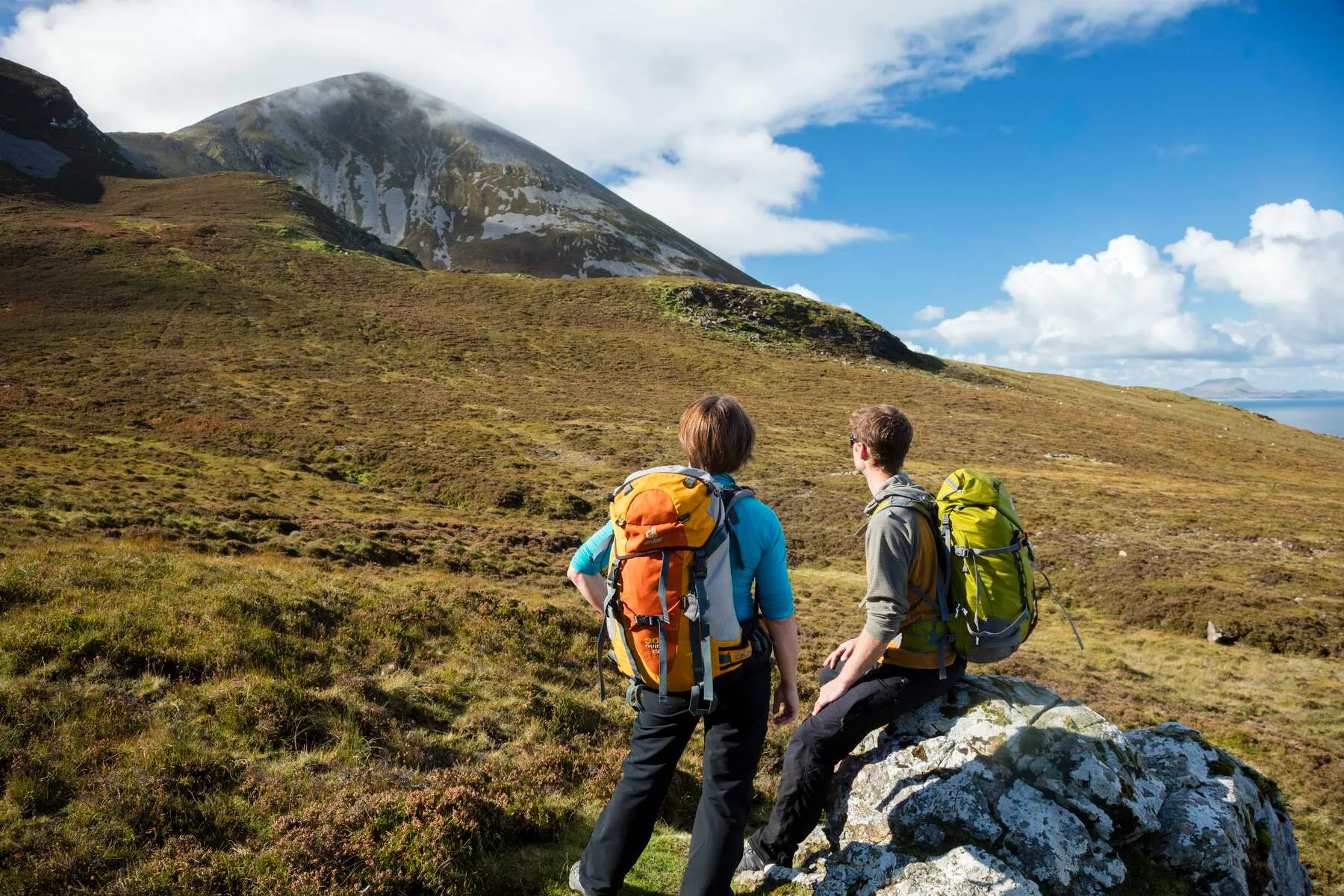
Reek Sunday — the last Sunday in July — is the traditional pilgrimage day. Thousands of walkers, some barefoot, climb the mountain together. It's a powerful communal experience. But if you want the mountain to yourself and a more reflective atmosphere, May, June, or September are the months to come. The village of Murrisk at the base has accommodation, food, and parking. A small chapel stands on the summit — it remains an active place of worship, so dress and behave respectfully.
Tochar Phádraig — Walking in Saint Patrick's Footsteps
Less well-known than Croagh Patrick itself, the Tochar Phádraig is the ancient pilgrim path to the mountain. This 23 km route connects Ballintubber Abbey — a monastery founded in 1216 that has been in continuous use ever since — to the base of Croagh Patrick.
Local historians and communities reconstructed the route in recent decades, following historical records as closely as possible. Walking it means retracing the steps that medieval pilgrims took on their way to the holy mountain. The trail combines countryside walking, quiet roads, and increasingly dramatic scenery as Croagh Patrick's cone comes into view on the horizon. You can complete Tochar Phádraig in one long day or split it across two with an overnight stop. This is one of the finest examples of Ireland's sacred trails — an ancient route reclaimed as a meaningful, sustainable walking experience. Walking it the day before climbing Croagh Patrick gives you a two-day pilgrimage that covers both the journey and the destination.
St Finbarr's Way — Cork to the Mountains
This 44 km modern pilgrimage trail follows Saint Finbarr's journey from Cork city to Gougane Barra — a remote mountain lake in County Cork where the saint established a monastery around 600 AD. Most walkers complete the route over 2 to 3 days, covering 15 to 22 km per day.
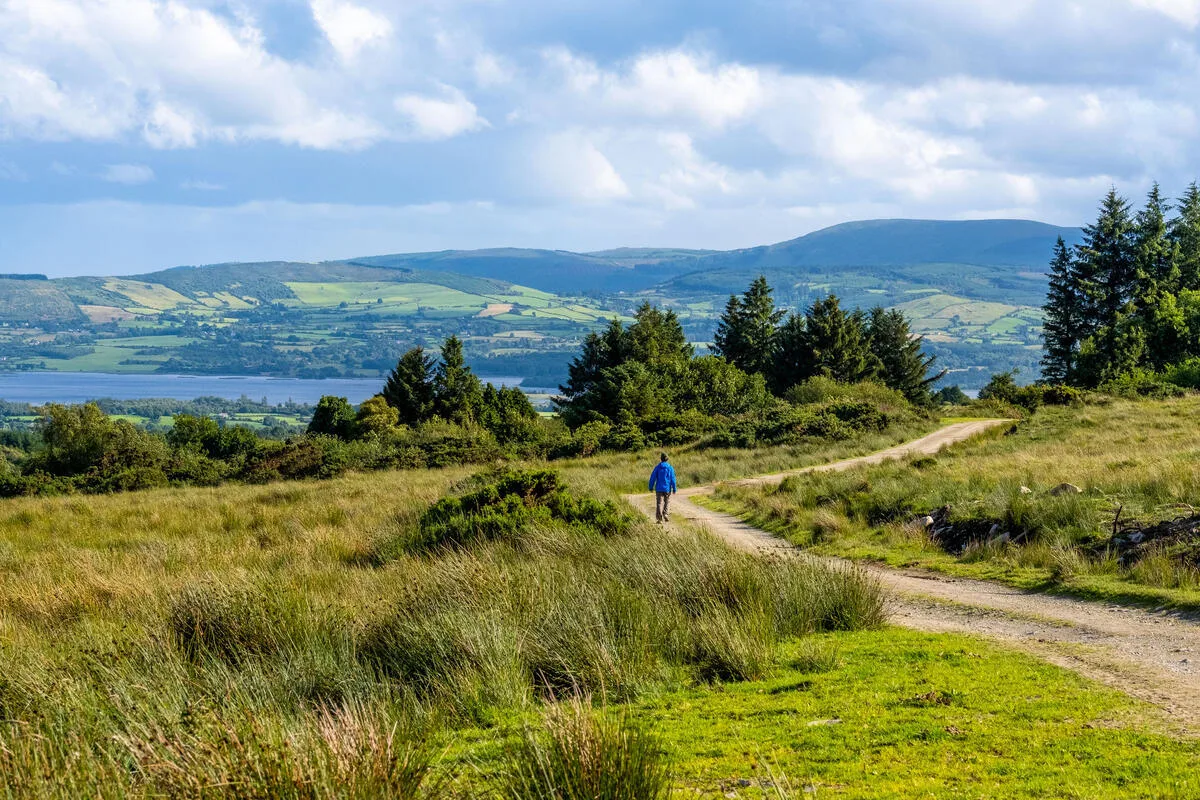
The trail begins in Cork city and climbs toward mountain terrain, the scenery shifting from suburban paths and quiet roads to woodland, mountain streams, and open hillside. The destination, Gougane Barra, is extraordinary — a small oratory sits on an island in a mirror-still lake, surrounded on three sides by mountains. Pilgrims have been coming here for fifteen centuries. Autumn is the finest season for this walk. The golden light on the mountains around Gougane Barra in September and October is something I've never been able to describe properly — you just have to see it.
Connemara, County Galway" loading="lazy" />
Slí Cholmcille — Following Saint Columba
At 97 km over 6 to 7 days, the Slí Cholmcille is the most substantial pilgrimage in ireland for walkers. The route honours Saint Columba, the Irish monk who established monasteries across Ireland and Scotland and remains one of the defining figures of Celtic Christianity.
The trail runs through the Inishowen Peninsula in County Donegal — some of the wildest and most remote landscape in Ireland — passing the Grianan of Aileach, an ancient stone fortress with views across Donegal and the border counties. Daily distances of 14 to 17 km make this manageable for walkers with reasonable fitness, and the route's spiritual and natural qualities make it one of the most rewarding multi-day walks in the country.
We offer self-guided walking holidays on routes like the Slí Cholmcille with accommodation booked, luggage transferred, and route notes provided. You walk each day with just a daypack, arriving at your guesthouse to find your bags already waiting.
Lough Derg — Ireland's Most Demanding Pilgrimage
The lough derg pilgrimage in County Donegal is something different entirely. This is not a walking tour. The traditional pilgrimage is a three-day fast on Station Island in a remote lake — dry bread and black tea only, minimal sleep, and continuous prayer rituals from arrival to departure. Thousands of pilgrims undertake it each year during the June to August season.
It is, by any measure, a challenging and deeply moving experience. Booking is required well in advance. If you're drawn to Lough Derg but not ready for the full pilgrimage, the shoreline walks offer a quieter alternative — time beside the lake for reflection without the demanding spiritual rigours of Station Island.
More Sacred Sites and Paths
Ireland has sacred sites ireland scattered across every county. A few more deserve mention.
Cnoc na dTobar in County Kerry — the Hill of the Wells — is a short but meaningful walk. The 5 km return with 247 metres of ascent takes 2 to 3 hours. The summit wells, the small chapel, and the views across the Kerry countryside make this a place that invites you to slow down.
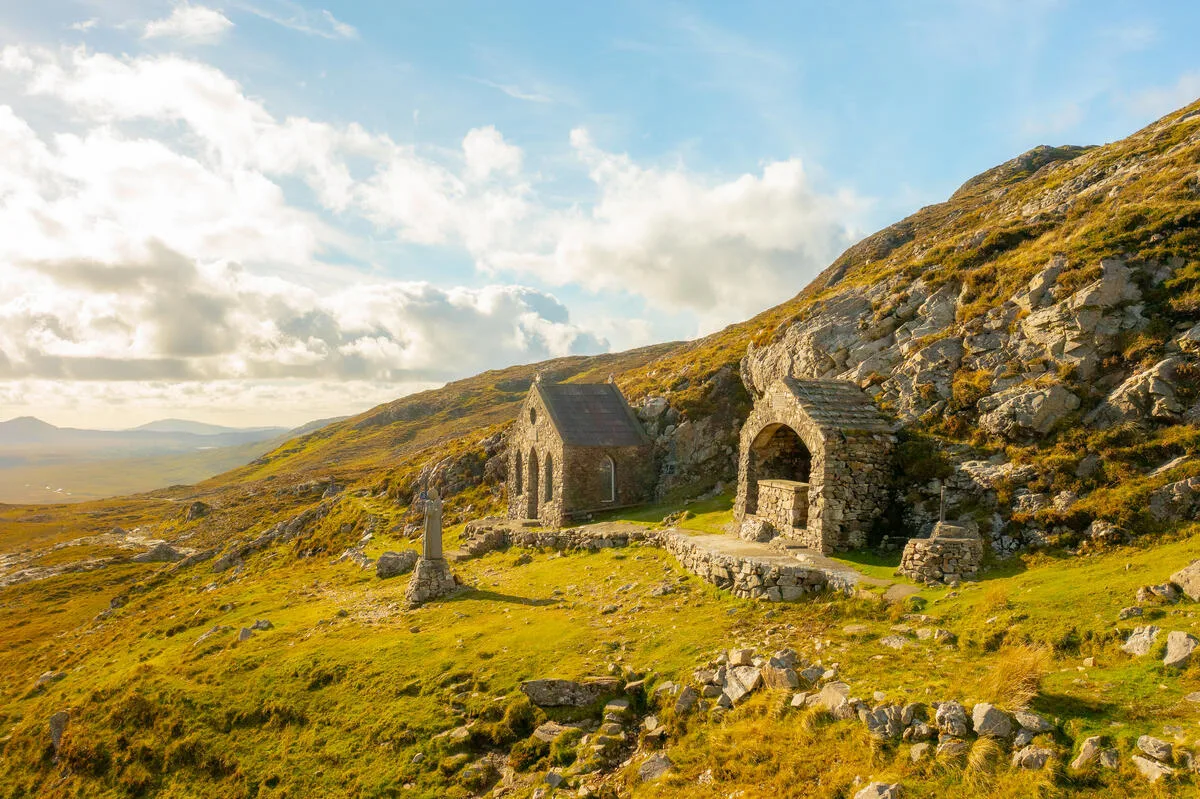
Maumeen in Connemara is a mountain pass with a small chapel and holy well, traditionally associated with Saint Patrick. The walk to the pass crosses wild bogland with views over the Connemara mountains. It's one of the quietest sacred sites in the west.
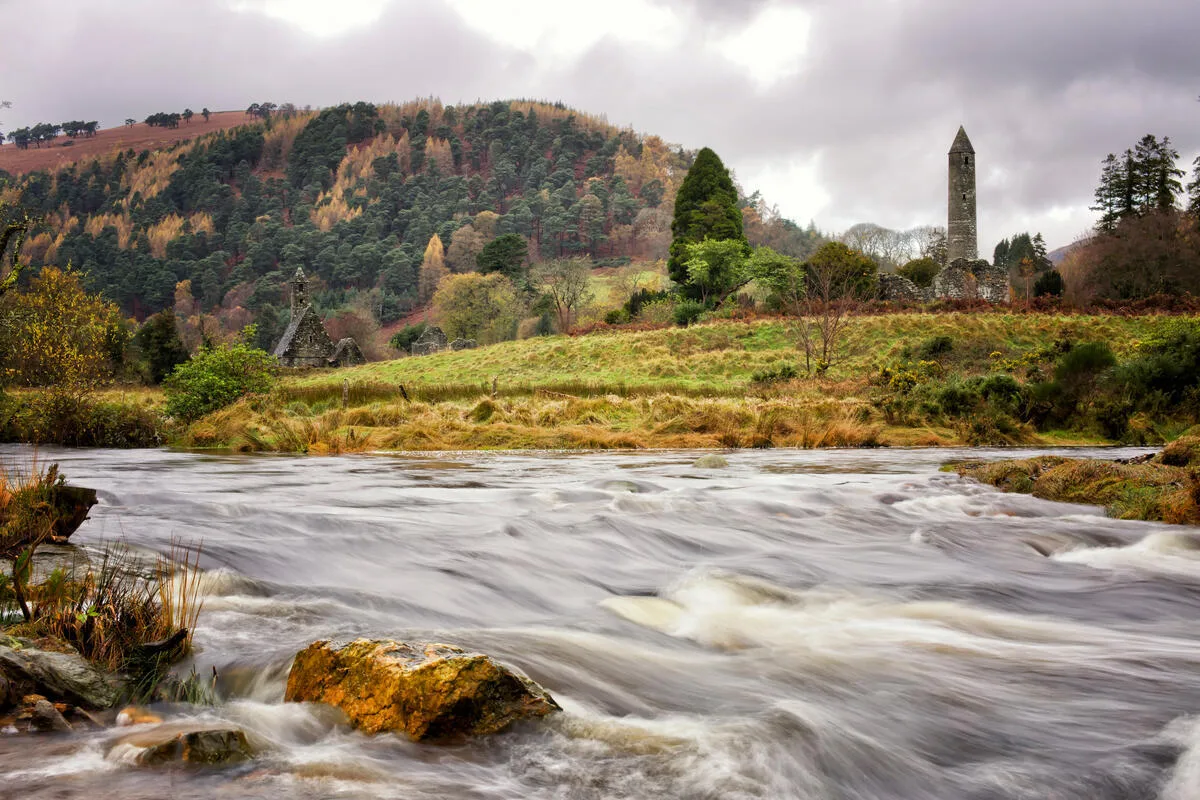
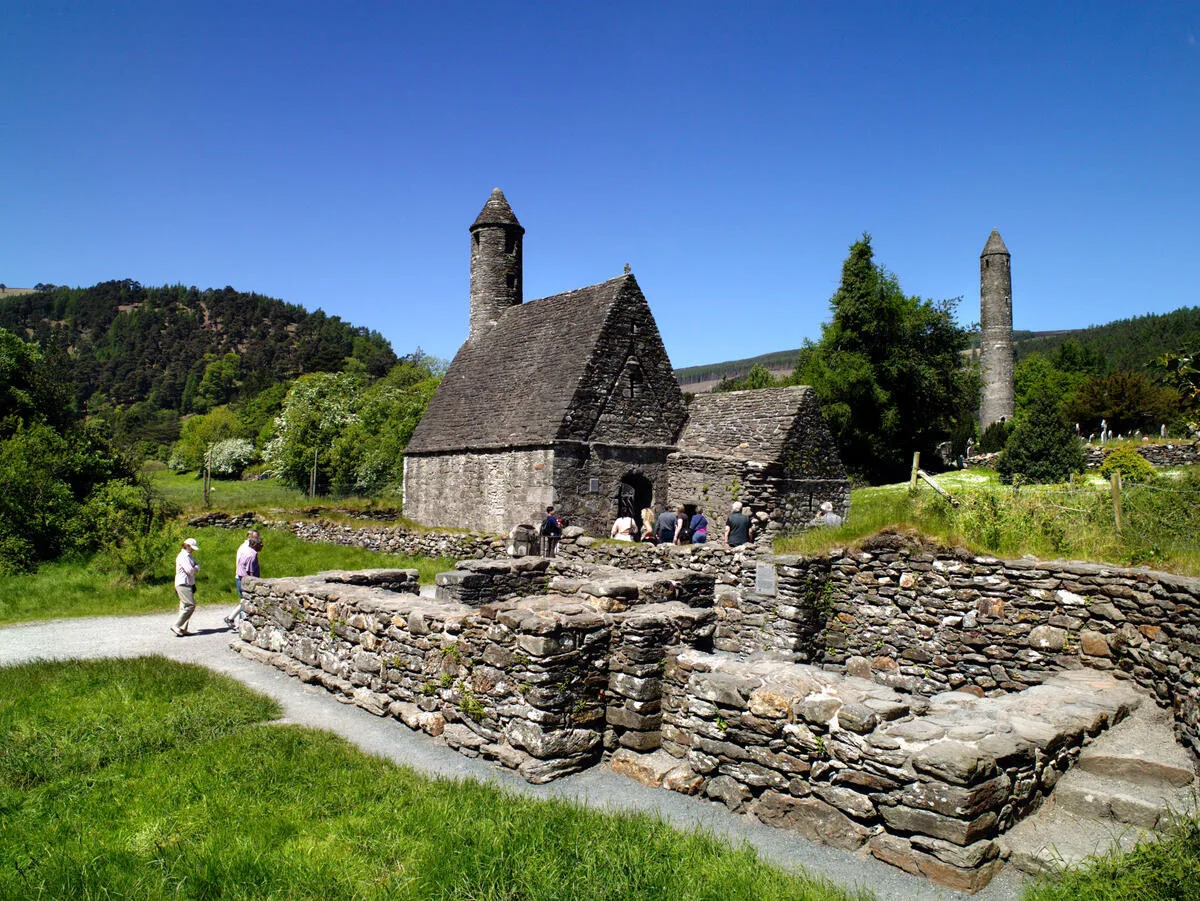
Glendalough in the Wicklow Mountains is perhaps Ireland's most visited monastic site. Saint Kevin founded his monastery here in the 6th century, and the round tower, stone churches, and lakes between the mountains create an atmosphere that fourteen centuries haven't changed.
Planning Your Pilgrim Walk
Most walkers combine a pilgrimage route with other walking during their trip. You could complete St Finbarr's Way over 2 to 3 days, then walk in Kerry or Cork for the rest of the week. Or head to Mayo for Tochar Phádraig and Croagh Patrick, then continue north for the Slí Cholmcille.
The best time to visit Ireland for pilgrim walking is May to October. The Irish weather can change fast on exposed mountain routes, so pack layers and waterproofs regardless of season. Our packing list covers everything you need, and our tour grading helps you find routes that match your fitness.
Pilgrim walks are ideally suited for self-guided walking holidays with luggage transfers. Your bags travel between accommodations each day while you walk with just a daypack. For walkers who want local knowledge and company, our guided walking holidays pair you with guides who know the paths and the stories behind them.
Most of these sacred sites remain in active religious use. Dress modestly, keep noise low, and show respect for ongoing devotional practices. Pilgrim walks are not about speed — move slowly, pause at significant sites, and allow time for reflection. Physical preparation is still important. Most pilgrim paths involve 15 to 20 km of daily walking, and routes like Croagh Patrick and the Slí Cholmcille include mountain terrain. Start training with regular local walks several months before your trip, gradually increasing your distance.
Walk Ireland's Sacred Trails
Ireland's pilgrim paths offer something hard to find in modern travel — a pace that lets you arrive somewhere in every sense of the word. These routes have been carrying people through transformation for fifteen hundred years. Croagh Patrick's summit, the ancient path of Tochar Phádraig, St Finbarr's mountain lake, Columba's trail through Donegal, and Lough Derg's demanding fast — together they make Ireland one of the finest places in Europe for pilgrimage walking.
Get in touch with Walking Holiday Ireland and we'll help you find the right path. Whether you're looking for a day on Croagh Patrick or a week on the Slí Cholmcille, we'll plan a trip that does justice to these ancient routes.
Frequently Asked Questions
What are the main pilgrim paths in Ireland?
Ireland's main pilgrim paths include Croagh Patrick in County Mayo, Tochar Phádraig (the ancient route to Croagh Patrick), St Finbarr's Way from Cork to Gougane Barra, the Slí Cholmcille through Donegal, Lough Derg in Donegal, and Cnoc na dTobar in County Kerry. These routes range from short day walks to multi-day treks of up to 97 km.
How hard is the Croagh Patrick pilgrimage?
Croagh Patrick is a demanding climb. The 7 km return walk gains 764 metres of elevation over rocky terrain, with loose scree on the upper slopes. Allow 4 to 6 hours for the round trip. Good hiking boots, waterproofs, and reasonable fitness are needed. The traditional Reek Sunday pilgrimage on the last Sunday in July draws thousands of walkers.
Can I walk Ireland's pilgrim paths as a non-religious person?
Yes. Many walkers undertake Ireland's pilgrim paths for cultural interest, wellness, or simply for a meaningful walking experience. The routes pass through beautiful landscapes with deep history. However, many sites remain in active religious use, so respectful behaviour and modest dress are expected at sacred sites.
What is the best time of year for pilgrim walking in Ireland?
May to October is the best season for pilgrim walking in Ireland. May and June offer long daylight hours and wildflowers. September and October bring quieter trails and golden autumn light, which is particularly beautiful at Gougane Barra on St Finbarr's Way. Reek Sunday falls on the last Sunday in July.
When to Walk: Seasonal Guide
Spring (March–May): Lengthening days, gorse blazing on hillsides, and the pilgrimage season opens. Croagh Patrick in April or May has dry scree and no crowds. St Kevin's Way through the Wicklow Mountains is at its most vivid. Skellig Michael boats begin in May — early visits are the most atmospheric, with puffins arriving in late April.
Summer (June–August): Long days, warmest temperatures, maximum crowds. Reek Sunday — the last Sunday in July — sees up to 30,000 pilgrims ascend Croagh Patrick in a single day. Skellig Michael access is most competitive; book months ahead. Extended daylight (nearly 17 hours around the solstice) compensates for variable weather.
Autumn (September–November): The finest pilgrimage season for experienced walkers. Crowds drop by 80%, autumn light transforms the landscape, and settled September weather windows are common. Gougane Barra's woodland turns in October — the oratory reflected in the lake on a misty morning is unforgettable. Skellig boats run until late October.
Winter (December–February): Short days and genuine mountain hazards. Croagh Patrick's upper scree becomes treacherous when iced — winter ascents are for experienced mountain walkers only. Glendalough valley in winter has its own beauty: frost on oak woodland, ice on the lakes, the valley almost empty.
The Pilgrim Passport
The Irish pilgrim passport — modelled on the Compostela system of the Camino de Santiago — allows walkers to collect stamps at designated sites along Ireland's pilgrim paths. Completing a full route earns a certificate of completion. The passport is available from pilgrim path offices and tourism information centres. For walkers who have completed the Spanish Camino, the Irish pilgrim paths offer a direct connection: much of Irish monasticism spread through scholars who walked between Ireland and the continent in the 5th to 8th centuries, and the pilgrimage tradition here is in many ways older than the Camino as it now operates.
The pilgrim paths are a lovely way in, but Ireland's waymarked ways run much further. Our guide to hiking in Ireland sets out the main regions and long-distance routes, and when to walk each one.
Frequently Asked Questions
Are the trails well-marked?
What kind of boots should I wear?
What is the most popular route?
What are the most essential items to pack for a walking holiday in Ireland?
Photo Gallery