Walking Holiday Packing List: Everything You Need for a Hiking Tour
Backpacking Checklist: Everything You Need for a Walking Holiday
My name is Cliff, and I run Walking Holiday Ireland. After twenty years of helping people pack for walking holidays, I can tell you that getting your backpacking checklist right makes the difference between a comfortable trip and a miserable one. Pack too much and your shoulders pay the price. Pack too little and you'll be cold, wet, or wishing you'd brought blister plasters. This is the packing list I give to every guest—it covers everything you need for a multi-day walking holiday in Ireland, and it works for hiking trips anywhere in Northern Europe.
If you're walking with us on a self-guided walking holiday, we transfer your main bag between accommodations each day. That means you only carry a daypack on the trail, with your main luggage waiting for you at the next B&B. This backpacking checklist covers both bags — what goes in your daypack for the trail and what goes in your main bag for the evenings.
Footwear — The Most Important Item
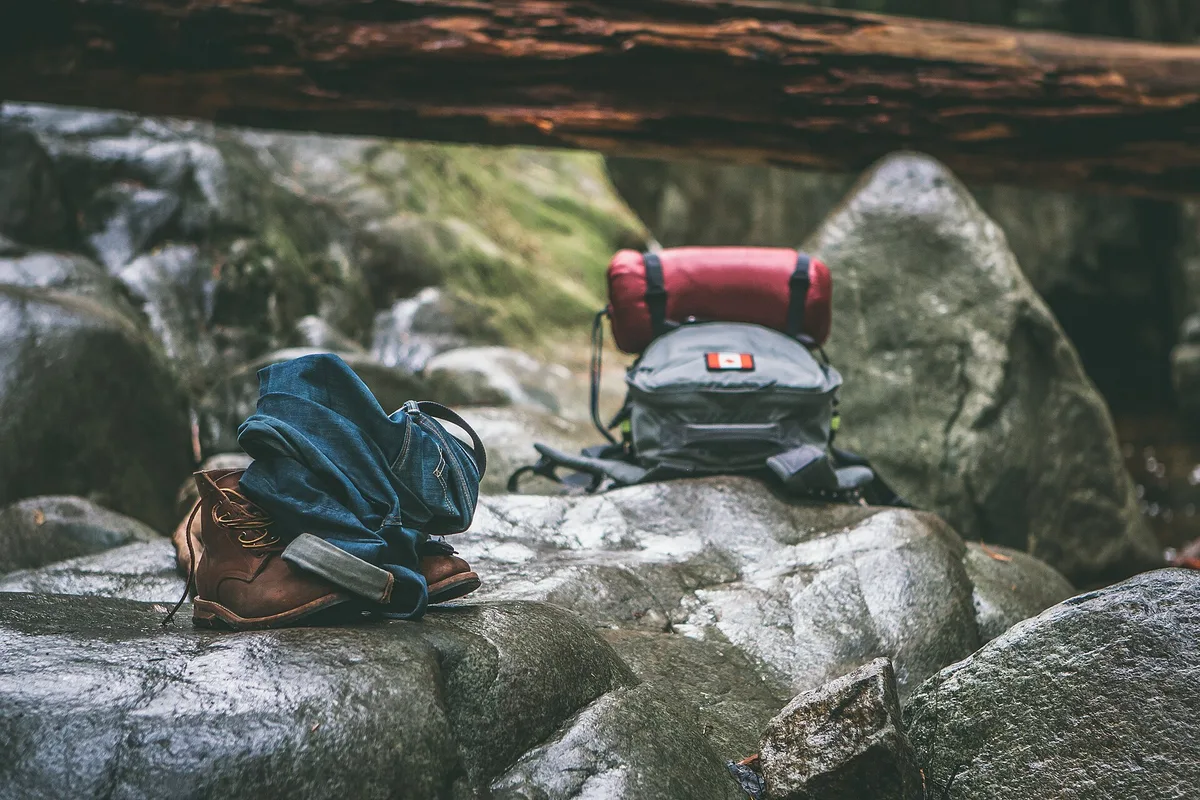
Your boots are the single most important item on any backpacking gear list. For walking holidays in Ireland, you need ankle-supporting walking boots with a waterproof membrane and a sole with proper grip. The ground is often wet—mud, bog, and rain-slicked rock are standard on Irish trails.
Break your boots in before your trip. Wear them around town for at least two weeks. New boots cause blisters, and blisters ruin walks. If your boots are already well broken in, you're ahead of the game.
Our guide to choosing the right hiking boots covers what to look for in detail.
Pack two to three pairs of merino wool hiking socks. Merino wicks moisture, cushions your feet, and fights blisters far better than cotton. Carry a spare pair in your daypack — changing into dry socks at lunch transforms the second half of your day. Lightweight evening shoes or sandals for your accommodation complete the footwear.
Waterproofs — Non-Negotiable in Ireland
A breathable waterproof jacket is the second most important item on this walking holiday packing list. Not a light rain shell, but a proper hillwalking jacket with sealed seams, a good hood, and breathable fabric. You will use it – Irish weather can change in minutes, and even summer walks often include a shower.
Waterproof trousers are worth carrying for mountain walks and in shoulder season. They pack small and weigh little but make a big difference when the rain comes sideways on an exposed ridge.
Clothing Layers
The layering system is the foundation of comfortable hiking, and these backpacking essentials belong on every packing list.
A base layer sits against your skin and wicks sweat. Merino wool or synthetic material works — never cotton, which holds moisture and chills you when you stop. Pack two base-layer tops: one for the trail and one clean for the evening.
A mid-layer provides warmth. A fleece jacket or a lightweight insulated layer works well. On warmer days you might not wear it while walking, but you'll want it at viewpoints and lunch stops where the wind bites.
Your waterproof jacket is the outer shell, blocking wind and rain.
Pack a warm hat and lightweight gloves for mountain walks, even in summer. Temperatures at altitude can be ten degrees cooler than the valley floor. A buff or neck gaiter is one of the most versatile backpacking essentials — use it as a scarf, a hat, or sun protection.
For evenings: one pair of comfortable trousers, a couple of shirts, and a warm jumper. Most B&Bs in Ireland are relaxed — nobody dresses up for dinner after a day's walking.
Backpack — What to Pack for Backpacking
For a walking holiday with luggage transfer, a daypack of 20 to 30 litres is ideal. It's big enough for your waterproofs, spare layer, food, water, and first-aid kit but small enough to stay comfortable all day. Look for a pack with a hip belt to take weight off your shoulders. A built-in rain cover is useful — if your pack doesn't have one, buy a separate waterproof cover.
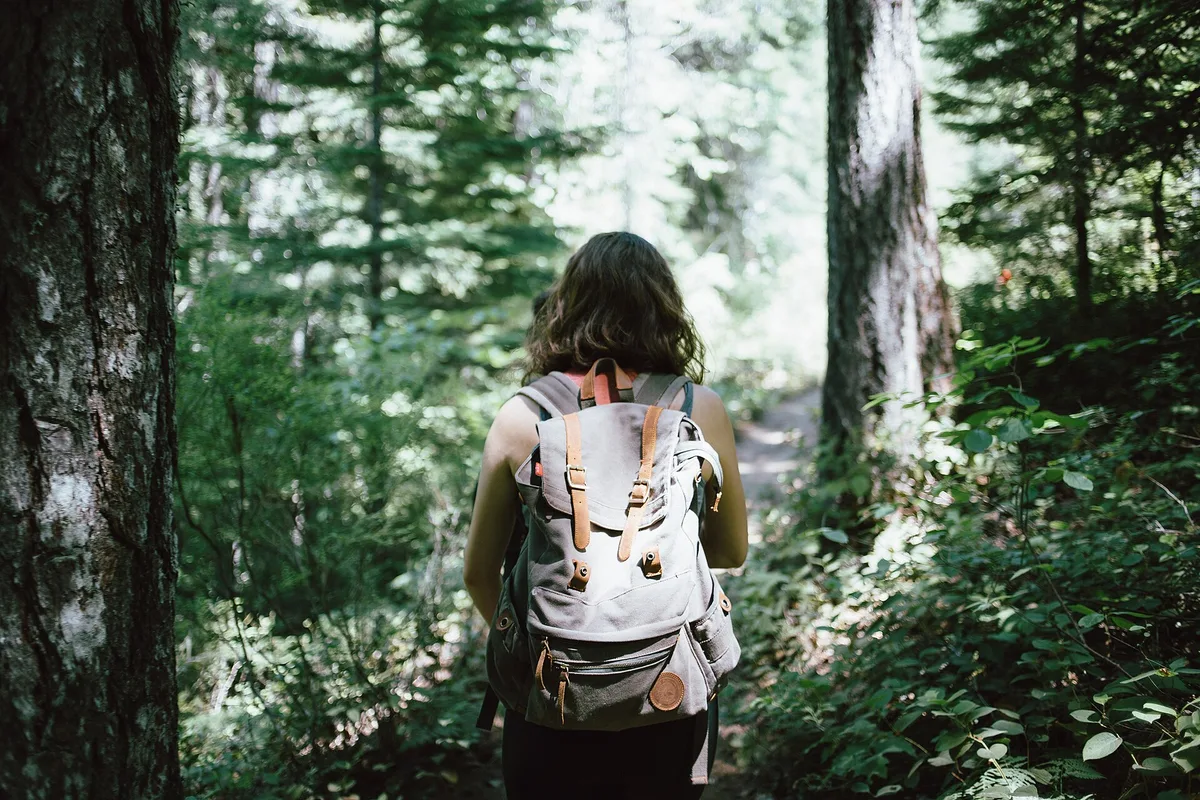
Your main bag — the one that travels between accommodations — can be a soft travel bag, a duffel, or a suitcase. It doesn't need to be a hiking backpack because you won't be carrying it on the trail. Keep it under 15 kg for luggage transfer.
Food and Water
Carry at least one litre of water for a day walk and more in warm weather or on longer routes. Dehydration causes fatigue, headaches, and poor decisions — all things you want to avoid on the trail. A reusable water bottle is better for the environment and the most practical choice.
For trail food: a sandwich or wrap for lunch, plus energy bars, nuts, dried fruit, and chocolate for snacking through the day. Eating small amounts regularly keeps your energy steady. A flask of hot tea or coffee earns its weight on a cold, wet day.
Most B&Bs along Irish walking trails serve a full breakfast that sets you up for the day, and many will prepare a packed lunch if you ask.
Navigation
A map of the area you're walking — Ordnance Survey Ireland at a 1:50,000 scale is the standard. Keep it in a waterproof map case. A compass is worth carrying on mountain walks, especially above the tree line, where mist can drop visibility by a few meters.
Your phone is a useful backup. Download offline maps before you set off. Carry a portable battery pack — phone batteries drain faster in cold weather and when GPS is running. But don't rely on your phone as your only navigation tool.
On our walking holidays, we provide a digital smartphone app with your itinerary and GPX walking maps describing every turn and landmark. Combined with the waymarks on the trail, navigation is straightforward.
Safety and First Aid
A basic first aid kit belongs on every backpacking essentials list. Pack blister plasters, adhesive bandages, antiseptic wipes, painkillers, and any personal medication. Zinc oxide tape is useful for hot spots before they become blisters.
A fully charged phone with emergency numbers. In Ireland, call 112 or 999 for emergencies. A whistle — six blasts in a minute — is the international distress signal. Most packs have a built-in whistle on the chest strap.
Sunscreen and sunglasses — Irish summer sun can burn, particularly at altitude and near water. A small tube of SPF 30+ and lightweight sunglasses weigh almost nothing.
Optional Extras
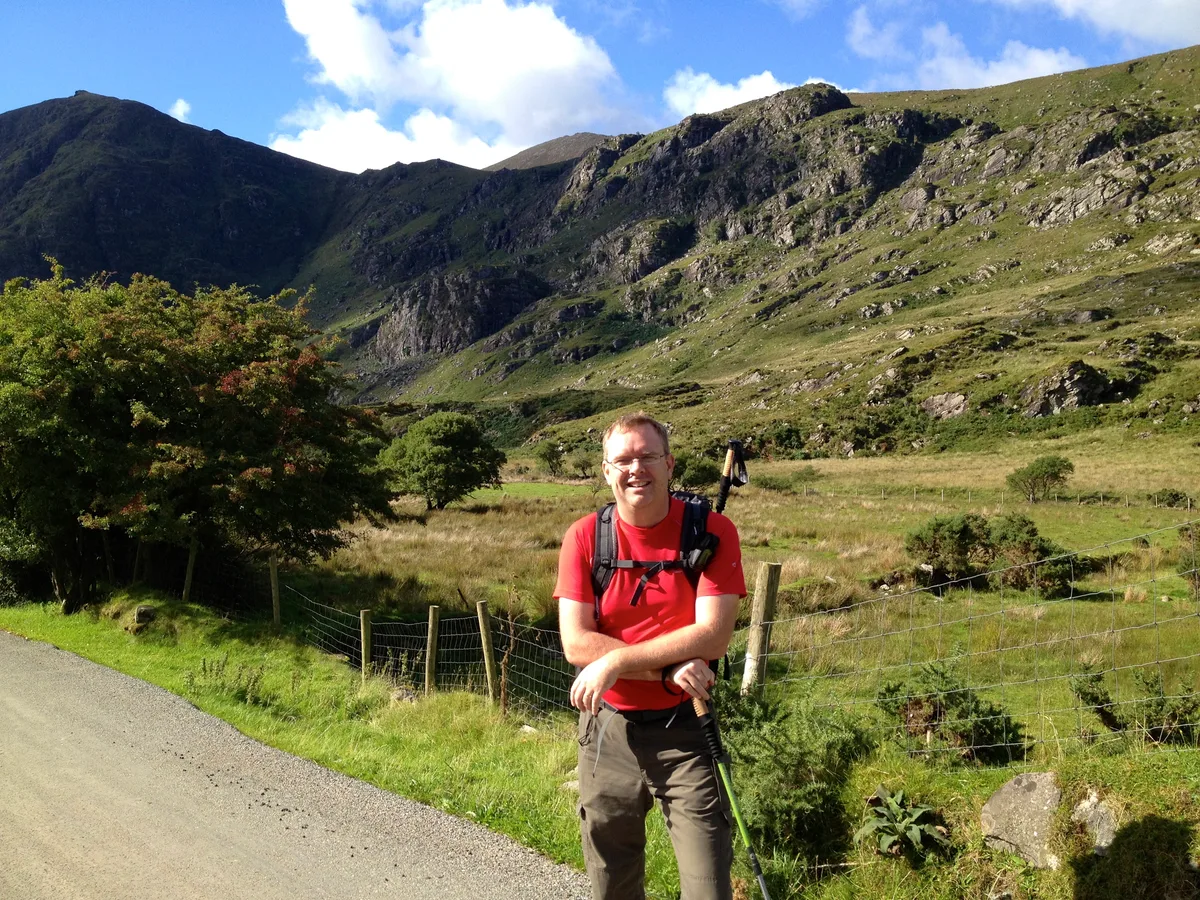
Walking poles take pressure off your knees on descents and add stability on uneven ground. Telescopic poles pack down small for travel and are especially useful on longer walks.
Gaiters keep mud, water, and stones out of your boots. Not needed on well-surfaced paths, but valuable on mountain trails after rain.
A headtorch – useful if you're walking in shoulder season when daylight hours are shorter, or as an emergency backup. LED headtorches weigh almost nothing and last for hours.
A sit mat—a small square of closed-cell foam— gives you a dry seat anywhere. Light enough to forget it's there, useful every time you stop.
What NOT to Pack (And Why)
Every year we meet walkers carrying things that make the week harder than it needs to be. These are the ones we see most often.
Heavy denim jeans. They soak up rain, take two days to dry in an Irish guesthouse, and chafe badly once wet. Nothing on a walking holiday punishes you faster.
Cotton t-shirts. Same problem in a lighter form — cotton holds sweat against your skin and chills you the moment you stop for lunch on an exposed headland. Merino or synthetic every time.
A second and third pair of shoes. Your boots and one pair of light trainers or sandals for the evening is genuinely all you need. Footwear is the heaviest thing per unit of usefulness in any bag.
A big heavy fleece. Two thin layers beat one thick one — they pack smaller, dry faster, and let you fine-tune as the day warms up.
Printed guidebooks and paper maps you will not open. We send route notes and a GPS app, and every guesthouse owner on the trail knows the way better than any book. Carry the one map for your day, not the whole shelf.
The general rule: if you are not sure you will use it, you will not use it. Take it out.
Your Complete Backpacking Checklist
Here is the whole thing in one table — this is what to pack for a walking holiday in Ireland, category by category.
| Category | Item | Qty | Notes |
|---|---|---|---|
| Footwear | Walking boots, broken in | 1 | Ankle support and a waterproof membrane. Never new. |
| Footwear | Walking socks | 3-4 | Merino or synthetic. One clean pair per walking day if you can. |
| Footwear | Evening shoes | 1 | Light trainers or sandals. Your feet will thank you at dinner. |
| Waterproofs | Waterproof jacket | 1 | Taped seams and a hood that stays up in wind. Non-negotiable. |
| Waterproofs | Waterproof overtrousers | 1 | Full-length side zips so you can pull them on over boots. |
| Waterproofs | Rucksack cover or dry bags | 1 | Assume the rain gets in eventually. |
| Clothing | Base layers | 2-3 | Merino wool. Warm when damp, and it does not smell after three days. |
| Clothing | Mid layer (thin fleece or light down) | 1-2 | Two thin beats one thick. |
| Clothing | Walking trousers | 2 | Quick-dry. No denim. |
| Clothing | Hat, gloves, buff | 1 each | Even in July on the Brandon shoulder or the Mournes. |
| Clothing | Evening clothes | 1 set | Ireland is informal — a clean shirt is plenty. |
| Daypack | Daypack, 20-30 litres | 1 | The big bag goes ahead by luggage transfer. This is all you carry. |
| Food & water | Water bottle or bladder | 1-1.5 L | Tap water everywhere is safe and good. |
| Safety | Small first aid kit with blister plasters | 1 | Compeed or similar. Treat a hot spot before it becomes a blister. |
| Navigation | Phone, power bank, charging cable | 1 each | The GPS app drains a battery over a long day. |
| Extras | Sun cream and sunglasses | 1 each | Not a joke. Wind and cloud-glare burn people every summer. |
Here's your complete backpacking packing list for a walking holiday. Daypack items: a waterproof jacket and trousers, a warm mid-layer, a hat and gloves for mountains, a water bottle (1L minimum), lunch and trail snacks, a map in a waterproof case, a compass for mountain routes, a phone with offline maps and a battery pack, a first aid kit, sunscreen and sunglasses, spare socks, and a whistle. Optional: walking poles, gaiters, headtorch, sit mat, and hot drink flask.
Main bag items: two to three base layer tops, one to two pairs of walking trousers, evening clothes, spare hiking socks, lightweight evening shoes, toiletries, a phone charger, any medication, and a book for the evenings.
That covers everything. Every item on this list earns its place, and nothing is there to weigh you down.
Five Questions We Get Asked About What to Pack
Do I need trekking poles? Not essential, but a lot of walkers swear by them on the long descents — the drop off the Brandon shoulder into Cloghane, or coming down off the Wicklow hills. They take real load off the knees. If you have never used them, borrow a pair and try a day out at home first. If you are flying, remember poles cannot go in cabin baggage.
Can I wash clothes along the way? Yes. Nearly every B&B and guesthouse we use will either run a load for you or let you use a sink and a radiator. Merino base layers wash in a basin and dry overnight, which is exactly why we keep recommending them. This is why three of something is usually enough for a week.
How much water should I carry? One to one and a half litres per walking day for most people, more in warm weather. Irish tap water is safe and good, so fill up at breakfast and top up at any pub or cafe you pass. You do not need purification tablets and you do not need to carry three litres — that is two extra kilos on your back for no reason.
If my main bag is transferred, what is actually in my daypack? Waterproofs, water, lunch, a warm layer, phone and power bank, first aid kit, sun cream, and your route notes. That is it. Your big bag leaves the guesthouse after breakfast and is waiting in your room at the next one before you arrive — we explain the whole system in how luggage transfer works.
Should I bring my own boots or rent? Bring your own, always. Boots need to be broken in on your own feet, and rented boots are the single most reliable way to ruin a walking week. If you need new ones, buy them at least a month before you travel and put fifty kilometres through them on local walks first.
Packing for a Walking Holiday with Us
If you're joining us for a self-guided walking holiday, packing is simpler than you might expect. We transfer your main bag between accommodations each day, so you carry only your daypack on the trail. That means you can bring comfortable evening clothes and everything you need without hauling it over the mountains.
Our tour grading helps you choose a route that matches your fitness. Check the best time to visit Ireland for walking, gather your backpacking essentials, and you'll be ready. Whether you prefer a guided or self-guided experience, the Kerry Way, Wicklow Way, Dingle Way, or Beara Way are all waiting. Pack the list, bring the boots, and let Ireland do the rest.
Continue planning your walking holiday
Each link below is a deep-dive on one item from the packing list:
- Waterproof Hiking Boots for Ireland
- Layering for Hiking
- Summer Hiking Clothes for Ireland
- Winter Hiking Clothing Ireland
- Best Hiking Snacks for Irish Trails
- Best Handheld GPS for Hiking
- Foot Care for Hikers
- Power Adapters for Ireland
Trusted resources
Official sources we recommend checking before you travel:
- Met Éireann — Check the forecast the night before and the morning of every walking day.
- Leave No Trace Ireland — The seven principles every responsible walker on Irish trails should know.
- Mountaineering Ireland — The national body for hillwalking and climbing — safety guidance, events, clubs.
Frequently Asked Questions
Are trekking poles recommended?
What size daypack should I carry while walking?
What type of waterproofs do I need?
Are the trails well-marked?
Photo Gallery