Newgrange: A Walker's Guide to Ireland's Ancient Boyne Valley
Newgrange: A Walker's Guide to Ireland's Ancient Boyne Valley
My name is Cliff, and I run Walking Holiday Ireland. Newgrange is one of those places that changes how you think about Ireland — and one of the greatest monuments in the Boyne Valley. A massive stone passage tomb, older than the Egyptian pyramids, sitting in green farmland above the River Boyne in County Meath. It was built around 3200 BC by Stone Age farmers, and on the winter solstice, a beam of sunlight still reaches through a narrow opening to light up the chamber inside. Five thousand years later, it still works. That alone makes Newgrange one of the most remarkable places in Europe.
But Newgrange is only part of the story. It sits within Brú na Bóinne — the Boyne Valley complex — alongside two other great passage tombs at Knowth and Dowth, plus dozens of smaller monuments scattered across the valley. This is a UNESCO World Heritage Site and one of the most important archaeological landscapes in the world. For walkers, the Boyne Valley offers gentle riverside trails through countryside that's been farmed since the Neolithic period. Here's everything you need to know about visiting.
What Makes Newgrange and the Boyne Valley Special
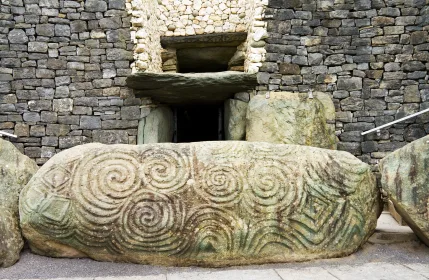
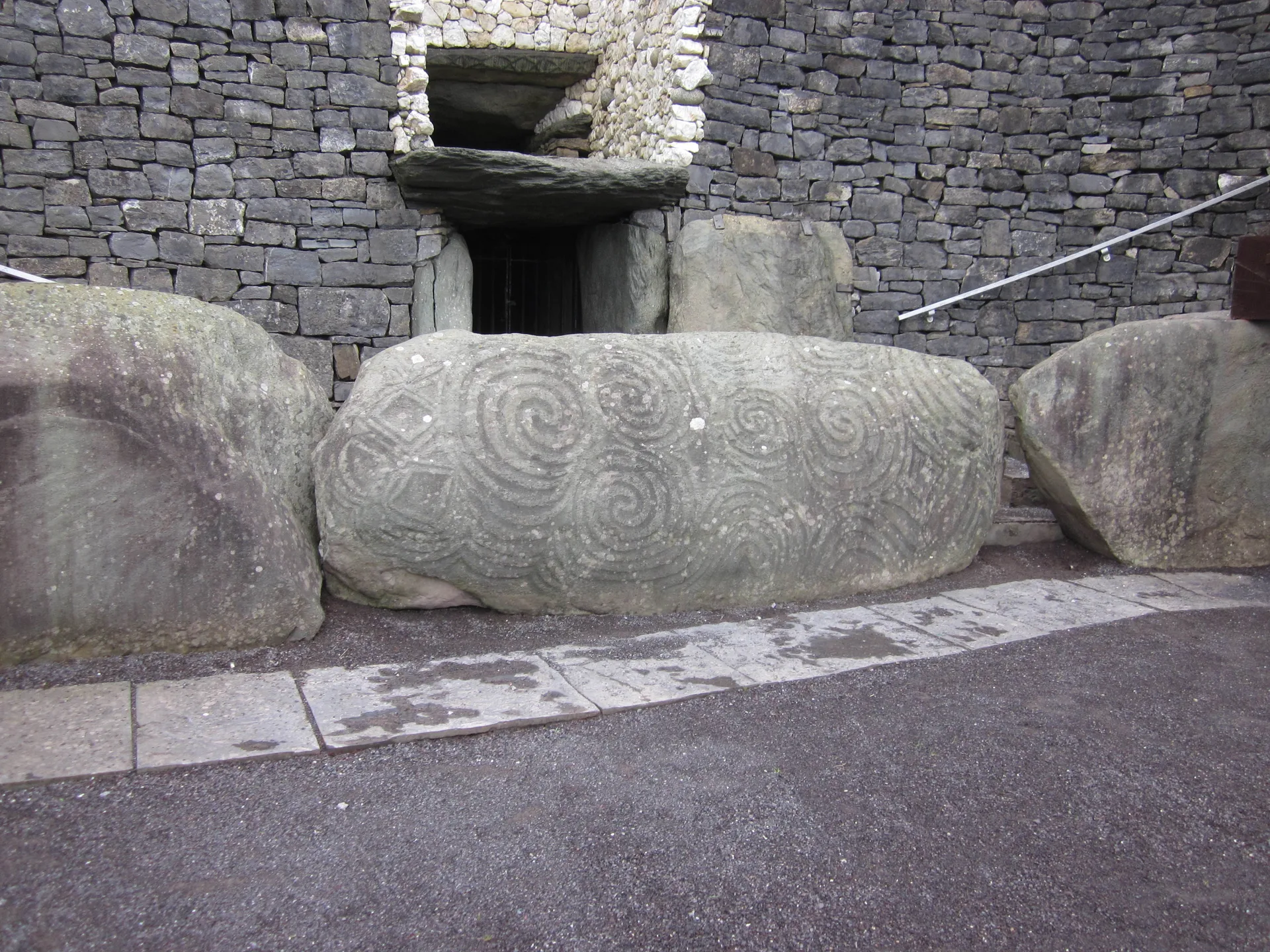
Newgrange is a passage tomb — a large mound of earth and stone covering a chamber reached by a stone-lined passage. The mound is about 85 metres across and 13 metres high, ringed by 97 kerbstones, many carved with spiral and geometric patterns. The entrance stone, with its triple spiral design, is one of the most famous pieces of megalithic art in the world.
The Newgrange passage runs 19 metres into the heart of the mound, ending in a cruciform chamber with a corbelled roof that has stayed waterproof for over 5,000 years. The engineering is extraordinary. The builders moved an estimated 200,000 tonnes of material — earth, stone, and quartz — to create this monument, using nothing but human labour and simple tools.
But the most famous feature at Newgrange is the roof box above the entrance. On the mornings around the Newgrange winter solstice — December 21st — a shaft of sunlight enters through this narrow opening and travels the full length of the passage, flooding the inner chamber with light for about 17 minutes. This alignment was designed and built into the structure 5,200 years ago. The builders knew exactly what they were doing.
The Newgrange winter solstice event is observed each year, but places in the chamber are decided by lottery — tens of thousands of people apply each year for just a handful of spots. Even without being inside, visiting Newgrange in December and understanding that this alignment was calculated by people five millennia ago is humbling.
Knowth and Dowth: Newgrange's Neighbours
Newgrange gets the most attention, but Knowth and Dowth deserve your time too.
Knowth sits about a kilometre from Newgrange and is actually the largest of the three main mounds at Brú na Bóinne. It has two passage tombs inside — an eastern and a western passage — and the mound is surrounded by 17 smaller satellite tombs. Knowth has the largest collection of megalithic art in Western Europe. The carved kerbstones here are remarkable — spirals, crescents, serpentine lines, and patterns that nobody has fully decoded.
Knowth is accessible through the Brú na Bóinne Visitor Centre, and you can walk around the exterior of the mound and see the carved stones up close. The satellite tombs surrounding the main mound add to the sense of a complex, planned landscape.
Dowth is the quietest of the three and the one most walkers miss. Unlike Newgrange and Knowth, you can visit Dowth independently — just walk across the field from the road. The mound is overgrown and atmospheric, and it has its own passage aligned to the winter solstice sunset, complementing Newgrange's sunrise alignment. Standing at Dowth without another visitor in sight, looking across the Boyne Valley, you feel the age of this place.
Visiting Brú na Bóinne: Newgrange Tours and Practicalities
All visits to Newgrange and Knowth start at the Brú na Bóinne Visitor Centre, which sits on the south bank of the River Boyne near Donore in County Meath. You cannot drive directly to the tombs — shuttle buses take you from the visitor centre across the river to the monuments.
Newgrange tours and Knowth tours run as guided visits with timed entry. At Newgrange, you walk along the passage into the chamber itself, where the guide demonstrates the Newgrange winter solstice effect with electric light. At Knowth, you walk around the exterior and explore the satellite tombs. Both tours take about an hour.
Booking in advance is strongly recommended, especially from May to September. The visitor centre has an excellent exhibition on the history, archaeology, and mythology of the Boyne Valley, and it's worth spending time there before or after your tour.
The centre is open year-round, though hours vary by season. Newgrange tours typically cost around €8 for adults, with combined tickets for Newgrange and Knowth available. Check the best time to visit Ireland for planning your trip around the seasons.
Walking in the Boyne Valley
The Boyne Valley is gentle walking country — river meadows, farmland, and quiet lanes through one of the richest historical landscapes in Ireland.
The Boyne Towpath walk follows the River Boyne from Trim to Navan, about 20 km through open countryside. You can walk shorter sections — the stretch from Trim to Bective Abbey is about 8 km and passes the ruins of a 12th-century Cistercian monastery. The path is flat and easy, following the old canal towpath alongside the river.
The Battle of the Boyne site at Oldbridge, about 5 km east of the visitor centre, has marked walking trails through the battlefield where William of Orange defeated James II in 1690. The trails are about 4 km in total and pass through mature parkland with views over the river. It's a beautiful spot with deep history.
The Hill of Tara, about 20 km west of Newgrange in the Boyne Valley, is the ancient seat of the High Kings of Ireland. A walk around the hilltop monuments takes about an hour and gives you panoramic views across the Meath plains — on a clear day, you can see the hills of every surrounding county. Tara and Newgrange together give you a picture of how important this part of Ireland was for thousands of years.
Wear good hiking boots for any of these walks — the riverside paths can be muddy after rain. Our packing list covers everything you need for walking in Ireland.
The Wider Boyne Valley
The Boyne Valley stretches well beyond the passage tombs, and there's enough here to fill several days of walking and exploring.
Trim Castle is the largest Anglo-Norman castle in Ireland. Built in the 12th century, it stands above the River Boyne in Trim town, in the wider Boyne Valley region, and was used as a filming location for Braveheart. You can tour the interior and walk the grounds. Trim itself is a pleasant town with good pubs and accommodation, and it makes a good base for exploring the valley.
Loughcrew Cairns, about 50 km northwest of Newgrange in County Meath, are another set of passage tombs on hilltops worth exploring. These are less visited than Newgrange but equally atmospheric. The walk to the summit cairn on Slieve na Calliagh takes about 20 minutes, and the views are spectacular. Inside the cairn, carved stones dating back 5,500 years line the passage.
Slane, on the River Boyne between Newgrange and the coast, is a pretty estate village with a castle and the Hill of Slane, where St Patrick is said to have lit the first paschal fire in Ireland. The hill gives fine views over the Boyne Valley and is a short walk from the village.
Planning Your Visit
Newgrange is about 50 km north of Dublin — roughly an hour's drive. The Brú na Bóinne Visitor Centre is well signposted from the M1 motorway. Public transport is limited, so a car is the best option for exploring the wider Boyne Valley.
For walkers coming from Dublin, Newgrange and the Boyne Valley combine well with a trip to the Wicklow Mountains or Dublin walking trails. You could spend a day at Newgrange and the Boyne Valley, then head south for mountain walking in Wicklow — the contrast between ancient heritage and wild landscape is one of the great experiences of eastern Ireland.
The Irish weather in the Boyne Valley is milder and drier than the west coast, making it walkable year-round. Spring and autumn are particularly good — quieter than summer and with beautiful light over the river valley.
We offer self-guided walking holidays that can include the Boyne Valley as part of a wider itinerary. We book your accommodation, transfer your bags, and provide route notes. For walkers who want deeper insight into the history and archaeology, our guided walking holidays pair you with local guides who bring the Boyne Valley's stories to life. Check our tour grading to find the right level for you.
Frequently Asked Questions
How old is Newgrange?
Newgrange was built around 3200 BC, making it over 5,000 years old. It predates the Egyptian pyramids by several centuries and is one of the oldest known structures in the world. The precision of its construction — particularly the winter solstice alignment — shows that the people who built it were skilled mathematicians and astronomers.
Can you go inside Newgrange?
Yes, you can visit the interior of Newgrange on a guided tour. All visits are managed through the Bru na Boinne Visitor Centre near Donore in County Meath. Tours are timed and run throughout the day. You walk along the passage into the chamber, and the guide demonstrates the winter solstice light effect using electric lighting. Booking in advance is strongly recommended, especially during peak season from May to September.
How do you see the winter solstice at Newgrange?
On the mornings around December 21st, a beam of sunlight enters the roof box above the entrance and travels down the passage to illuminate the inner chamber for about 17 minutes. Attendance is decided by lottery — tens of thousands of people apply each year for just a handful of spots inside the chamber. Even if you're not selected, visiting in winter to understand this alignment is a profound experience.
What is the difference between Newgrange and Knowth?
Newgrange is famous for its interior access and the winter solstice alignment that lights the chamber. Knowth is the largest of the three main mounds at Bru na Boinne and contains two passage tombs (eastern and western). Knowth is surrounded by 17 satellite tombs and has the largest collection of megalithic art in Western Europe, including remarkable carved kerbstones with spirals and patterns. At Knowth, you walk around the exterior and explore the satellite tombs rather than entering the main passage.
How long do you need at Bru na Boinne?
Allow 3-4 hours for a full visit to Bru na Boinne. This includes time at the visitor centre exhibition (which covers the history, archaeology, and mythology of the Boyne Valley), plus guided tours to Newgrange and Knowth (each tour takes about an hour). If you're visiting just one monument, you can complete it in 2 hours. The visitor centre is open year-round, though hours vary by season.
Newgrange: Five Thousand Years of Light
Newgrange is more than a monument — it's proof that the people who lived in Ireland five thousand years ago were skilled builders, precise astronomers, and creative artists. The passage tomb, the winter solstice alignment, the carved spirals on the stones — they tell you something about the depth of human achievement in this small island.
Walking the Boyne Valley connects you to that story in a way that no museum can match. You walk the same riverbanks, look across the same fields, and stand inside a chamber that people built before writing existed. Knowth, Dowth, the Hill of Tara, Trim Castle, and the Boyne itself add layers of history that stretch from the Stone Age to the modern era.
Get in touch with Walking Holiday Ireland and we'll help you plan a trip that takes in Newgrange, Knowth, and the best of the Boyne Valley walking trails.
Frequently Asked Questions
Are the trails well-marked?
What kind of boots should I wear?
What is the most popular route?
What are the most essential items to pack for a walking holiday in Ireland?
Photo Gallery