Walking the Dingle Way: Your Complete Guide to Ireland's Most Beautiful Peninsula Walk
You will know, on your second morning walking the Dingle Way, that you have made a good decision. You leave Camp village after breakfast, climb gently up out of Tralee Bay, and the entire peninsula opens out in front of you — the spine of the Slieve Mish Mountains on one side, the curve of Inch Strand on the other, and the Atlantic doing whatever the Atlantic feels like doing that day. By lunchtime you are walking on a beach that goes on for five kilometres. By evening you are eating fish in Annascaul that was in the sea this morning. This is the Dingle Way.
Part of our complete guide to Ireland's National Waymarked Ways — a trail-by-trail rundown of every long-distance walk in Ireland.
The Dingle Way is a 162-kilometre waymarked walking trail that circles the Dingle Peninsula in County Kerry, starting and finishing in Tralee. It is, in our quietly partisan view, the most beautiful long-distance walk in Ireland. The peninsula is small enough to feel intimate — every village is on the route, every beach gets walked, every headland gets rounded — but the scenery is wildly varied. Beach, mountain, headland, ancient archaeology, and one of the last living Gaeltachts in the country.
The Walking Holiday Ireland team has walked the Dingle Way more times than is probably sensible. This guide is everything we want you to know before you go: what to expect, how the days break down, when to come, what to bring, and how to book the trip without it becoming a planning project of its own.
What Walking the Dingle Way Is Actually Like
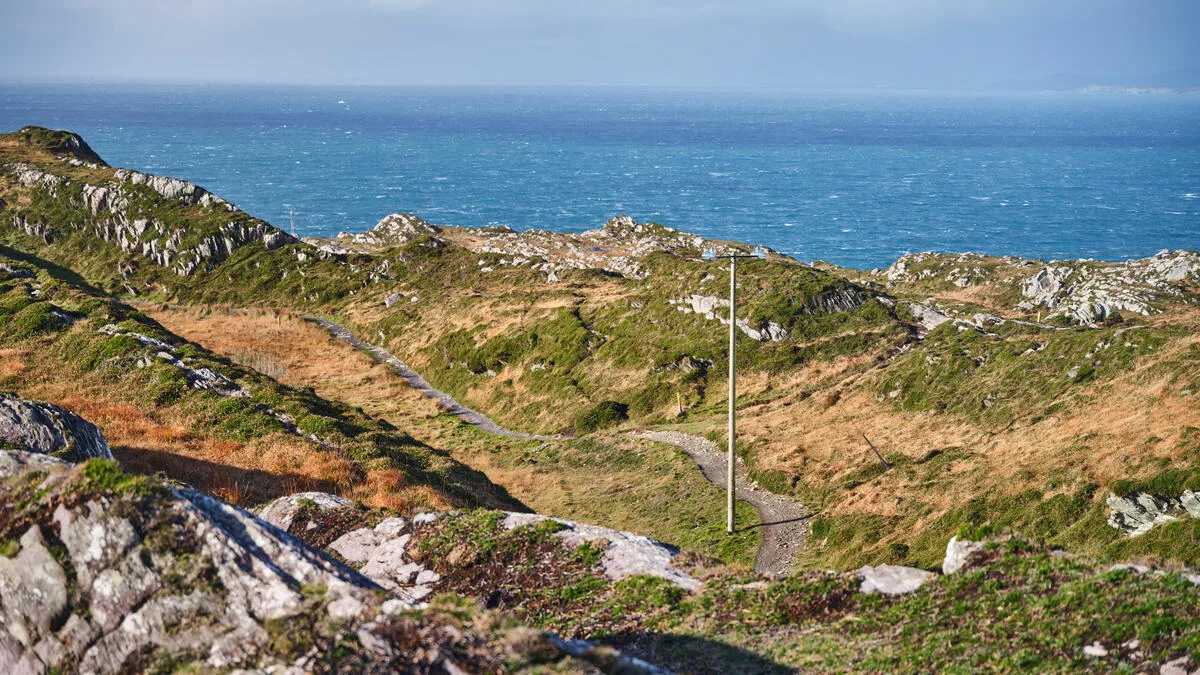
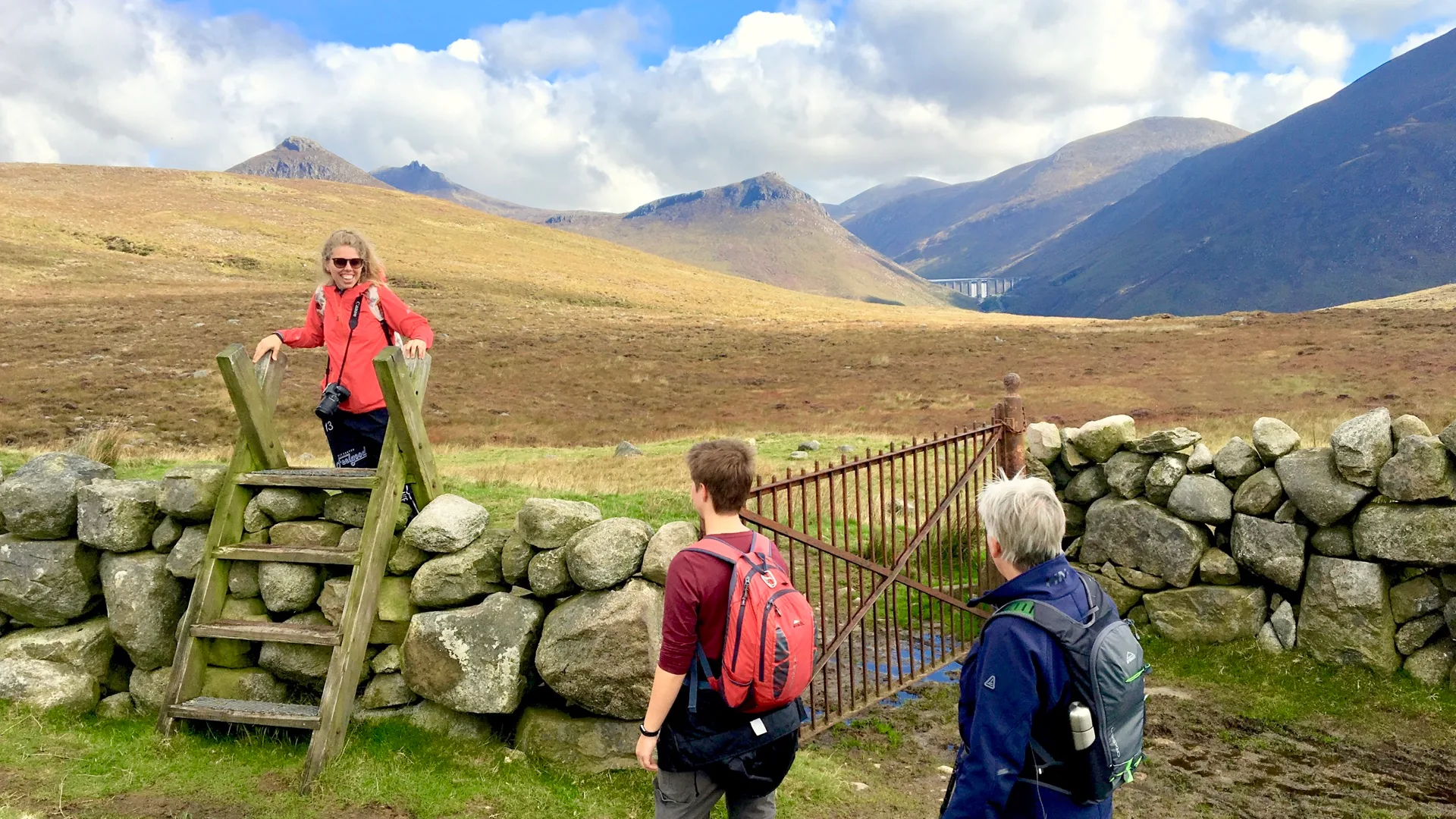
The Dingle Way is varied in a way that few long-distance trails are. Some mornings you are walking on hard golden sand with the tide out for a kilometre on your left. Other days you are climbing through bracken and gorse to a saddle on the shoulder of a mountain. In between you cross boggy moorland, country lanes lined with fuchsia, and farm tracks where the cattle stare at you with mild interest.
Underfoot you will encounter beach sand, hard farm track, soft peat, exposed rock, and the occasional stretch of quiet country road. Most of it is forgiving — there is no scrambling and very little exposure — but the high section over the Maharees Saddle on the north side of the peninsula deserves respect, particularly in poor weather. Waterproof boots and a proper jacket are essential. So is a willingness to keep walking when a cloud rolls in off the Atlantic; that's part of the deal.
Daily distances on most itineraries fall between 16 and 22 kilometres, with modest elevation — typically 200 to 500 metres of climbing per day. The Dingle Way is more forgiving than the Wicklow Way or the Kerry Way in this respect. Walkers who do not do much long-distance walking at home usually find it manageable, especially if they have built up to a couple of six-hour walks in the months before they come.
The WHI Dingle Way Walking Tour: Day by Day
Our flagship 8-day self-guided Dingle Way itinerary covers the full 122 kilometres of the trail's most rewarding sections, with sensible daily distances and the right villages overnight. Here is how it breaks down.
Day 1: Arrival in Tralee
You arrive into Tralee — easily reached by train from Dublin in about four hours, or by car. We have you settled into your first night's accommodation, ready for a good dinner and an early night. The Dingle Way begins on your doorstep tomorrow morning.
Day 2: Tralee to Camp (17 km)
The trail starts by climbing gently out of Tralee onto the slopes of the Slieve Mish Mountains. By mid-morning you are walking a contouring track with the whole of Tralee Bay below you. You drop down to the village of Camp in time for an afternoon pint in Junior's Bar, one of the most welcoming pubs on the peninsula.
Day 3: Camp to Annascaul (18 km)
A classic Dingle day. Down to Inch Strand — the five-kilometre golden beach made famous by the film Ryan's Daughter — and along the dunes. The trail then crosses inland to the village of Annascaul, home to the South Pole Inn (the pub kept by Antarctic explorer Tom Crean) and one of the best evening meals on the trail.
Day 4: Annascaul to Dingle (22 km)
The longest day, but a brilliant one. You walk over the gentle Garrane River valley, past medieval churches and forts, and finally drop down into Dingle town. Dingle is the heart of the peninsula — a working fishing port with about thirty pubs, traditional music sessions every night, and views straight out into the bay where Fungi the dolphin used to live.
Day 5: Dingle to Dunquin (17 km)
One of the most spectacular days on any Irish trail. You walk south-west out of Dingle, climb gently over Mount Eagle's lower slopes, and round the corner at Slea Head — the most westerly point of mainland Europe (excepting Iceland). Out to sea sit the Blasket Islands, abandoned since 1953. You finish in Dunquin, the tiny village that produced the writers Peig Sayers and Tomás Ó Criomhthain.
Day 6: Dunquin to Feohanagh (15 km)
Today the trail crosses the north-west tip of the peninsula. You walk past the famous beehive huts at Gallarus, ancient stone oratories, and the great curve of Smerwick Harbour. Feohanagh is a quiet, scattered settlement at the foot of Mount Brandon.
Day 7: Feohanagh to Cloghane (15 km)
The most demanding day in terms of altitude — you cross the shoulder of Mount Brandon, Ireland's second-highest peak, at about 650 metres. On a clear day the view is genuinely overwhelming: the whole peninsula behind you, the Maharees stretching ahead, and the Atlantic everywhere. Cloghane is a single street of pubs and B&Bs at the base of the mountain.
Day 8: Cloghane to Castlegregory (18 km) and onward
A gentle finale. The trail follows the long curve of Brandon Bay around to the village of Castlegregory and the long peninsula of the Maharees. After breakfast we arrange your transfer back to Tralee, or onward to Killarney, Dublin, or wherever you are going next.
If eight days is more than you want, our 5-day Dingle Way covers the most photogenic section between Tralee and Dingle town. For walkers who want to take the full 162km loop at an unhurried pace, our 10-day Dingle Way includes extra rest days in Dingle and Castlegregory.
Best Time to Walk the Dingle Way
The Dingle Way walks well from late March to mid-October. Each part of the season has its own character.
April and May: Hawthorn blossom along the boreens, sea pinks on the cliffs, and the freshest air of the year. Some mornings will still be cold and showery, but the light is beautiful and the trail is largely empty. Our personal favourite.
June, July, and August: The warmest weather, longest days, and the busiest time on the peninsula. Dingle town in August is genuinely lively. Book accommodation as far ahead as you can — popular B&Bs sell out months in advance. Midges can be a nuisance on still evenings, particularly near boggy ground.
September and early October: Often the most settled weather of the year — the Atlantic high tends to sit over Kerry into the first half of October. Quieter, with autumn light on the headlands. A wonderful time to come.
We do not recommend walking the Dingle Way in winter. Days are short, the Mount Brandon shoulder section can be dangerous in poor visibility, and many smaller B&Bs close from November to March.
How Hard Is the Dingle Way?
We rate the Dingle Way Moderate. Daily distances and elevation are gentler than the Wicklow or Kerry Ways, the trail is well waymarked throughout, and there is no technical difficulty. The challenge is the cumulative distance — six or seven days of walking, in conditions that can include Atlantic wind and rain.
Walkers who train in the months before they come — building up to a couple of six-hour walks — usually find the Dingle Way well within their ability. The Mount Brandon shoulder day (around 15 km but with the most climbing) is the one to pace carefully; everything else is gentler.
What to Pack
Less than you think, as long as what you bring works. Our short list:
Waterproof walking boots, well broken in. A proper waterproof jacket and trousers. Lightweight layers — a base layer, a fleece or warm mid-layer, a t-shirt or two. Wool walking socks, two pairs, plus blister plasters. A small daypack (25–30 litres). A water bottle. Sunblock and a sun hat — the Kerry coast in summer is surprisingly bright. A warm hat and light gloves for the Mount Brandon day, even in summer. Our complete packing guide goes into more detail.
Your main luggage moves between hotels each day with our luggage transfer service. You carry only your daypack — water, lunch, layers, and a camera.
Why Walk the Dingle Way With Us
You can absolutely organise the Dingle Way yourself. Plenty of people do. But the Dingle Peninsula is small enough that all the best B&Bs and guesthouses sell out months ahead in summer, the bus timetables are limited, and there is real value in someone else having sorted the logistics before you arrive.
Walking Holiday Ireland gives you handpicked accommodation along the route — friendly, walker-friendly places we have used for years. We move your luggage between hotels each day. We provide detailed route notes and maps so navigation is straightforward. We are on the phone if anything goes wrong. And we put together an itinerary with sensible daily distances and the right villages overnight.
The price covers all of that. You bring yourself to Tralee and we handle the rest.
Frequently Asked Questions
How long does it take to walk the entire Dingle Way?
Most walkers take eight to nine days to complete the full 162 km loop. Fitter walkers can do it in six or seven, though we usually recommend allowing more time so you can spend an evening in Dingle town and another in Castlegregory rather than rushing through.
Is the Dingle Way harder than the Wicklow Way?
No. The Dingle Way has gentler daily climbs and slightly shorter daily distances. The single exception is the Mount Brandon shoulder day, which involves more sustained climbing than anything on the Wicklow Way.
Can beginners walk the Dingle Way?
Yes, with a little preparation. We routinely send first-time long-distance walkers on the Dingle Way and almost all of them complete it without issue. Build up to a six-hour walk a few weeks before you come, and make sure your boots are broken in.
Do I need a guide?
No. The Dingle Way is waymarked throughout with yellow arrows and a walker symbol, and our route notes cover everything you need. We do not run guided walks on this trail — most of our walkers tell us they prefer the freedom of going at their own pace.
What is the best section of the Dingle Way?
Most walkers nominate the Slea Head day — Dingle to Dunquin — as the most spectacular. The Inch Strand section on day three runs it close. If you only have a few days, those two are the ones to walk.
What is the difference between the Dingle Way and the Kerry Way?
Both are extraordinary. The Dingle Way is shorter (162 km vs 214 km), gentler underfoot, and circles a single compact peninsula with a strong Gaeltacht culture and miles of beach. The Kerry Way is longer, more mountainous, and crosses a much larger landscape from Killarney south. We have written a full comparison for walkers trying to choose.
Ready to Walk the Dingle Way?
Have a look at our 8-day Dingle Way walking tour — our most popular itinerary, with everything organised for you. If you have less time, our 5-day Dingle Way covers the trail's most photogenic section. For walkers who want a proper unhurried trip, the 10-day Dingle Way adds rest days in the best villages.
For more detail on planning logistics and the full waymarked route, our complete Dingle Way trail guide covers navigation, sub-sections, and side trips. To get a feel for the most spectacular day on the trail, see our piece on walking the Saints' Road on the Dingle Peninsula. And if you are deciding between the two great Kerry trails, our Dingle Way vs Kerry Way comparison sets out the trade-offs.
If you have any questions, just get in touch. We are happy to talk anyone through which Dingle Way itinerary fits them best.