Who Was St Kevin of Glendalough? The Hermit Saint Who Founded a Monastic City
St Kevin of Glendalough: The Saint Who Made a Valley Sacred
If you walk the valley of Glendalough in the Wicklow Mountains, you're walking through a landscape shaped by one man's story. The history of St Kevin at Glendalough begins in the 6th century when he came to this valley looking for solitude, and what he built here became one of the most important monastic sites in Ireland. The round tower still stands, the stone churches still mark the valley floor, and the lakes he prayed beside are as still and dark as they were 1,400 years ago.
The story of St Kevin's Glendalough is the story of early Irish Christianity — monks choosing wild, beautiful places to live and pray, building communities that became centres of learning, and leaving behind ruins that draw walkers and visitors to this day. Glendalough is one of the best walks in the Wicklow Mountains, and understanding Kevin's story makes the walk richer.
St Kevin Glendalough History: The Early Years
Kevin — or Caoimhín in Irish, meaning "fair begotten" — was born around 498 AD, probably in Leinster. According to tradition, he was of royal blood and educated by monks from childhood. But Kevin wasn't interested in power or position. He wanted solitude and prayer, and he found both in the deep glacial valley of Glendalough — the Glen of the Two Lakes.
Kevin lived as a hermit in the valley for years, sleeping in a cave above the Upper Lake known as St Kevin's Bed Glendalough — a small hollow in the cliff face about 10 metres above the water. The stories say he wore animal skins, ate nettles and herbs, and spent his days in prayer. Birds nested in his hands. A blackbird laid eggs in his open palm, and Kevin held still until the chicks hatched. That image — the saint so gentle that birds trusted him completely — is one of the most enduring in Irish hagiography.
Over time, followers were drawn to Kevin's holiness. What began as one man's retreat became a community, then a monastery, then one of the great centres of learning among early Irish monasteries. Kevin is said to have lived to the age of 120 — almost certainly an exaggeration, but a sign of how revered he was. He died on June 3rd, around 618 AD, and St Kevin's feast day in Ireland is still celebrated on that date.
St Kevin is patron saint of the Dublin diocese, and his legacy extends far beyond Glendalough. But it's in the valley that you feel his presence most strongly.
The Glendalough Monastic Site
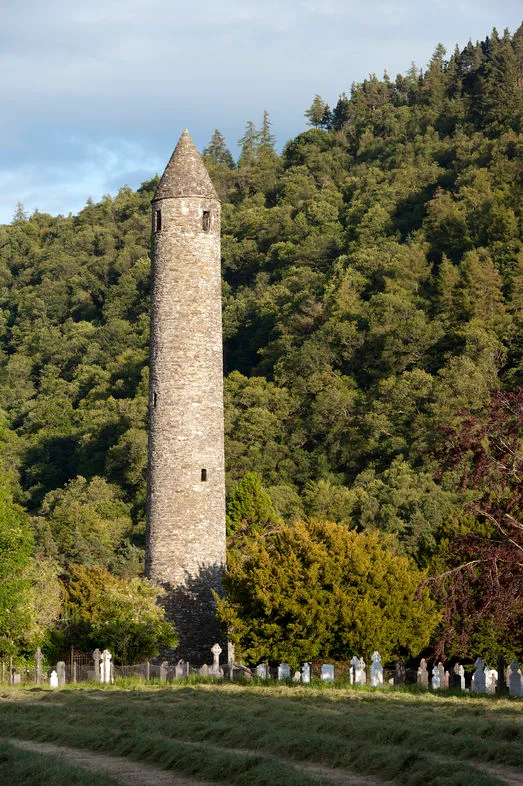
The Glendalough monastic site that Kevin founded grew into one of the largest and most influential monasteries in mediaeval Ireland. At its peak, the settlement included churches, a cathedral, scriptoriums, workshops, dwellings, and the iconic round tower that still dominates the valley.
The Round Tower is the most recognisable landmark. Standing about 33 metres tall, the Glendalough round tower history dates to the 10th or 11th century when it was built as a bell tower, lookout, and place of refuge during Viking raids. The doorway is set high above ground — monks would climb a ladder and pull it up behind them when raiders appeared. The tower is remarkably well preserved and visible from miles around.
The cathedral is the largest building on the site. Built in stages between the 10th and 12th centuries, it gives you a sense of how substantial the monastery had become — this was no small community of hermits but a major centre of religious and intellectual life.
St Kevin's Church — sometimes called St Kevin's Kitchen because of its small round tower that resembles a chimney — is a beautifully preserved stone building near the round tower. It dates from the 11th century and is one of the finest examples of early Irish church architecture.
The history of St Kevin at Glendalough stretches from his arrival in the 6th century through centuries of growth, Viking attacks, and eventual decline after the Norman invasion. The Glendalough monastic ruins remained after the monastery was finally dissolved in the 16th century, and people never stopped coming to the valley. Today, Glendalough draws over a million visitors a year.
Walking Glendalough
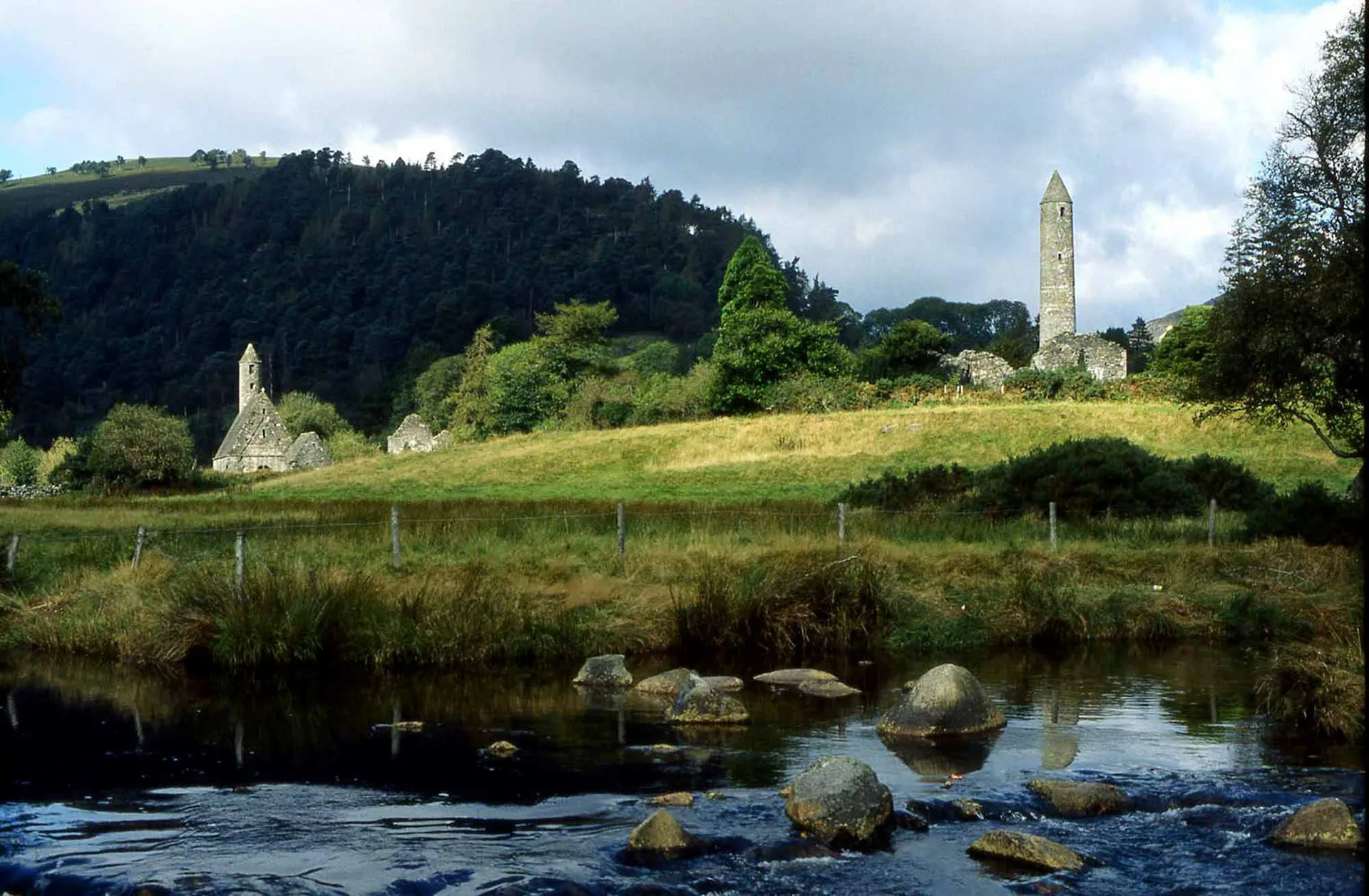
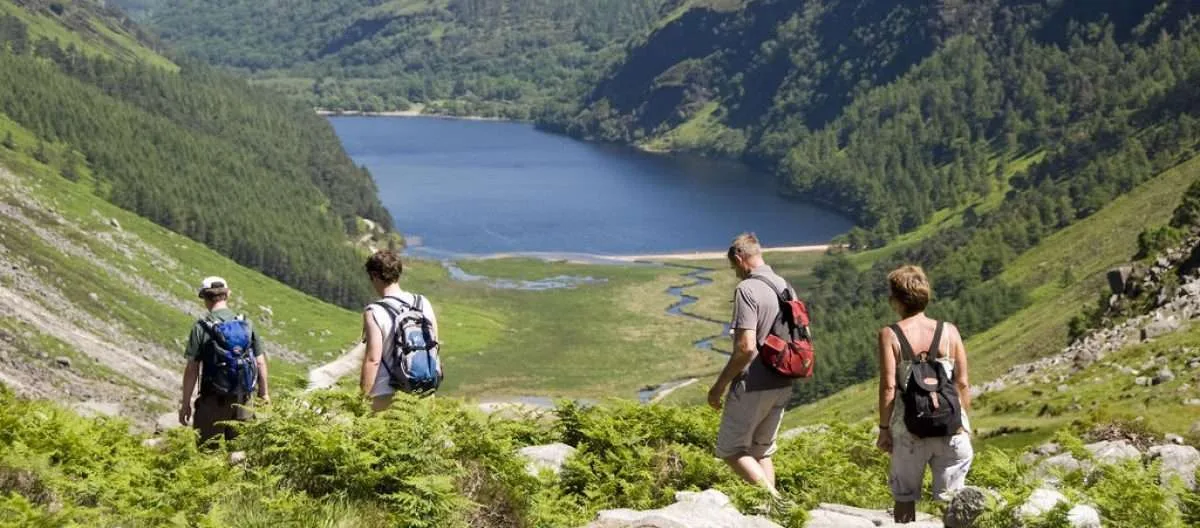
The walking at Glendalough is as good as the history. The valley sits between steep wooded mountains, with two glacial lakes — the Upper and Lower Lakes — connected by a river that runs through the monastic site. There are marked trails for every fitness level.
The Green Road is the easiest and most popular walk. It follows the south shore of the Upper Lake on a flat, wide path through native oak woodland. The walk is about 3 km each way and takes an hour or so at an easy pace. Along the way, you pass the Reefert Church — a small stone church where local chieftains were buried — and the site of Kevin's Cell, where the saint is believed to have lived.
For a more serious walk, the Spinc Trail climbs steeply above the south side of the valley, giving you views down to the Upper Lake and across to the mountain ridge beyond. The full Spinc loop is about 9 km and takes 3 to 4 hours. The climb is demanding but the views from the top are among the best in Wicklow — the valley spread out below you, the lakes shining, and the monastic city a cluster of grey stones by the Lower Lake.
The Miners' Road follows the north shore of the Upper Lake to the old lead mines at the head of the valley. This walk is about 5 km each way and gives you a wilder, quieter experience than the Green Road. The path narrows as you go deeper into the valley, and the mountains close in on both sides.
Wear good hiking boots for any walk beyond the Green Road. The Spinc Trail in particular is rocky and steep in places. Our packing list covers everything you need for a day in Wicklow.
St Kevin's Bed and the Glendalough Upper Lake Walks
The Upper Lake is the wilder and more atmospheric of Glendalough's two lakes. Dark water sits between steep mountain walls, and the forest comes down to the shore. This is where St Kevin first settled in Glendalough's history, and the remoteness of the spot tells you something about what he was looking for.
St Kevin's Bed Glendalough is a small cave in the cliff face above the south shore of the Upper Lake. It sits about 10 metres above the water and is reached by a narrow ledge. Access is restricted for safety reasons, but you can see the cave from the lakeshore and from the Green Road on the Kevin's Bed cave walk. Imagining Kevin living in that small hollow, high above the lake, through Irish winters, gives you a measure of his commitment.
The Poulanass Waterfall is a short detour from the main path, just upstream from the Upper Lake. The river drops through a narrow rocky gorge surrounded by oak and holly trees. It's a fine spot for a rest on any Glendalough walk.
Glendalough and the Wicklow Way
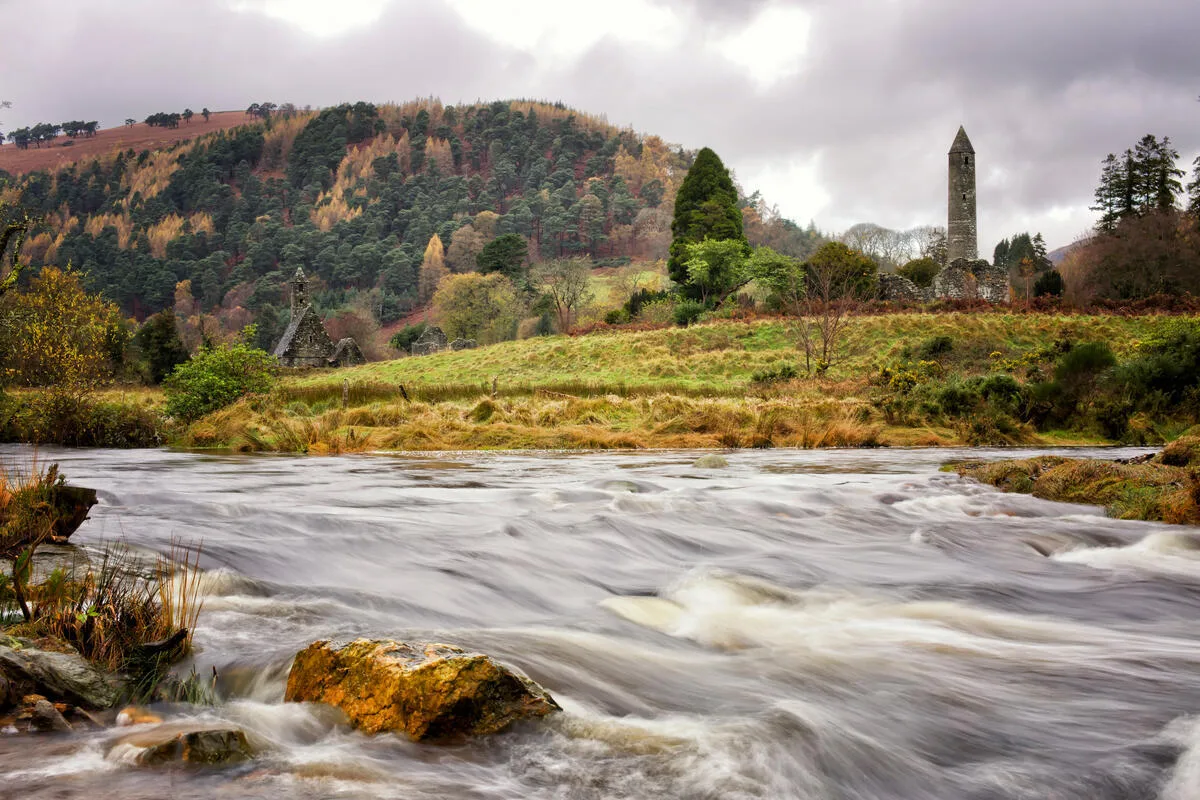
Glendalough is a key stop on the Wicklow Way, Ireland's oldest waymarked trail. The Way runs 127 km from Dublin to Clonegal in County Carlow, passing through some of the finest mountain scenery in eastern Ireland, and Glendalough is its most famous point.
Many walkers use Glendalough as a base for exploring the wider Wicklow Mountains. The village has accommodation, cafes, and good access to trails. From Glendalough, you can walk north toward Glendasan and the old mines, south over the Wicklow Gap, or connect with the Wicklow Way in either direction.
If you're walking the Wicklow Way as a multi-day trip, we offer self-guided walking holidays with accommodation booked, luggage transferred, and route notes provided. For walkers who want local knowledge, our guided walking holidays give you a guide who knows every path in the Wicklow Mountains.
Planning Your Visit
Glendalough is about 50 km south of Dublin — roughly an hour's drive through the Wicklow Mountains. The valley is well signposted from the N11 motorway. There's a visitor centre at the entrance to the monastic site with exhibitions, information, and parking.
The Glendalough monastic ruins site is free to enter and open year-round. The visitor centre charges a small fee for its exhibitions. The trails into the valley are open at all times.
The best time to visit Ireland for walking Glendalough is April to October. Autumn is particularly beautiful — the oak woodland turns gold and copper, and the light in the valley is warm and low. Summer weekends can be busy, so arrive early or walk the longer trails to leave the crowds behind.
The Irish weather in Wicklow can change fast, especially on the higher trails. Pack layers and waterproofs even in summer. Check our tour grading to find walks that match your fitness level — the Green Road is suitable for everyone, while the Spinc Trail needs moderate fitness and sure footing.
Glendalough combines well with Dublin walking trails for a trip that mixes city and mountains. You can walk Dublin in the morning and be in Glendalough by afternoon.
Frequently Asked Questions
Who was St Kevin of Glendalough?
St Kevin (Caoimhín in Irish) was a 6th-century Irish hermit and saint who founded Glendalough monastery in the Wicklow Mountains. Born around 498 AD of royal blood, Kevin chose a life of solitude and prayer in the remote glacial valley of Glendalough. He lived as a hermit for years in a cave above the Upper Lake known as Kevin's Bed, and over time his spiritual reputation attracted followers who built a thriving monastic community. Kevin is the patron saint of the Dublin diocese and died around 618 AD on June 3rd, a date still celebrated as his feast day.
Is Glendalough free to visit?
Yes, the Glendalough monastic site is free to enter and is open year-round. The archaeological ruins, round tower, churches, and walking trails in the valley are all accessible without charge. The visitor centre at the entrance to the site does charge a small admission fee for its exhibitions, information displays, and facilities, but this is optional. The valley itself and all its trails are completely free.
How long do the Glendalough walks take?
Glendalough offers walks for different fitness levels. The Green Road, the easiest and most popular walk, follows the south shore of the Upper Lake on a flat woodland path and takes about an hour each way (3 km). The Spinc Trail is more challenging, climbing steeply above the valley with excellent views, and takes 3 to 4 hours for the full loop (about 9 km). The Miners' Road follows the north shore of the Upper Lake to the old lead mines and takes 2 to 3 hours for a 5 km walk each way. All times can vary depending on fitness level and pacing.
Can you see Kevin's Bed?
Yes, you can see St Kevin's Bed from a distance. The small cave in the cliff face above the south shore of the Upper Lake is clearly visible from the lakeshore and from the Green Road walking trail. However, direct access to St Kevin's Bed Glendalough is restricted for safety reasons — the narrow ledge leading to it is not open to visitors. You can get a good view of where St Kevin lived by looking up at the cave from the lake path, which gives you a sense of the remoteness and commitment required for his hermitic lifestyle.
What is the Glendalough round tower?
The Glendalough round tower is one of Ireland's most iconic mediaeval structures, standing about 33 metres tall in the heart of the monastic site. Built around the 10th or 11th century, it served multiple purposes: as a bell tower to call monks to prayer, as a lookout point to watch for approaching danger, and as a place of refuge during Viking raids. The doorway is set high above ground so monks could climb a ladder inside and pull it up behind them when under attack. The round tower is remarkably well preserved and visible from miles around the Wicklow Mountains, making it the most recognisable landmark of Glendalough.
A Valley That Holds Its Story
St Kevin came to Glendalough looking for peace, and the valley still gives you that. The ruins of his monastery, the round tower against the sky, the dark lakes between the mountains — they create an atmosphere that fourteen centuries haven't changed. Whether you come for the history, the walking, or both, Glendalough stays with you.
Walk the Green Road to the Upper Lake, stand where Kevin stood, and look up at his cave above the water. Then climb the Spinc for the view, or follow the Miners' Road into the head of the valley. This is one of the finest places to walk in Ireland, and one of the most meaningful. Get in touch with Walking Holiday Ireland and we'll help you plan a trip to Glendalough and the Wicklow Mountains.