Irish Legends Behind Hiking Trail Names in Ireland
Every trail in Ireland has a name, and most of those names mean something. Not in a vague, poetic way — they're direct references to people, events, and stories that the people who lived here considered worth remembering. When you walk the Táin Way in County Louth, you're following the route of a 2,000-year-old cattle raid. When you climb Knocknarea in Sligo, you're walking toward the grave of a warrior queen. Irish legends hiking trail names aren't decorative — they're the reason the trails exist where they do.
I've spent years walking these routes, and the Irish legends behind hiking trail names have changed how I experience them. A mountain pass is just a mountain pass until you know that Fionn Mac Cumhaill supposedly built a road across the sea from that exact spot or that a goddess turned herself to stone on that particular summit. Here's what the legends actually say and which trails carry them.
Fionn Mac Cumhaill Hiking Trails: The Giant's Causeway Legend
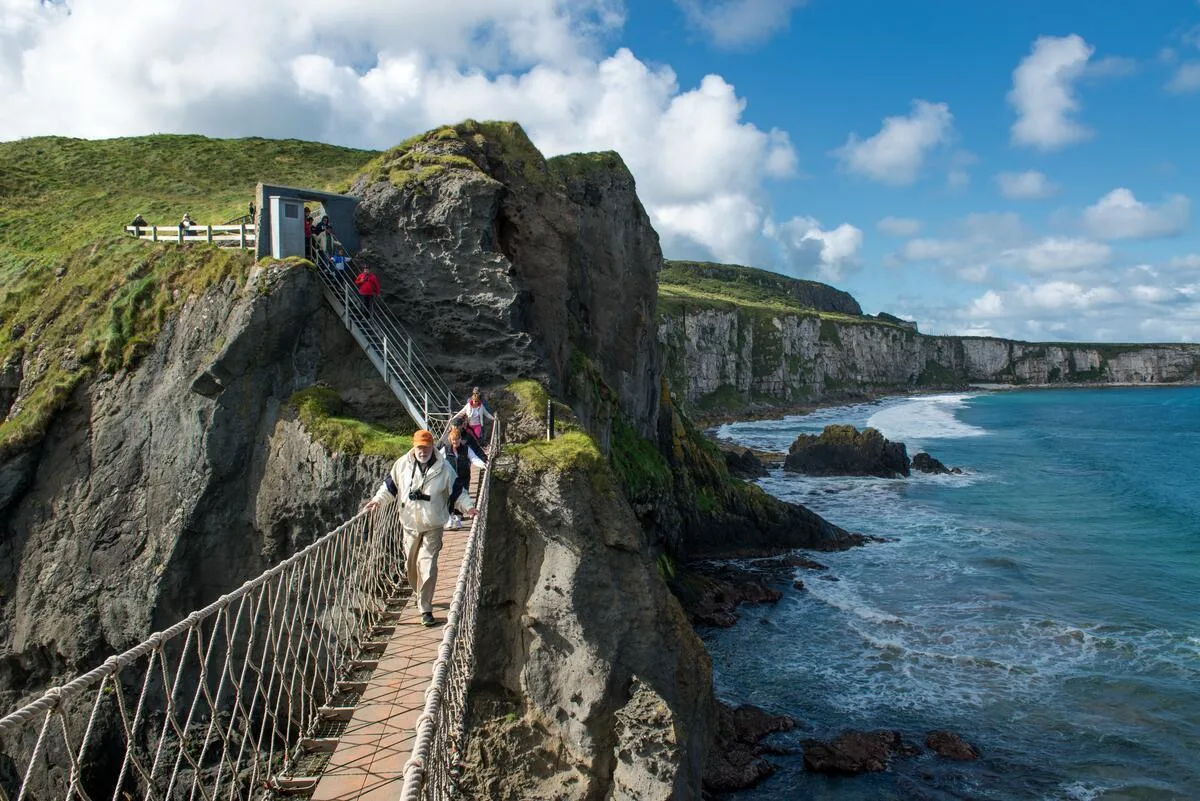
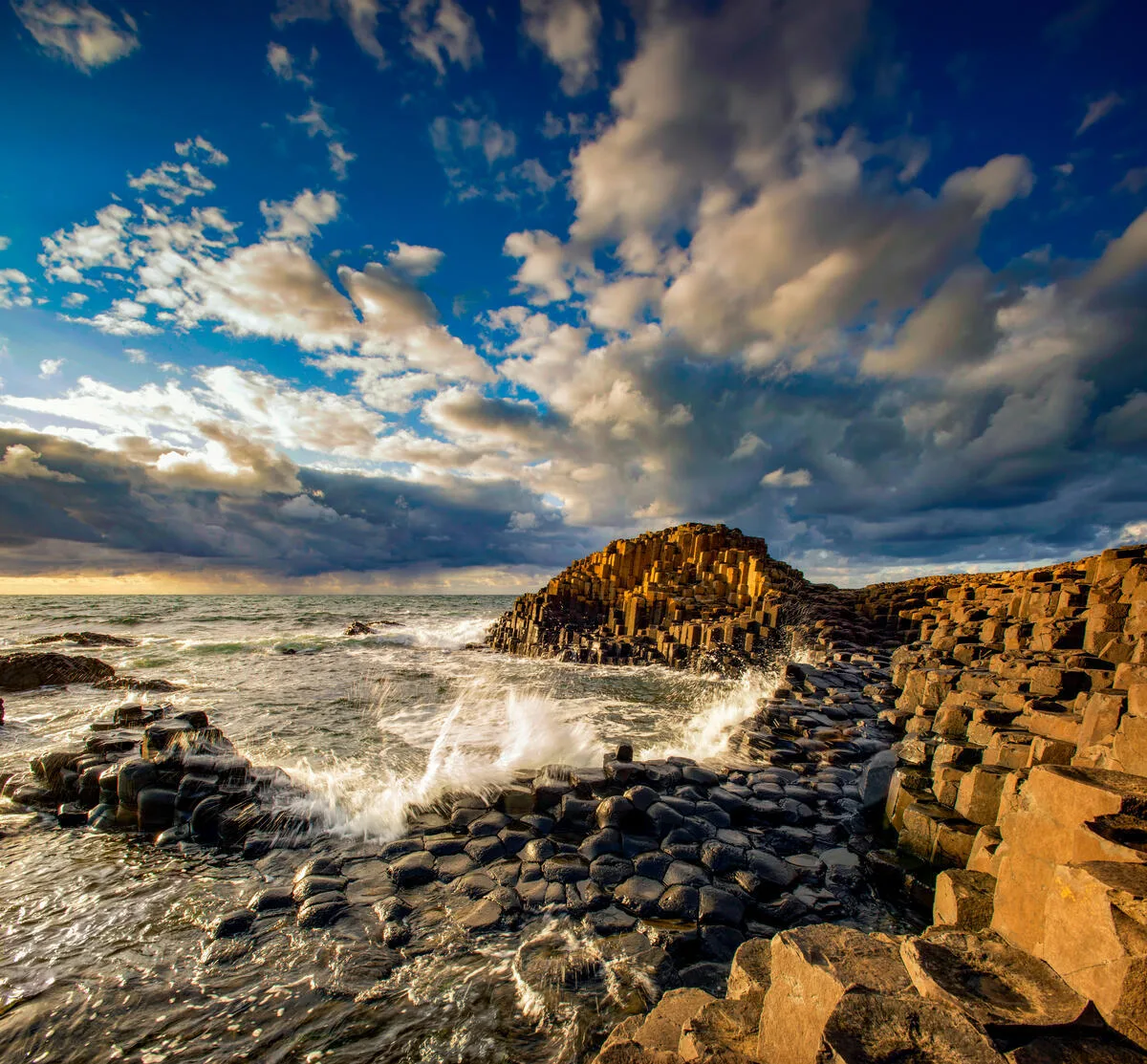
The Giant's Causeway on the Antrim coast is Ireland's most visited natural site, and the mythology behind this Irish trail name comes straight from ancient legend. The story goes that Fionn Mac Cumhaill – the warrior leader of the Fianna – built a causeway of stepping stones across the sea to Scotland so he could fight the giant Benandonner. When Benandonner turned out to be enormous, Fionn's wife Oonagh disguised him as a baby. Benandonner saw the "baby" and figured the father must be truly massive, so he fled back to Scotland, tearing up the causeway behind him.
The 40,000 basalt columns you see today are what's "left" of that road. Geologists will tell you they formed from cooling lava 60 million years ago, but the story is better. Our Giant's Causeway walking guide covers the coastal trail in detail. The Causeway Coast 6-day walking holiday takes you along the full stretch of coastline where Fionn's legend sits in the landscape at every turn.
Queen Maeve Knocknarea Legend and Trail
Knocknarea is the flat-topped mountain that dominates the Sligo skyline. On its summit sits Miosgan Méadhbha — Queen Maeve's Cairn — a 40,000-tonne Stone Age passage tomb that has never been excavated. The legend says Maeve, the warrior queen of Connacht from the Táin Bó Cúailnge, is buried standing upright inside it, facing her enemies in Ulster — one of the most powerful mythological hiking stories Ireland has to offer.
The Queen Maeve Trail climbs roughly 300 metres over 6 km to reach the cairn. It's a straightforward walk — about two hours up — but the view from the top is extraordinary. You can see Ben Bulben, Rosses Point, Coney Island, and the whole Sligo coastline. The tradition is to carry a stone up and place it on the cairn. Don't take one away — that's considered bad luck, and given who's supposedly buried there, I wouldn't test it.
Sligo is saturated in mythology. W.B. Yeats drew on these same legends for much of his poetry, and the landscape hasn't changed since his time. If you're walking in this part of Ireland, the stories are literally underfoot.
The Cailleach Bheara and the Beara Peninsula
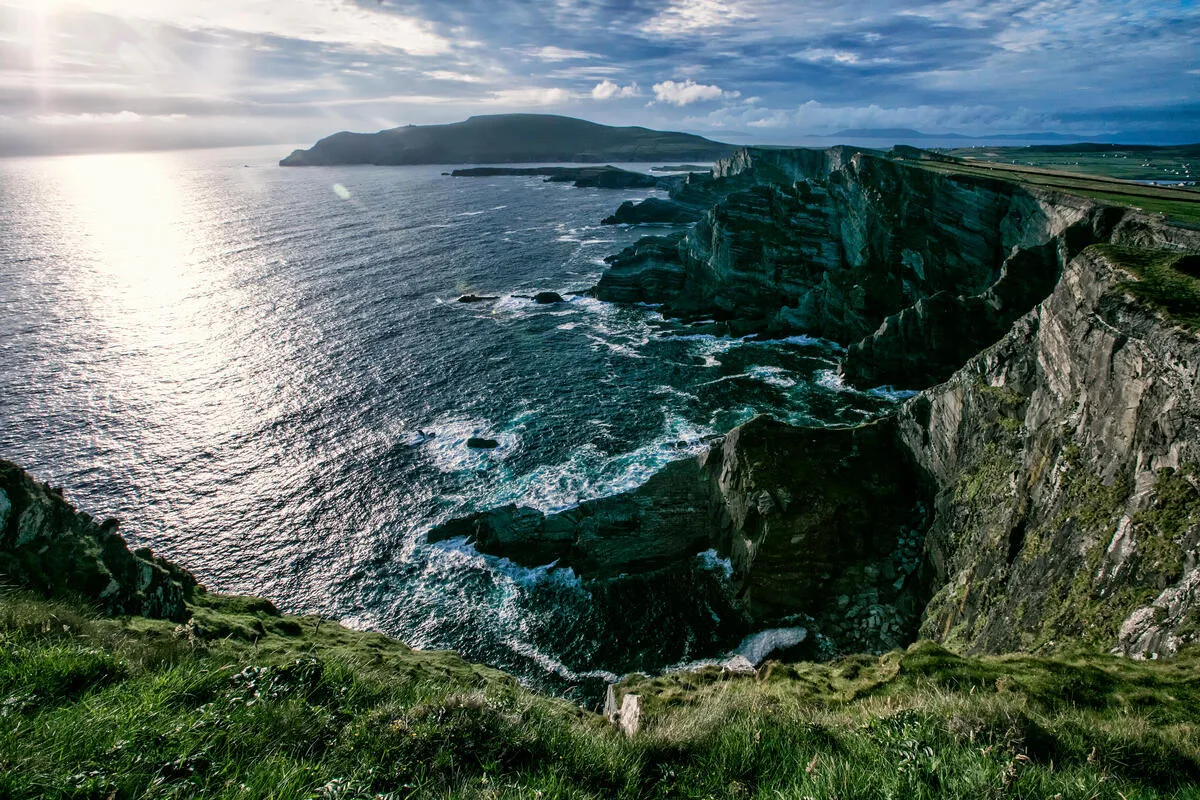
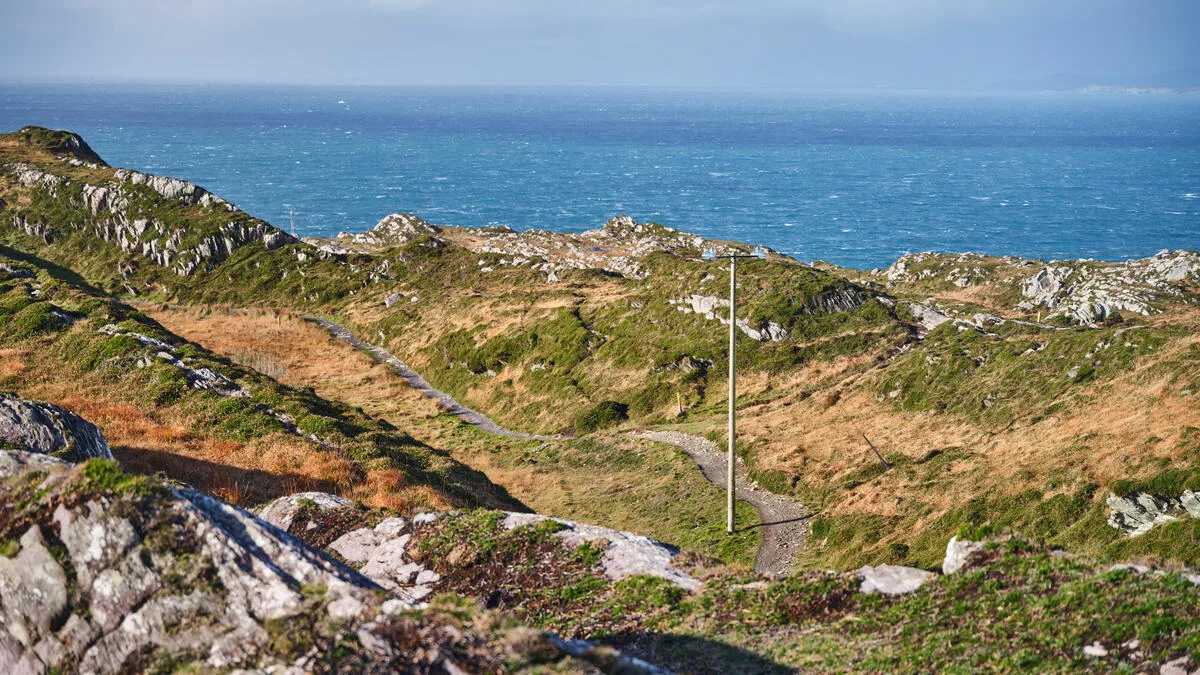
The Cailleach Bheara — the Hag of Beara — is one of the oldest figures in Irish mythology. She's a goddess of winter, stone, and landscape, and understanding Irish trail name meanings like this reveals how her name is woven into the geography of southwest Ireland. The Beara Peninsula itself carries her name. Local tradition says she leapt from hilltop to hilltop, dropping stones from her apron that became the cairns and standing stones scattered across the mountains.
The Ring of Gullion in County Armagh is another landscape shaped by her legend. The ring dyke — a geological formation of hills encircling Slieve Gullion — is said to be the Cailleach's domain. There's a lake near the summit called Calliagh Berra's Lough where, according to the story, she tricked Fionn Mac Cumhaill into diving in, turning him into an old man.
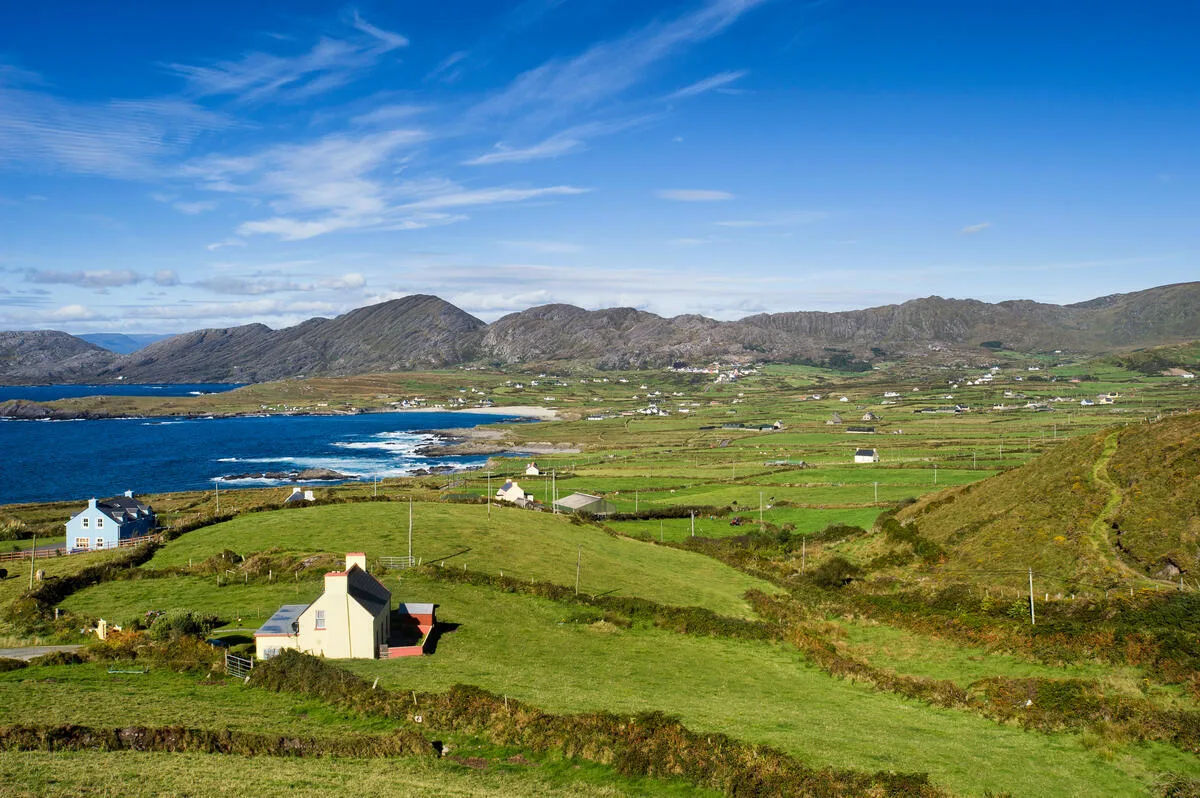
Walking in Beara, you feel the Cailleach's presence in the raw, stripped-back landscape. It's a harder, wilder place than Kerry, and the trail folklore Ireland preserves here reflects that ancient character. Our Causeway Coast Way guide covers the Antrim end, while the Glens of Antrim walking guide explores the valleys where many of these northern legends are set.
St Kevin and Glendalough
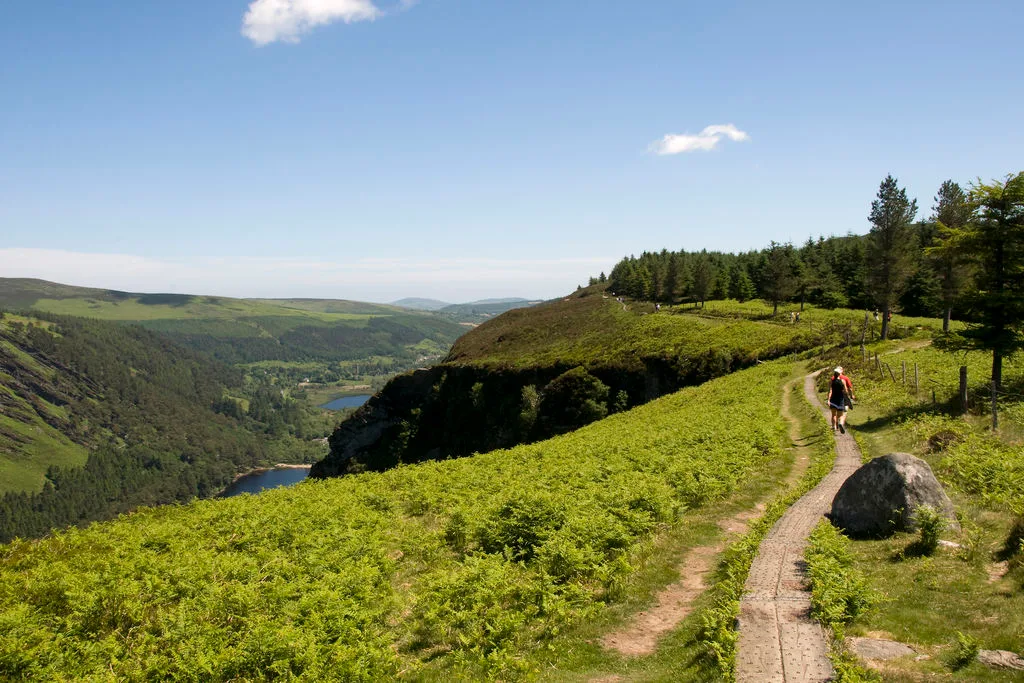
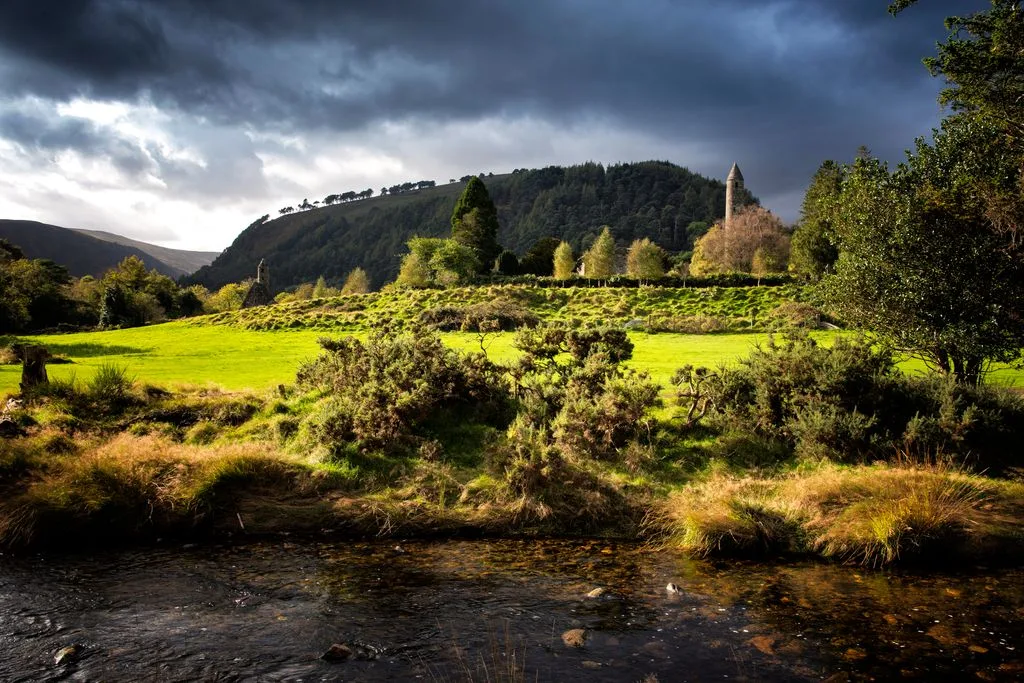
Not all Irish trail legends are pre-Christian. St Kevin of Glendalough is a sixth-century figure who blurs the line between history and myth. He lived as a hermit in the glacial valley of Glendalough in County Wicklow, sleeping in a Bronze Age tomb, praying in a cave above the upper lake, and — according to legend — holding his hand outstretched for so long that a blackbird nested in his palm and he wouldn't move until the eggs hatched.
Glendalough means "glen of two lakes" in Irish, and the monastic city Kevin founded there became one of the great centres of learning in early mediaeval Europe. The Glendalough walks take you past the round tower, the cathedral ruins, and Kevin's Bed — the cave where he supposedly lived. The Wicklow Way passes through the valley, and it's one of the most atmospheric sections of the entire 127 km trail.
Dindshenchas: Celtic Legends Walking Routes and Place Names
There's actually an ancient Irish literary tradition dedicated to exactly this topic. The Dindshenchas — meaning "the lore of places" — is a collection of poems and prose from the 11th and 12th centuries that explains how Irish places got their names. Almost every river, mountain, lake, and pass in Ireland has an origin story in this tradition.
The River Boyne, for example, is named after the goddess Boann, who approached the sacred well of Nechtan despite being forbidden. The well rose up and chased her to the sea, creating the river. The Shannon is named after Sionann, who sought the salmon of knowledge in a similar forbidden pool. The Liffey, the Lee, the Slaney — each has a mythological origin.
When you walk trails in Ireland, you're moving through a landscape where every feature was named by people who told stories about it. The mountains aren't just geographical — they're characters. That's what makes the legends behind hiking trail names in Ireland different from trails named after surveyors or compass bearings elsewhere in the world.
The Táin Way and Ireland's Great Epic
The Táin Bó Cúailnge — the Cattle Raid of Cooley — is Ireland's equivalent of the Iliad. It tells the story of Queen Maeve's invasion of Ulster to seize the Brown Bull of Cooley and the lone warrior Cú Chulainn's defence of his homeland. This epic is central to understanding Irish hiking trail mythology. The Táin Way in County Louth follows the landscape where much of this story is set, through the Cooley Peninsula with views across Carlingford Lough to the Mourne Mountains.
The trail passes landmarks that connect directly to the story — river fords where Cú Chulainn fought single combats, hilltops where armies camped, and passes where ambushes were laid. Whether you take the story literally or not, walking terrain that's been associated with an epic for two thousand years gives the landscape a weight that a random trail through hills simply doesn't have.
Why It Matters for Walkers
You don't need to know any of this to enjoy a walk in Ireland. The scenery speaks for itself. But knowing the legends behind Irish hiking trail names adds a layer that turns a good walk into something you think about long after you've finished. When you reach the top of Knocknarea and see the cairn, it hits differently if you know who Maeve was. When you stand at the Giant's Causeway, the columns are more interesting if you can picture Fionn building them overnight.
Ireland is a small country with a vast mythological landscape. Every trail name is a door into that world, if you want to open it. For a broader look at Ireland's walking routes, our self-guided walking holidays guide is a good starting point. And if you want to walk where the legends live, the Kerry Way and Causeway Coast are two of the best places to start.
Which Irish hiking trails are named after legends?
Many of Ireland's best-known trails carry mythological names. The Giant's Causeway is named after Fionn Mac Cumhaill, the Queen Maeve Trail climbs to her legendary burial cairn on Knocknarea, and the Táin Way follows the route of Ireland's greatest epic poem through the Cooley Peninsula. Glendalough's trails are named for St Kevin's monastic settlement.
What is the Dindshenchas?
The Dindshenchas is a mediaeval Irish literary tradition — a collection of poems and prose that explains how places in Ireland got their names. Almost every river, mountain, and lake in Ireland has an origin story in this tradition, connecting landscape features to gods, heroes, and ancient events.
Can I walk trails connected to Irish mythology?
Yes. The Causeway Coast trail takes you along the Giant's Causeway. Knocknarea in Sligo leads to Queen Maeve's Cairn. The Wicklow Way passes through Glendalough and St Kevin's monastic valley. The Táin Way in County Louth follows the landscape of Ireland's great cattle raid epic.
Do I need to know the mythology behind Irish trail names to enjoy these walks?
Not at all — the scenery stands on its own. But understanding the Irish legends behind hiking trail names adds depth to the experience. Many walkers find that a bit of background on the legends makes the landscape more meaningful and the walk more memorable.
Frequently Asked Questions
Which Irish hiking trails are named after legends?
Many of Ireland's best-known trails carry mythological names. The Giant's Causeway on the Antrim coast is named after the warrior giant Fionn Mac Cumhaill. The Queen Maeve Trail in Sligo climbs to the cairn where the legendary warrior queen of Connacht is said to be buried. The Táin Way in County Louth follows the route of Ireland's greatest epic, the Cattle Raid of Cooley. And Glendalough's trails wind through the monastic valley of St Kevin, the sixth-century hermit who lived in a Bronze Age tomb.
What is the Dindshenchas?
The Dindshenchas — meaning "the lore of places" — is a medieval Irish literary tradition. It's a collection of poems and prose from the 11th and 12th centuries that explains how Irish places got their names. Almost every river, mountain, lake, and pass in Ireland has an origin story in the Dindshenchas, connecting landscape features to gods, heroes, and ancient events. When you walk Irish trails, you're moving through a landscape where every feature was named by storytellers.
Can I walk trails connected to Irish mythology?
Yes — and our self-guided itineraries are built around them. The Causeway Coast walk takes you along the Giant's Causeway, where Fionn Mac Cumhaill's stones still stand. Knocknarea in Sligo leads to Queen Maeve's Cairn. The Wicklow Way passes through Glendalough and St Kevin's monastic valley. The Táin Way in County Louth follows the landscape of Ireland's great cattle-raid epic. Each of these routes lets you walk the same ground the legends are set on.
Do I need to know the mythology to enjoy walking in Ireland?
Not at all — the scenery stands on its own. But knowing the legends behind Irish trail names adds a layer that turns a good walk into something you remember years afterwards. When you reach the cairn on Knocknarea, it hits differently if you know who Maeve was. When you stand at the Giant's Causeway, the columns are more interesting if you can picture Fionn building them. We include short legend notes on the route briefings we send before your trip.
Who was Fionn Mac Cumhaill?
Fionn Mac Cumhaill was the legendary warrior leader of the Fianna in Irish mythology — a band of hunter-warriors who roamed Ireland in the third century. The story tells that Fionn built the Giant's Causeway as stepping stones across the sea to Scotland to fight the giant Benandonner, then tore most of it up when fleeing back. His tales are woven into landscape features all over Ireland, especially along the Antrim coast and in the Wicklow Mountains.
What is the Cailleach Bheara?
The Cailleach Bheara — the Hag of Beara — is one of the oldest figures in Irish mythology, a goddess of winter, stone, and landscape. Her name is woven into the geography of southwest Ireland; the Beara Peninsula carries her name. Local tradition says she leapt from hilltop to hilltop, dropping stones from her apron that became the cairns and standing stones scattered across the mountains. Her legend lives on in landscapes from the Beara Peninsula to Slieve Gullion in County Armagh.
Photo Gallery