Burren National Park: A Walking Guide to Ireland's Limestone Landscape
Burren National Park: A Walking Guide to Ireland's Limestone Landscape
My name is Cliff, and I run Walking Holiday Ireland. Burren National Park is one of the most unusual landscapes I've ever walked through. Bare limestone stretches to the horizon, cracked into blocks and channels, and somehow wildflowers grow from the rock itself. It looks like a moonscape until you get close, and then you see orchids, gentians, and ferns thriving in the crevices. This is County Clare at its most remarkable, and the walking here is like nothing else in Ireland.
The Burren National Park in Ireland covers about 250 square kilometres of karst limestone in the northwest corner of County Clare. The national park protects a section of this landscape between Mullaghmore and Carron, but the wider Burren stretches from Doolin on the coast to Kinvara on Galway Bay. If you want to walk a landscape that feels genuinely different from anywhere else in Europe, the Burren is where you come.
What Makes Burren National Park Special
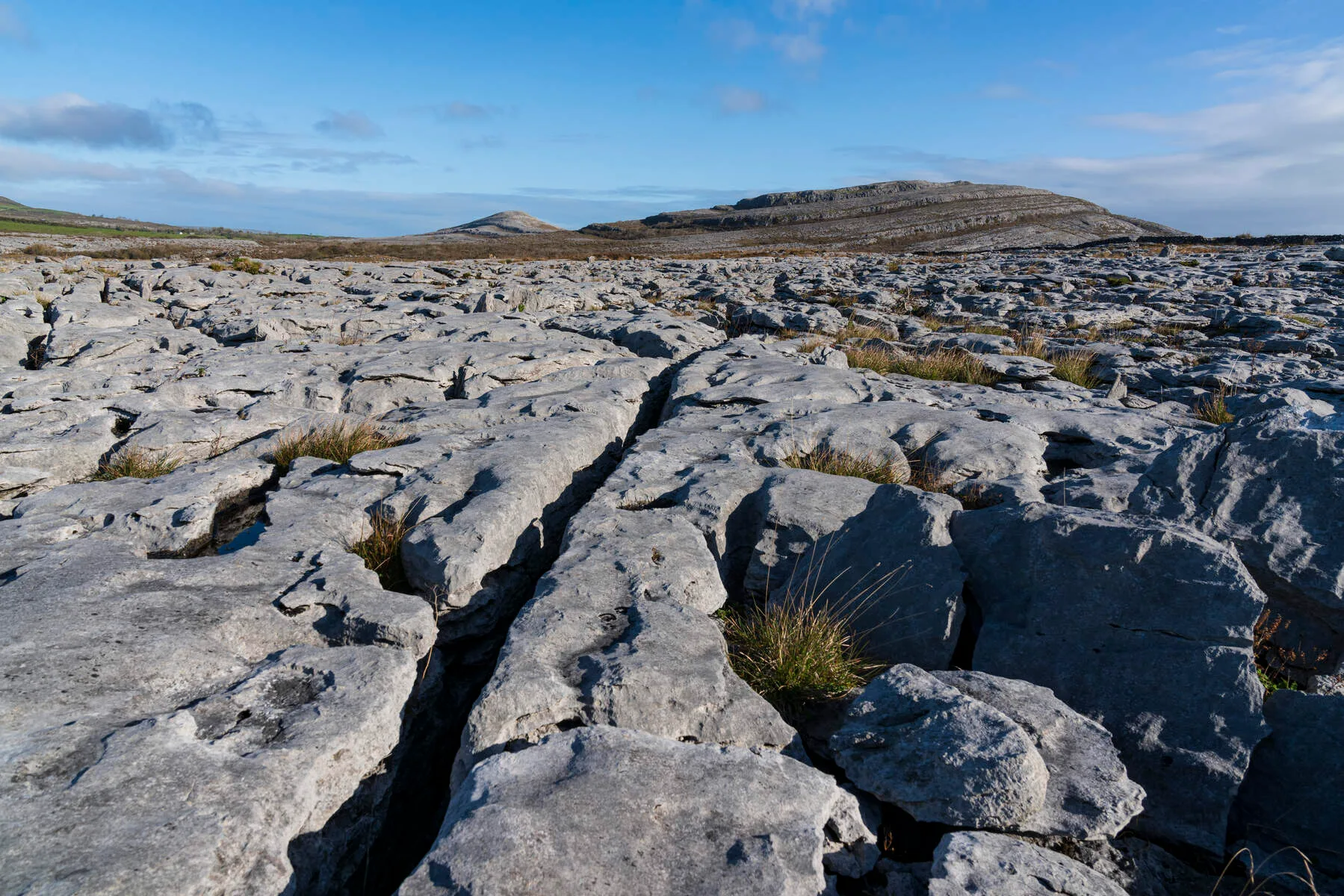
The word "Burren" comes from the Irish "Boireann", meaning "rocky place". That gives you the picture — the Burren, Ireland, is a land of exposed limestone pavement, shaped by water over 340 million years. The rock was formed on a tropical seabed, and today you can still find fossil corals and sea shells in the stone beneath your feet.
The limestone pavement is split into blocks called clints, separated by deep cracks called grikes. Rain dissolves the limestone slowly, creating the patterns you see across the surface. Underground, the water has carved caves and passages — the Burren is riddled with them, and Aillwee Cave is the most accessible for visitors.
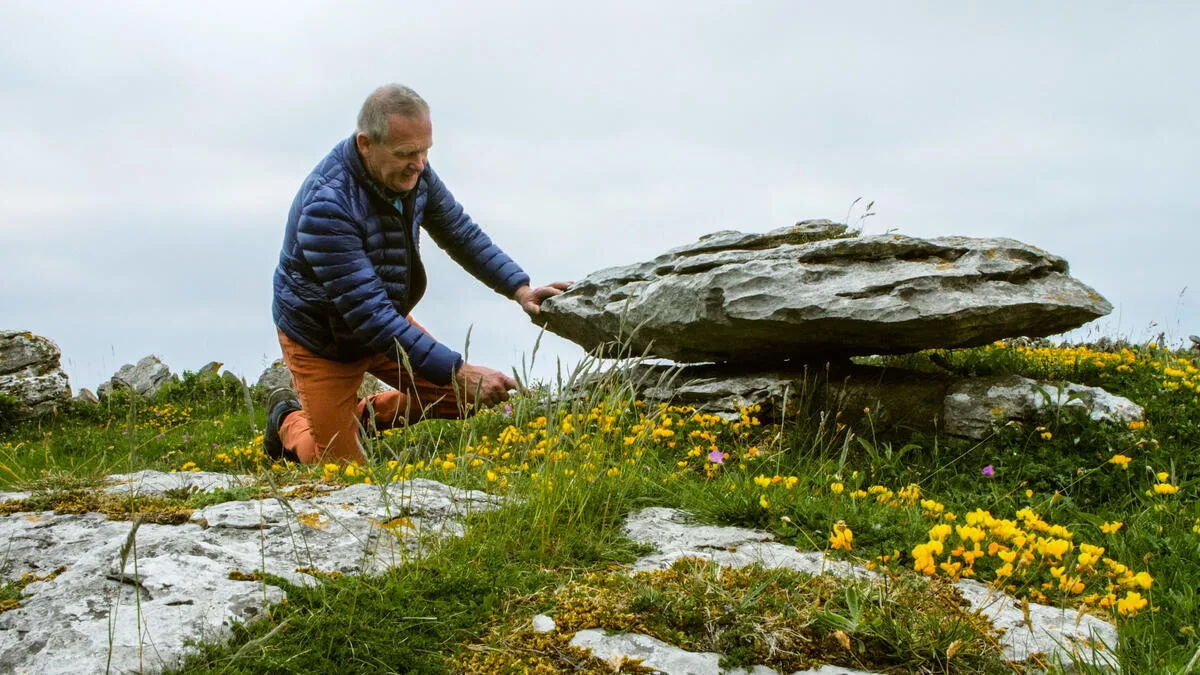
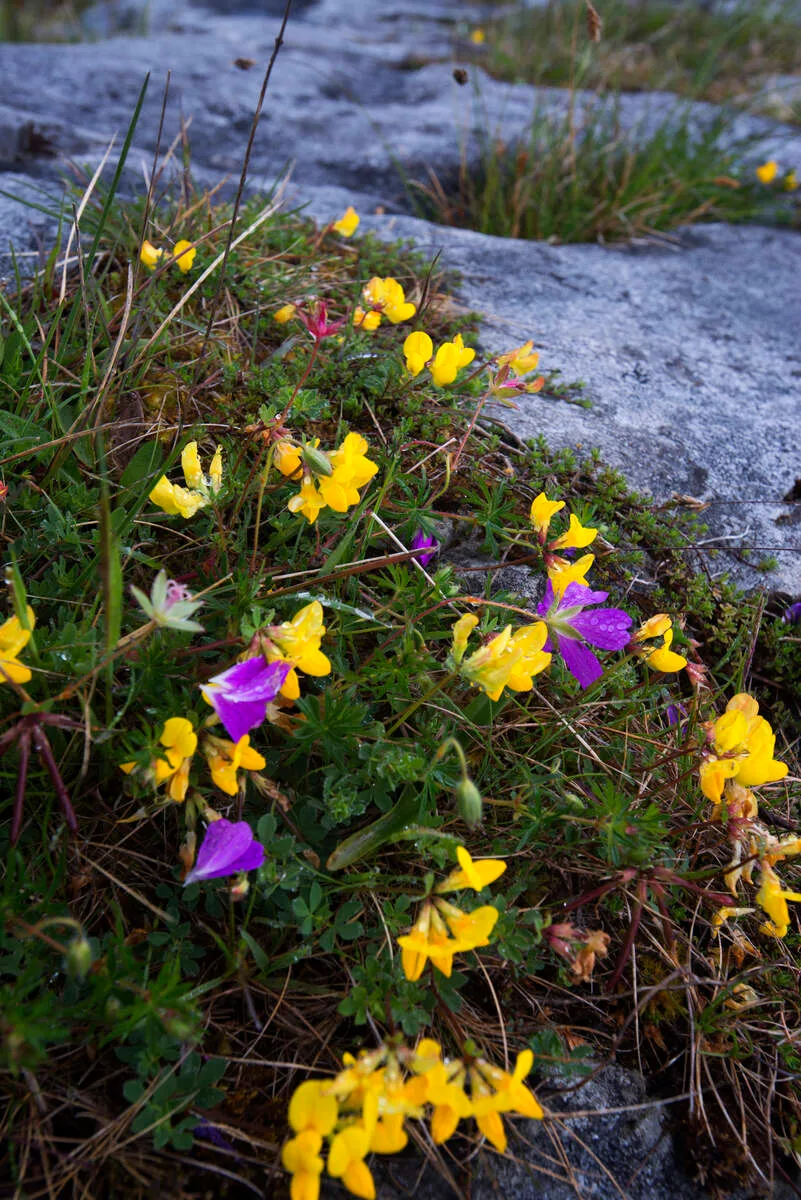
What makes the Burren unique for walkers is the wildflowers. The grikes create sheltered microclimates where Arctic, Alpine, and Mediterranean plants grow side by side — something that happens nowhere else in the world. In May and June, the rock comes alive with colour: bright blue spring gentians, purple orchids, mountain avens, bloody cranesbill, and dozens more species. You can walk across bare grey rock and find a crevice bursting with flowers that shouldn't be growing together at all.
Burren National Park Walks
Burren National Park is centred around Mullaghmore, a low limestone hill that gives you the best overview of Burren's landscape. The park covers about 1,500 hectares and is free to enter—there's no visitor center, just trails, limestone, and sky.
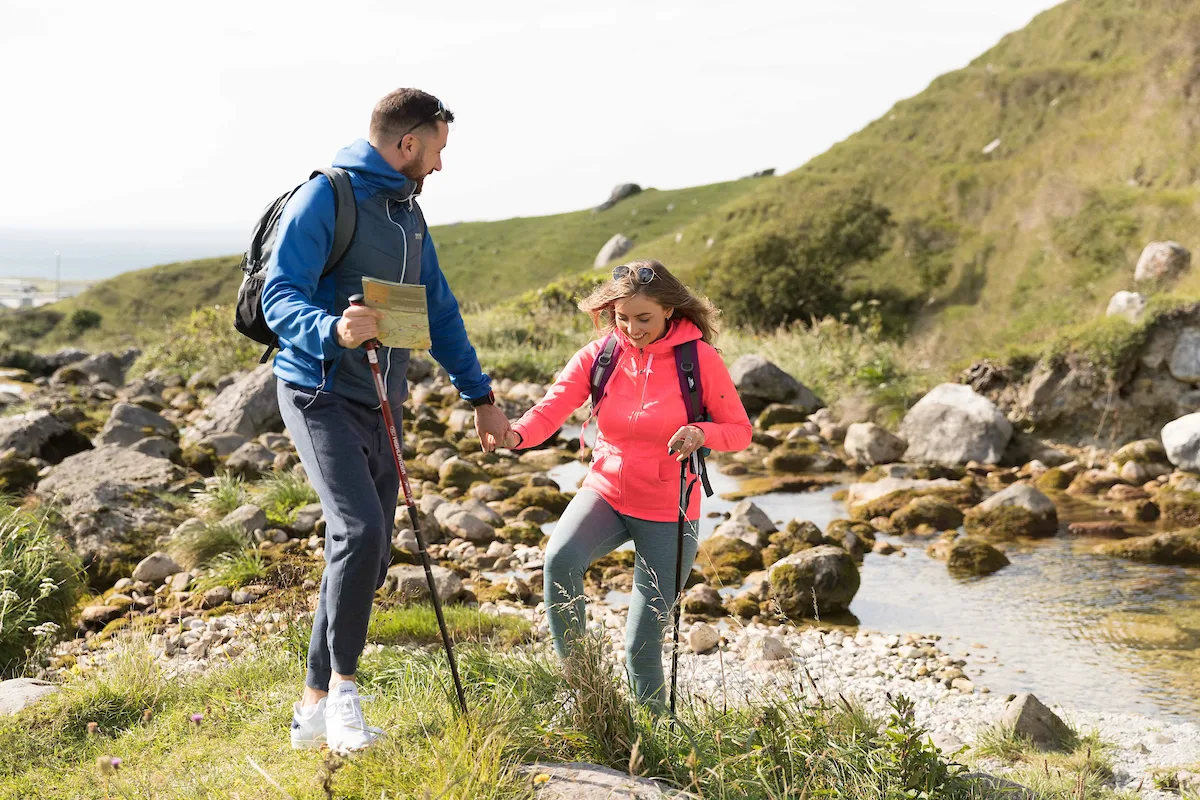
The Mullaghmore Loop is the park's main walk. This 8 km trail circles the base of Mullaghmore Hill and crosses some of the finest limestone pavement in Ireland. The walk takes about 3 hours at an easy pace and is moderate in difficulty — the limestone surface is uneven, so you need good hiking boots with ankle support. In spring, the wildflowers along this route are extraordinary.
For a shorter option, you can walk to the summit of Mullaghmore itself. The hill rises to just 180 metres, but the views from the top take in the whole Burren — limestone terraces dropping away on all sides, with Galway Bay to the north and the Atlantic to the west. On a clear day, you'll see the Aran Islands sitting in the bay.
The park is also home to turloughs — seasonal lakes that appear and disappear with the rainfall. These are rare geological features found almost exclusively in western Ireland, and walking past one as it fills or drains is a reminder of how alive this landscape is.
Poulnabrone Dolmen
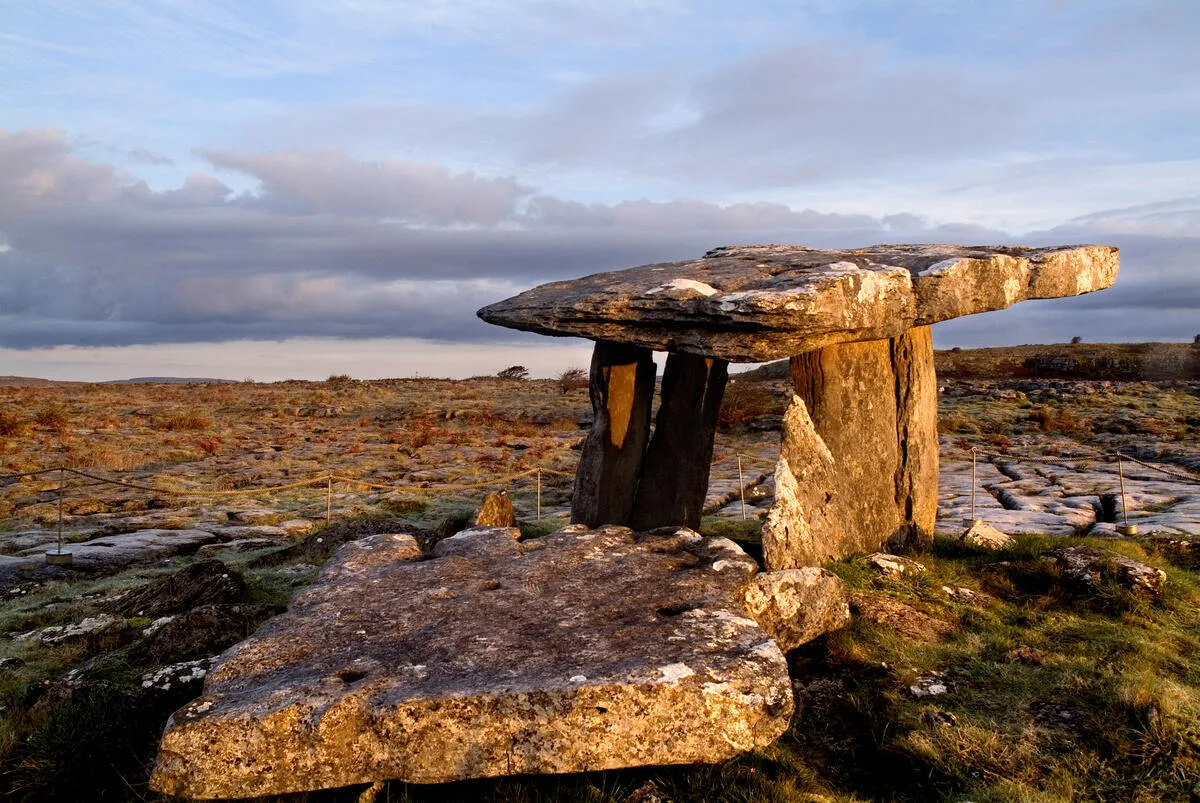
The Poulnabrone Dolmen stands on the limestone pavement about 8 km from Burren National Park, and it's one of the most photographed monuments in Ireland. This portal tomb dates back to around 3800 BC — making it older than the Egyptian pyramids. Two upright stones support a massive capstone, and the structure sits exposed on the bare rock with nothing around it but sky.
Excavations found the remains of over 30 people buried beneath the dolmen, along with pottery, tools, and jewellery. Standing beside it, you're looking at something that's been part of this landscape for nearly six thousand years. The short walk from the car park takes just five minutes, but the setting is powerful — the dolmen framed against open limestone and the Clare hills beyond.
Poulnabrone Dolmen is free to visit and is on the R480 road that crosses the Burren. Combine it with burren walks in the national park for a day that covers both the natural and human history of this landscape.
Aillwee Cave and the Underground Burren
While the surface of Burren National Park is dramatic enough, the real scale of this limestone landscape lies beneath your feet. The rock is honeycombed with caves, rivers, and passages carved by water over millions of years.
Aillwee Cave is the most visited of the Burren's caves and offers guided tours through chambers and passages that run deep into the hillside. The cave features stalactites, stalagmites, and an underground waterfall. Brown bear bones found inside the cave date back thousands of years, when bears still roamed Ireland. Tours run year-round and take about 30 minutes.
For walkers, the underground rivers of the Burren explain something you notice on the surface — there are almost no streams or rivers above ground. The water drains straight through the limestone, reappearing as springs along the coast and at the edges of the Burren. This is what creates the dry, exposed landscape that makes walking here so distinctive.
The Burren Way
The Burren Way is a waymarked long-distance trail running about 45 kilometres from Corofin inland to Ballyvaughan on the coast—one of our favourite multi-day routes in Ireland. It crosses ancient green roads, skirts the Atlantic beneath Black Head, and passes through some of the most dramatic limestone scenery on the planet, including sections near Burren National Park. We've written a full stage-by-stage guide to the Burren Way with everything you need to plan your walk.
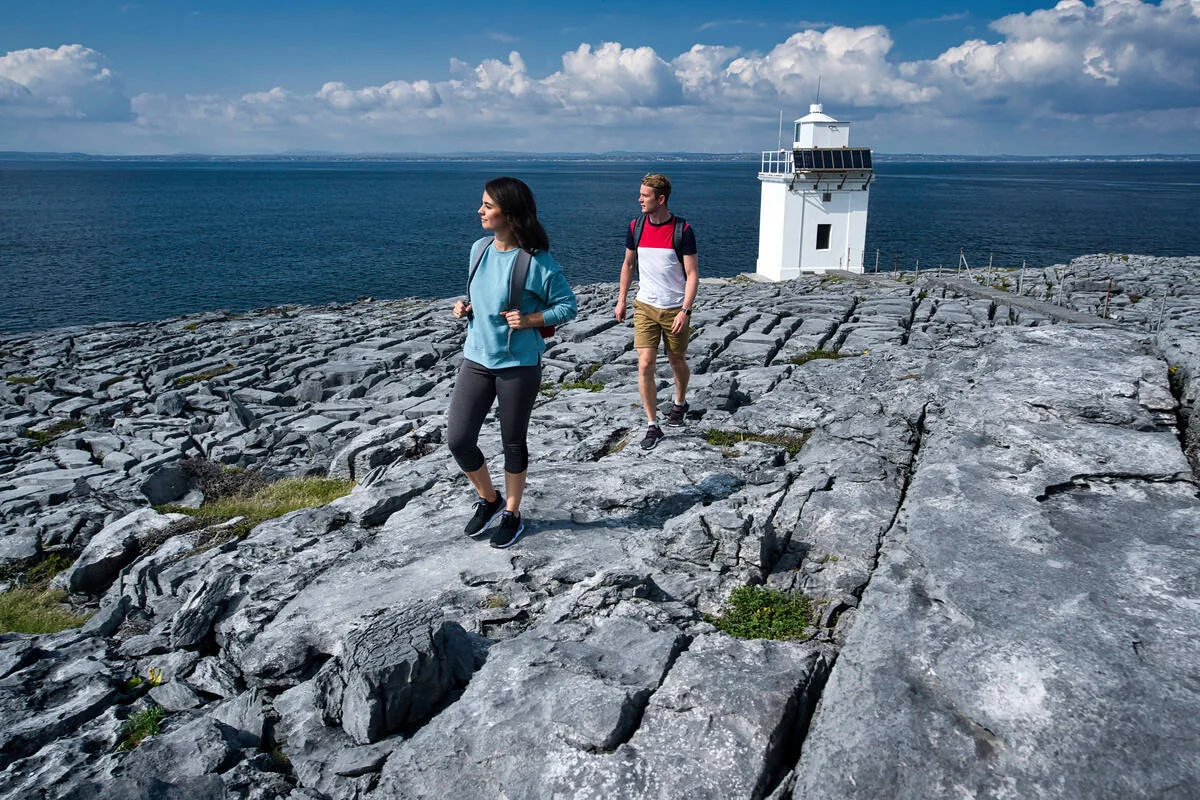
We offer Burren walking holidays that cover the best sections of the Burren Way with accommodation booked, luggage transferred, and route notes provided.
History and Heritage
The Burren has been lived in for at least 6,000 years, and the evidence is everywhere. Besides Poulnabrone, there are ring forts, church ruins, and high crosses scattered across the limestone.
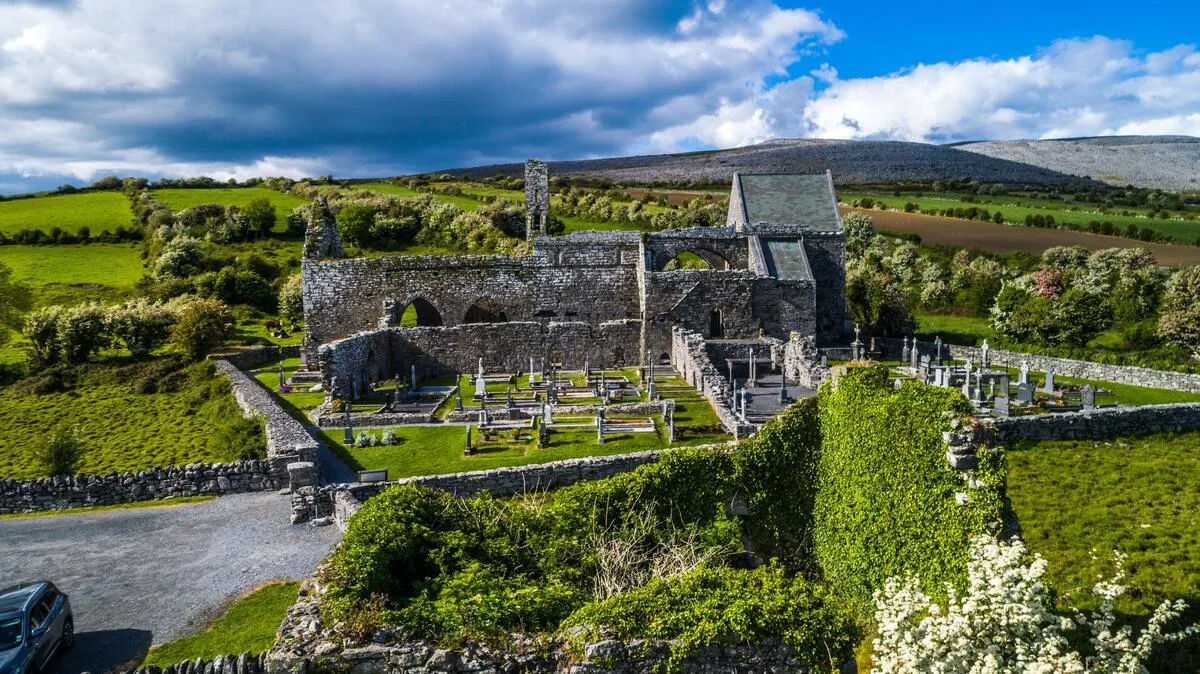
Corcomroe Abbey is one of the finest. This 12th-century Cistercian monastery sits in a small valley near Bell Harbour, and its stone carvings include flowers and plants from the Burren – the mediaeval masons carved what they saw around them. The abbey is free to visit and makes a good stop on a walk around the northern Burren.
Kilfenora, on the southern edge, has an ancient cathedral with remarkable high crosses dating from the 12th century. The Burren Centre in Kilfenora gives a good introduction to the geology, ecology, and history of the area, and it's worth a visit before you set out walking.
The Burren tells a story of people and landscape interacting over thousands of years. The stone walls, the green roads, the field patterns — they're all part of a working landscape that has been farmed since the Neolithic period. Walking here, you're following paths that people have used for millennia.
Planning Your Visit
The Burren is about 90 minutes from Galway and about 3 hours from Dublin. Doolin, Ballyvaughan, and Kilfenora make the best bases for walking. All have accommodation, pubs, and restaurants.
The best time to visit Ireland for the Burren is April to June, when the wildflowers are at their peak. May is the standout month — the spring gentians and orchids turn the grey rock blue and purple. September and October are also excellent, with quieter trails and warm autumn light.
The Burren is less rainy than other parts of the west coast because the limestone drains water so effectively. But the Irish weather can still change quickly, so pack layers and waterproofs. Our packing list covers everything you need.
Check our tour grading to find walks that suit your level. Burren National Park walks are moderate, with uneven limestone underfoot. The Burren Way sections are easy to moderate. Both are suitable for anyone with reasonable fitness and proper footwear.
We offer self-guided walking holidays through the Burren with all accommodation and logistics arranged. For walkers who want local insight and company, our guided walking holidays pair you with guides who know every flower, every fort, and every hidden corner of this landscape. The Burren connects to the Wild Atlantic Way, so you can combine it with walks in Connemara or along the Clare coast.
Walk a Landscape Like No Other
The Burren gives you something you won't find anywhere else — a limestone world where wildflowers grow from bare rock, ancient tombs stand against the sky, and the walking takes you through 340 million years of geology in a single afternoon. Burren National Park, the Poulnabrone Dolmen, the caves beneath the surface, and the trails of the Burren Way together make this one of the most rewarding walking areas in Ireland.
Spend a few days here and you'll understand why the Burren stays with people long after they leave. The light, the flowers, the silence, and the sense of deep time in the landscape — it all gets under your skin. Get in touch with Walking Holiday Ireland and we'll help you plan a trip through the Burren that you'll remember.
Frequently Asked Questions
Is the Burren National Park free to enter?
Are the trails well-marked?
When is the best time to see wildflowers in the Burren?
What kind of boots should I wear?
How long does the Mullaghmore Loop take?
Can you visit Poulnabrone Dolmen and the national park in one day?
Are Ireland's national parks free to visit?
What should I wear for walking in the Burren?
How many national parks are there in Ireland?
Photo Gallery