Antrim Coast: A Walking Guide to Northern Ireland's Dramatic Coastline
Antrim Coast: A Walking Guide to Northern Ireland's Dramatic Coastline
The Antrim coast is one of the most spectacular stretches of coastline I've ever walked. Basalt cliffs drop straight into the sea, hexagonal rock columns rise from the surf, and on clear days you can see Scotland across the water. This is Northern Ireland at its most dramatic, and the walking here is world-class.
The causeway coastal route runs roughly 50 kilometres along the northeastern edge of the island, from Larne up to Ballycastle. Along the way you'll find the Giant's Causeway, the Carrick-a-Rede rope bridge, the Gobbins cliff path, nine glacial valleys known as the Glens of Antrim, and some of the finest coastal walks in Europe.
If you're planning a walking trip to Northern Ireland, the Antrim coast should be at the top of your list. Here's everything you need to know.
Why the Antrim Coast Is Special
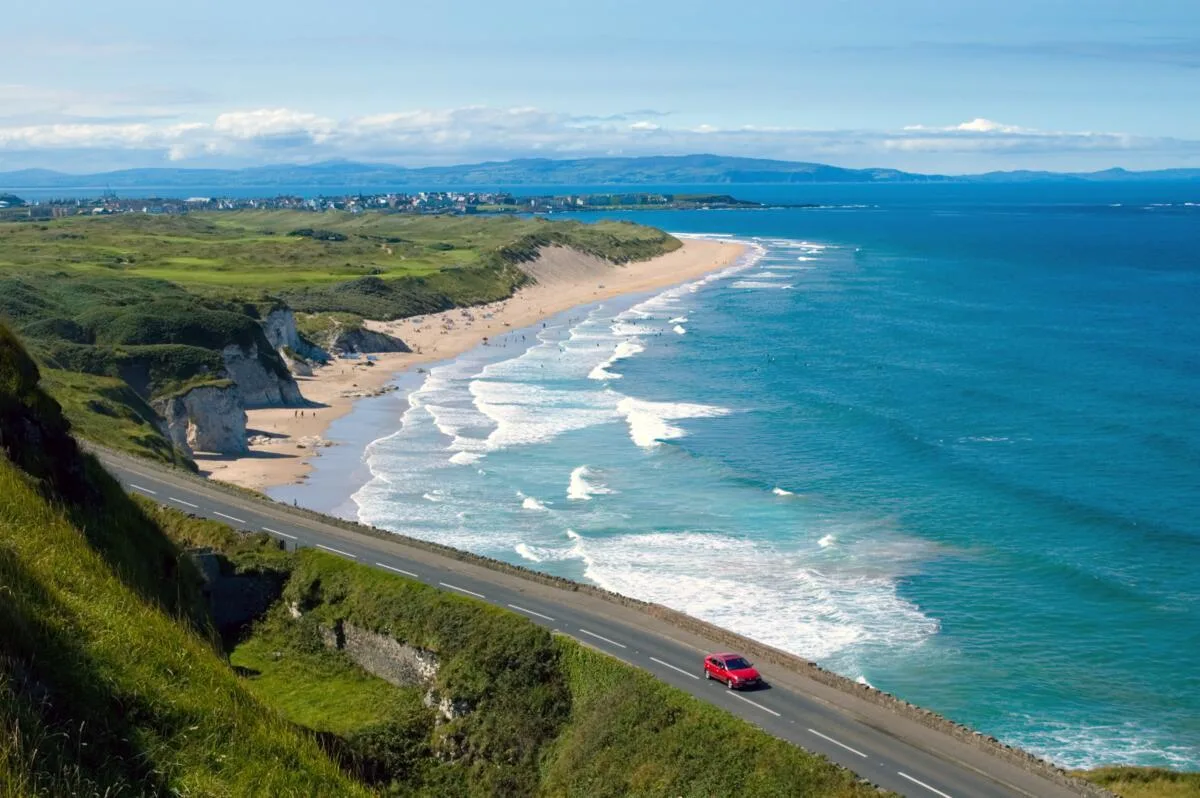
The Antrim coast owes its character to volcanic activity that happened around 60 million years ago. Lava flows cooled into basalt columns – the same process that created the Giant's Causeway. Over millions of years, the sea carved cliffs, arches, and sea stacks from this dark volcanic rock. The result is a coastline that looks like nowhere else in Ireland.
But it's more than geology. The Antrim Coast Road winds along the cliff edges between the mountains and the sea, passing through small harbour villages where fishing boats still land. The Glens of Antrim — nine deep valleys cut into the basalt plateau — are green, quiet, and full of waterfalls. Castles stand on clifftops. Rope bridges sway over rocky coves. And the light on this coast, with the sea reflecting off the basalt, is something you'll remember.
The walking infrastructure is excellent. Trails are well-maintained and clearly marked. The villages along the coast have good accommodation, pubs, and restaurants. And because Northern Ireland sees fewer tourists than the south, you'll often have the trails to yourself — even in summer.
Giant's Causeway Walk
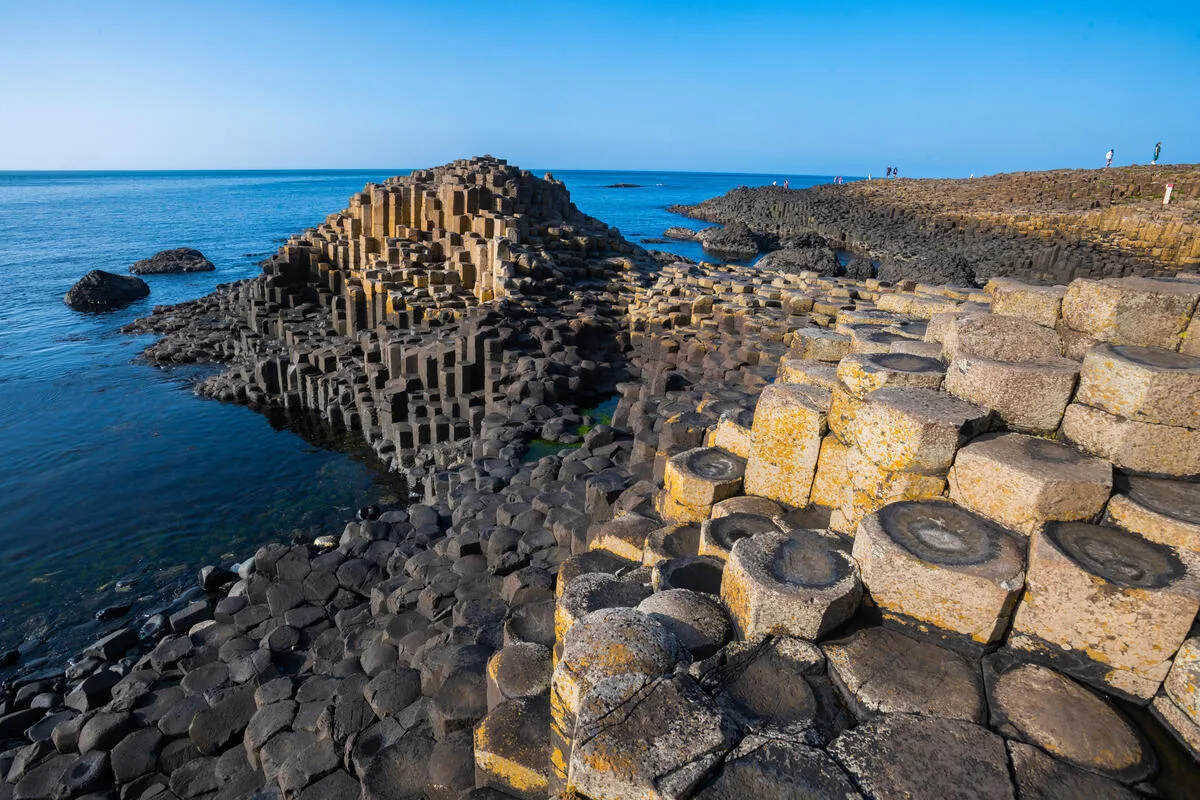
The Giant's Causeway is Northern Ireland's most famous landmark, and the walk here is one of the best Northern Ireland walks you can do. About 40,000 hexagonal basalt columns step down into the Atlantic, looking like they were placed by hand. They weren't—they're the result of cooling lava – but it's easy to see why the legend says a giant built them.
The walk from the visitor centre to the Causeway stones and back is about 3 km and takes an hour or so. But the real reward comes from continuing along the cliff-top path toward Dunseverick. This section runs about 6 km one way along the top of the basalt cliffs, with views down to the columns and out to sea. Allow 2 to 3 hours for the full out-and-back, and wear good hiking boots — the path can be muddy after rain.
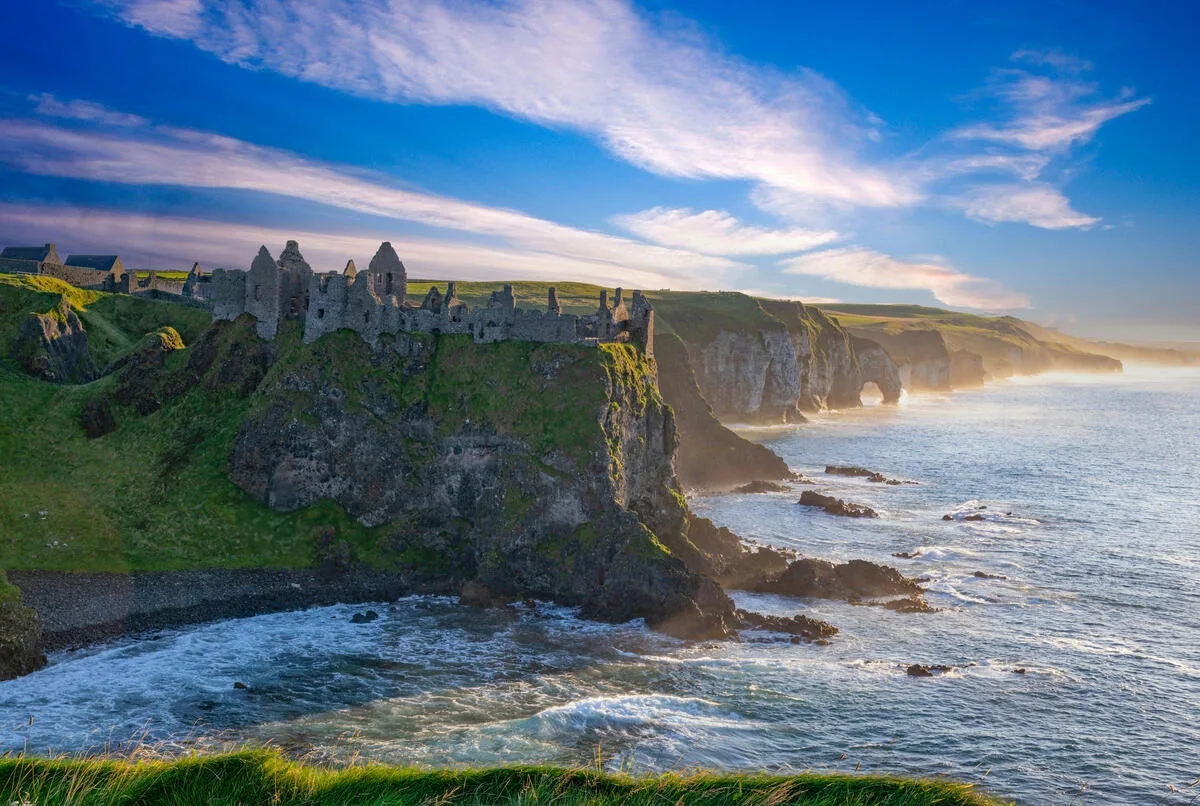
The Giant's Causeway walk connects to a network of coastal paths, so you can extend your day in either direction. Eastward takes you toward Carrick-a-Rede and Ballintoy. Westward brings you to the ruins of Dunluce Castle on its clifftop perch.
The Gobbins Cliff Path
The Gobbins cliff path is one of the most unusual walks on the Antrim coast. Cut into the basalt cliffs near Islandmagee, the path follows a narrow route along the rock face with bridges, staircases, and a tunnel carved through the headland. Below you, the sea crashes against the base of the cliffs.
The original path was built in 1902 as a tourist attraction and was considered an engineering marvel. It fell into disrepair, but a restored version opened in 2015. The guided walk takes about 2.5 hours and covers roughly 3 km. It's not technically difficult, but it's not suitable for anyone with a fear of heights — you're walking along cliff edges with drops to the sea.
Booking is required, and numbers are limited to keep the experience manageable. The Gobbins is about an hour north of Belfast, making it an easy day trip. Of all the walks on the Antrim coast, this is the one that makes you feel closest to the sea.
Glenariff Forest Park
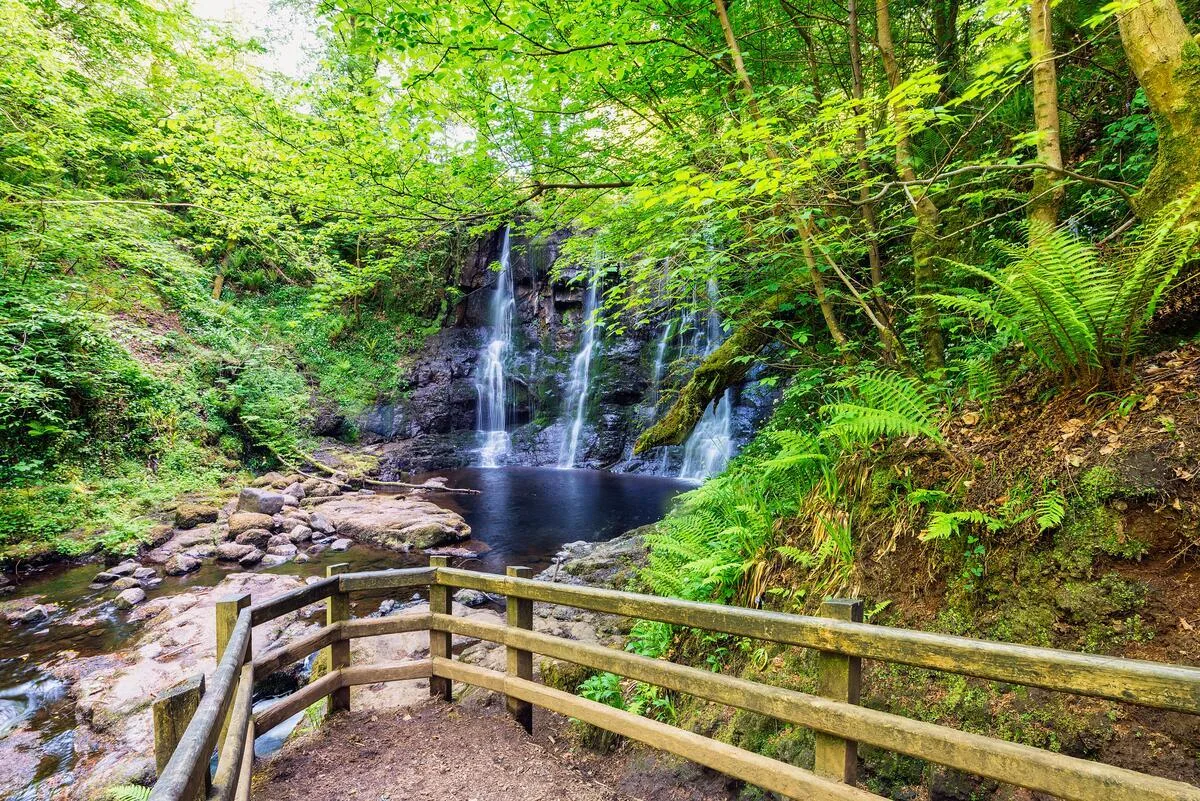
If the coast shows the Antrim coast's drama, Glenariff shows its softer side. Known as the Queen of the Glens, Glenariff is the largest of the nine Glens of Antrim — a deep, wooded valley with waterfalls tumbling through the forest.
The Waterfall Walk is the main trail, a 3 km loop that follows the Glenariff River through native woodland past three waterfalls. Boardwalks and steps keep you above the river gorge, and the sound of falling water is constant. It's an easy-to-moderate walk that takes about an hour.
For a longer day, the Scenic Trail climbs to the rim of the glen and gives you views across the valley to the sea. Allow 3 hours for this 9 km loop. The forest park also has picnic areas, a cafe, and marked mountain bike trails.
Glenariff is a welcome contrast to the exposed coastal paths. After a day of wind and cliff walking, the sheltered forest feels like another world. It's one of the best Northern Ireland walks for families or for a recovery day between tougher hikes.
Fair Head
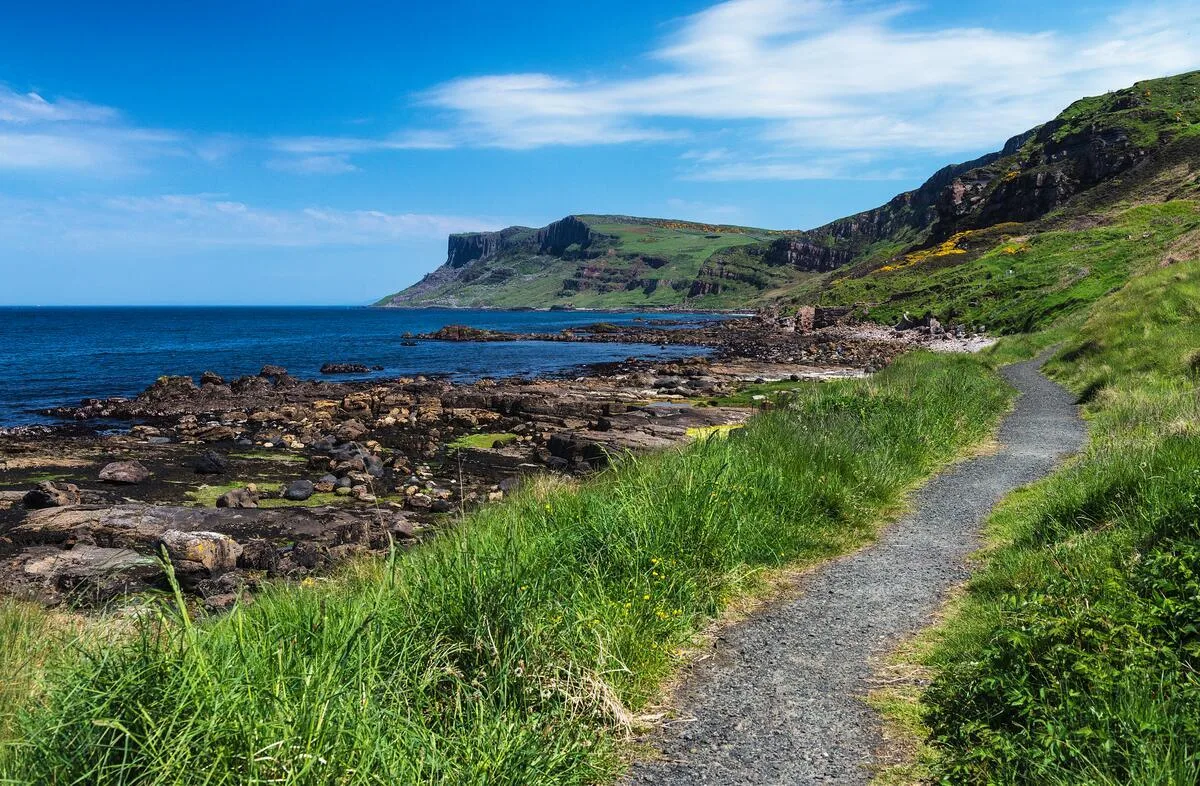
Fair Head is the Antrim coast's hidden treasure. This massive basalt headland near Ballycastle rises 200 metres above the sea and offers views across to Rathlin Island and the Mull of Kintyre in Scotland.
The walk to Fair Head starts from the car park above Murlough Bay and follows farm tracks and moorland paths to the cliff edge. The full loop is about 6 km and takes 2 to 3 hours. The approach is gentle, crossing open bogland with sheep grazing around you. Then the cliff edge appears, and the scale hits you — columns of dark basalt dropping vertically to the sea below.
Fair Head is also a major rock climbing destination, so you may see climbers on the cliff face. The headland is less visited than the Giant's Causeway, which adds to its appeal. On a clear day, the views to Scotland are remarkable.
This is a walk for people who want the Antrim coast experience without the crowds. The path is unmarked in places, so bring a map and check the weather before you go.
Carrick-a-Rede Rope Bridge and Ballintoy
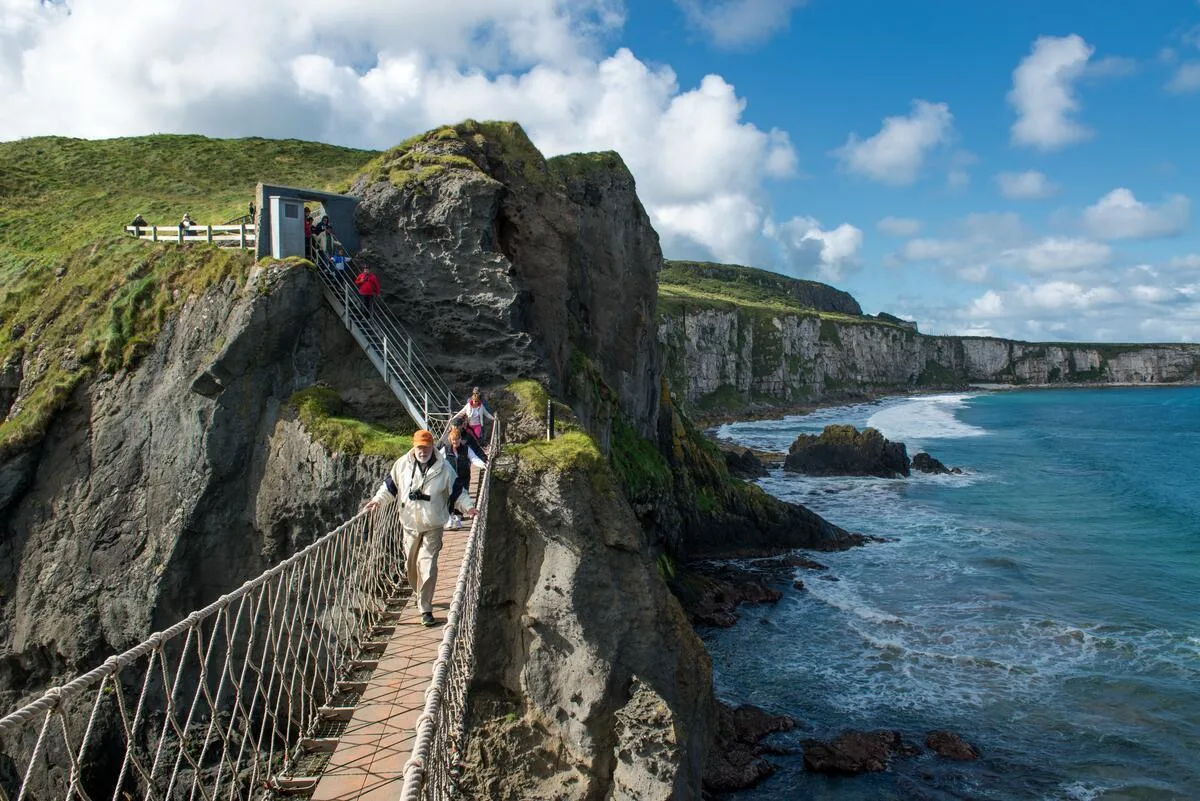
Carrick-a-Rede is a small rocky island connected to the mainland by a rope bridge that sways 30 metres above the sea. Salmon fishermen built the original bridge centuries ago to check their nets. Today it's one of the most visited spots on the Antrim coast.
The walk from the car park to the bridge is about 1 km along a cliff-top path with excellent views. Crossing the bridge itself takes nerve — the gap below you is real, and the bridge moves. Once across, the island has views back to the mainland cliffs and out toward Rathlin Island.
From Carrick-a-Rede, it's a short drive to Ballintoy Harbour – a tiny, photogenic harbour tucked beneath limestone cliffs. The harbour was used as a filming location for Game of Thrones, and the walk down to it gives you views along the coast toward the Giant's Causeway.
Planning Your Antrim Coast Walk
The Antrim Coast Road (A2) connects all the main sites, running from Larne in the south to Ballycastle in the north. It's one of the great coastal drives in these islands, and it makes planning a walking trip straightforward.
Belfast is the nearest major city, about an hour's drive from the heart of the Antrim coast. From Dublin, allow about 3 hours. Most walkers base themselves in Ballycastle, Bushmills, or one of the villages along the Glens of Antrim.
The best time to visit Ireland for coastal walking is April to October. The Antrim coast gets less rain than the west of Ireland, but wind is a factor on the exposed cliff paths. Pack layers and waterproofs — our packing list covers everything you need.
Check our tour grading to find walks that match your fitness level. The Giant's Causeway and Glenariff are suitable for most walkers. Fair Head and the longer cliff-top sections need more experience and confidence on exposed ground.
We offer self-guided walking holidays that cover the best of the Antrim coast. We book your accommodation, transfer your bags, and give you detailed route notes so you can walk at your own pace. For walkers who prefer company and local knowledge, our guided walking holidays pair you with guides who know every path on this coastline.
The Antrim coast connects to the Glens of Antrim walking routes, so you can combine coastal and glen walks in a single trip. And the Giant's Causeway deserves its own article — we've written a detailed guide to help you plan your visit.
Frequently Asked Questions About the Antrim Coast
How long does it take to walk the Antrim coast?
The full Causeway Coast Way covers about 50 km and takes 3 to 4 days. You can also walk individual sections as day walks. The Giant's Causeway cliff-top path is a 6 km half-day walk. The Gobbins cliff path takes about 2.5 hours. Most walkers spend 3 to 5 days to see the highlights.
Is the Giant's Causeway walk free?
The Giant's Causeway stones are free to visit at any time. The National Trust visitor centre charges an admission fee that includes an audio guide and parking. The cliff-top walking paths are free and open year-round.
Do I need to book the Gobbins cliff path in advance?
Yes. The Gobbins is a guided walk with limited numbers, and it books out quickly in summer. Reserve your place online at least a few days ahead. The walk takes about 2.5 hours and runs in all but the worst weather.
What is the best base for walking the Antrim coast?
Ballycastle and Bushmills are the two most popular bases. Both have good accommodation, pubs, and restaurants, and they sit in the heart of the best walking. The Glens of Antrim villages like Cushendall also make a quieter alternative.
Can I walk the Antrim coast in winter?
Yes, but with care. The cliff paths can be exposed and muddy. Daylight hours are short from November to February. The Giant's Causeway and Glenariff Forest Park are good winter options as the paths are well-maintained. Check weather forecasts and carry a head torch.
A Coastline You Won't Forget
The Antrim coast gives you everything a walker could want — dramatic cliffs, ancient geology, quiet glens, rope bridges over the sea, and trails that run from easy family strolls to serious cliff-edge walks. It's one of the finest stretches of coastline in Europe, and it's less crowded than you'd expect.
Walk the Giant's Causeway at dawn before the coaches arrive. Cross the rope bridge at Carrick-a-Rede with the wind in your face. Stand on Fair Head and watch the sea swirl 200 metres below. Then find a pub in Ballycastle and let the day settle. Get in touch with Walking Holiday Ireland and we'll help you plan a trip that does the Antrim coast justice.
Planning your walk on the Causeway Coast
How long is the Causeway Coast Way?
The full Causeway Coast Way is 51 km from Ballycastle to Coleraine. Most walkers cover it over three days, averaging 17 km per day. You can also walk shorter sections — the Ballycastle to Bushmills leg is popular and takes about 6 hours at a comfortable pace.
What's the best day-walk section?
Bushmills to Portrush (about 9 km, 2.5–3 hours) is a perfect single day. You get coastal drama, access to the Giant's Causeway visitor centre, and finish near good pubs and accommodation. Portrush to Portstewart is also a beautiful shorter loop with cliffs and dunes.
Where should I stay overnight?
Ballycastle, Bushmills, Portrush and Coleraine all have hotels, guesthouses and B&Bs. Portrush has the most choice. For a quieter base, Bushmills is well-positioned for the trail and has good local pubs.
Is there good public transport access?
Yes. Translink buses connect the main towns. The Causeway Rambler bus links Bushmills, the Giant's Causeway and Portrush during the season. Ballycastle and Coleraine have train stations, and Portrush is easy to reach by bus from Belfast.
How fit do I need to be?
Moderate fitness is enough. The terrain is a mix of cliff path, country lane and short forest tracks, with some hills but no steep scrambles. A day section like Bushmills-Portrush suits casual walkers; the full three-day route suits people who walk regularly.
Continue exploring
Three companion guides if you're heading to the north coast.
Photo Gallery