Footwear for Irish Walking Holidays: A Route-by-Route Guide
Every spring we get the same question dozens of times: "What should I put on my feet for the Kerry Way?" Or the Wicklow Way. Or the Dingle Way. Or the Causeway Coast.
It's a great question — and the honest answer is that it depends on the trail. Different routes put different demands on your feet, and a boot that's perfect for one walk can be slightly wrong for another. After more than a decade of running self-guided walking holidays in Ireland, we've watched it play out season after season. So here's our route-by-route guide to footwear for Irish walking holidays — what works on each major trail, and the few things that hold true no matter which one you're walking.
If you're still in the buying stage and want a full guide to picking the right boot — fit, cut, sole, ankle support and waterproofing — read our companion post Waterproof Hiking Boots for Ireland: How to Choose the Right Pair. This one assumes you already have boots and want to know what'll work on the trail you've booked.
What makes Irish trails different
Before we get into the routes, it's worth being honest about what your feet are up against here.
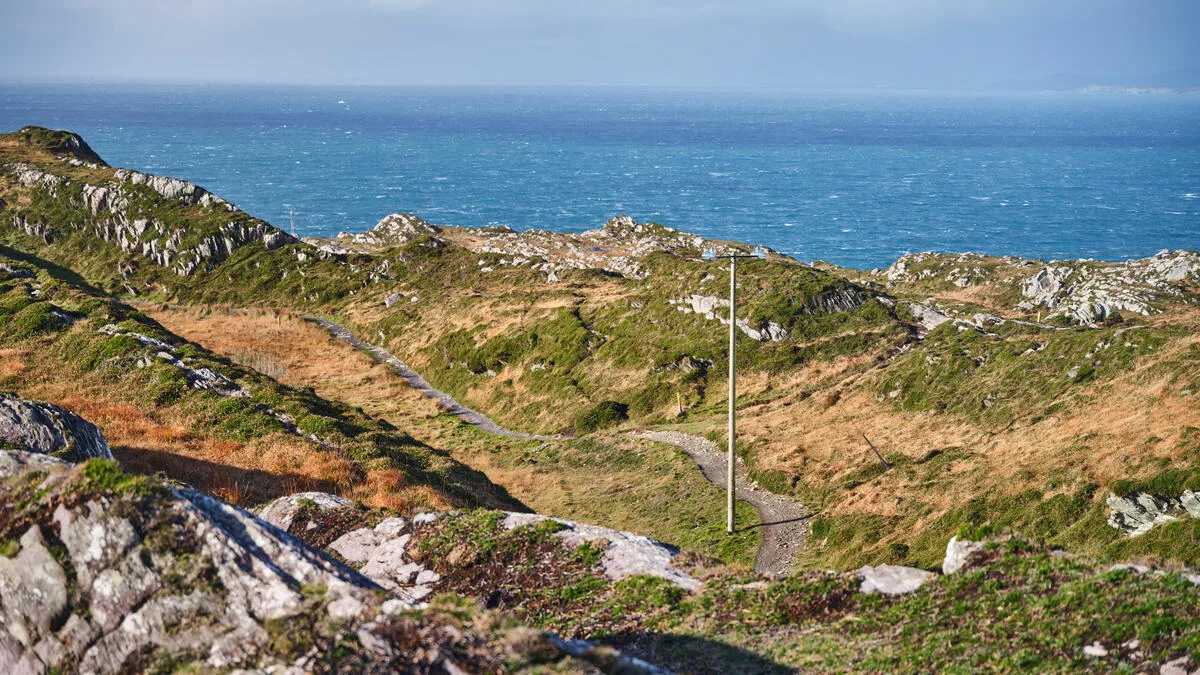
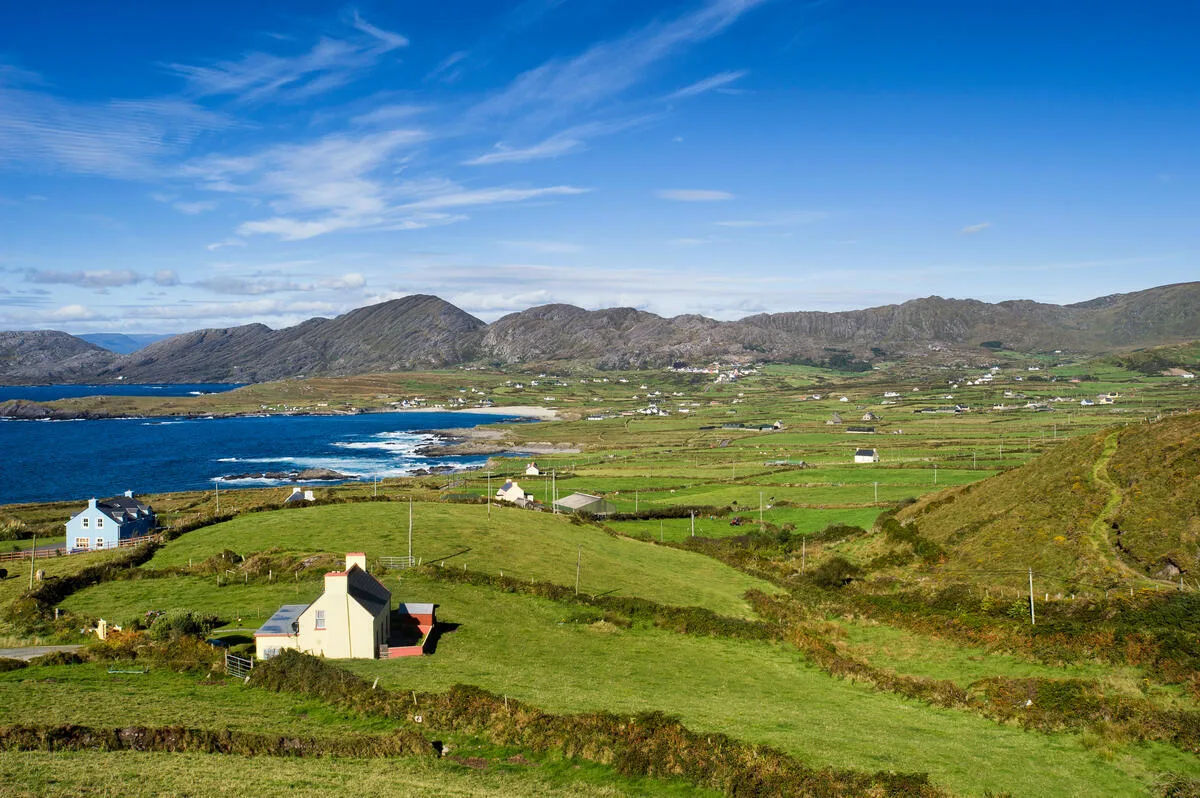
Ireland's long-distance trails aren't the high mountain paths of the Alps or the dry rocky tracks of southern Europe. They're a mix of soft bog, rough gravel, smooth tarmac, ancient stone causeways, root-laced forest paths, and the occasional very wet field. The weather is usually mild, but rarely dry for a whole week — even in July, you can get a soft, all-day drizzle that soaks the grass and turns the boggy sections into a test of your boot's waterproofing.
The trails are also long. Most of our walkers cover between 18 and 25 kilometres a day, six days in a row, with luggage transferred between accommodations so they can walk in just a day-pack. That's a lot of consecutive hours on the feet — far more than most weekend walkers ever do at home.
This combination — wet underfoot, variable terrain, long consecutive days — is what shapes our route-by-route advice below.
Boots or trail shoes? The quick answer
For most walkers on most Irish trails, a mid-height walking boot with a waterproof membrane and a grippy lugged sole is the safe bet. Ankle support helps on uneven ground when you're tired at the end of a long day; the membrane keeps the wet bog out, which matters more in Ireland than almost anywhere else in Europe.
Trail running shoes or low-cut hiking shoes work brilliantly for confident walkers with strong ankles — they breathe better and dry faster overnight if soaked. But they're a confident-walker choice, not the default. If you're new to multi-day walking, or if you've ever rolled an ankle, stick with boots.
The route-by-route notes below tell you when each approach works best.
Kerry Way
The longest and most varied of our trails — and the one that punishes the wrong footwear most reliably.
You'll cross open bog, mountain passes, forest tracks, country roads, and beach. Waterproofing matters most here. There are sections, particularly between Glencar and Glenbeigh, where dry feet are an act of will. We've also had walkers regret light fabric shoes on the rocky descent off Windy Gap — the trail wears trainers down quickly.
Recommendation: a mid-height waterproof boot with a stiff-enough sole for rocky descents. Most walkers regret nothing about going with a proper boot on the Kerry Way; the few who pick trail shoes usually wish they hadn't by day four.
Insider note: bring boots that drain. The kind with a fully sealed Gore-Tex liner are great until water gets in over the cuff, at which point they hold the water in. If you've already got a pair like that, just be vigilant about gaiters or trousers worn over the boot in the very wet sections.
Wicklow Way
The most varied terrain of all our routes — forest tracks, mountain ridges, military roads, and farmland. Drier underfoot than the Kerry Way on average, but with steeper sustained climbs, especially up Djouce and Mullacor.
Recommendation: a boot with good ankle support pays off here when your legs are tired on the longer descents. A small minority of fitter walkers do the Wicklow Way in trail shoes; most are happier in boots.
Insider note: the stone-and-gravel forestry roads chew up softer outsoles. If your boots' tread is already worn, get it checked before the trip — Wicklow eats lugs.
Dingle Way
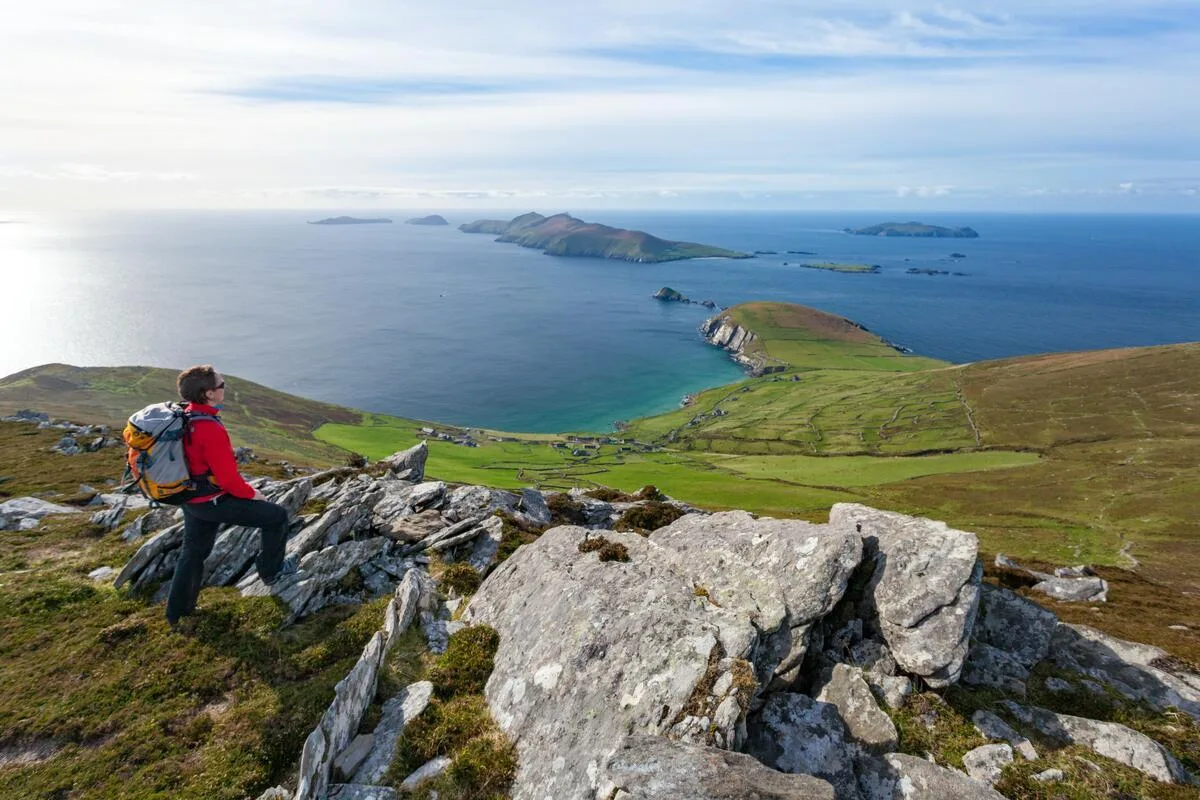
More coastal, with long stretches on beach and headland. The Atlantic wind keeps things drier than the inland routes, and the terrain is gentler overall — no big mountain ascents except the optional climb over Mount Brandon.
Recommendation: trail shoes work surprisingly well here for confident walkers. If you're going with boots, lighter and more flexible is better than heavy and stiff. The beach sections in particular feel easier in a less rigid shoe.
Insider note: sand. Even waterproof boots aren't sand-proof, and beach grit inside the sock is a fast track to blisters. Carry a soft brush or just shake the boots out before the next stage.
Causeway Coast
The shortest and most coastal of the trails — cliff paths, beach walking, and stone causeways. Drier and grippier underfoot than the western routes, but the wet sea spray and sand can chew through cheap fabric.
Recommendation: a decent waterproof boot or a sturdy hiking shoe will both do the job. Lower-cut is often better here because the terrain is forgiving and ventilation matters on warm coastal days.
Insider note: rinse the salt off overnight if you've been on the beach. Sea-spray dries into a fine crust that abrades the fabric over time and shortens the boot's life.
Sheep's Head Way
The quietest of our trails — a remote loop around West Cork's narrowest peninsula. Mostly coastal grass paths, old bog tracks and quiet lanes.
Recommendation: closer to the Dingle Way in feel — lighter boots or sturdy trail shoes both work. Waterproofing still matters because the grass paths hold yesterday's rain, but the terrain doesn't punish soft soles the way the Kerry Way does.
Insider note: the trail crosses some very quiet ground where you might not pass anyone for hours. Whatever you wear, make sure it's broken in. Help is further away here than on the busier routes.
The rules that hold true on every trail
Three things matter regardless of which route you've booked.
Break your boots in
If you take one thing from this post, take this: never start a multi-day walk in brand-new boots, no matter how comfortable they felt in the shop. A boot needs 30 to 50 miles of wear before it has moulded to your foot, and your foot has learned where the seams are. Until then, the friction lands in places you can't predict.
We see this every single season. A walker turns up on day one with stiff, shiny boots, says "they felt great in the shop," and is in pain by mile six. By day three the blisters are bad enough that we're rearranging accommodation to shorten stages. It's heartbreaking, because it's entirely preventable.
The fix is patience: wear them around the house for an hour or two each evening for a week, then take them on shorter walks (three to five miles, in the socks you'll wear on holiday), then build up to a couple of longer walks (eight to twelve miles) in the month before the trip. If anything rubs, fix it before the trail — don't hope it'll get better.
Wear merino socks, not cotton
You can buy the best boots in the world and ruin them with the wrong socks. Cotton holds moisture against your skin, and wet skin blisters under friction. What you want is a merino wool walking sock, mid-weight, designed for hiking — Bridgedale, Smartwool, and Darn Tough are all reliable.
Bring three or four pairs and rotate them so one set dries overnight while you wear another. A pair of decent merino socks does more for your knees over six days of walking than almost any insole or boot upgrade will.
Treat the first hotspot the moment you feel it
A hotspot is the warm patch that comes about an hour before a blister. If you stop and fix it, the blister never happens. If you walk through it because "we're almost at the next village", you'll spend the next four days walking unevenly, and by day five your knees and hips will hurt too. Compeed plasters, re-lacing, or a fresh sock — whichever it takes. Ten minutes off your feet now saves four days of pain.
What we tell walkers in the week before their trip
A few last-minute things we put in our pre-trip emails:
- Lace them properly. Re-tie boots after the first mile of walking when your foot has settled — a common mistake is lacing too loose at the ankle.
- Bring Compeed plasters. Even with everything done right, the occasional hotspot happens.
- One pair you trust beats two pairs you're unsure about. You're carrying it all.
- If your boots get soaked, stuff them with newspaper overnight. Don't put them on a radiator — that cracks the leather. Newspaper draws the moisture out and keeps the shape.
Ready for your walk?
The right footwear isn't about brand prestige — it's about matching the boot to the trail, breaking it in properly, and pairing it with good socks. Do those three things and your feet will carry you all the way from Killarney to Cahersiveen, or wherever your route leads.
Still picking out the boots themselves? Our companion post — Waterproof Hiking Boots for Ireland: How to Choose the Right Pair — walks through fit, cut, sole, and what to look for in the shop.
If you'd like a hand picking the right route for your fitness and the time of year, we'd love to help. We've walked every metre of the trails we offer, and we're happy to chat about footwear, terrain, or any of the hundred small details that make the difference between a good walking holiday and a great one.
Browse our walking holidays or get in touch — a real person will reply.