Ticks in Ireland: What Walkers Really Need to Know
Every so often a guest emails us before their trip with a version of the same question: “I’ve been reading about ticks and Lyme disease — should I be worried about walking in Ireland?” It’s a fair thing to ask, and we’d rather give you a straight answer than brush it off. So here it is.
Yes, there are ticks in Ireland, and yes, Lyme disease is real and worth taking seriously. But with a few simple habits — the kind of thing that becomes second nature by day two of a walking holiday — the risk of a tick bite becoming anything more is very small. We’ve walked these trails for years and hosted thousands of guests, and tick bites have almost never been an issue. Here’s what’s actually going on, and what to do about it.
Are there ticks in Ireland?
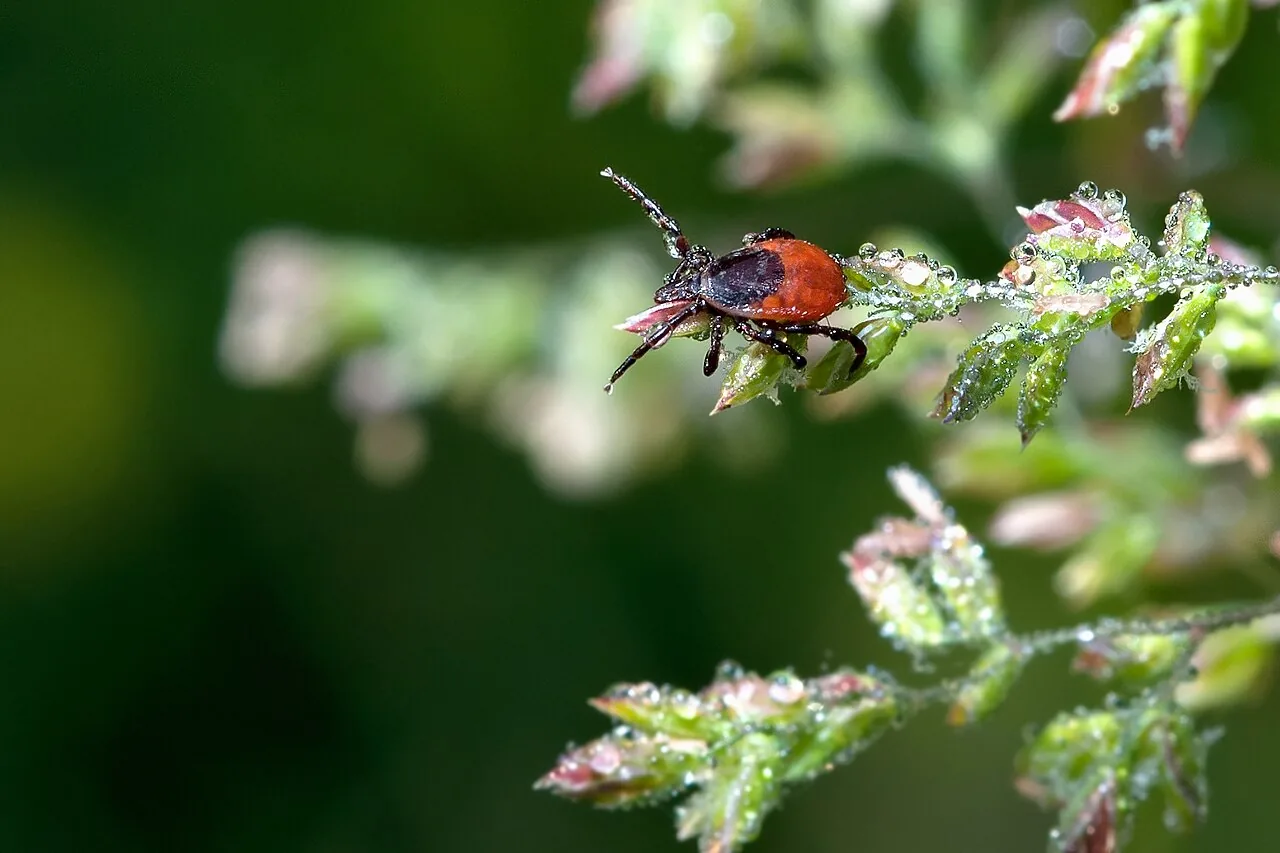
A tick questing on vegetation. Photo: Richard Bartz, CC BY-SA 3.0.
There are. The tick you might come across here is Ixodes ricinus, sometimes called the sheep tick or castor bean tick, and it lives in exactly the kind of places you’ll be walking through: long grass, bracken, heathland and the edges of woodland. They’re most active from spring through to autumn, which lines up neatly with walking season.
They’re tiny — a young tick can be smaller than a poppy seed — and they don’t jump or fly. They wait on the tips of grass and latch on as you brush past. Most of the time you’ll never know one was there, and a bite itself is usually harmless. The thing worth guarding against is the small chance that a tick passes on an infection while it feeds. If you’d like the full kit list, our guide on what to pack for a walking holiday in Ireland covers the clothing that helps here too.
Lyme disease in Ireland — the honest picture
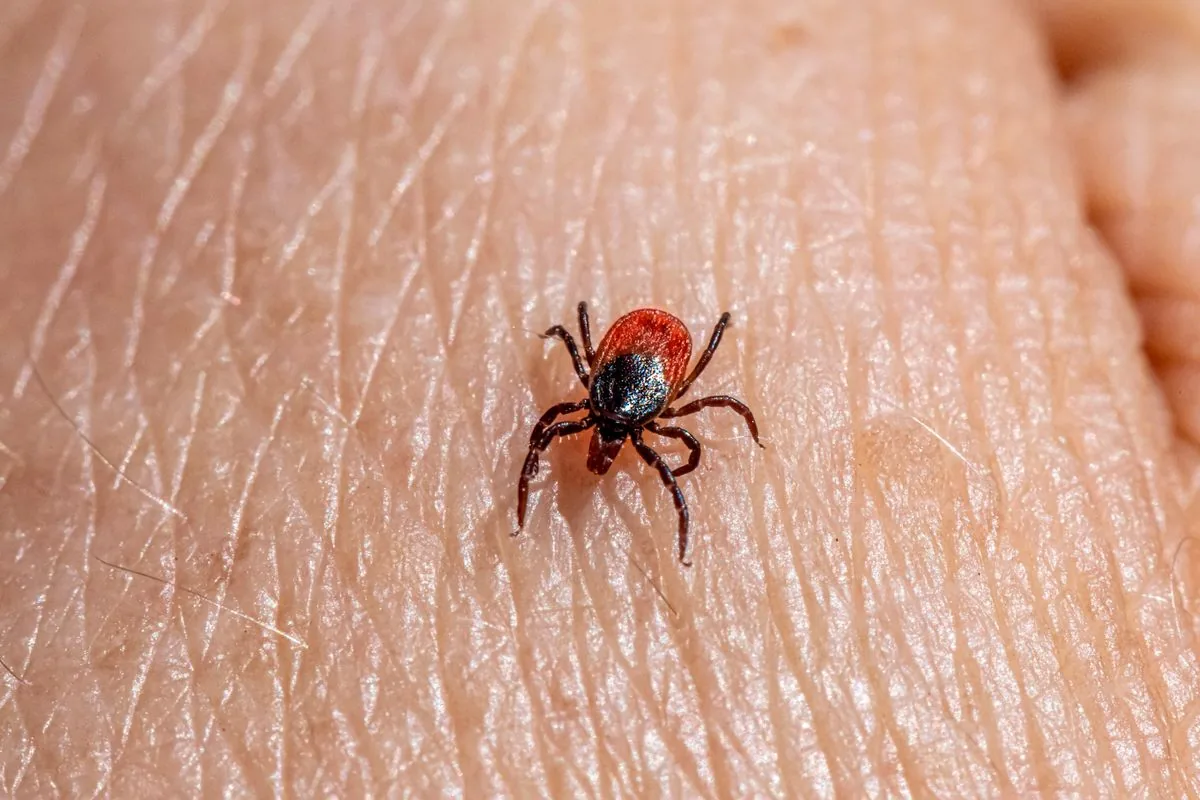
Lyme disease (or Lyme borreliosis) is the tick-borne illness to be aware of in Ireland. Not every tick carries it, and even an infected tick usually has to be attached for a good while before there’s any real risk of transmission — which is exactly why checking yourself and removing ticks promptly matters so much.
The classic early sign is a red rash that spreads outwards in a ring, often described as a “bull’s-eye”. It doesn’t always appear, and some people get flu-like symptoms instead — tiredness, aches, a mild fever — in the days or weeks after a bite. Caught early, Lyme disease is very treatable with a course of antibiotics. Left untreated it can be more serious, which is the whole reason we’d rather you knew what to look for than found out later. If you develop a rash or feel unwell after a walk, see a doctor and mention that you’ve been out on the trails.
What about tick-borne encephalitis (TBE)?
This is the reassuring part, and it’s a genuine point of difference from many popular walking destinations in mainland Europe. Tick-borne encephalitis — the viral infection that has walkers in Germany, Austria and parts of Scandinavia reaching for a vaccine — is not endemic in Ireland.
Ireland’s ticks are the same Ixodes ricinus species that carries TBE elsewhere, but the virus itself has not been found in ticks here, and according to Ireland’s Health Protection Surveillance Centre there have been no cases of TBE ever caught within the country. The only Irish diagnoses have been in people who picked it up travelling abroad. So there’s no TBE vaccine to arrange and no TBE risk to plan around for your walking holiday in Ireland. If you’re used to the tick-safety routine back home in Central Europe, you can relax one notch here.
How to avoid tick bites while walking
None of this needs to change how much you enjoy being out in the hills. A handful of easy habits does almost all the work:
- Cover up in long grass. Long trousers tucked into your socks and a long-sleeved top give ticks far less to grab onto.
- Stick to the path. Ticks wait in the tall stuff at the edges, so walking down the middle of a trail keeps you clear of most of them.
- Use a repellent. An insect repellent containing DEET, applied to exposed skin, is a simple extra layer.
- Wear light colours. A pale trouser leg makes a dark tick much easier to spot and flick off before it settles.
- Do a tick check at the end of the day. When you reach your B&B, look over your skin — especially the warm, hidden spots: behind the knees, around the waist, under the arms, along the hairline. It takes two minutes and it’s the single most effective thing you can do.
These habits sit alongside the general good sense in our hiking safety tips for walking in Ireland. Tick activity also follows the seasons, so it’s worth a look at the best time to walk the Kerry Way when you’re choosing your dates.
If you find a tick
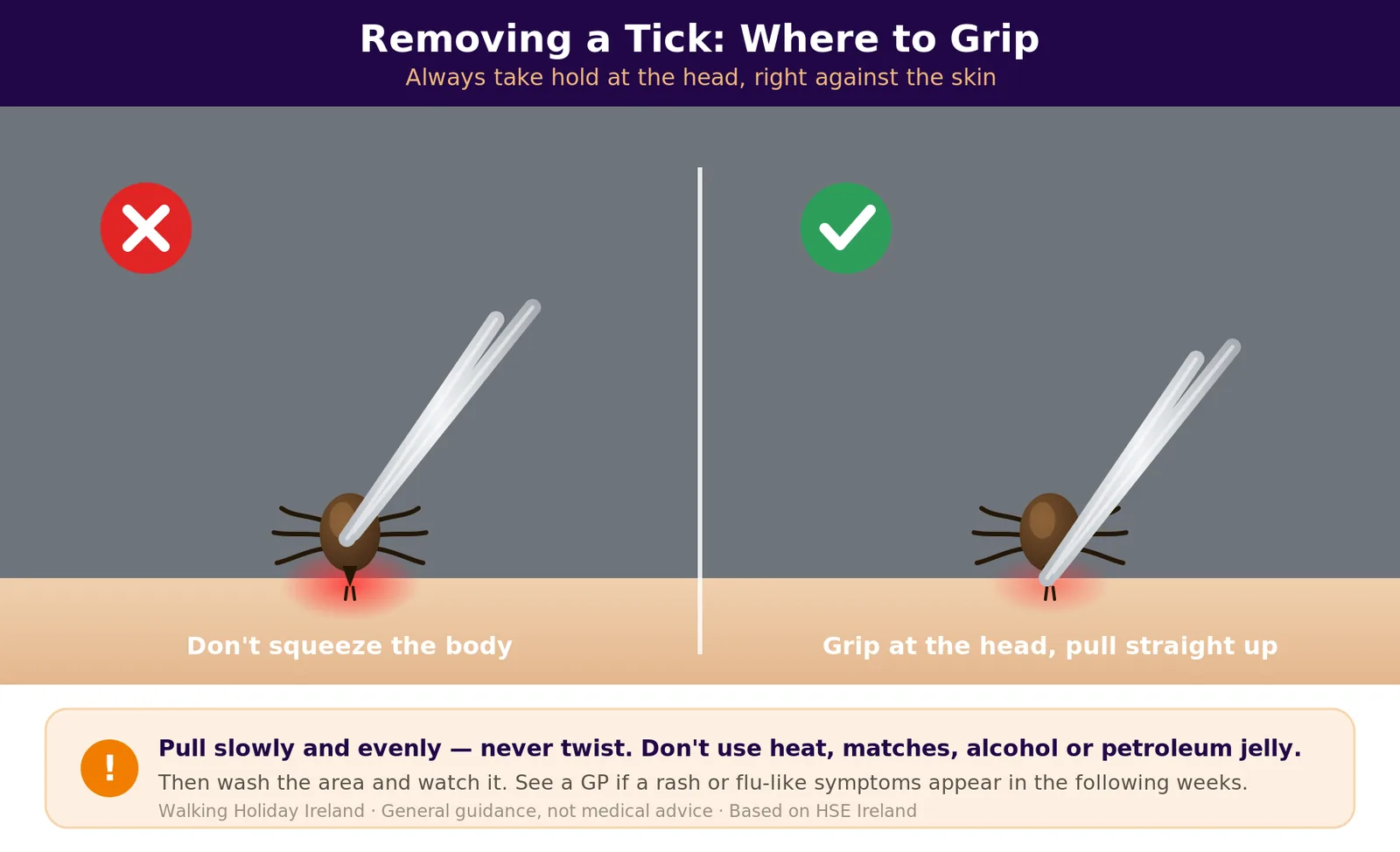
Don’t panic, and don’t reach for the old wives’ tales about matches or nail varnish. The advice from the HSE is simple: remove it as soon as you can. Using fine-tipped tweezers or a small tick-removal tool (they cost next to nothing and slip into any rucksack), grasp the tick as close to your skin as possible and pull straight upwards, steadily, without twisting or squeezing. The aim is to get the whole thing out cleanly. Then wash the area, and keep half an eye on it over the following weeks. You only need to see a doctor if a rash appears or you start to feel unwell.
The bottom line
Ireland’s trails are among the safest and most rewarding walking you’ll find anywhere. Ticks are a small, manageable part of being out in beautiful wild country — the same as they are in the Alps, the Scottish Highlands or your local woods at home. Take a few sensible precautions, do your evening tick check, and you’ll spend your holiday thinking about the views and the pint at the end of the day, not the grass at your feet.
Fancy putting it into practice on one of Ireland’s classic routes? Take a look at our self-guided Kerry Way walking holiday or explore the wider Kerry Way walking area. And if you have any questions about a route or what to pack, drop us a message — we’re always happy to chat.
This article is general information, not medical advice. For the most up-to-date guidance, see Ireland’s Health Protection Surveillance Centre and the HSE’s advice on Lyme disease.
None of this should put you off the trail. Our guide to hiking in Ireland covers where to walk, when to go and what the ground is actually like underfoot.